Seoul, Korea Night Tour
We took Tauck’s “Sakura Seas: South Korea and Japan” tour. The first part of our tour was centered in Seoul. We came a few days early to see some sites on our own before the start of the tour.
Before arriving in Korea, we booked a private night tour of Seoul (through Get Your Guide). Our first stop was the Changyeonggung Palace, a palace we had visited on our prior trip in 2009. It was the third palace built during the Joseon Dynasty and served as a royal living quarters. It was originally built in the mid 15th Century, but some buildings were destroyed during wars with the Japanese and subsequently rebuilt.
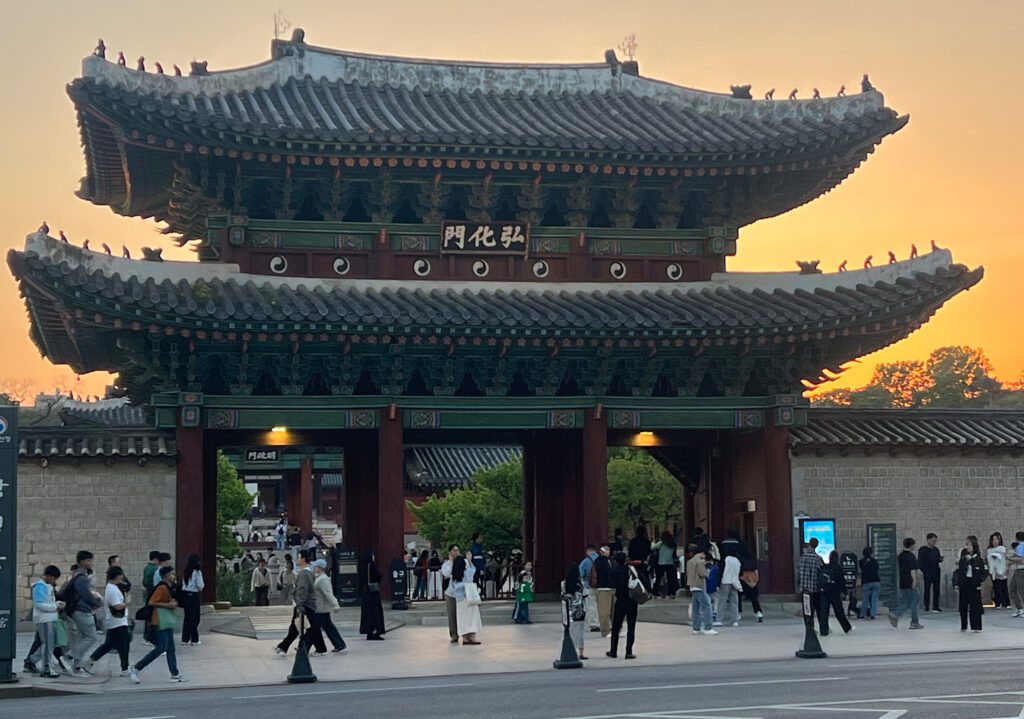
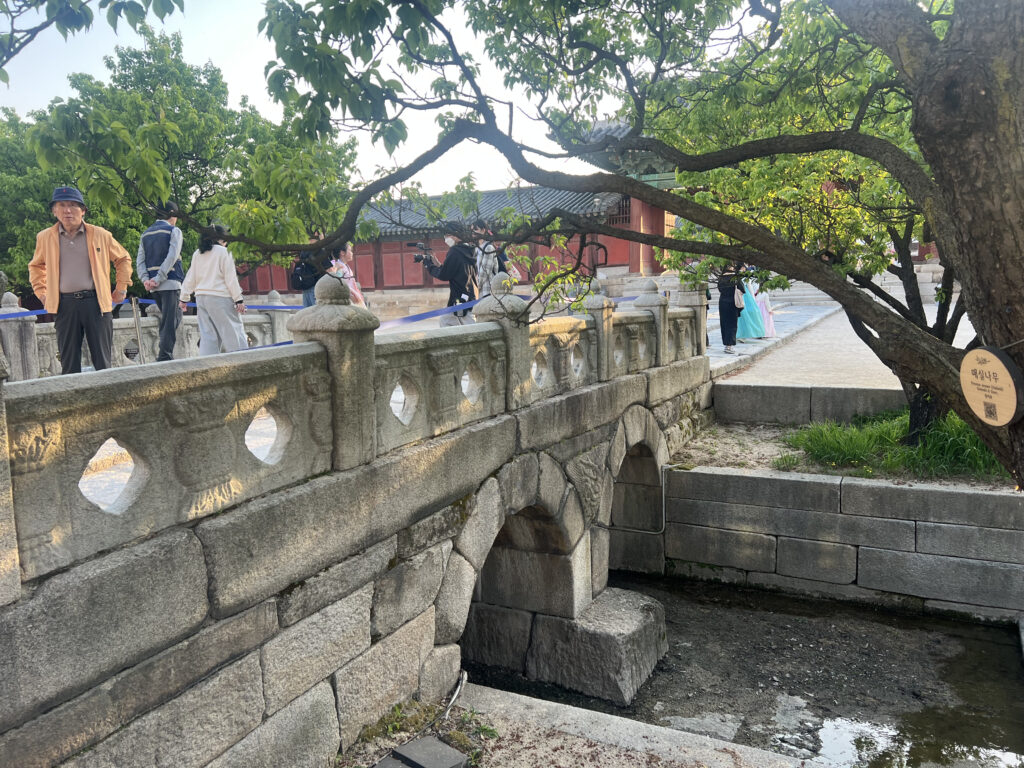
The first picture below is the Honghwamun Gate which means “promoting harmony.” It was most recently rebuilt in 1616. Next is the Okcheongyo Bridge, built in 1484. A goblin is carved between the arches of the bridge, meant to protect the palace from any evil spirits coming through the river.
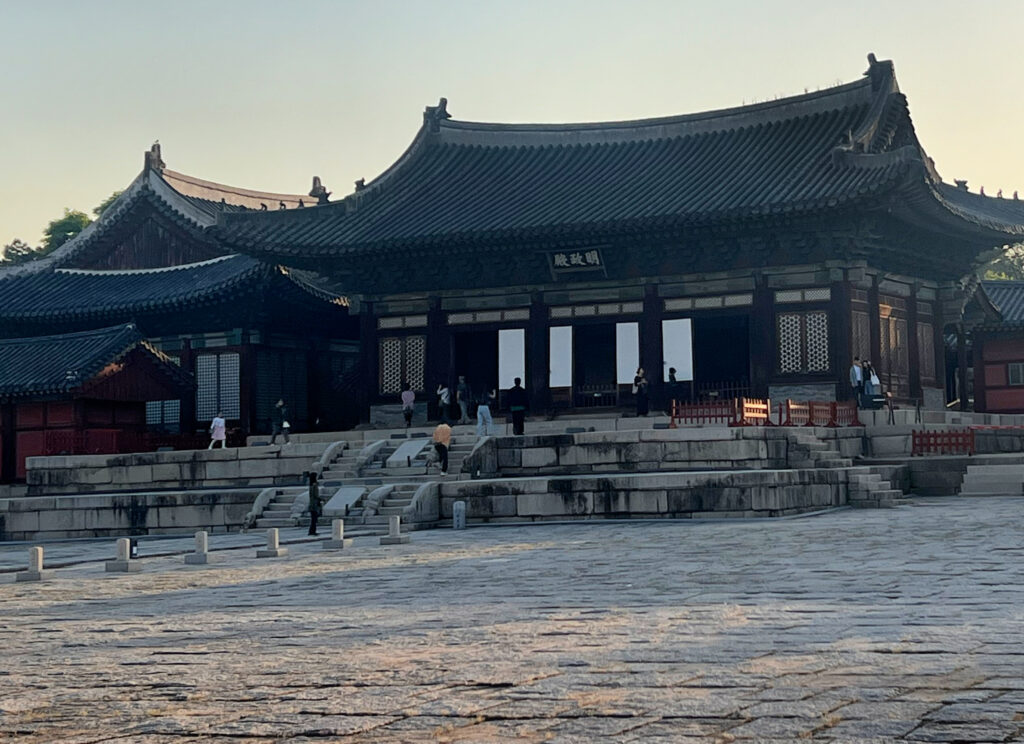
Injeongjeon Hall (third picture) is considered the main building of the Changdeokgung Palace Complex and is where the king would meet special guests. There is a courtyard in front of the Hall with stone markers on either side. The rank of court officials were carved into these stones. When meeting with the king, the official would stand by the marker with his rank. The higher the rank, the closer the official would stand to the king.
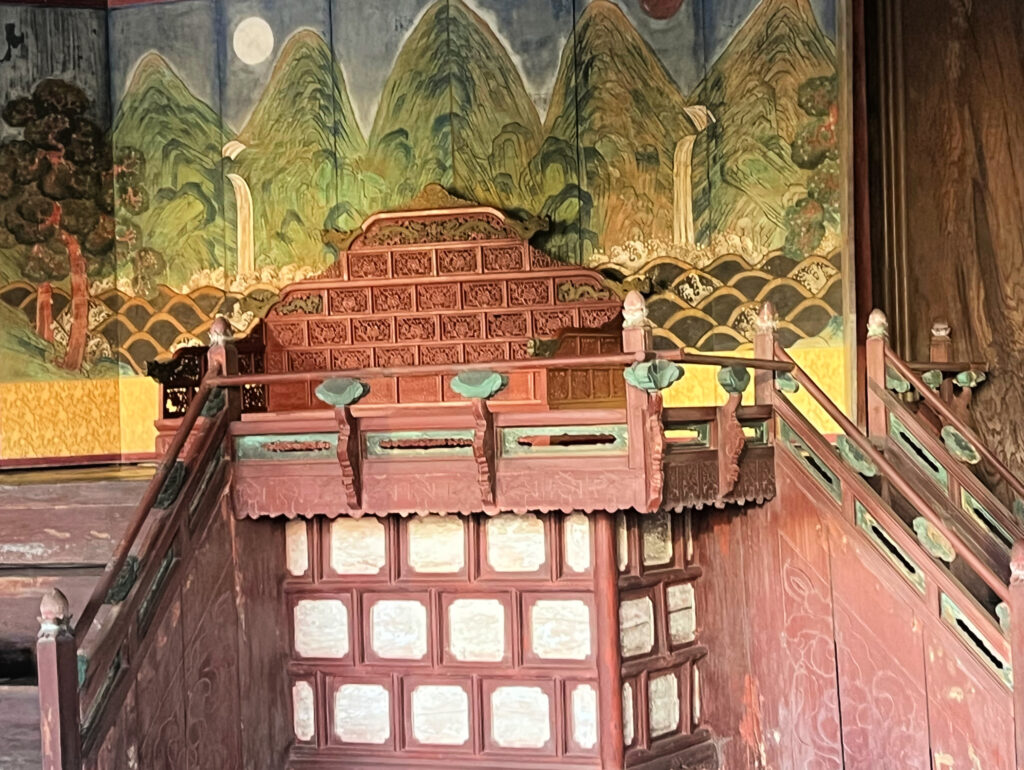
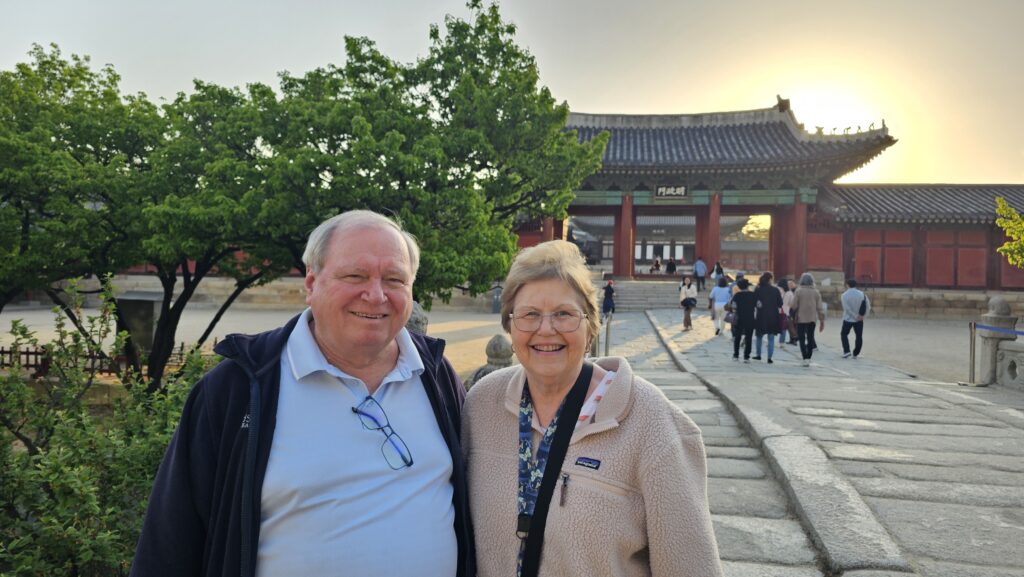
The fourth picture is the king’s throne which is located in Myeongjeongjeon Hall near the center of the Palace grounds. Behind the throne is a folding screen featuring the sun, moon and five peaks. These symbolize “national prosperity and the welfare of the people.” The last picture is one our guide took of us on the Palace grounds. The Changdeokgung Palace is a UNESCO World Heritage Site.
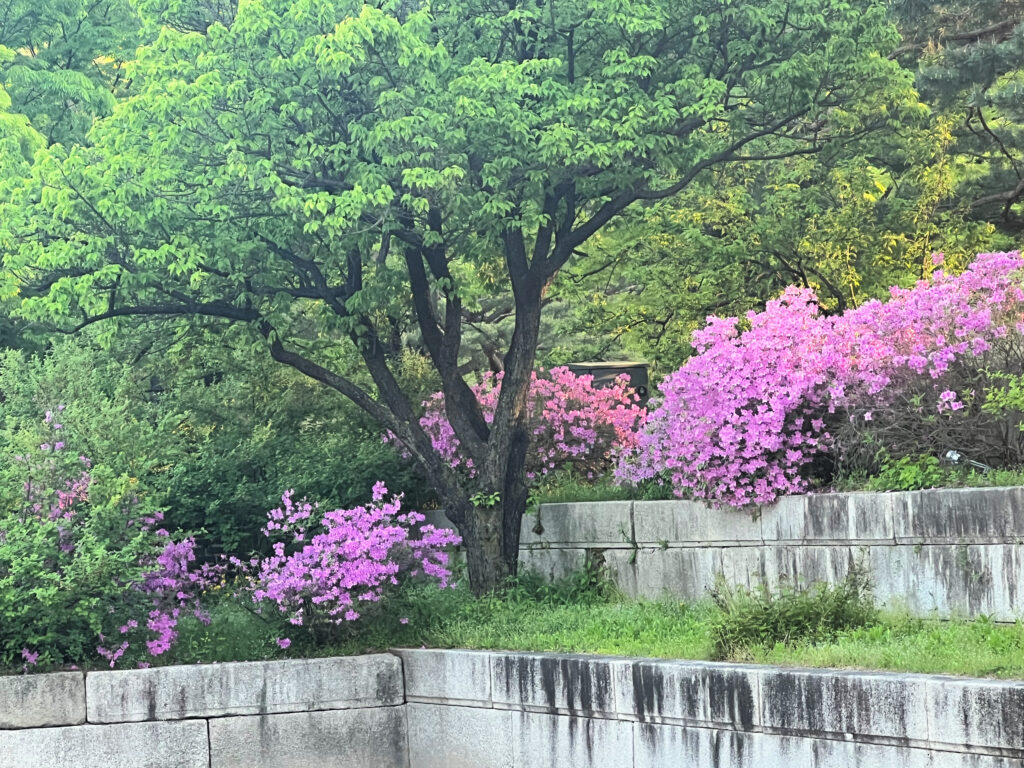
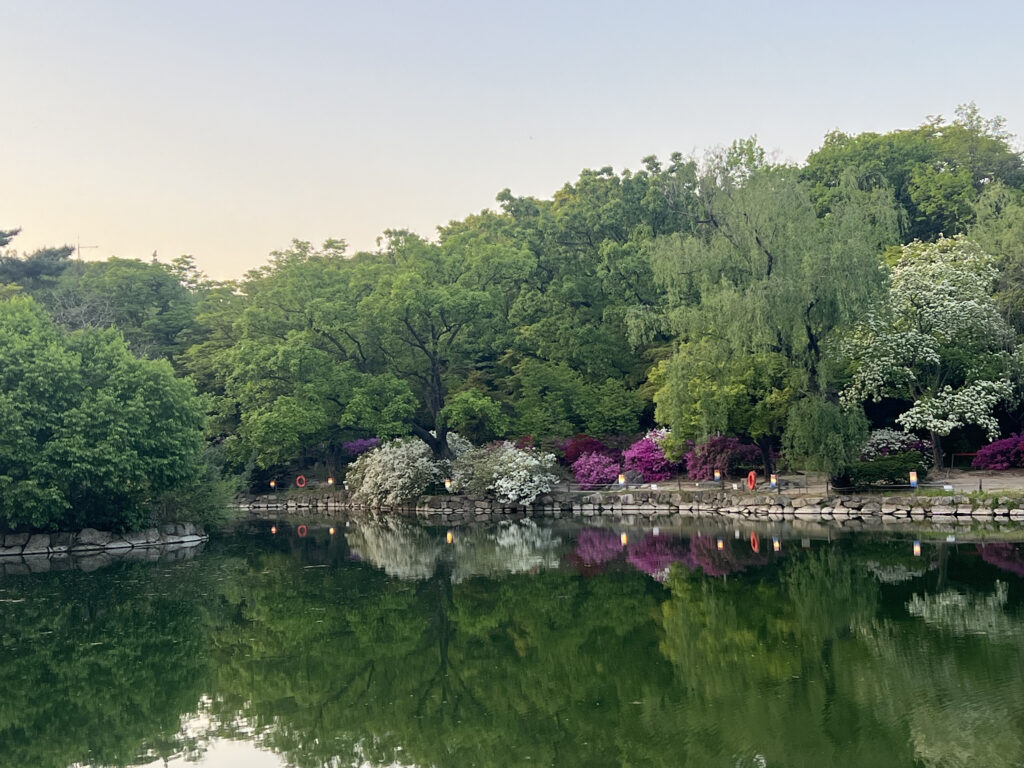
When we were in Korea in 2009, it was during November. So our visit to the Palace this year was very different with bushes, trees and flowers in bloom. These are some of the beautiful bushes and trees we saw on the palace grounds, many on the shore of Chundangji Pond.
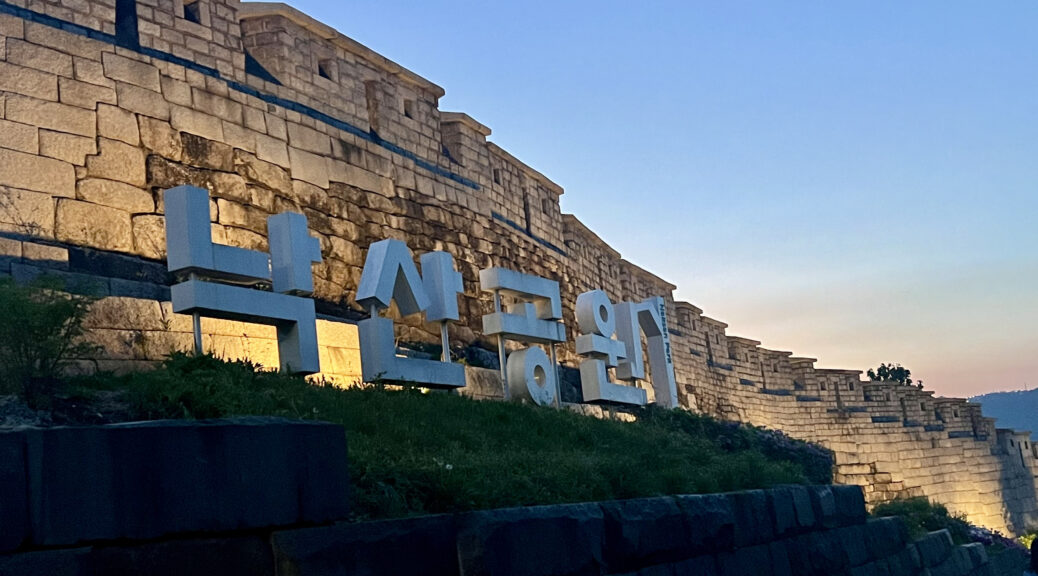
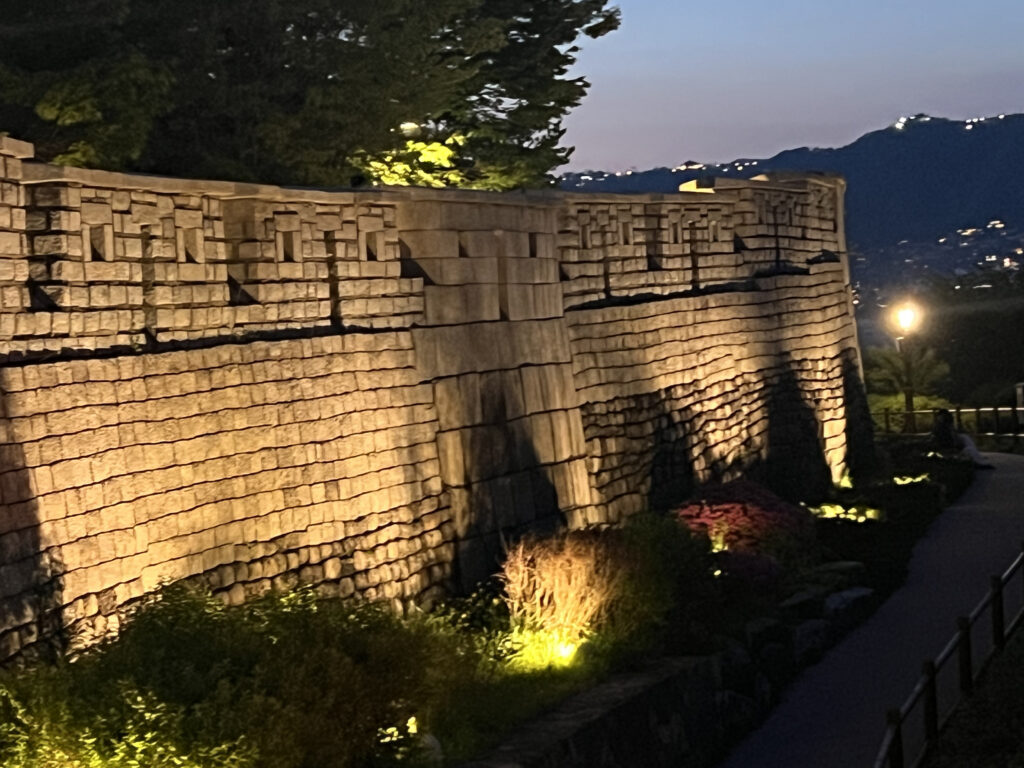
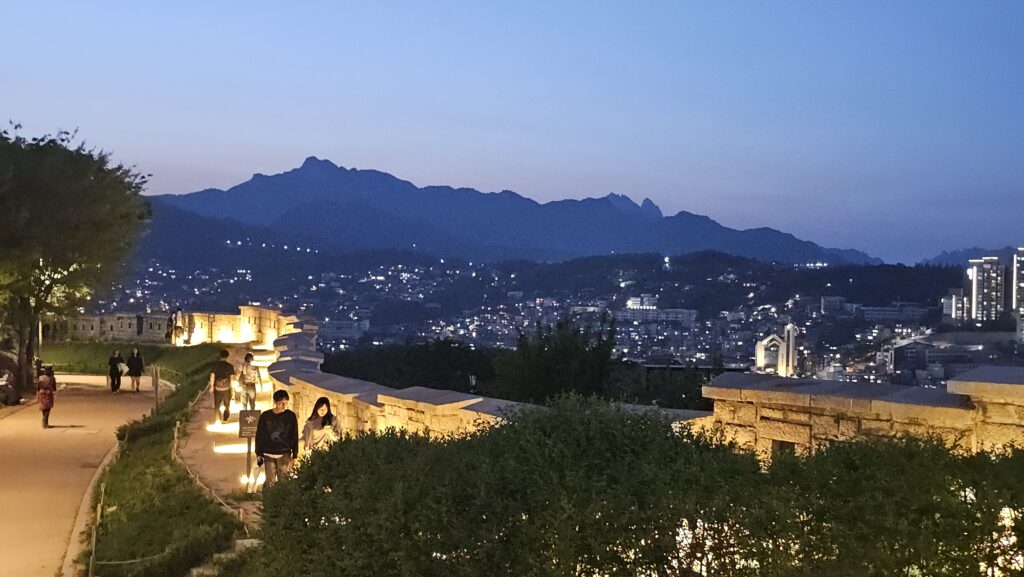
Continuing our Seoul Night Tour, we next went to Naksan Park, where we walked along the old city fortress wall. It was built in 1396 during the Joseon Dynasty for protection against invaders. Construction was completed in just 98 days by more than 197,000 people. The sections built on mountains were formed with stone; sections on lower ground were originally formed with mud, though in 1402 these were also rebuilt in stone.
The wall and gates suffered damage during the Japanese colonial period and during the Korean War. In the early 2000s, the Seoul Metropolitan Government undertook a major restoration project to revive both the mountain’s ecology and its cultural identity.
Today, there are six trails along the wall totaling just over 11 miles. One of these is the one-mile trail we visited in Naksan Park. It provided great views of Seoul. This section of the wall is also a frequent filming location including scenes from the K-Pop Demon Hunters.
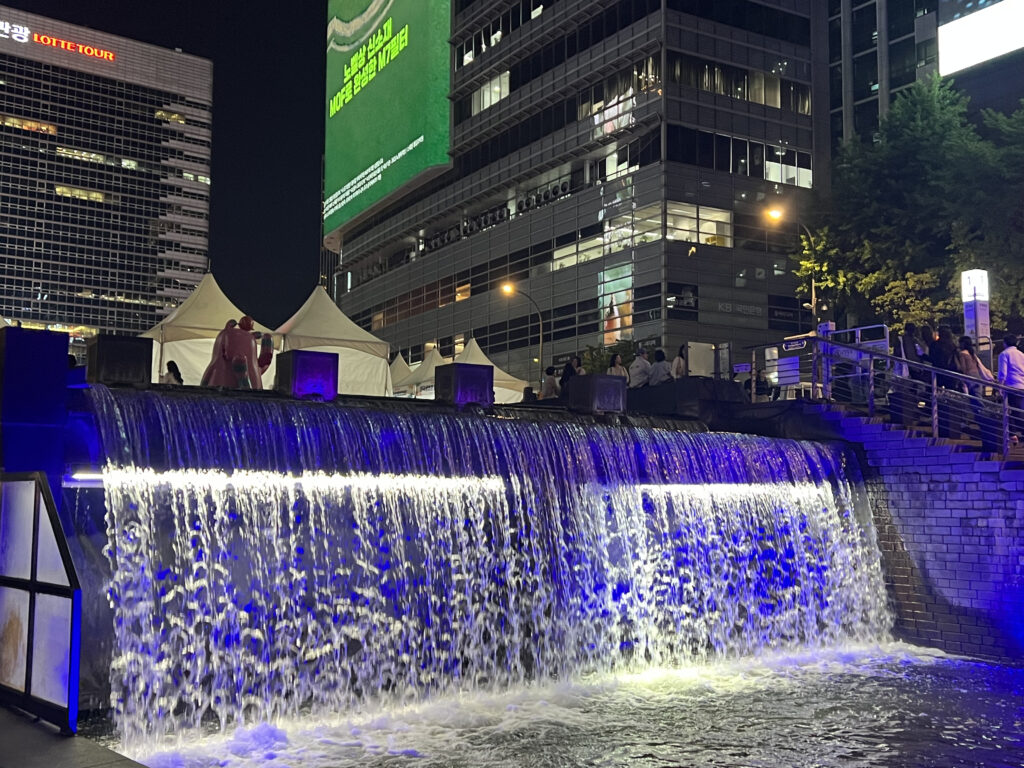
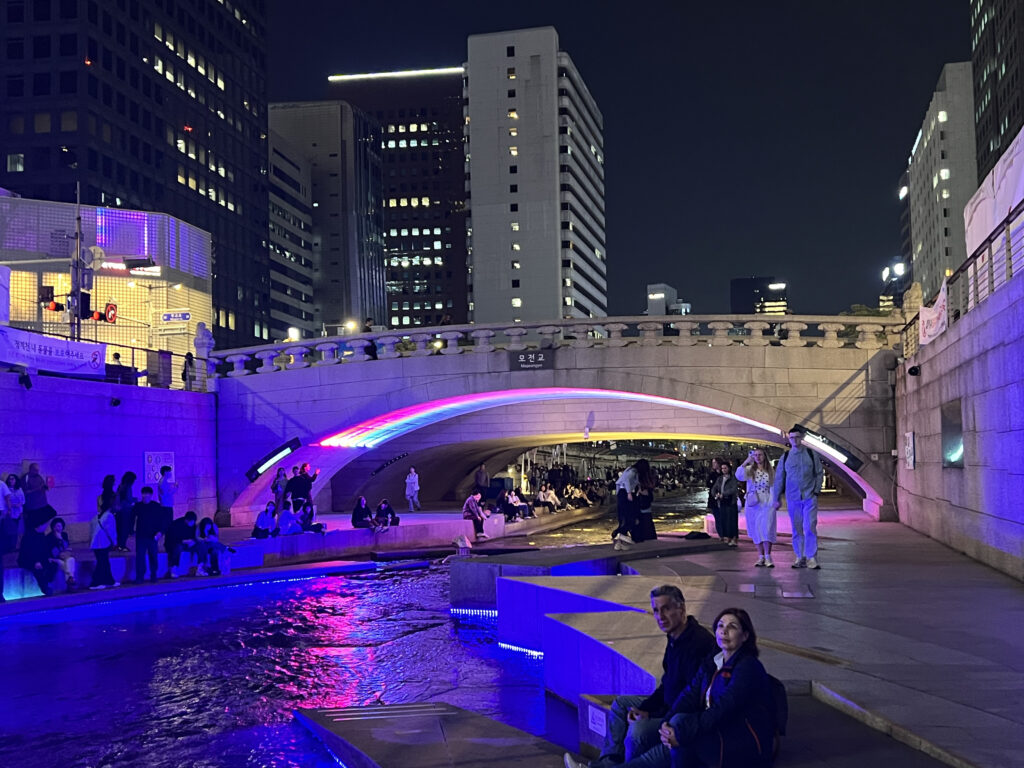
Our Seoul Night Tour ended at the Cheonggyecheon Stream, a stream about 1/2 mile long running through downtown Seoul. Created as part of an urban renewal project, Cheonggyecheon Stream is a restoration of a stream that existed during the Joseon Dynasty. It became a slum area but was covered with concrete and an elevated highway after the Korean War. In 2003, the elevated highway was removed to restore the stream to its present form.
The stream, opening to the public in 2005, is a pedestrian only area popular with both locals and tourists. It is a venue for special events such as concerts. It also created an environment with clean water and natural habitats. The most significant achievement of the project is thought to be the 639% increase in plant and animal biodiversity over a five year period.