Touring the Suwon and Yongin Area
After our night tour of Seoul, we went on another independent tour with Tours By Locals. This time we would be in Suwon area, about 20 miles south of Seoul. We would first visit the Hwaseong Fortress, a stone and brick fortress built in the late 1700s. It was badly damaged during the Korean War. A document, Hwaseong Seongyeok Uigwe (Records of Hwaseong Fortress Construction), was published in 1801 and was used to reconstruct much of the Fortress. It is a UNESCO World Heritage site.
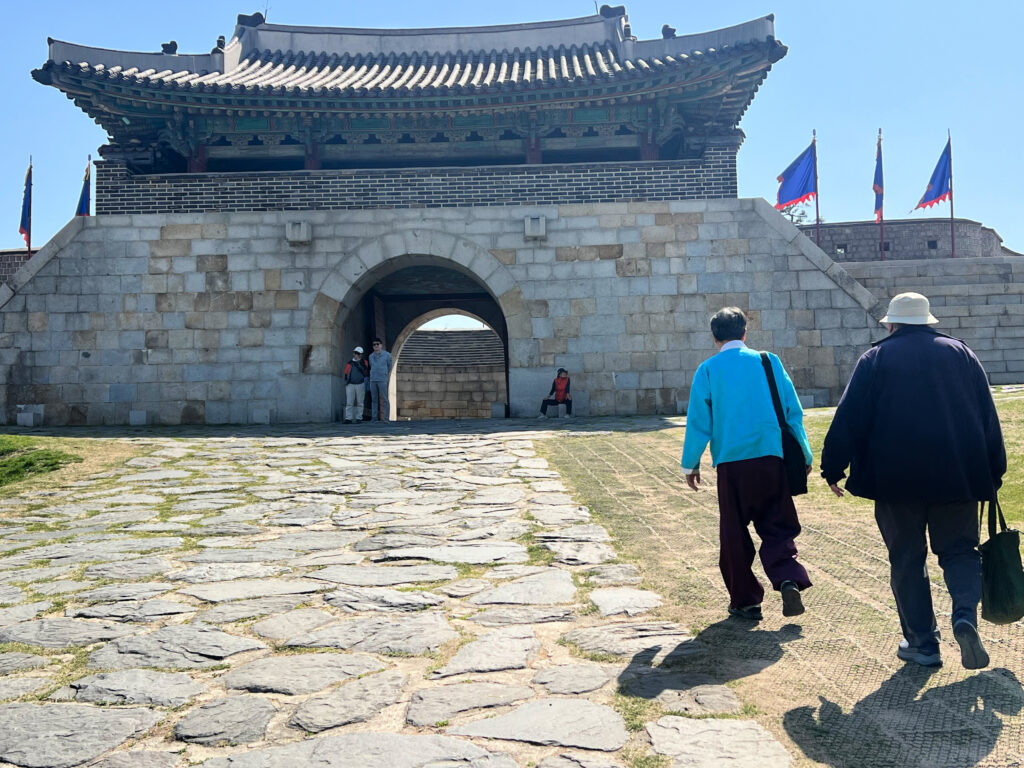
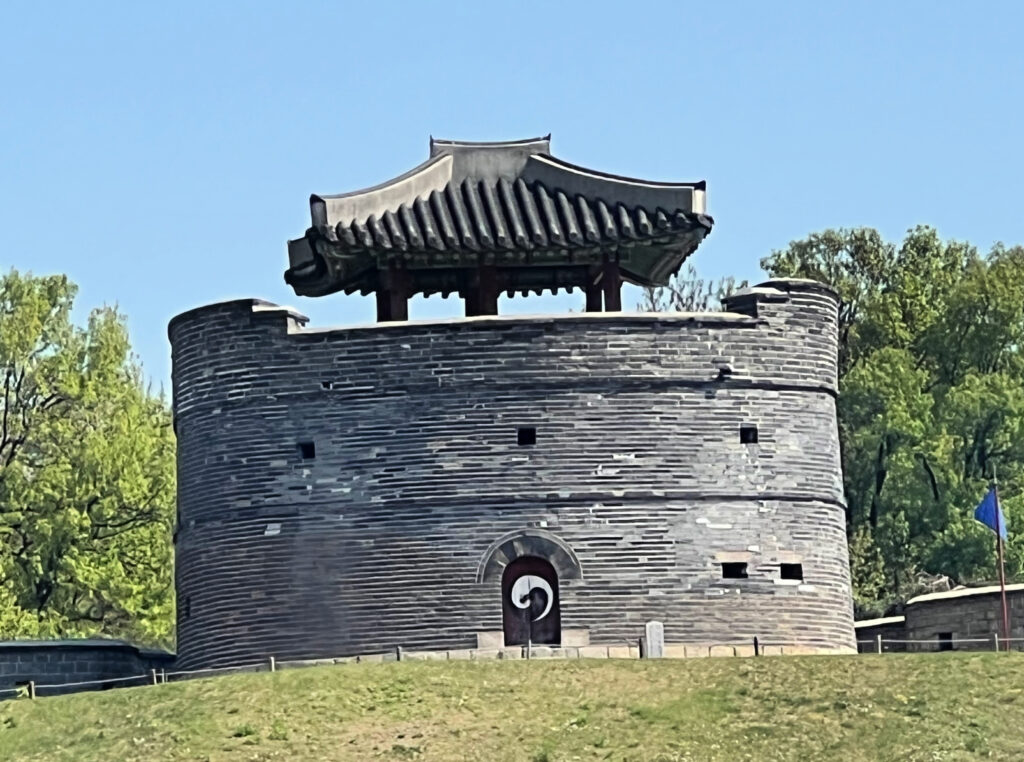
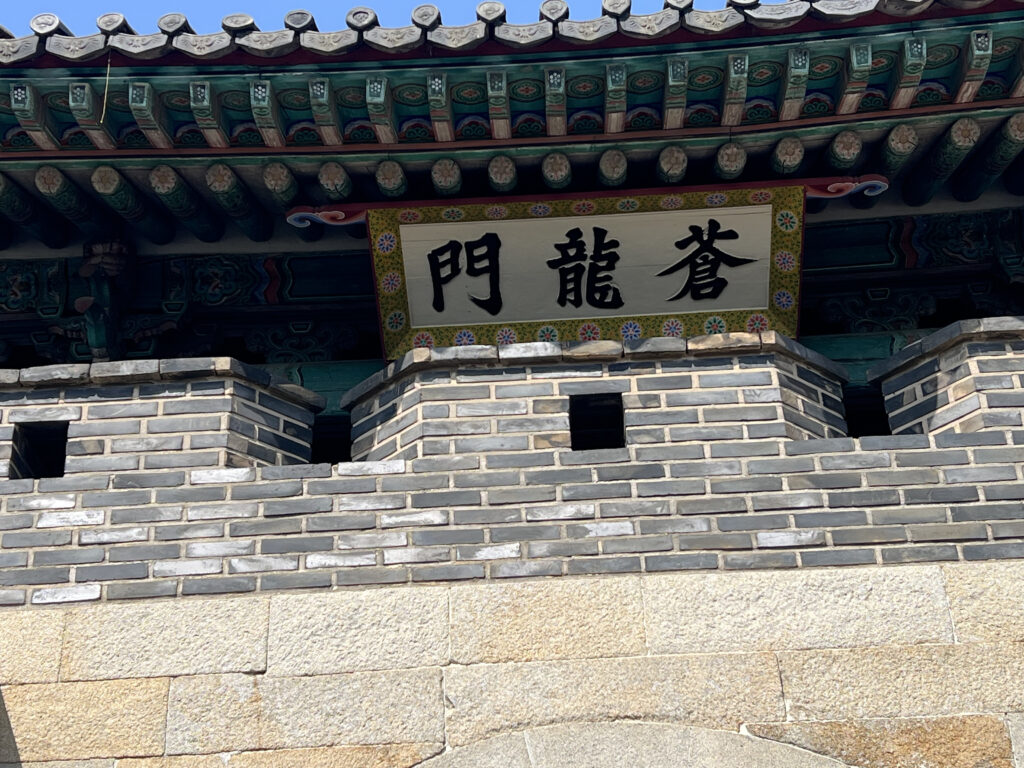
Pictured below is the Changnyeongmun or East Gate, one of four gates at the Fortress. Also pictured is a bastion which protrudes from the Fortress allowing an approaching enemy to be attacked. The third picture is an observation tower called a gongsimdon which translates to “hollow tower.” This is because it only contains a spiral staircase and arrow slits. This kind of watchtower was only built at the Hwaseong Foretress in Korea.
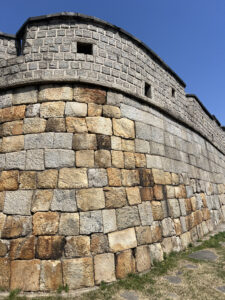
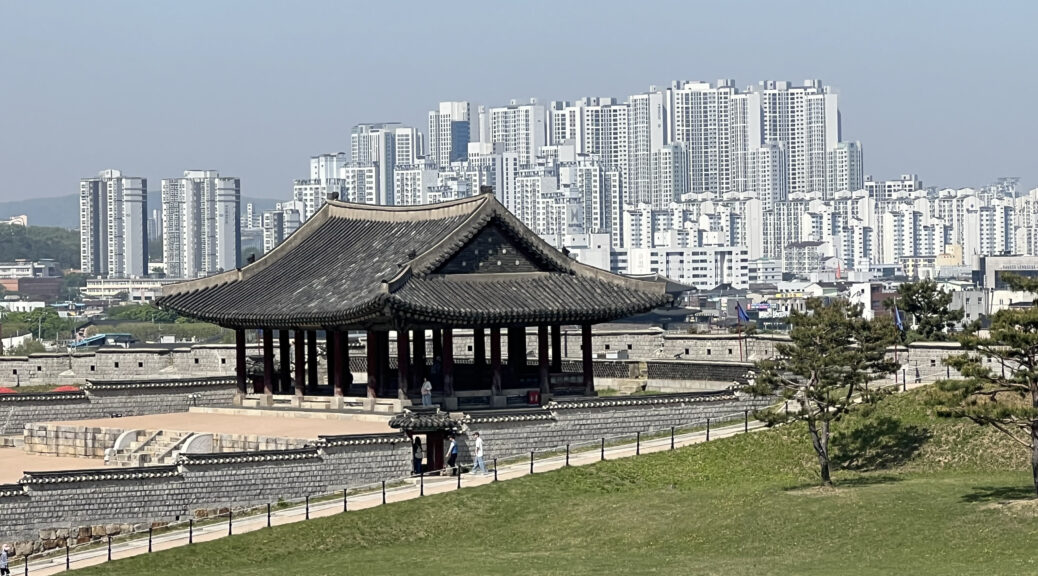
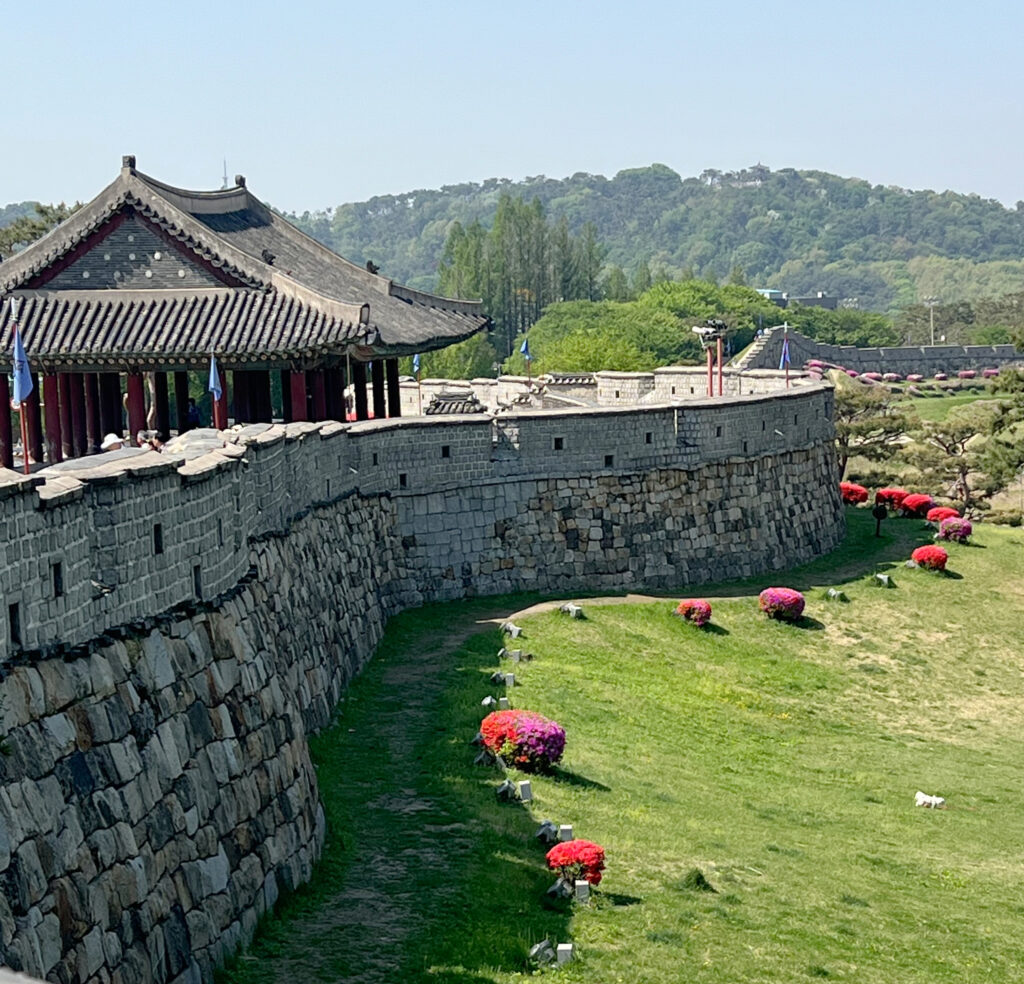
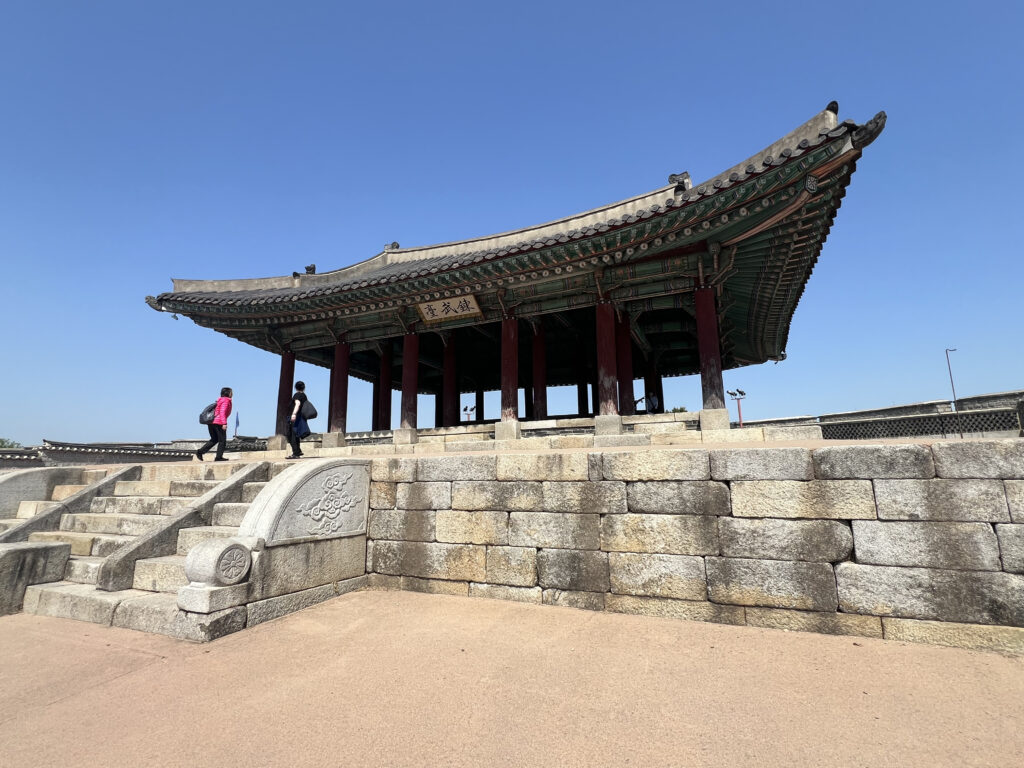
More of the Hwaseong Fortress is pictured below. In the first picture are close-ups of openings from which soldiers could shoot. The second picture shows the defensive wall surrounding the Fortress. The third picture is the Dongbuk Gangnu, a pavilion once serving as a command post to train soldiers and later as a place to enjoy the scenery. The picture above the title for this post shows one of the Fortress buildings with skyscrapers in the background. I thought it was an interesting combination of history and the present.
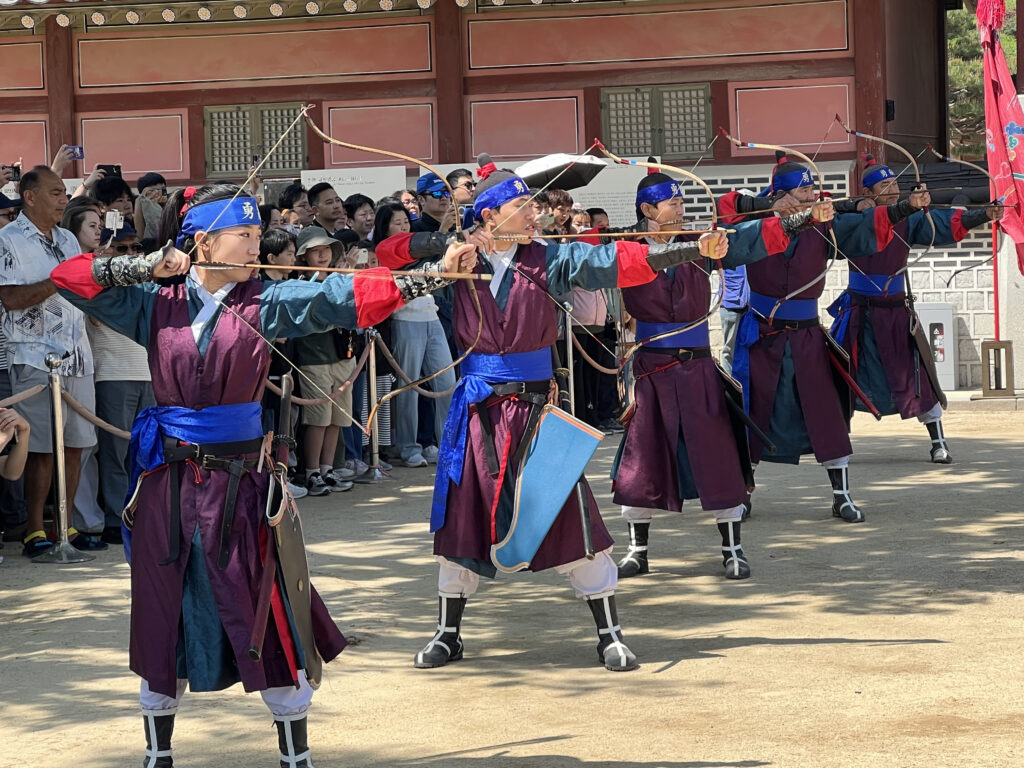
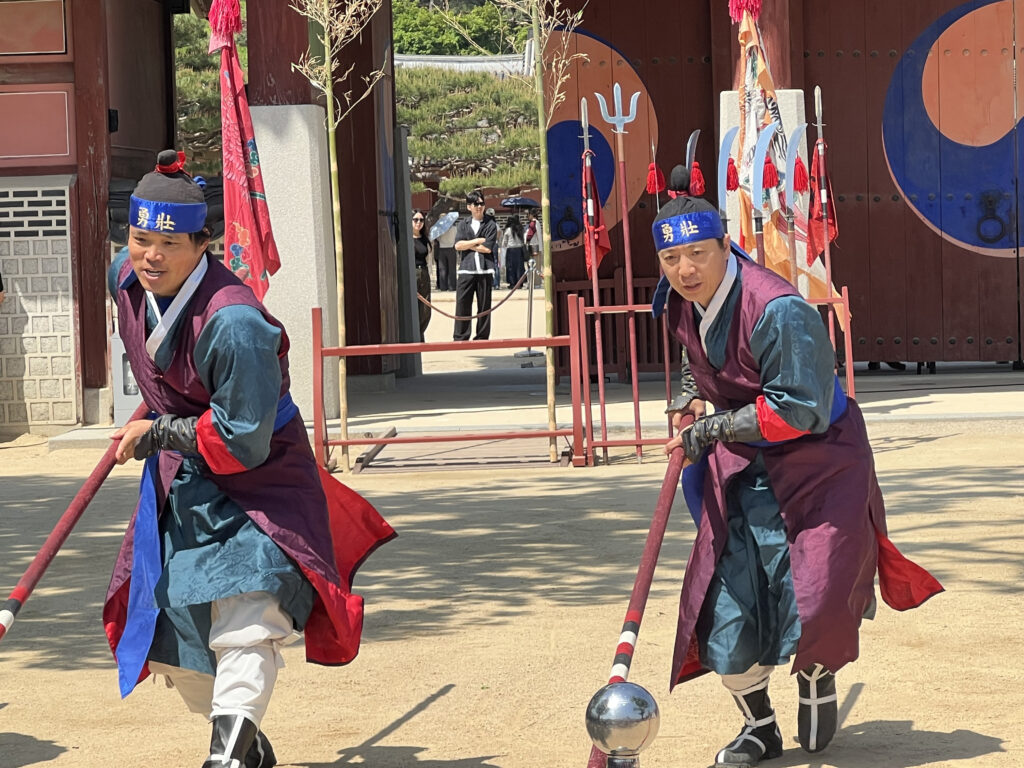
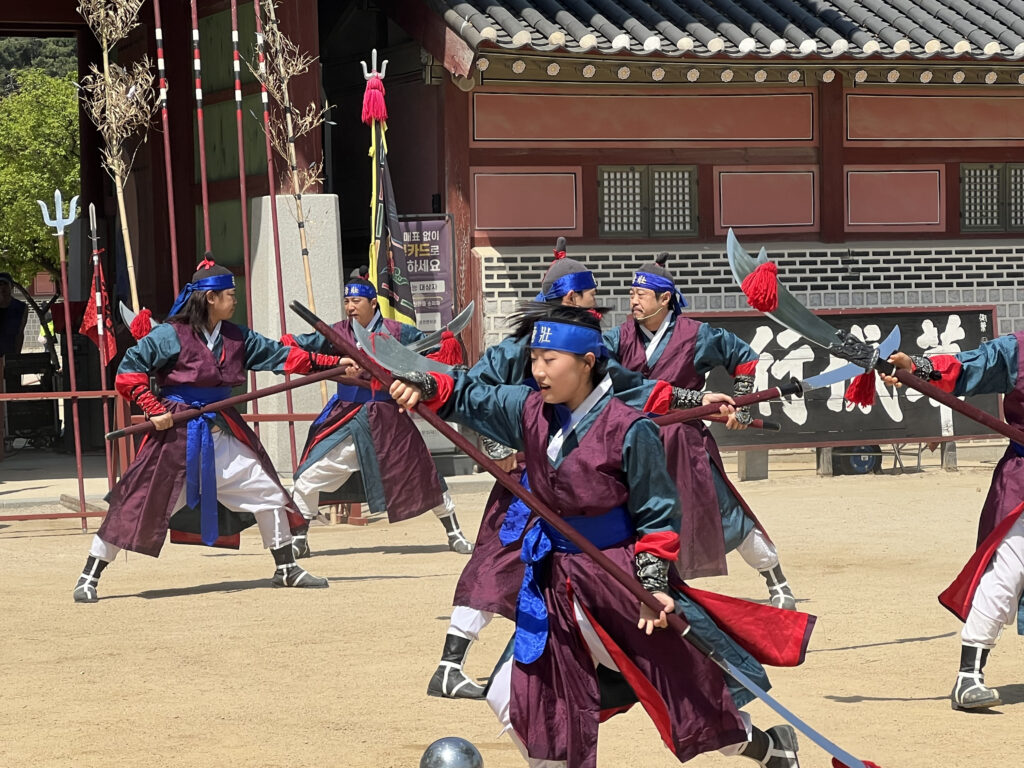
We also saw a martial arts demonstration at the nearby Hwaseong Temporary Palace. Dating back to the late 1700s, there were 24 different martial arts techniques practiced by soldiers responsible for guarding the palace. The martial arts techniques are considered a significant intangible cultural heritage because of their historic, artistic, and athletic values.
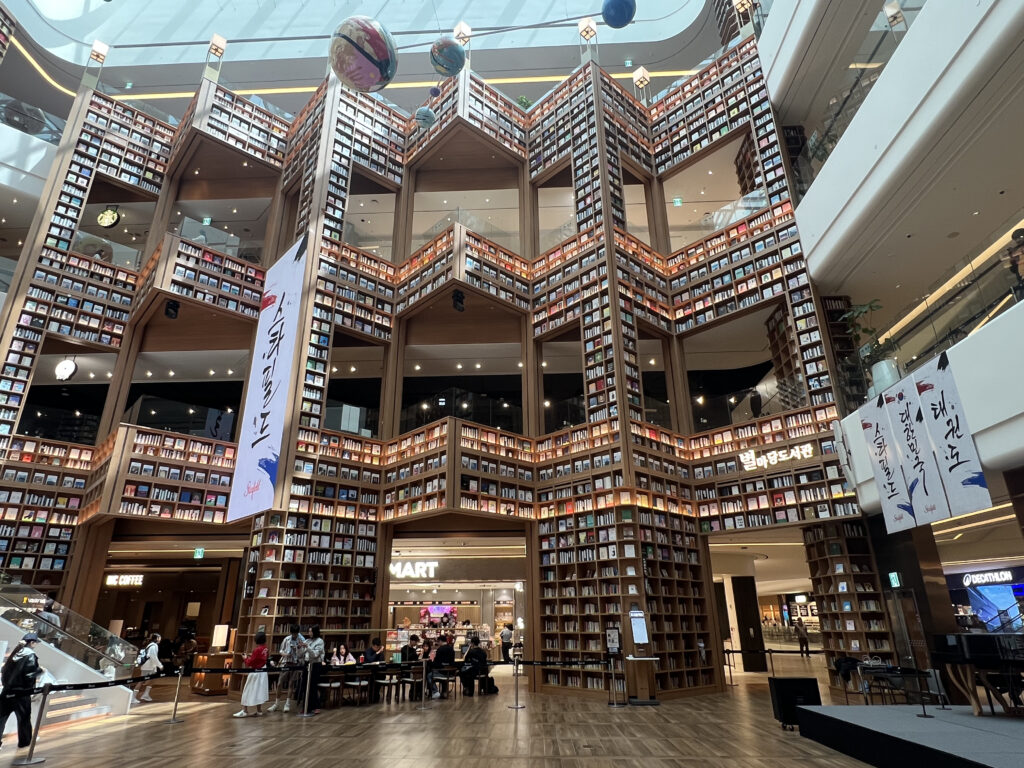
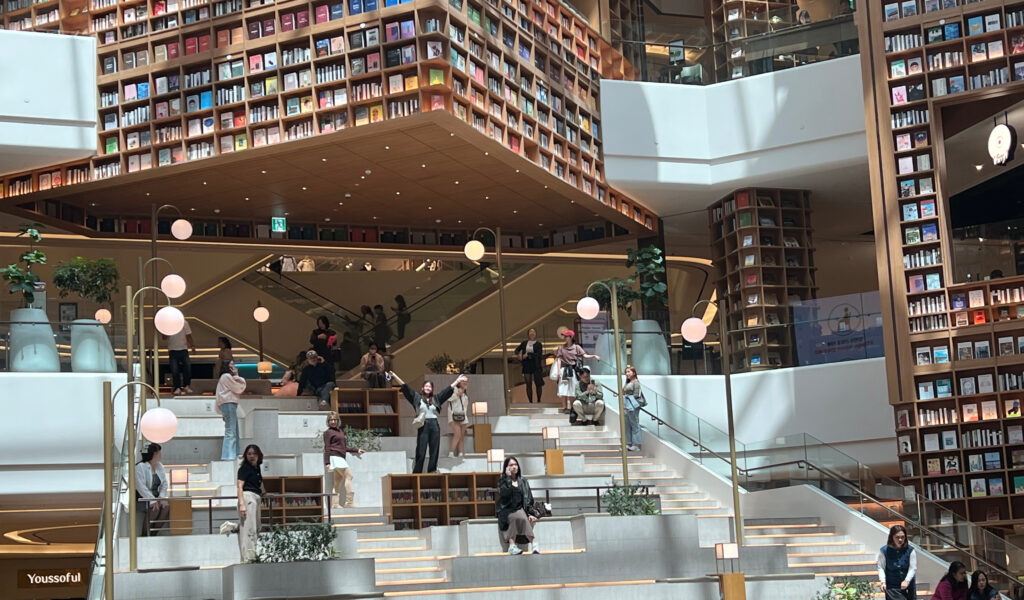
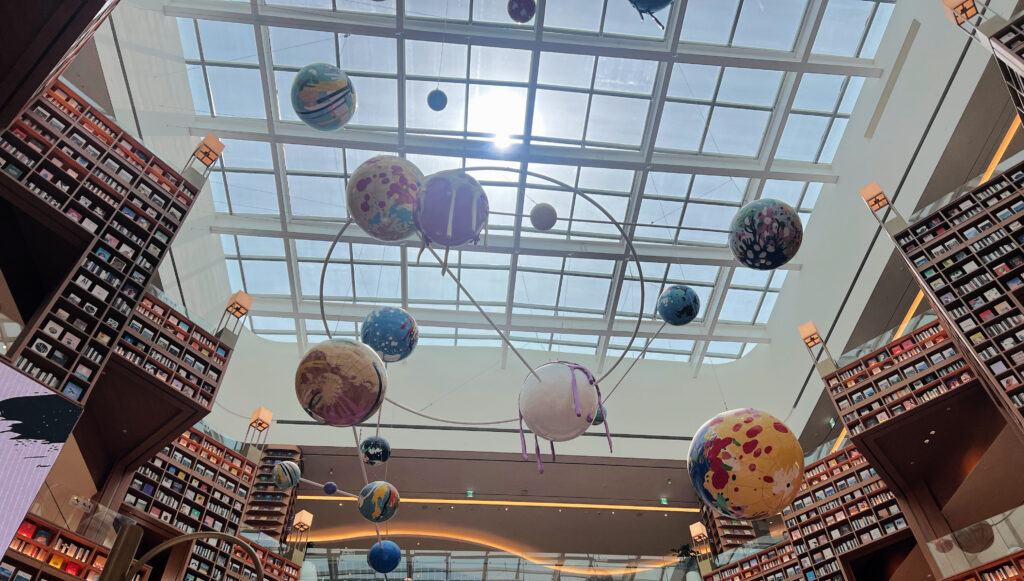
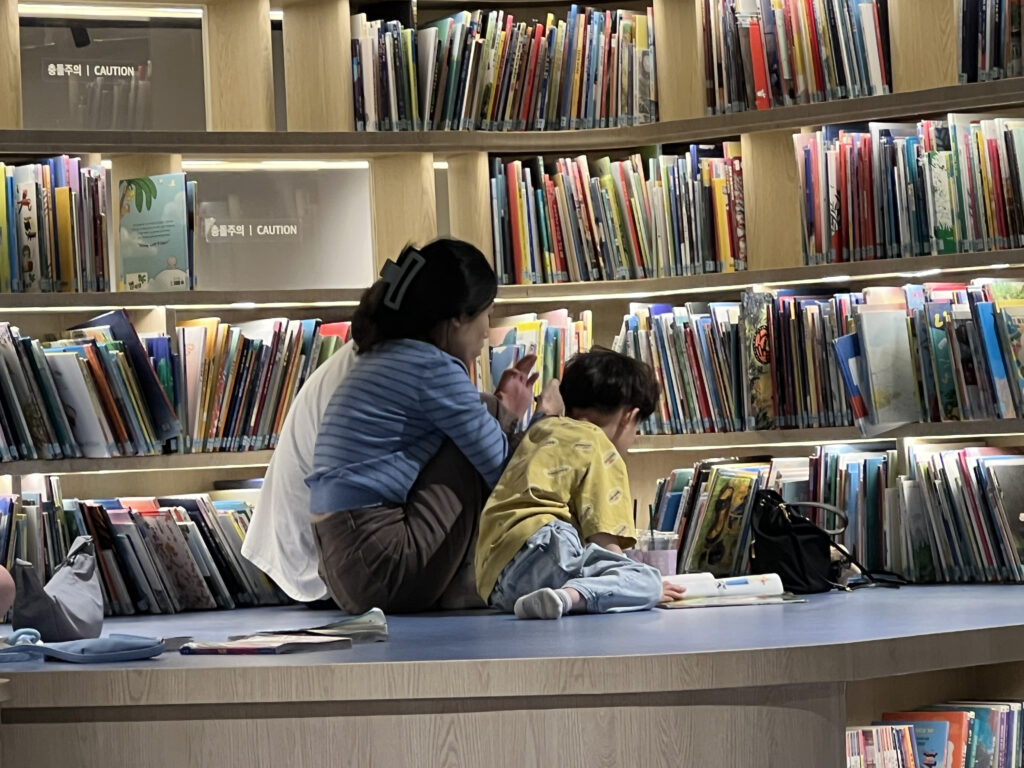
We jumped forward in time to the incredible Starfield Library. It is situated within a shopping center near Suwon. The two-story library features 40-foot tall bookshelves. The library has 70,000 books, including literature, hobbies/practical books, foreign books, over 400 types of magazines and E-books for the iPad. Like us, many people stop in to take pictures but visitors are also encouraged to read and enjoy the space.
We also visited the Waujeongsa Temple in Yongin. The Temple was founded in the 1970s by Monk Kim Hae Geun, a North Korean refugee and Buddhist monk. He was displaced during the Korean War and established the temple to pray for the peaceful reunification of North and South Korea.
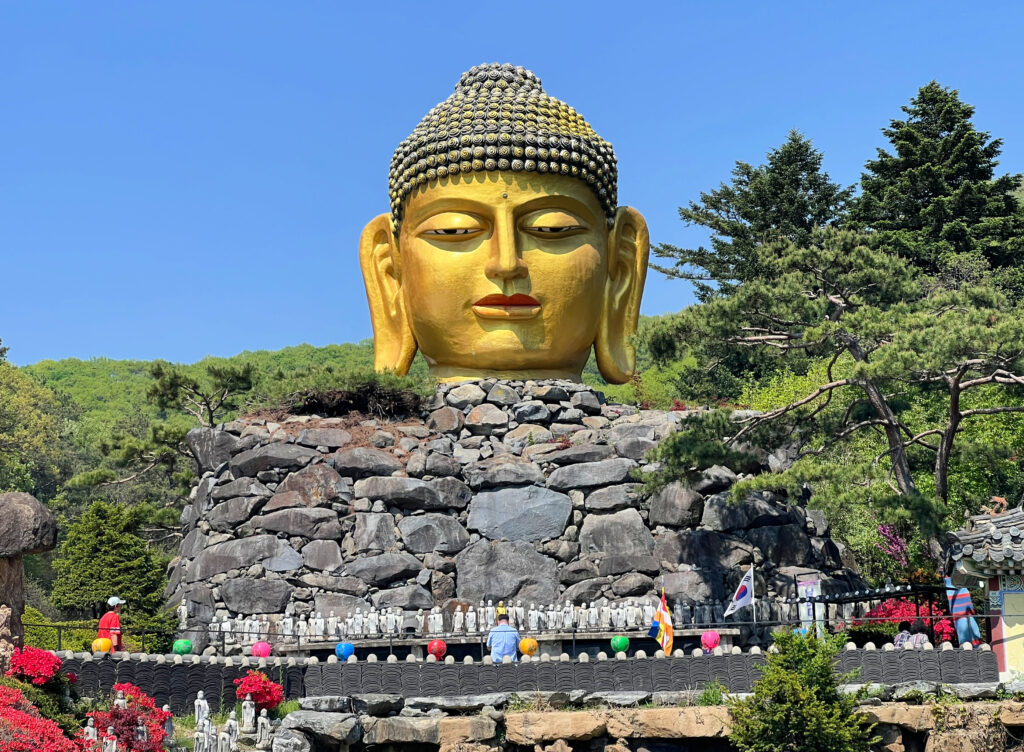
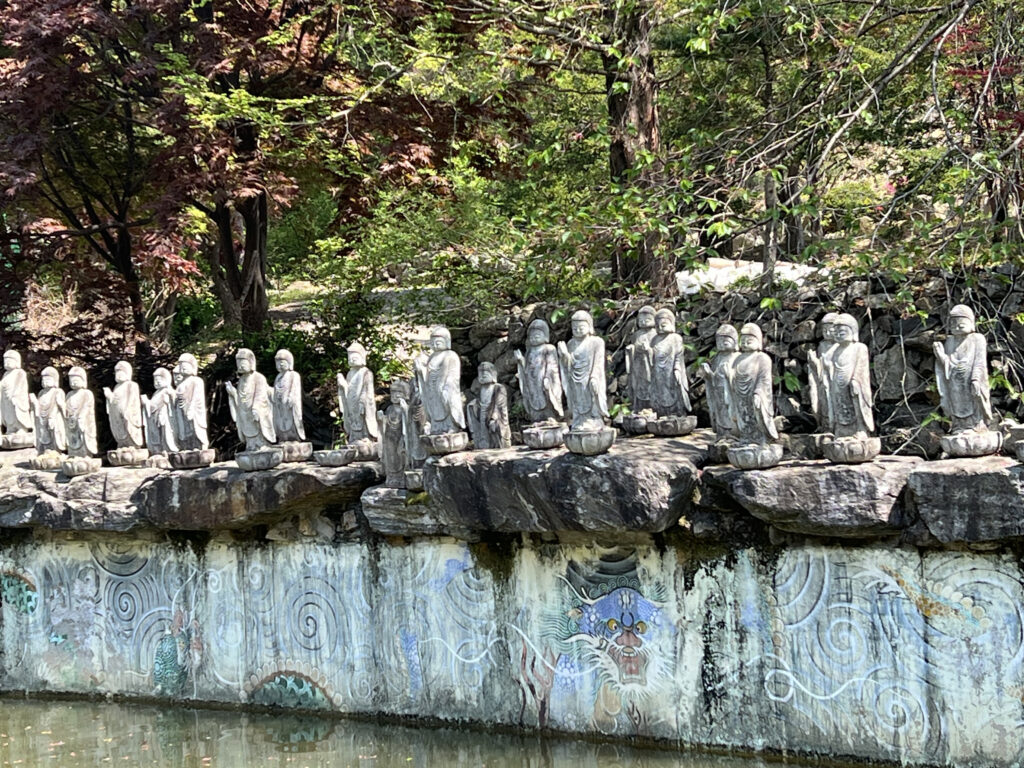
The first thing we saw on the Temple grounds was a giant golden head of Buddha (Bulda in Korean). It is made of wood and is about 26 feet tall, the largest of its kind in the world. It sits in front of a man-made pond. The Temple is said to be home to over 3,000 Buddha statues from around the world. Many were standing beneath the Buddah head and around the pond.
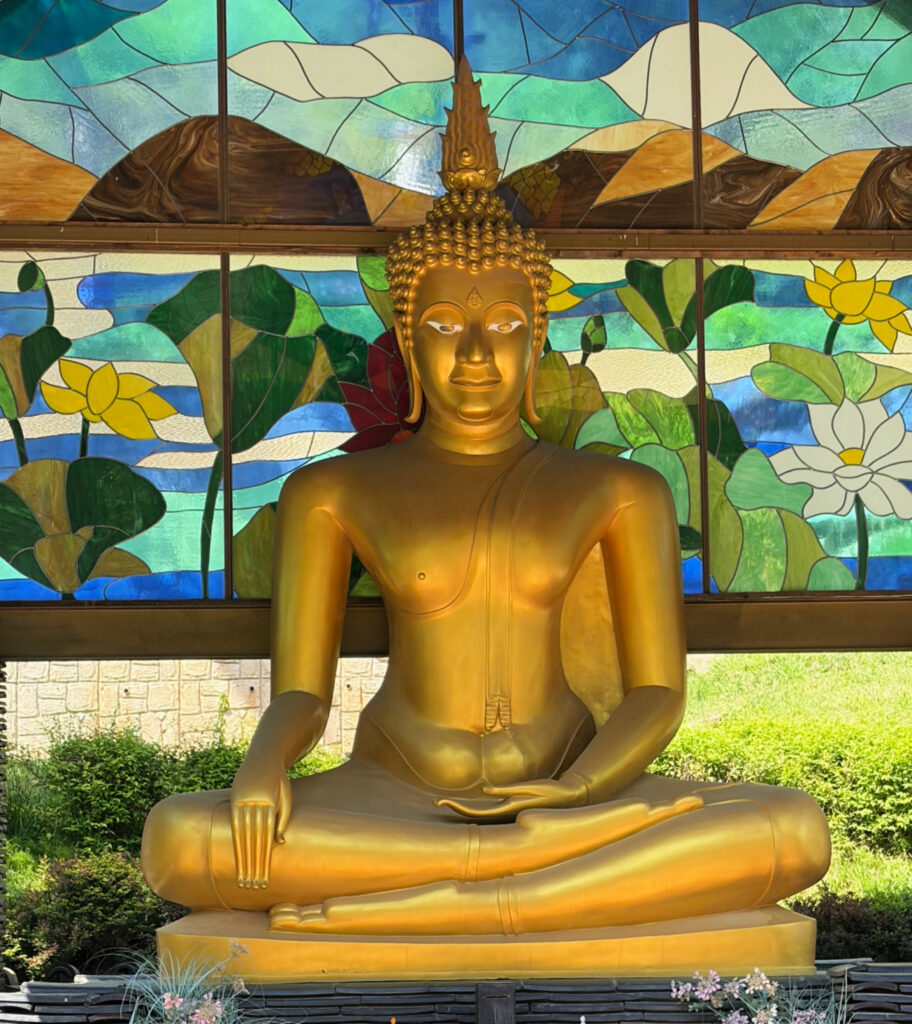
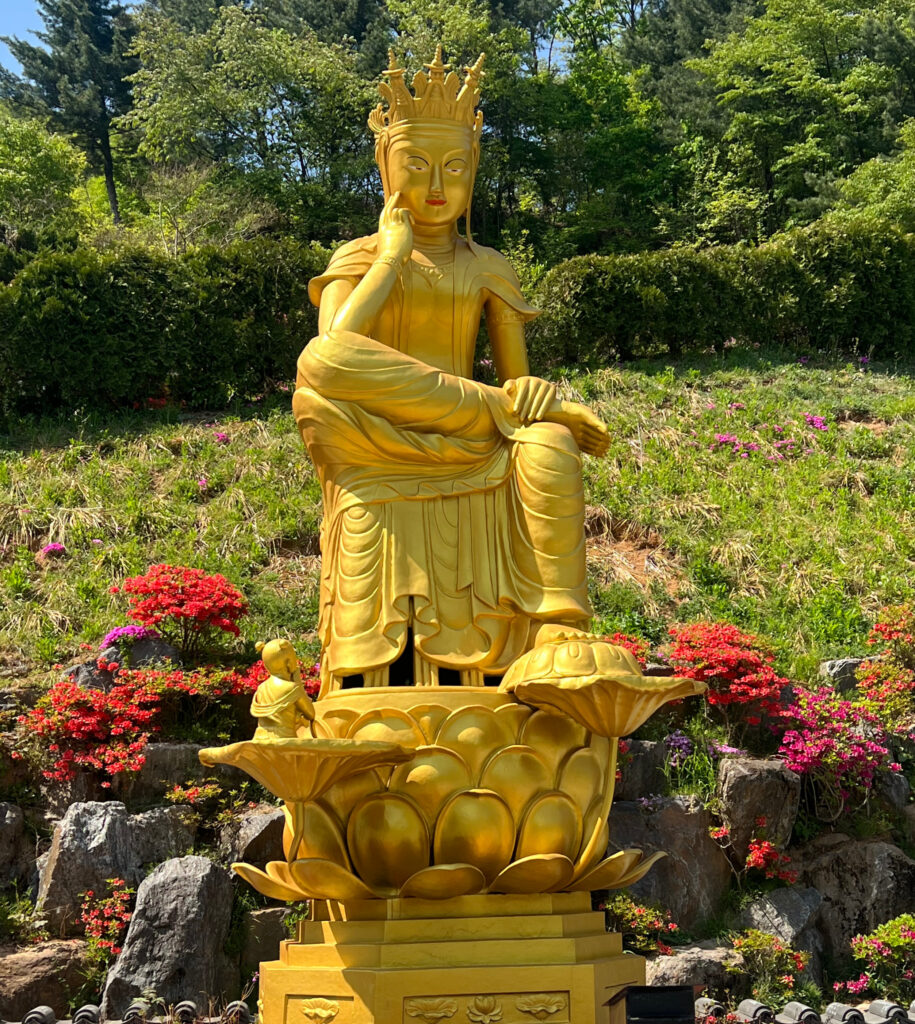
The third picture below is a Buddha statue sent to Korea by the royal family of Thailand to honor 133 Thai soldiers who fought during the Korean War. The last picture in this section is a statue of Shakyamuni Buddha. The name refers to the historical founder of Buddhism, Siddhartha Gautama.
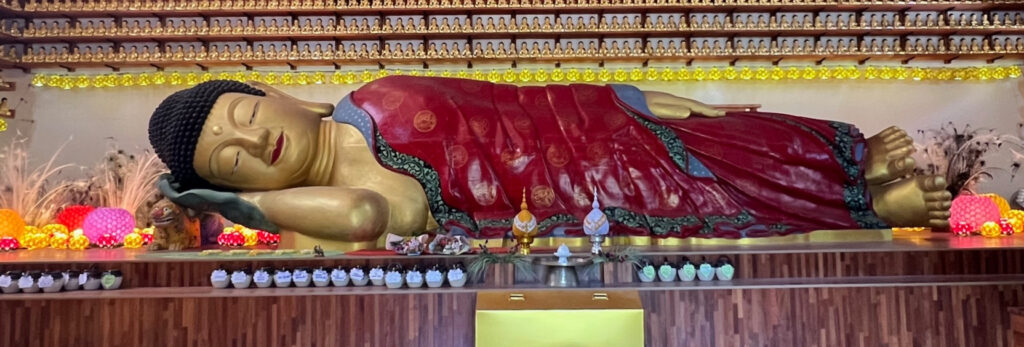
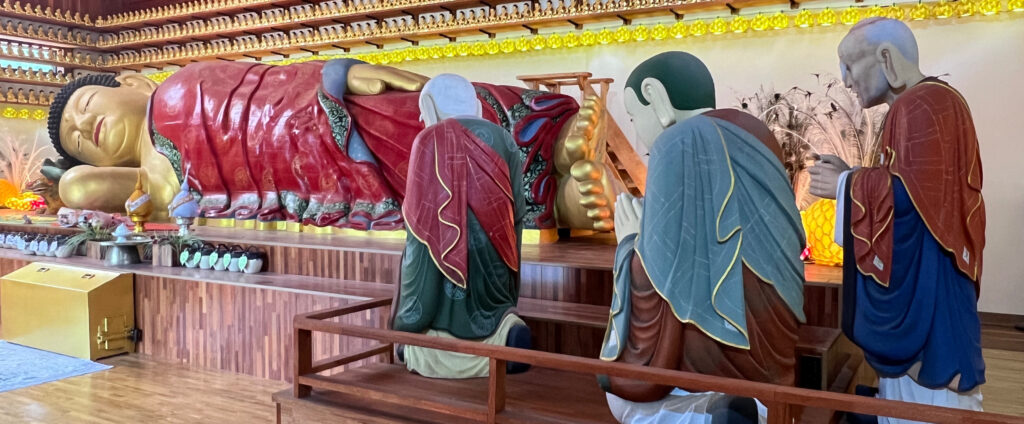
After a somewhat steep uphill climb, we came to the actual Temple. Inside was a statue entitled Wabul which means reclining Buddha. It was carved from a single piece of wood from a juniper tree imported from Indonesia. The statue has no joining parts, nails or glued pieces. The Buddha is almost 10 feet in height and nearly 40 feet long. The Wabul at Waujeongsa Temple is one of the largest of this style. Another picture of the reclining Buddha shows three monks or pilgrims approaching the statue.
The small drum, the last picture in this section, was also in the Temple. It is a hand-held wooden drum which is tapped by monks with a mallet to keep the rhythm during chanting and meditation walks. Meditation is a key practice of Buddhism because it leads to being an awakened person, one who is free from anxiety and self-interest. An awakened person also has compassion for all living things because they understand the interconnectedness of life.
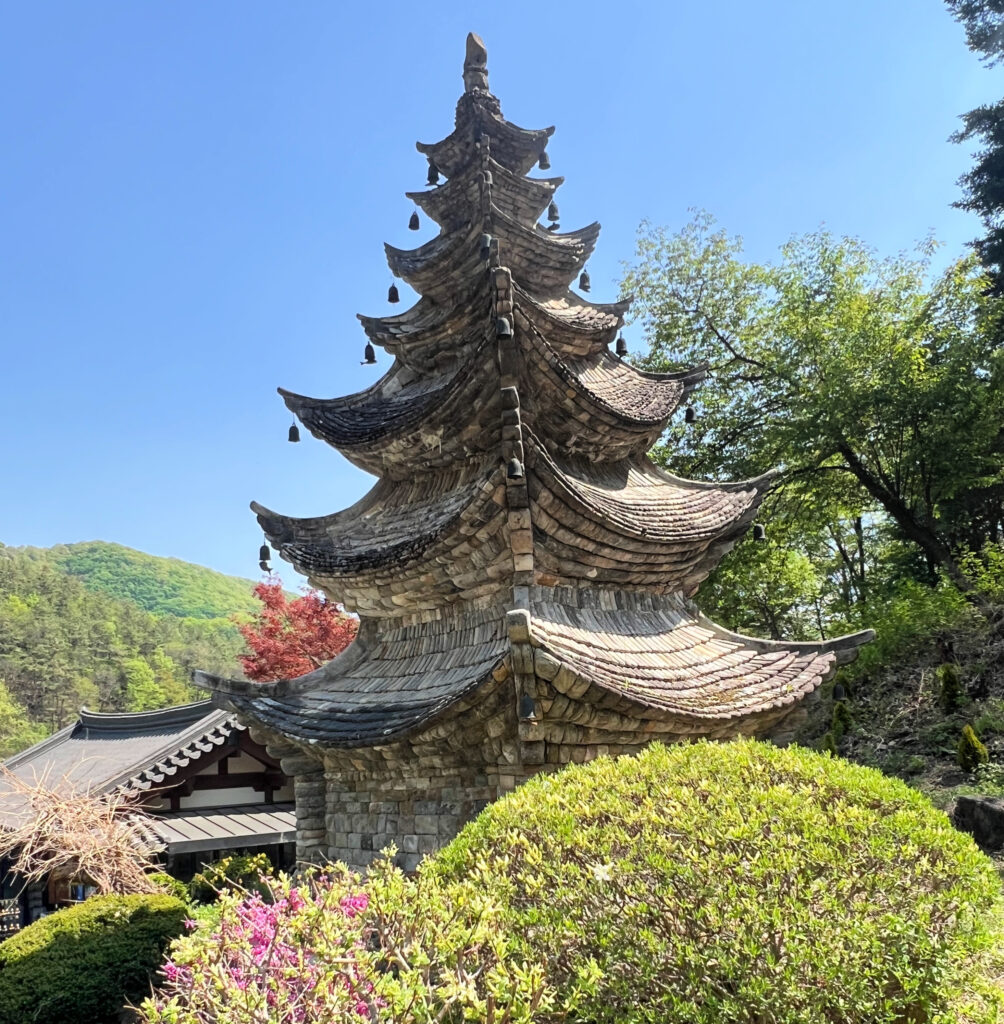
There were many other interesting things on the grounds of the Temple. We saw many pagodas that were constructed using stones brought from holy sites from all over the world.
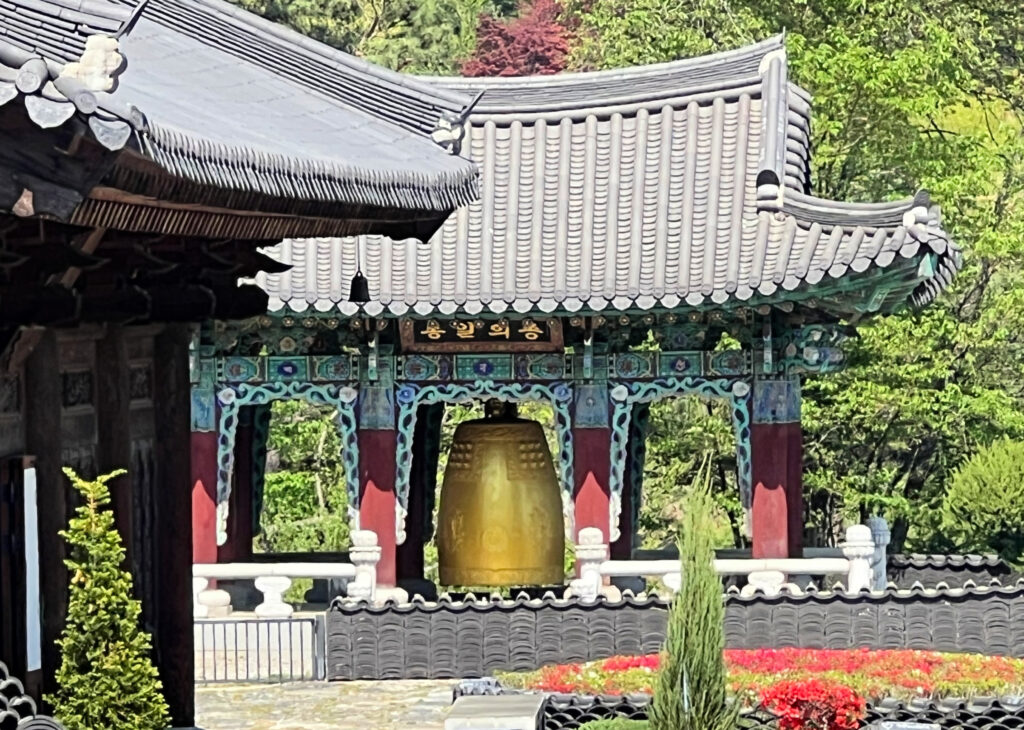
The second picture depicts the Unification Bell. This 12-ton gold Reunification Bell is another symbol of the monk’s hope for the unity of the Korean Peninsula. It was moved to the Waujeongsa Temple after being rung at the 1988 Summer Olympics in Seoul.
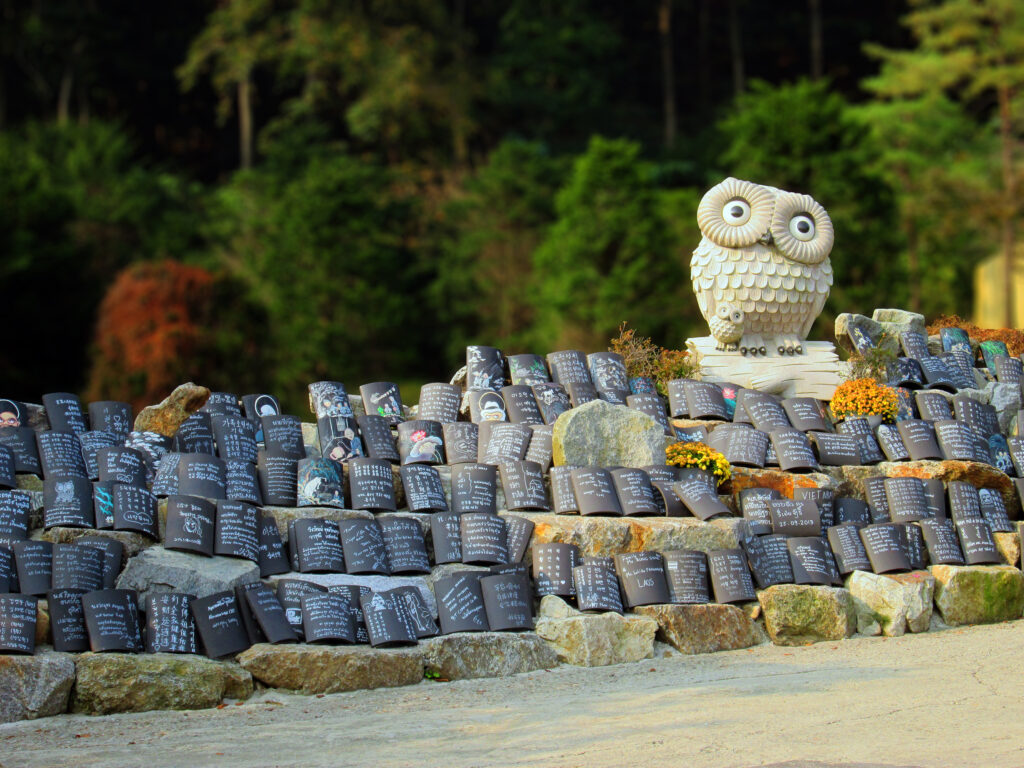
The next picture shows prayer tiles on display. At Waujeongsa Temple, visitors can purchase a temple roof tile and write a message, prayer or wish on the underside of the tile. It is now a prayer tile (known as giwa) and is a way some people support the Temple. These tiles are subsequently used by the monks to re-roof and maintain the Temple structures, ensuring the prayer becomes part of the Temple itself. Many of the tiles are displayed on the Temple grounds for a year before being integrated into the construction.
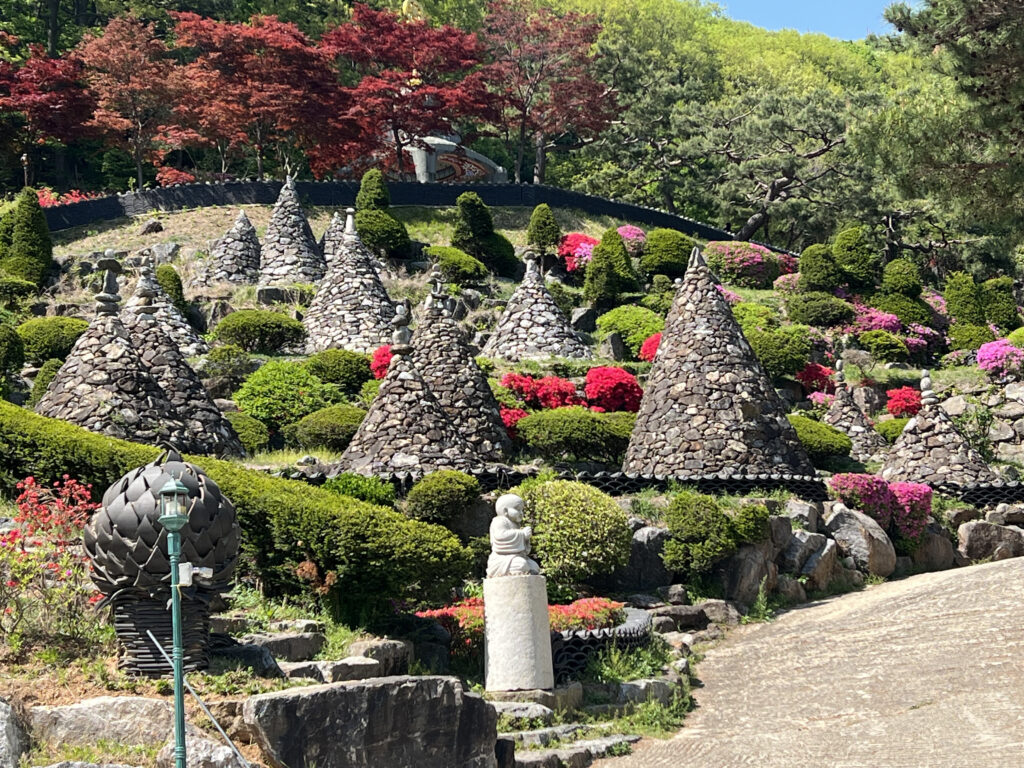
The last picture is another view of the beautiful Temple grounds. Visiting Waujeongsa Temple was one of the highlights of our time in Korea.