Bern, Switzerland
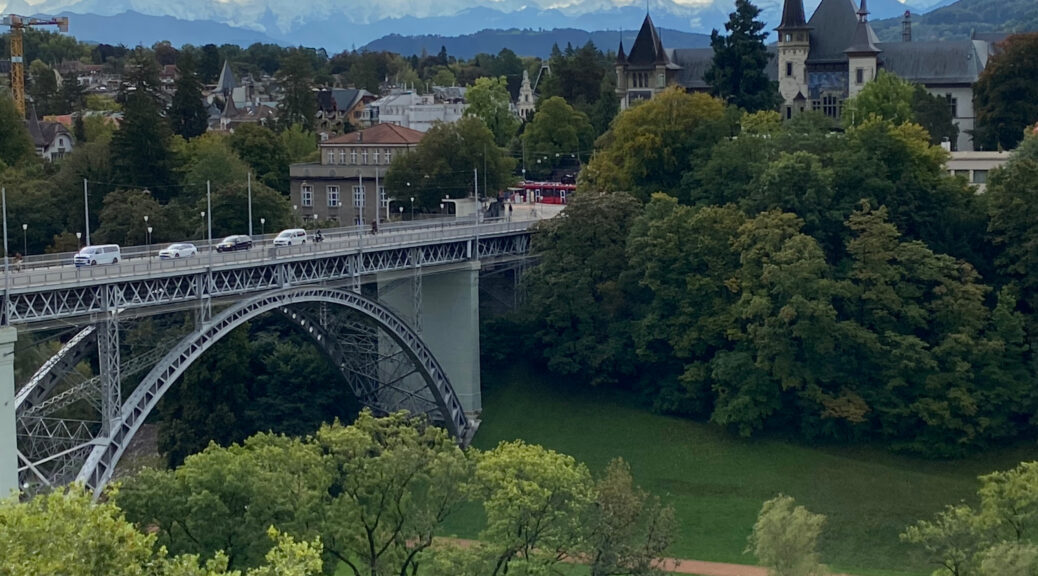
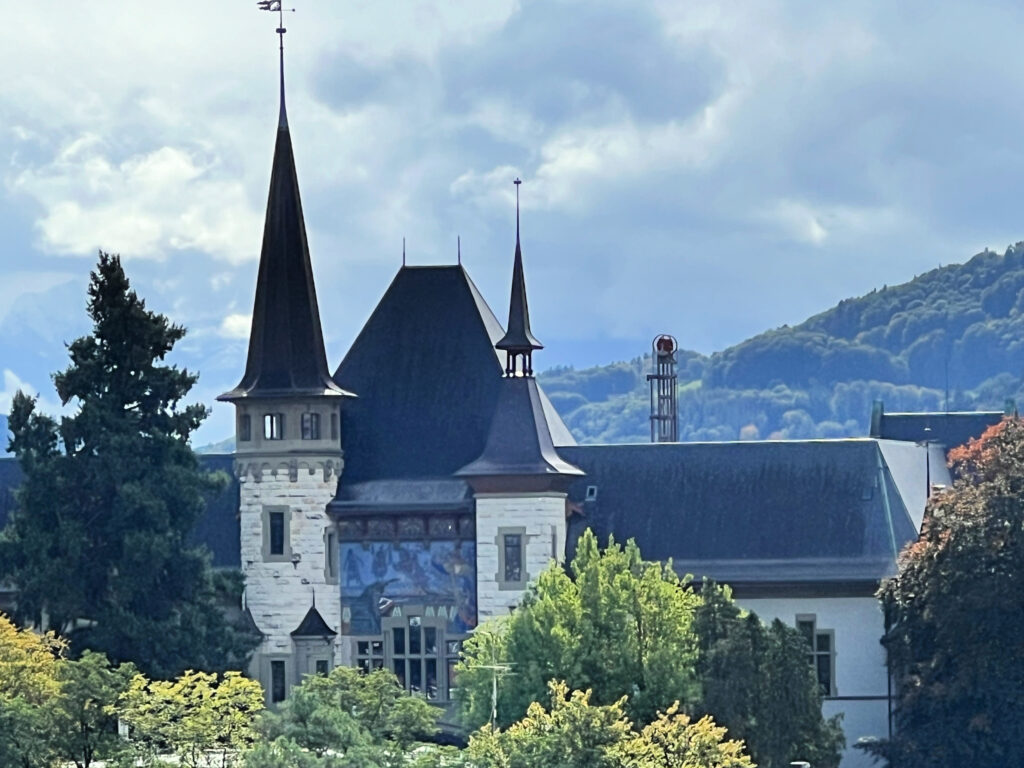
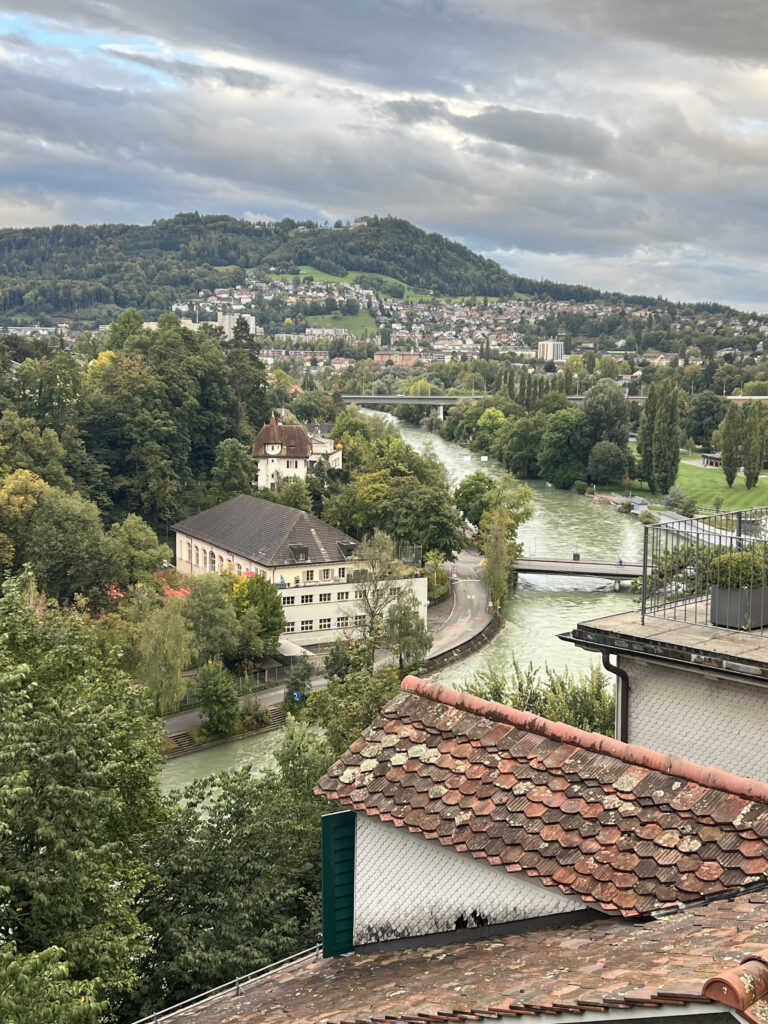
We began our Rhine, Swiss Alps and Amsterdam Tauck tour in Bern, Switzerland. We arrived a day early and stayed in a very nice room in the Bellevue Palace. These are views from our hotel room. The first picture below is the Albert Einstein Museum. It was within walking distance of our hotel and dealt mostly with Einstein’s life and to a lesser extent some of his inventions. The second picture is the Aare River. It flows through Bern and is the longest river in Switzerland.
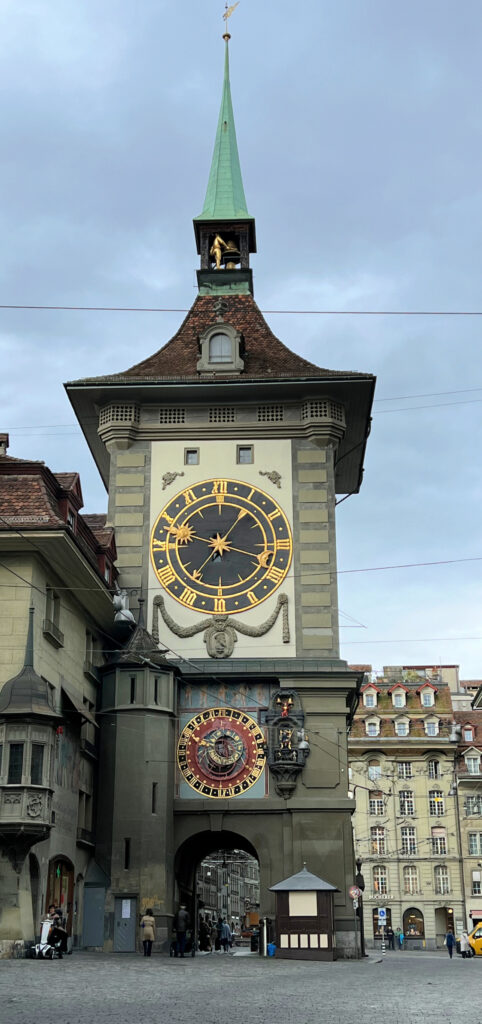
In the center of Old Bern is the Zytglogge, the city’s famous clock tower. Originally built in the 13th century, it has served Bern as a guard tower, prison, and clock tower. It was once a city gate into Bern, but as the city grew, it was no longer on the outskirts of the city but in the city center.
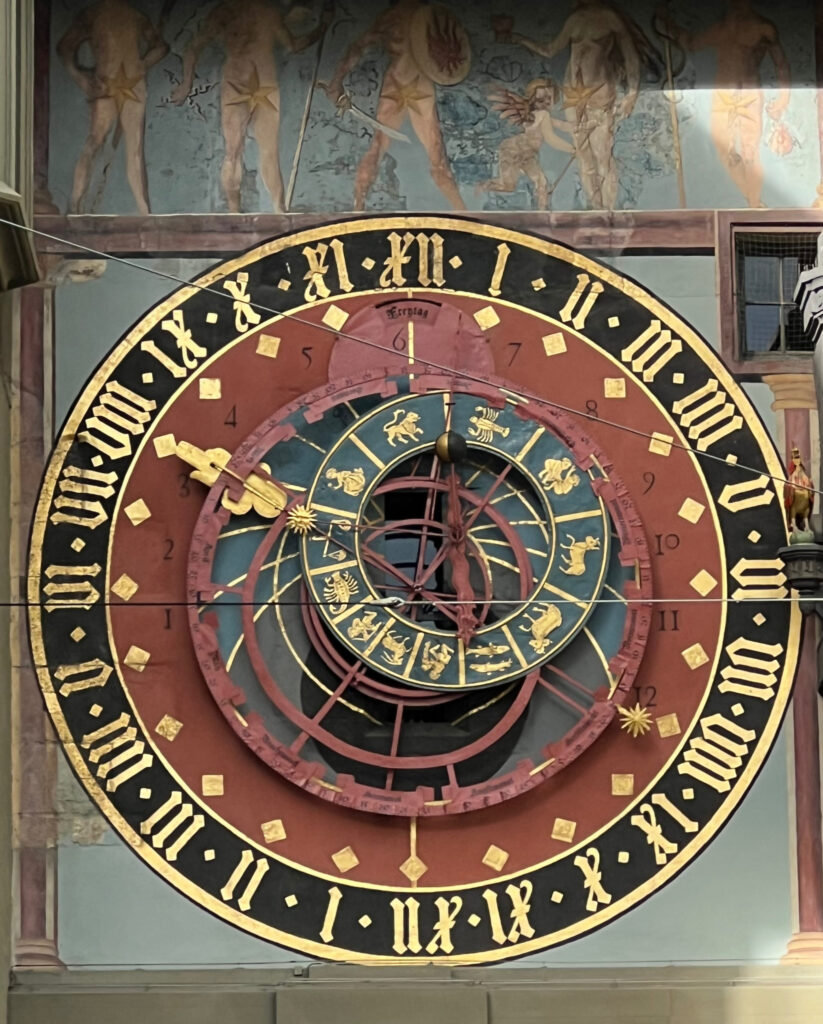
The red clock face is an astronomical clock. It was made between 1527 and 1530. In addition to showing the time, it displays the day of the week and has a lunar dial and zodiac dial.
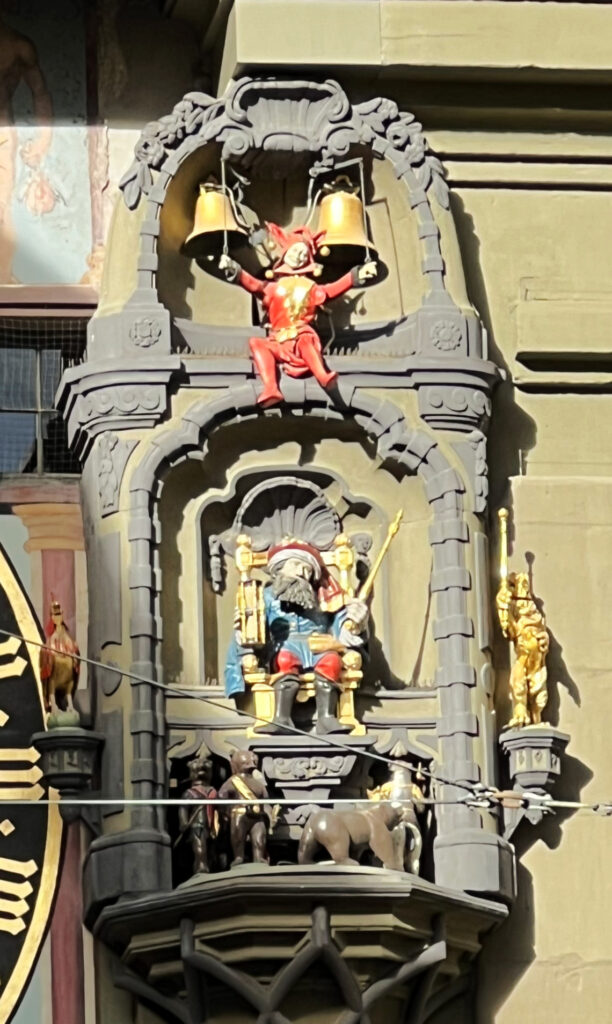
The third picture shows several mechanical figures that “perform” just a few minutes before the hour. A rooster crows, alerting crowds the performance is about to begin. Bears, the symbol of Bern, dance and a jester strikes bells a little before the actual hour.
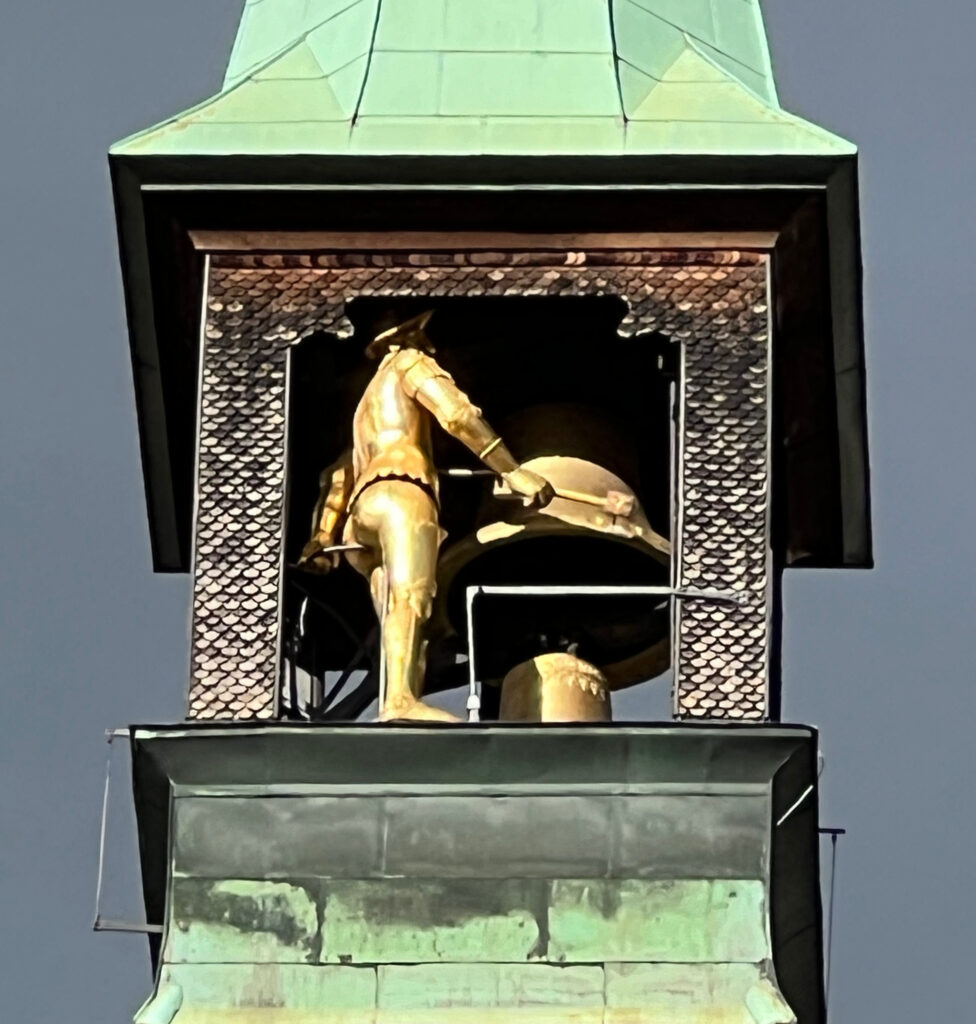
A bell, struck by a hammer, rings on the hour. This is near the very top of the clock tower. I took a close-up picture of this which is the last picture in this section. The golden figure striking the bell with the hammer is Chronos, the Greek god of time.
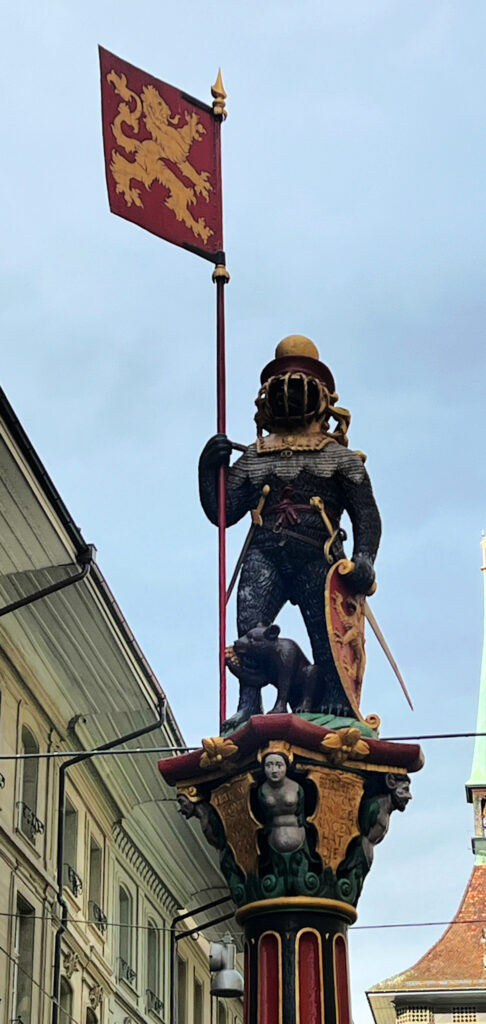
The Zähringerbrunnen, or Warrior Bear Fountain, is in the Old City of Bern, just down the street from the clock tower. The Old City of Bern is a UNESCO World Heritage Site so both the fountain and clock tower share this designation. The Warrior Bear Fountain is pictured below. Bears are the symbol of Bern, probably because of the many bears in the forest surrounding the city. The Zähringerbrunnen was built in 1535 as a memorial to the founder of Bern, Duke Berthold V. The bear is in full armor, with another bear cub at its feet. The bear carries a shield and a banner, both decorated with a lion.
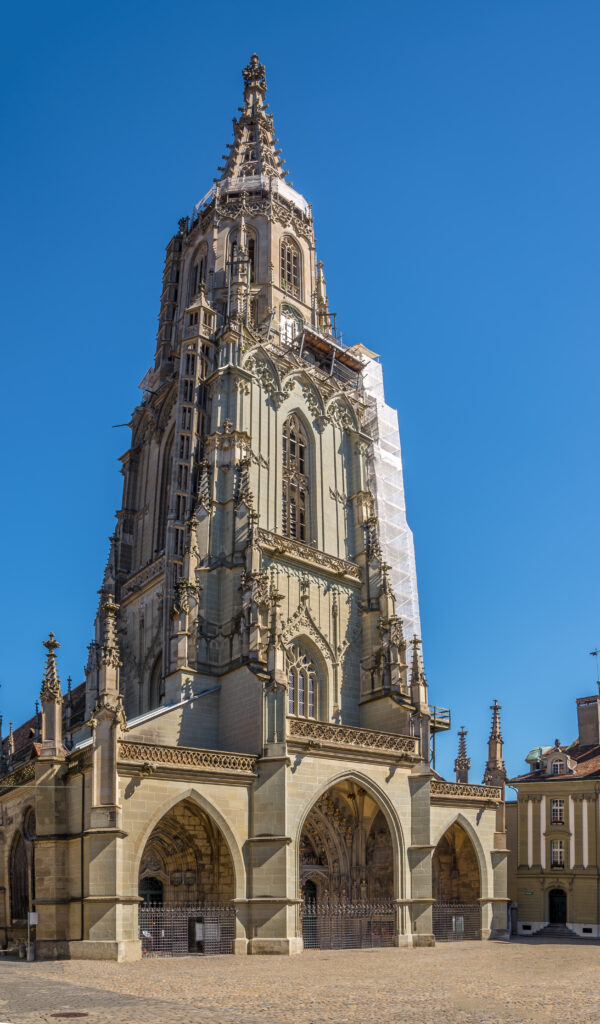
The first picture below is the Bern Minster (purchased from Shutterstock). It was originally a Roman Catholic Church but during the time of the Reformation, it became a Swiss Reformed (Protestant) Church. In the 15th century, Bern was the largest city state north of the Alps and was an important political power. The people wanted a church that was worthy of their influence so the city commissioned the Minster. Construction began in 1421, with the work taking over 150 years to complete. Generations of foremen, sculptors and stonemasons were all part of the effort to create this beautiful church. The Minster was completed in 1893. It was made almost completely from Bernese sandstone. The spire is the tallest in Switzerland and is an iconic part of Bern’s skyline.
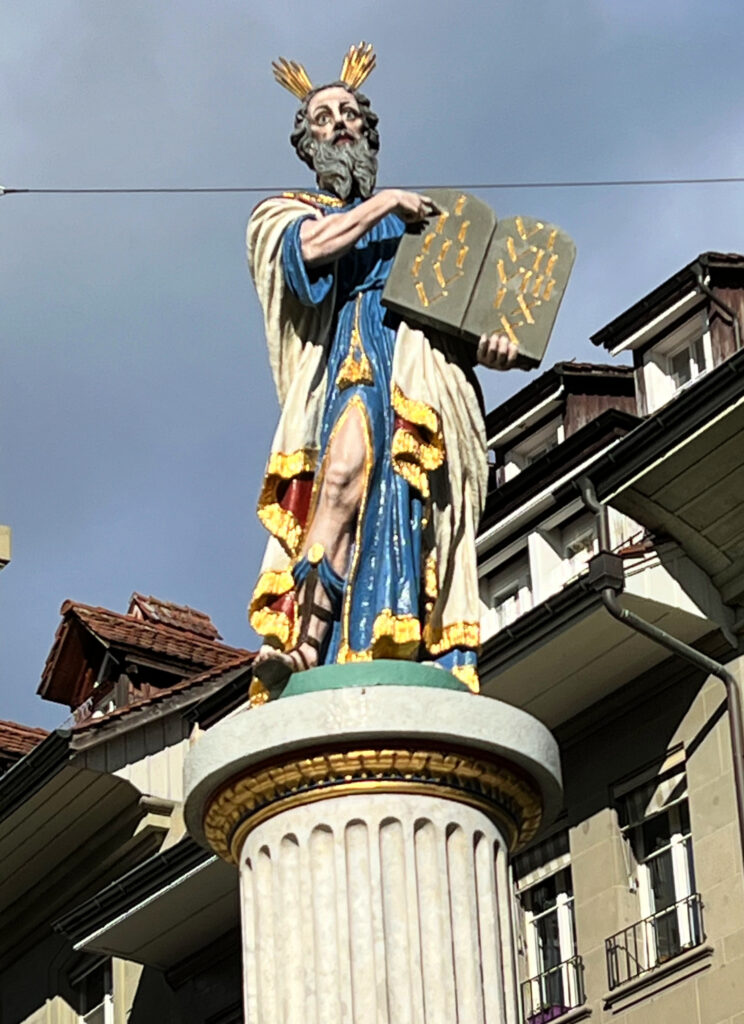
The Minster sits on the Münsterplatz. The second picture is the Mosesbrunnen, or Moses Fountain, which is also on the plaza. The statue dates back to 1544. After storm damage, it was rebuilt in 1790-1791. The statue represents Moses bringing the Ten Commandments to the people of Israel. Moses is portrayed with two groups of rays of light projecting from his head. This may be in reference to Exodus which tells that after Moses met with God, his face became radiant.
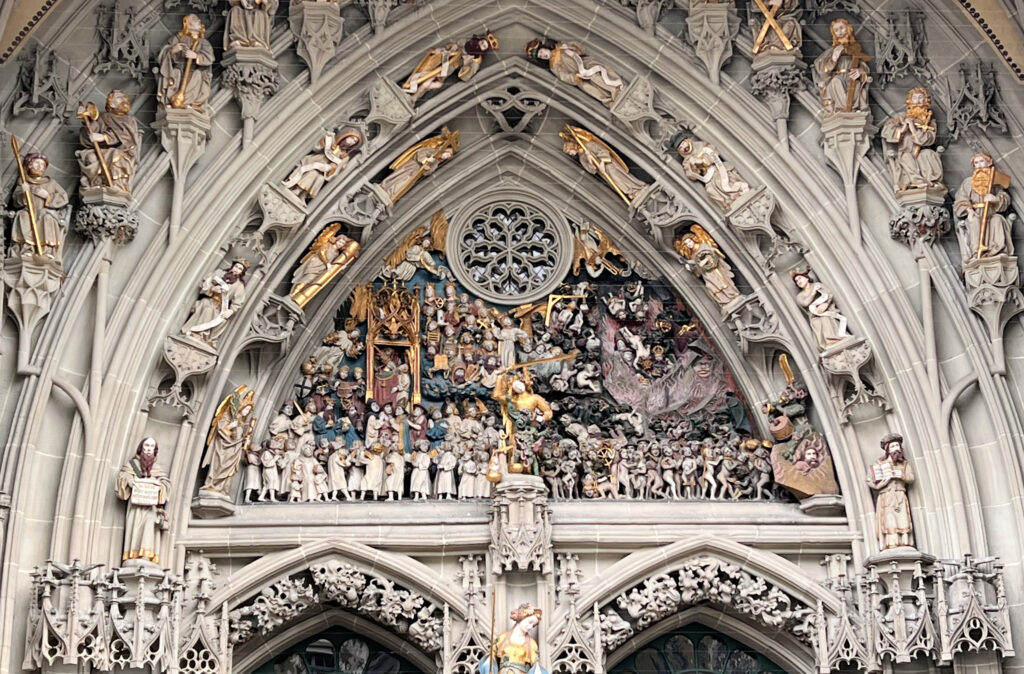
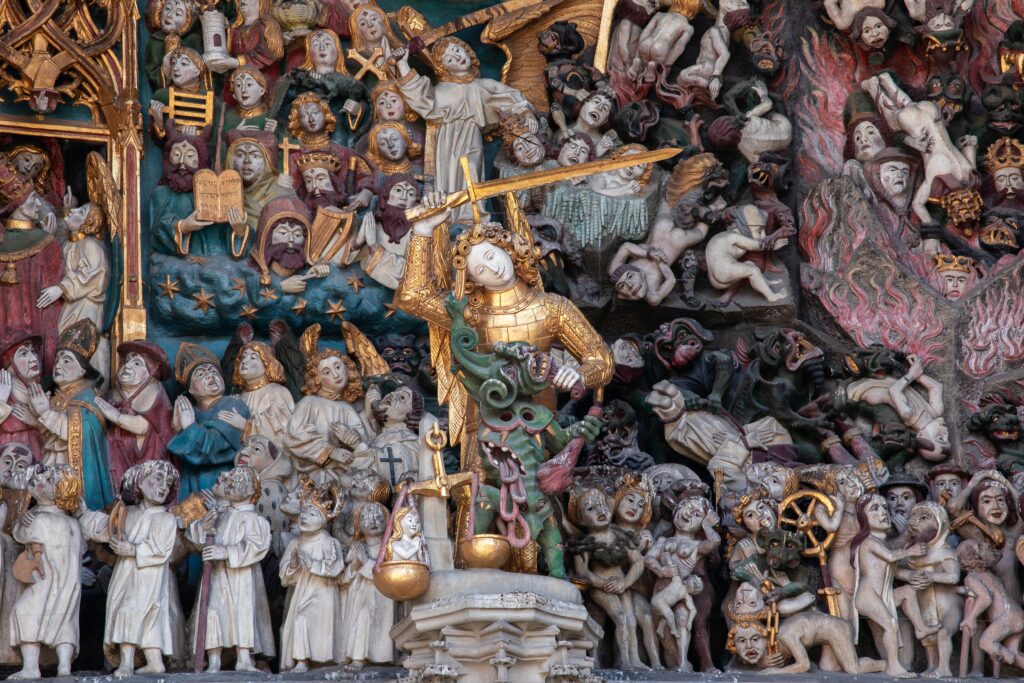
The most famous feature of the Bern Minster is the amazing main portal. Erhart Küng made the sandstone sculpture which depicts the Last Judgement. There are 294 individual sculptures: prophets, angels with trumpets, Jesus as Judge, Lady Justice, martyrs and damned souls. Those going to Hell are on the right as we look at the portal and those going to Heaven are on the left. The last picture in this section was purchased from Shutterstock and shows some of the incredible detail in Küng’s work.
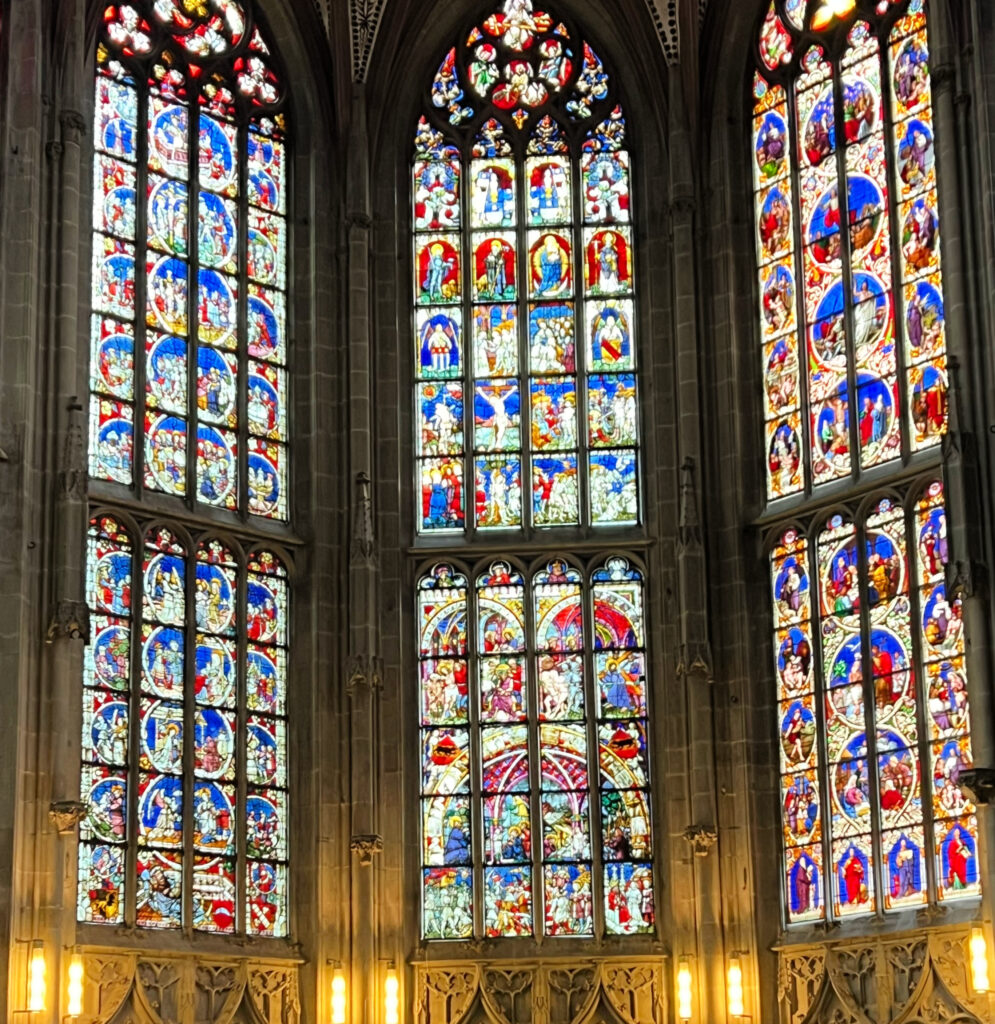
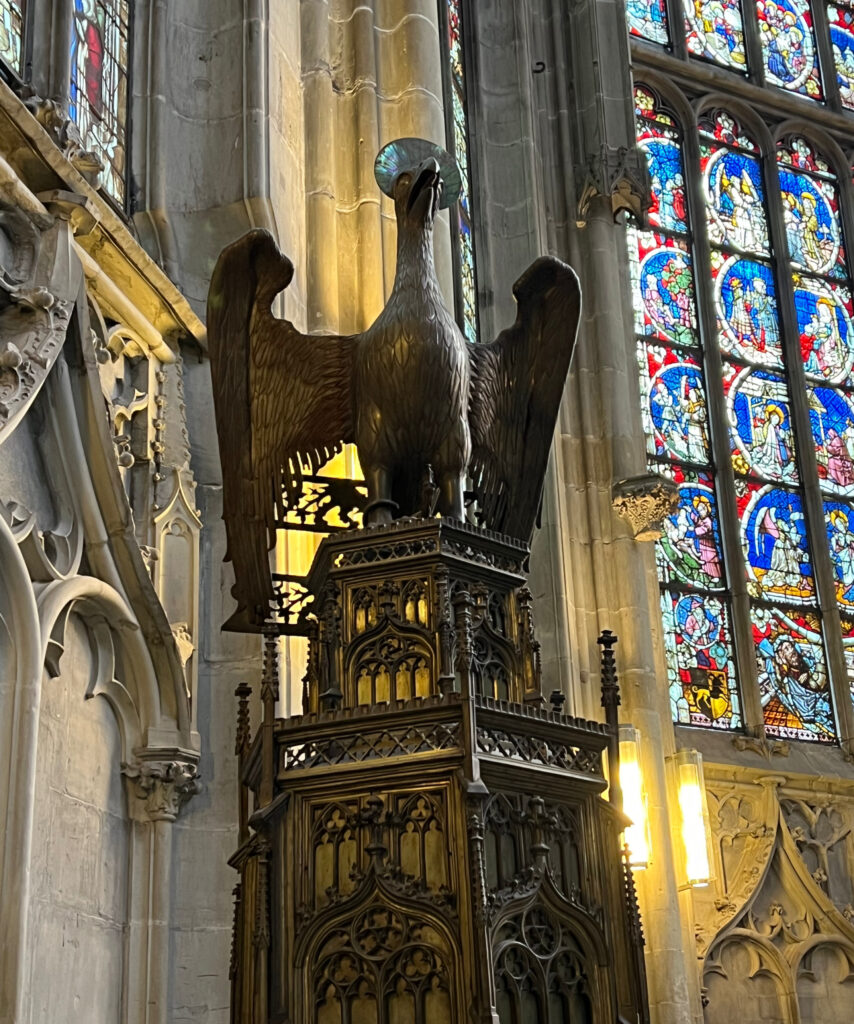
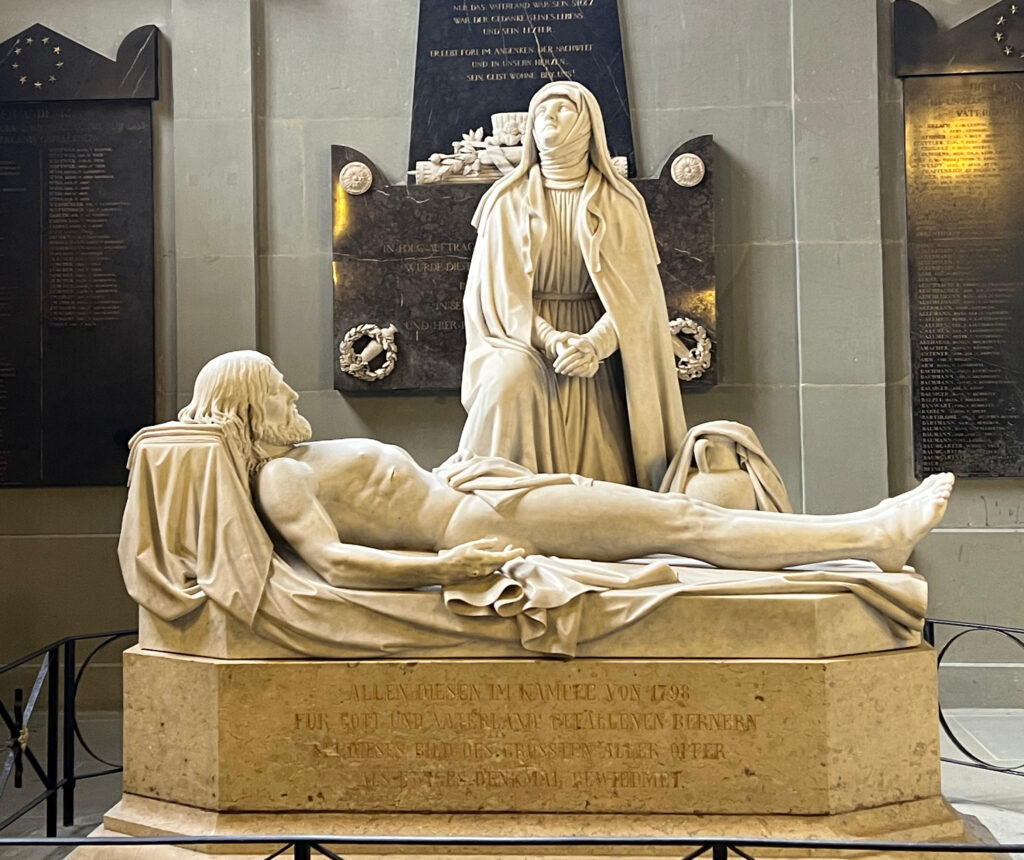
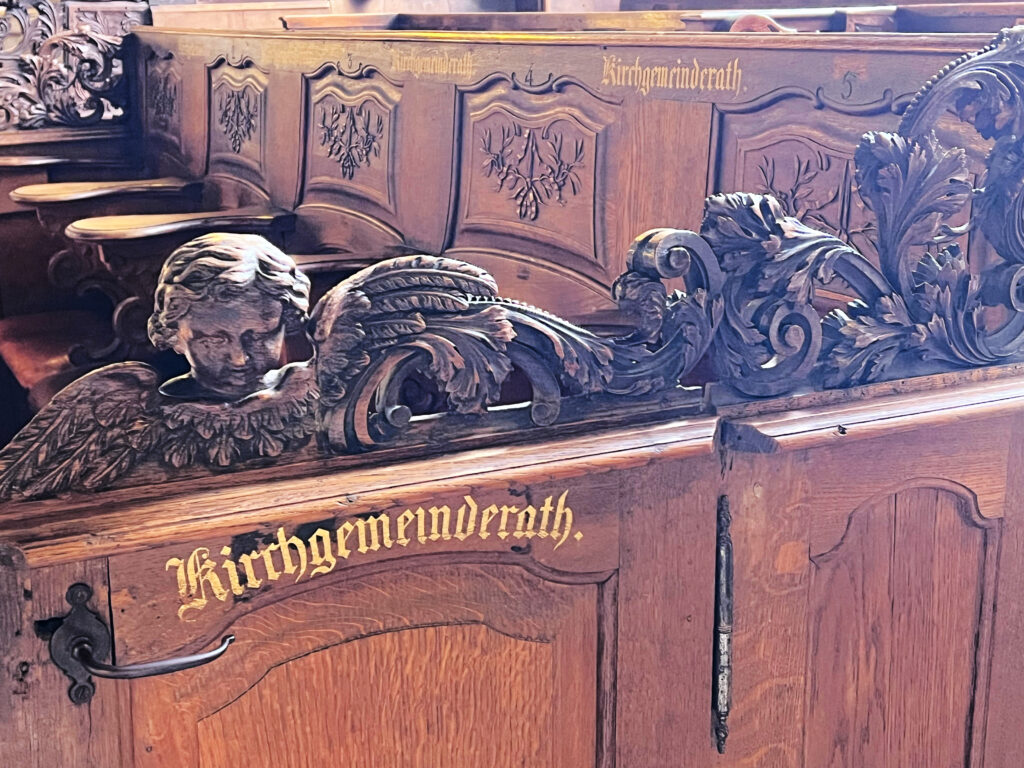
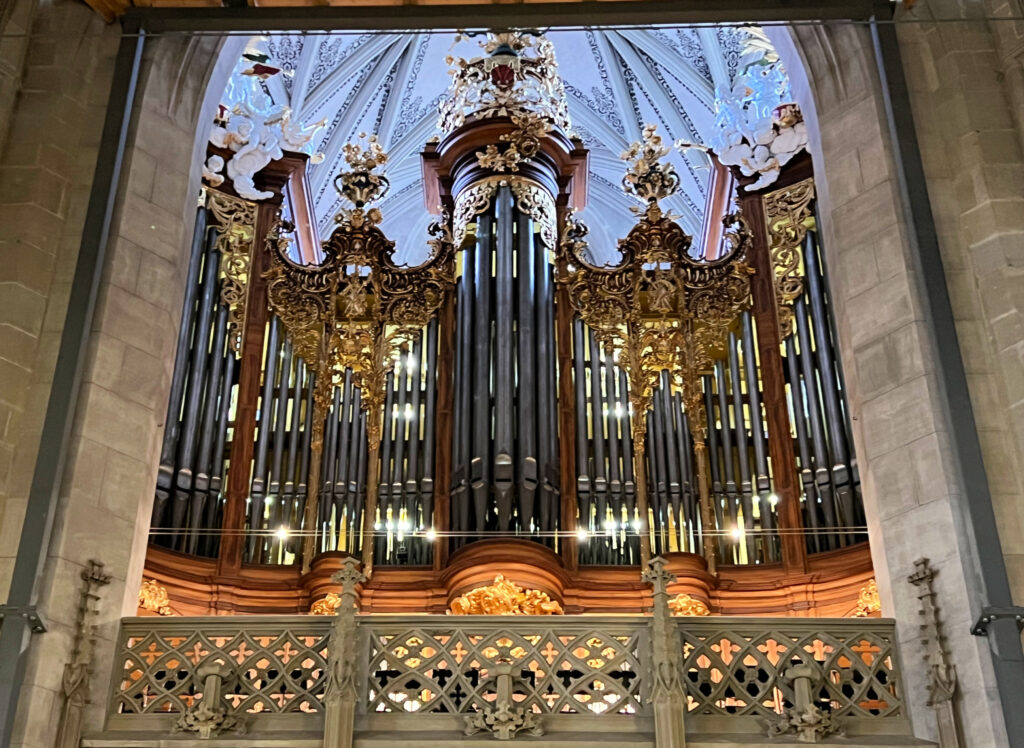
These pictures show some of the interior of the Minster. The stained glass windows of the cathedral are considered the most valuable in Switzerland. Some of the windows date back to the mid 1400s. Also pictured is a sculpture of an eagle which is a symbol of the resurrection; a sculpture depicting Mary mourning over her son, Jesus; choir stalls; and organ pipes.