Paris – Part One
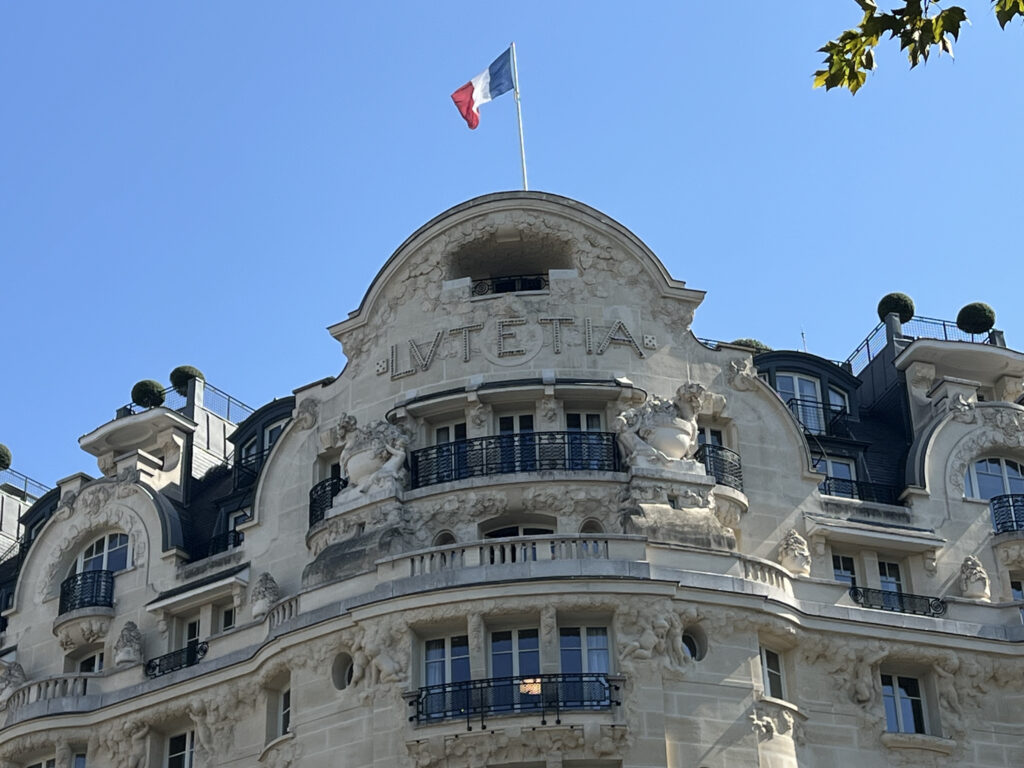
We took Tauck’s “Impressions from the Seine” tour traveling from Paris to Normandy. We arrived a day early and stayed at the Hotel Lutetia, a beautiful hotel with an interesting history. During World War II, when Germany occupied Paris, the Nazis seized the Hotel and repurposed it as the headquarters for the Abwehr, the German military intelligence service. Admiral Wilhelm Canaris was chief of the Abwehr and unknown to many, opposed the Nazis and used his position to sabotage Hitler’s war efforts. He was ultimately found out and put to death.
When Paris was liberated in 1944, the hotel was taken over by French and American forces. It was then used as a repatriation center for prisoners of war, displaced persons, and those returning from German concentration camps. As Paris recovered, the Lutetia was restored to its previous state as a luxury hotel.
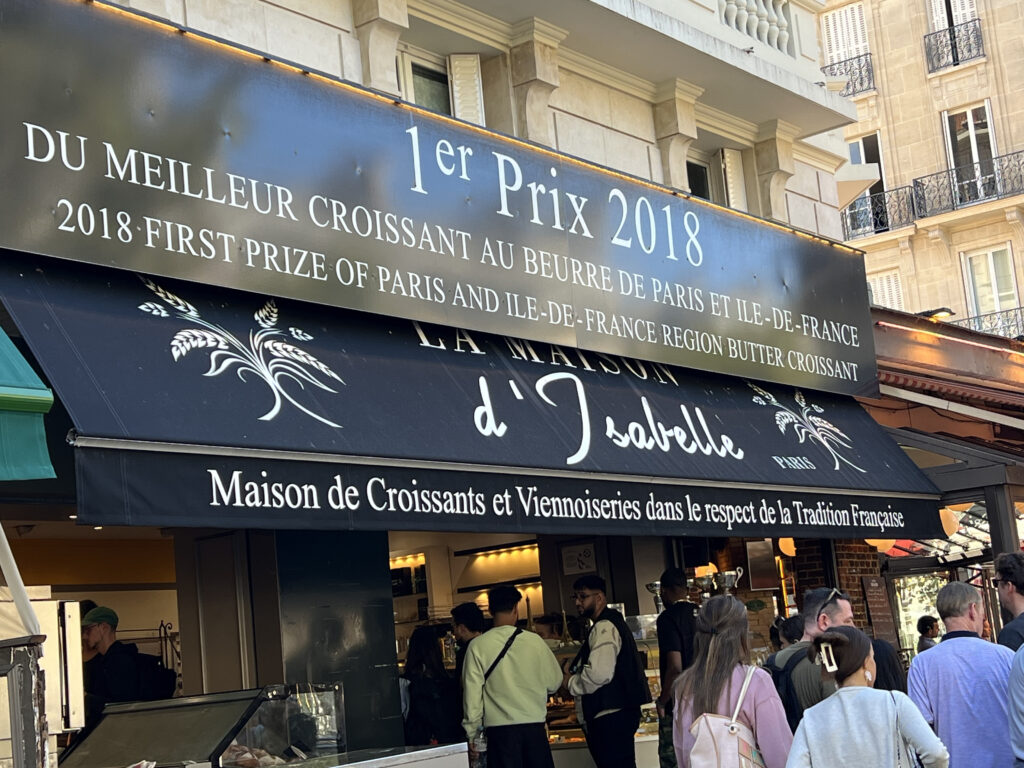
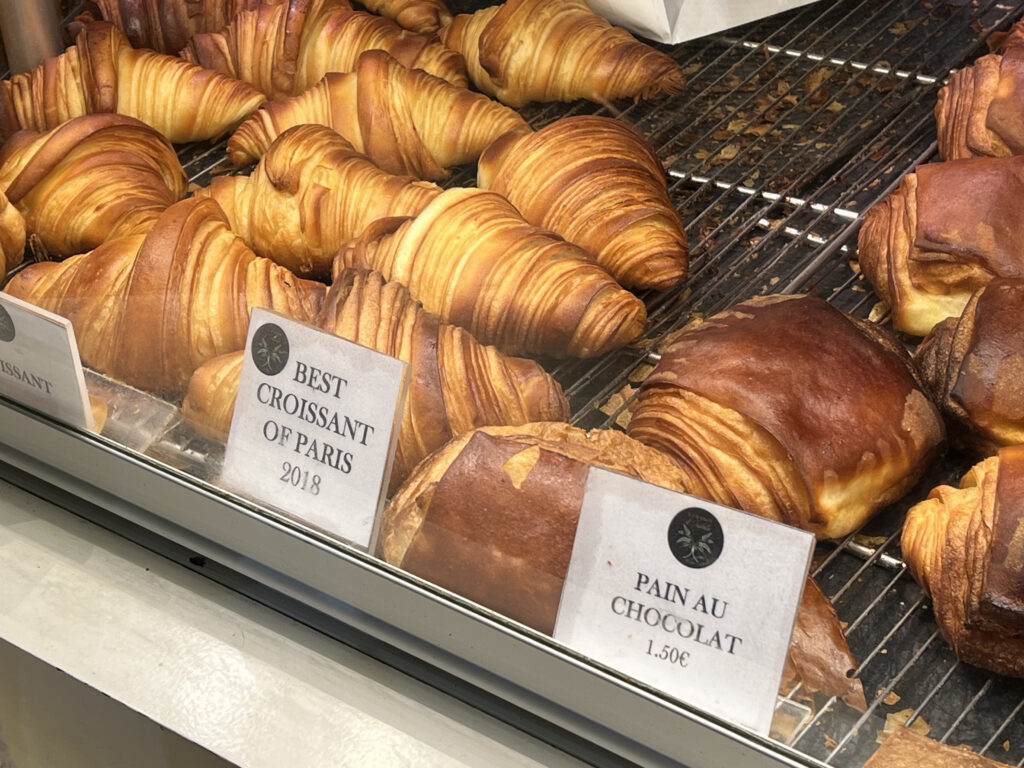
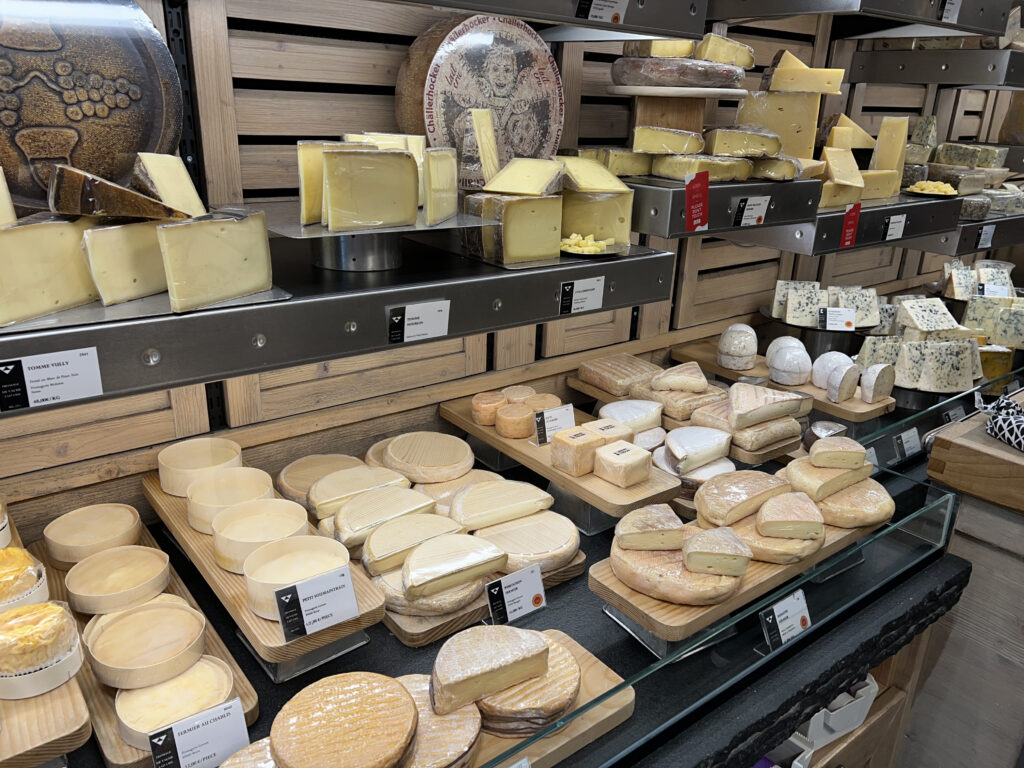
We arrived in Paris a day before our tour officially began and took a “Paris by Mouth” tour, led by a local guide. He took us to several award-winning shops including the one which featured the Best Croissant of Paris (2018) and baguettes. We also visited shops with cheese and chocolate (both award-winning), macaroons, and tarts.
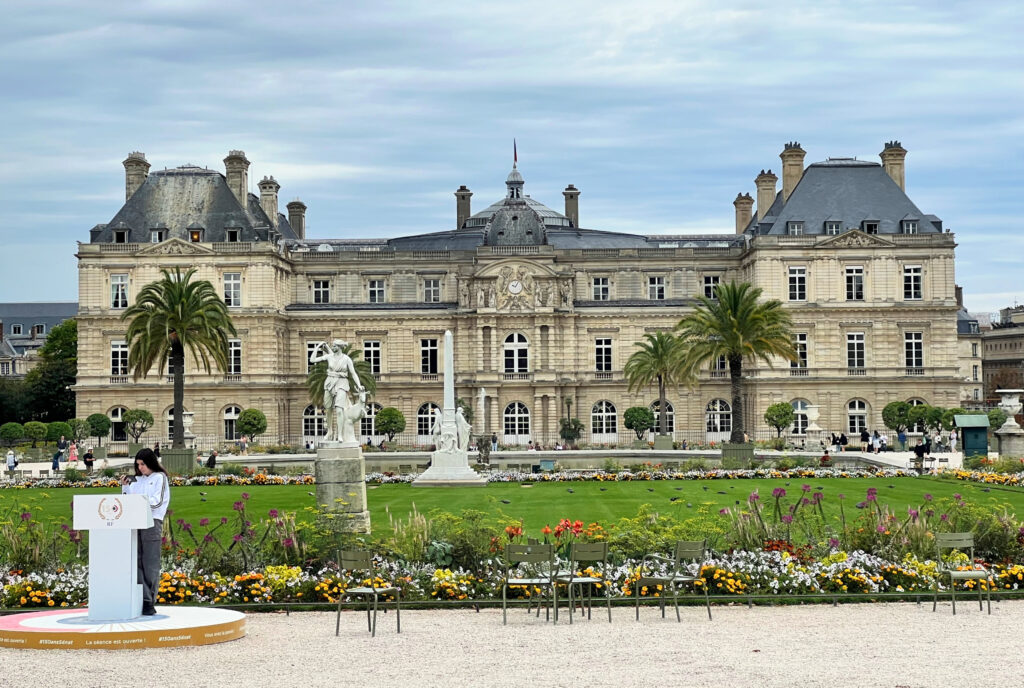
As we rode around Paris, we saw many beautiful buildings, statues, monuments and fountains. The first picture below is of the Luxembourg Palace, seat of the French Senate. It was built in the 17th Century, originally intended as the residence for Marie de’ Medici. The palace has had various roles throughout its history. The Luxembourg Palace has been home to the Senate since 1800. It is located in the Luxembourg Gardens, which are also managed by the Senate. The 348 senators are elected by a panel of “electors.” They serve six-year terms of office, with half of the senators up for election every three years.
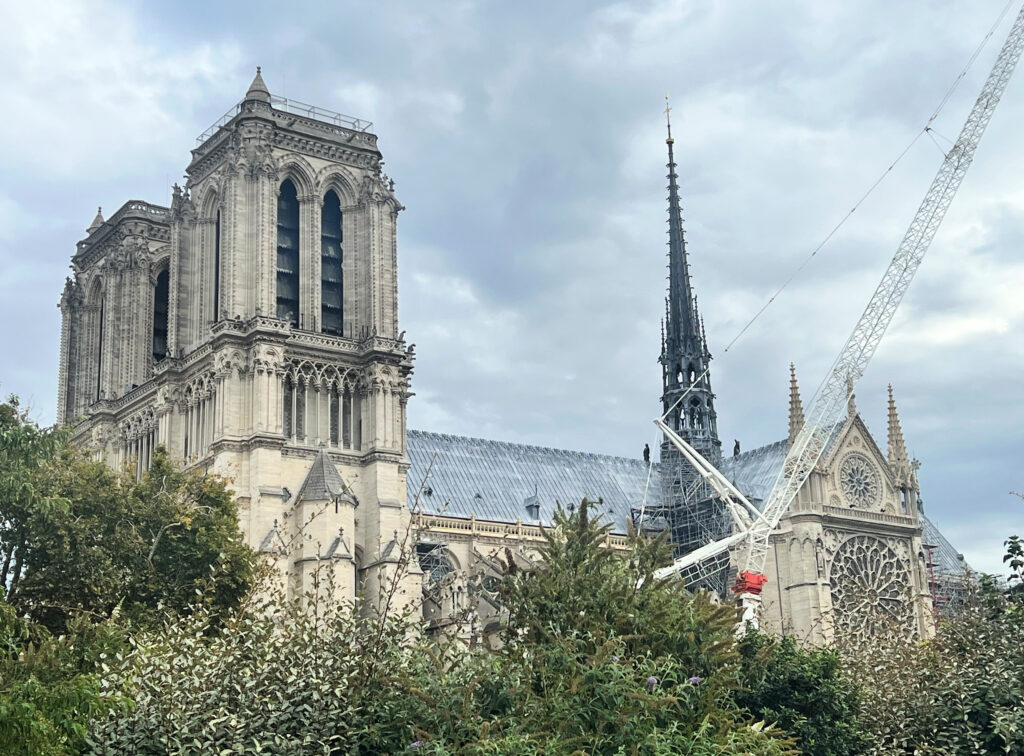
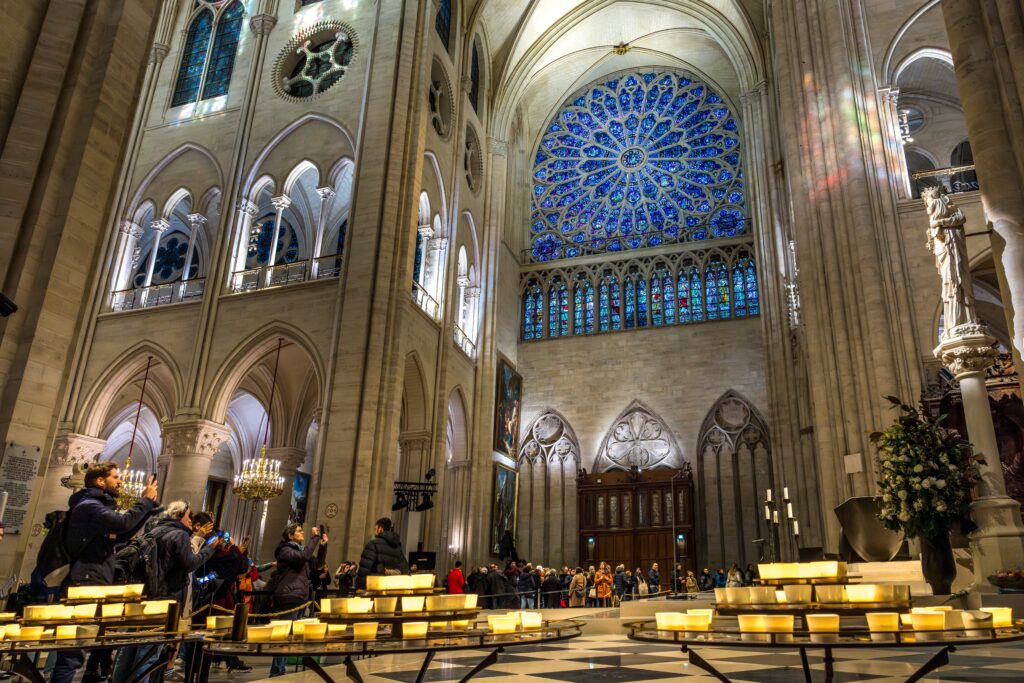
The next picture is the Notre Dame Cathedral. The construction of the Cathedral began in 1163 and was completed in 1260, though it has undergone modifications through the years. A cleaning and restoration project resulted in a fire in 2019, causing serious damage and the closing of the Cathedral for extensive and costly repairs; it reopened in December 2024. Notre Dame is a UNESCO World Heritage Site and a symbol of both Paris and the French nation. Unfortunately, we did not have the opportunity to go inside Notre Dame. The third picture is one I purchased. It was taken in 2025 after renovations were largely completed. The photograph features the Cathedral’s rose window.
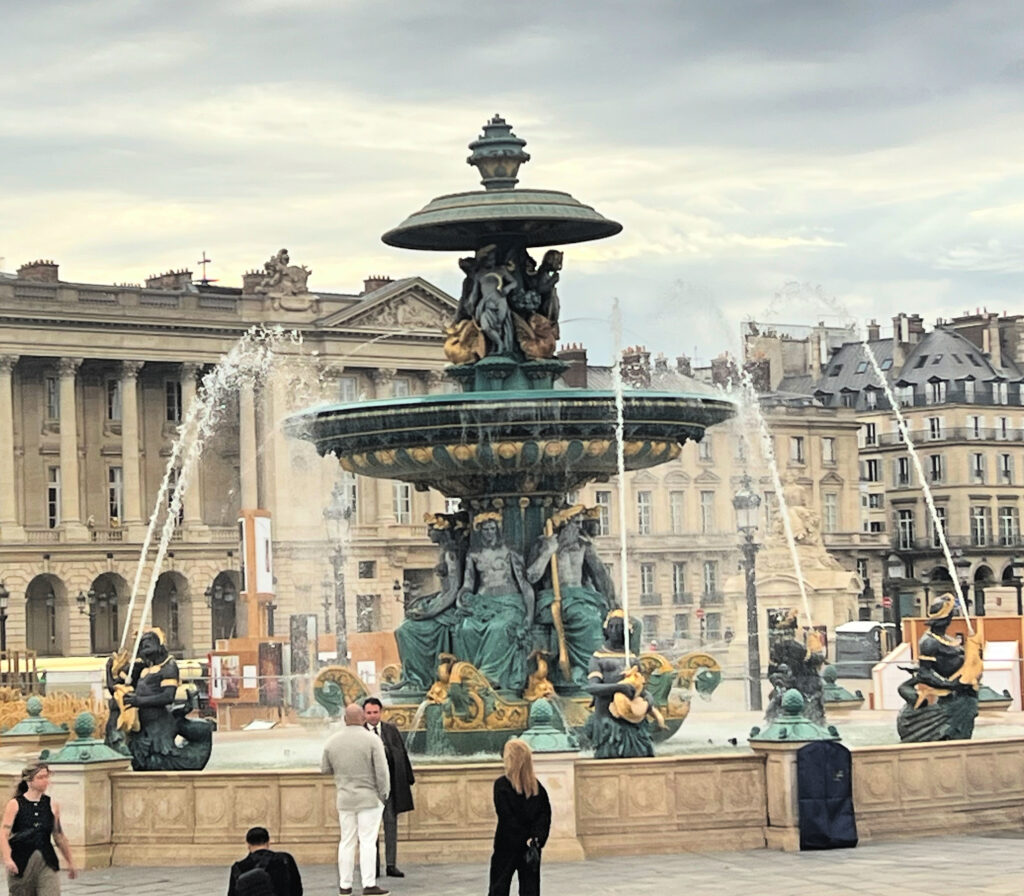
I have also included a picture of a fountain, “La Fontaine des Fleuves.” It pays tribute to France’s navigation and river trade.
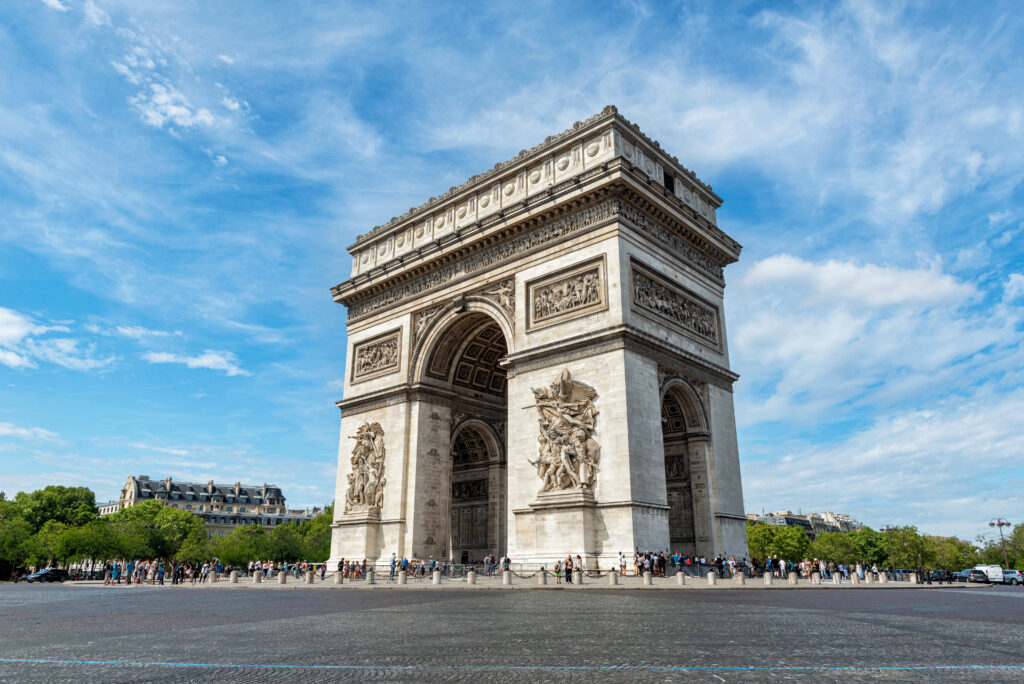
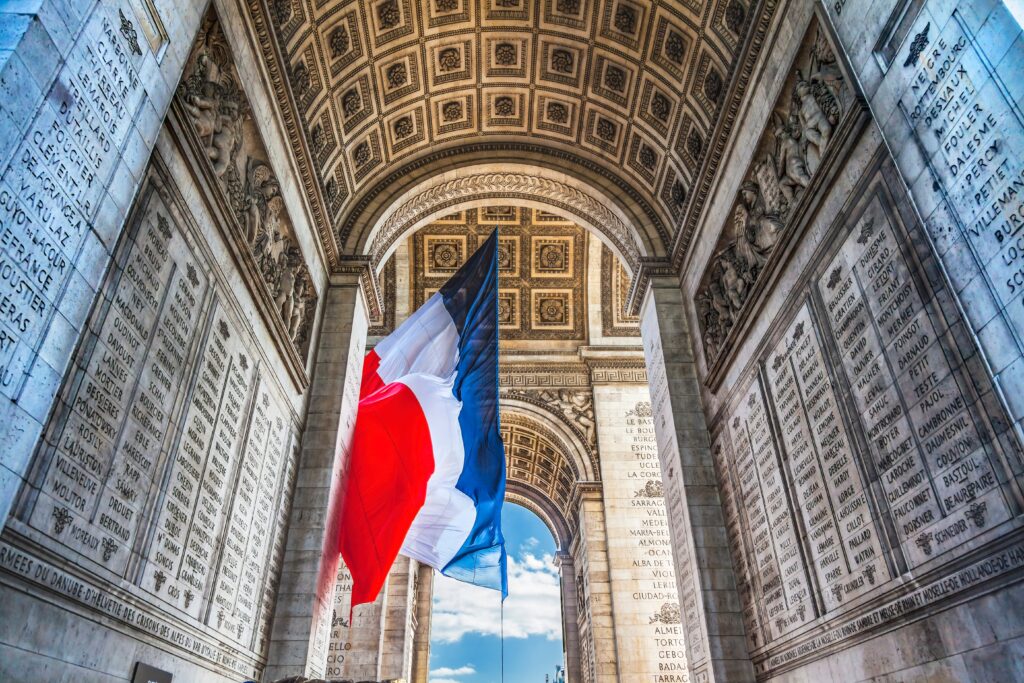
After our tour officially began, we did a bus tour of Paris. We drove by the Arc de Triomphe, but did not have a photo stop. The first two pictures below are ones I purchased from Shutterstock. The Arc de Triomphe is famous as an iconic symbol of French national identity, built by Napoleon to honor soldiers who fought and died for France, particularly during the French Revolution and Napoleonic Wars. It houses the Tomb of the Unknown Soldier from World War I. The monument is also known for its grand location at the center of the Place de l’Étoile, a star-shaped roundabout of twelve traffic lanes, and for its impressive architectural carvings and sculptures.
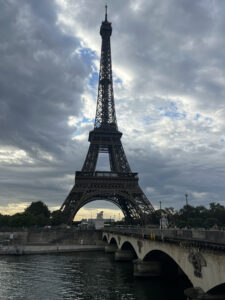
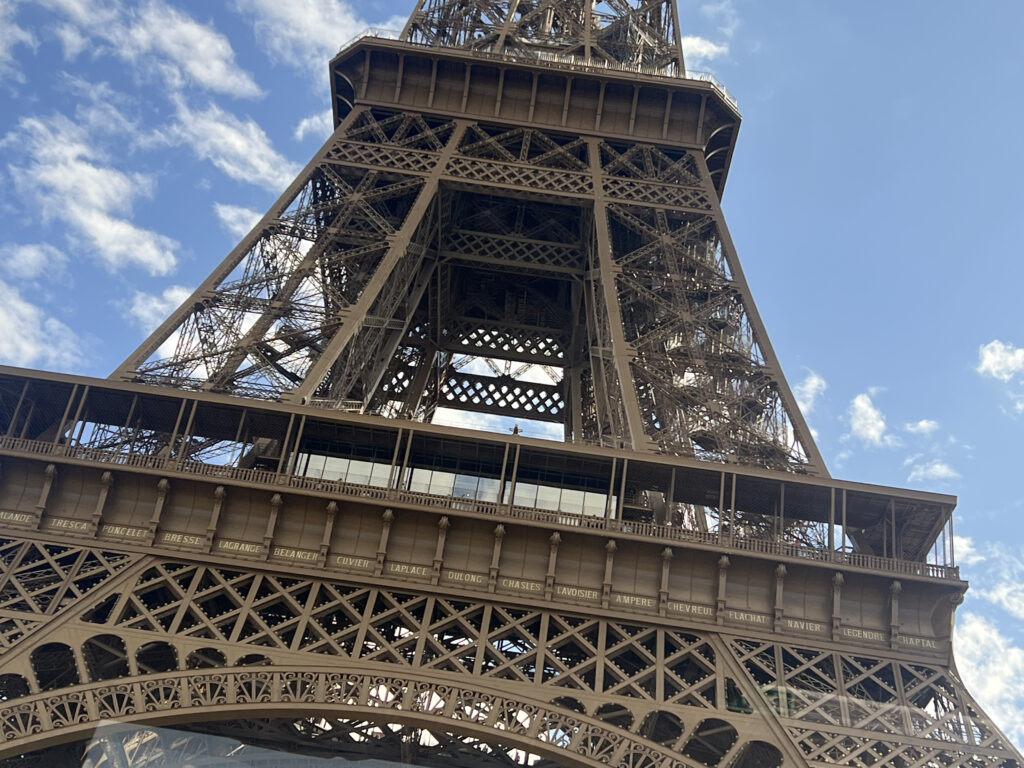
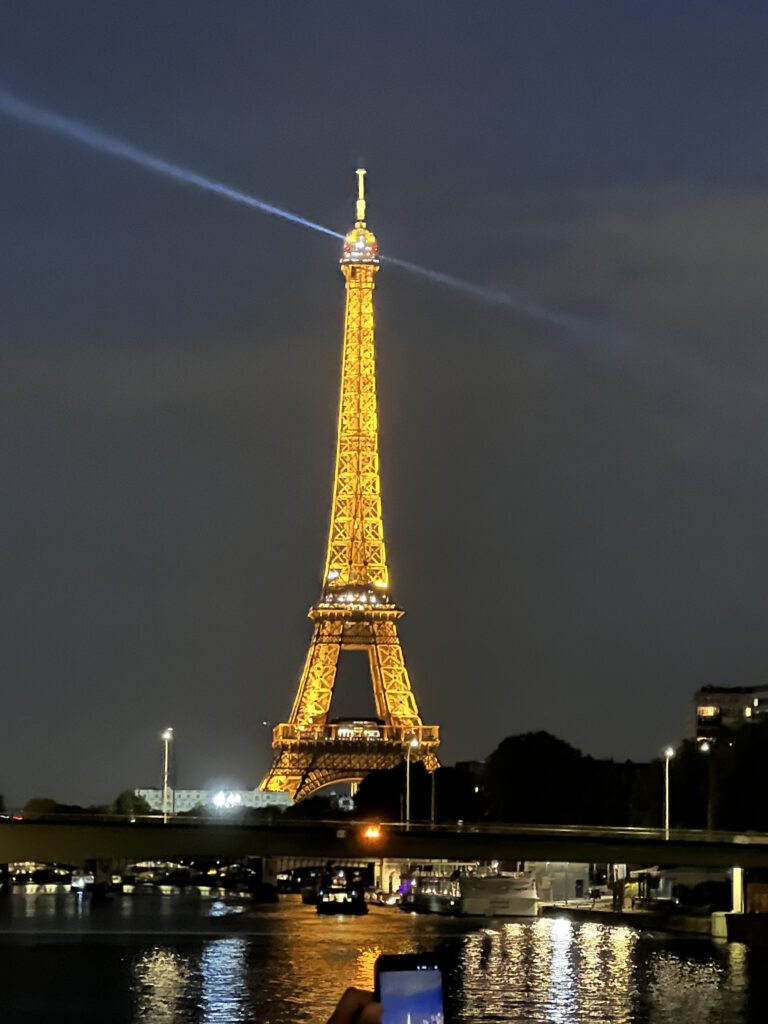
We did have a photo stop on our Paris bus tour at the Eiffel Tower. The Eiffel Tower is a wrought-iron lattice tower named after its designer, Gustave Eiffel. Built as the entrance arch for the 1889 World’s Fair, it was a symbol of French industrial ingenuity and is now a global icon of Paris. We also viewed the Eiffel Tower from our riverboat, the Esprit at night. It was wonderful to be on the top deck sipping wine with the Eiffel Tower beautifully lit. The picture above this post’s title includes the Olympic Rings, placed there when Paris hosted the summer Olympics in 2024.