Paris – Part Two
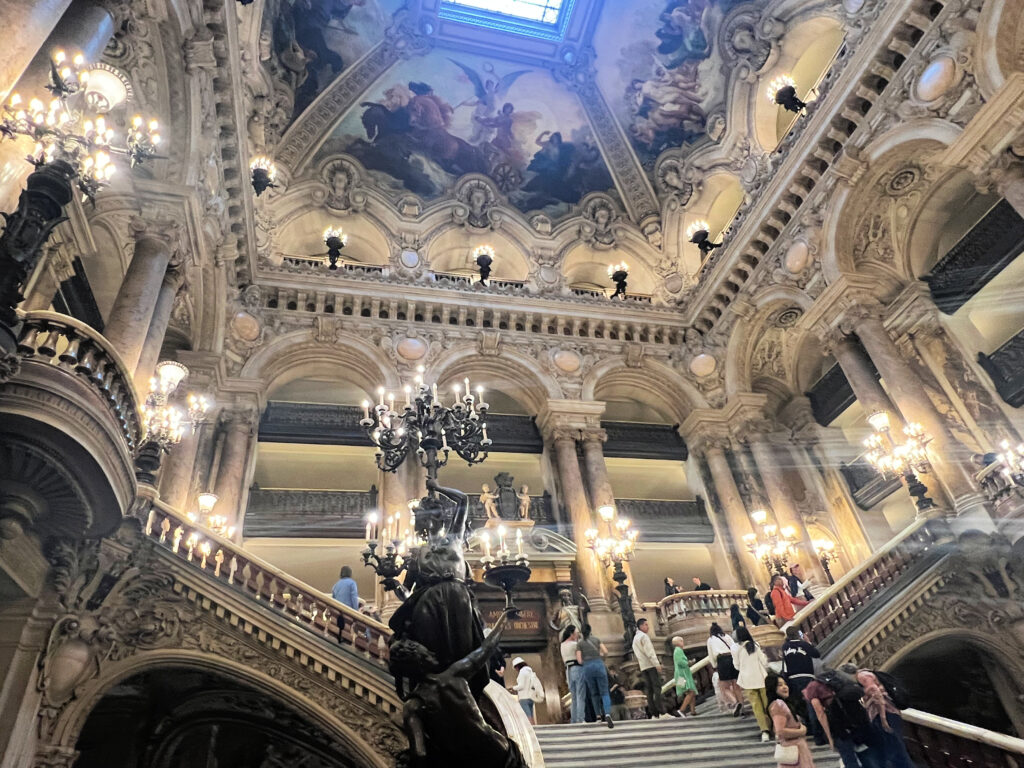
Our bus tour in Paris took us to the Palais Garnier, Paris’ opera house. It was the setting for the movie, Phantom of the Opera. The opera house is famous for its opulent common rooms designed to impress high society. When we visited, preparation for a performance was in progress so we could only visit the common areas and could not enter the auditorium.
Pictured below is the ceremonial stairway. It is made of multicolored marble and splits into two divergent flights of stairs, one leading to the foyers and the other to the auditorium. It is decorated with sculptures and a ceiling fresco depicting scenes of music and mythology.
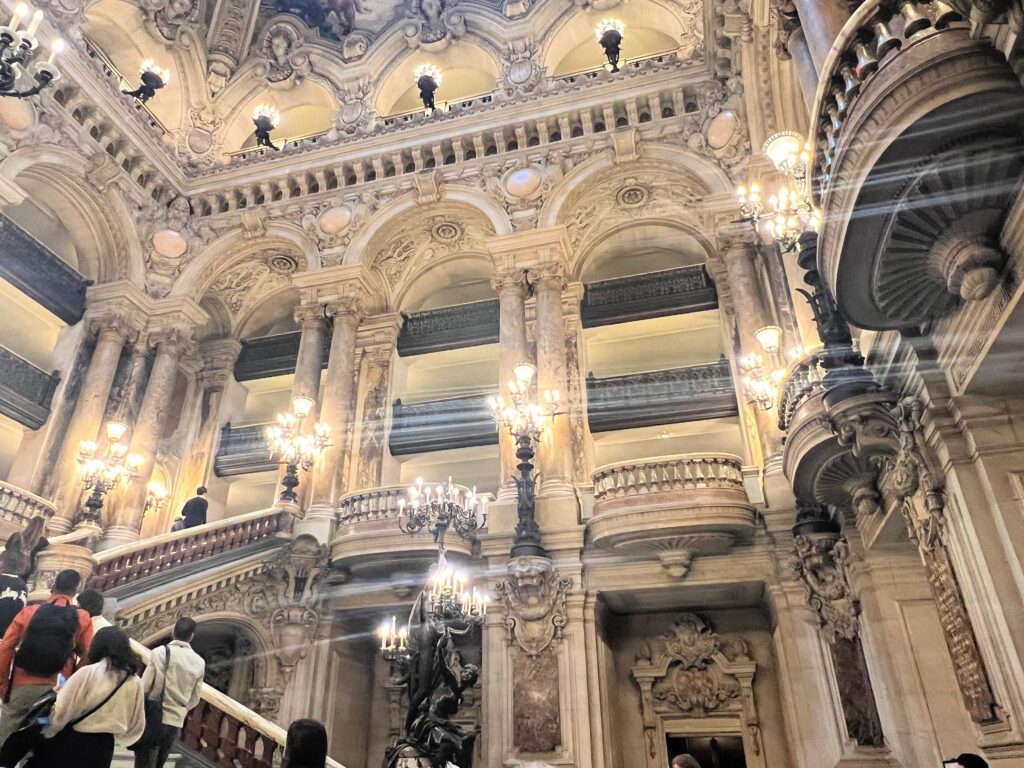
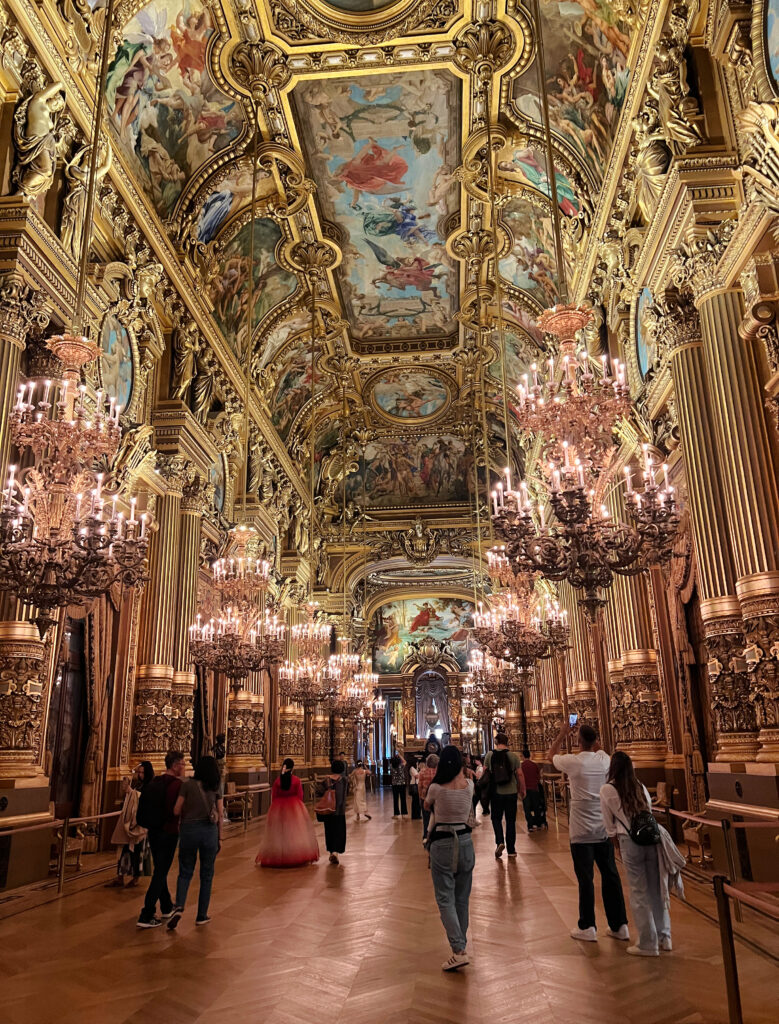
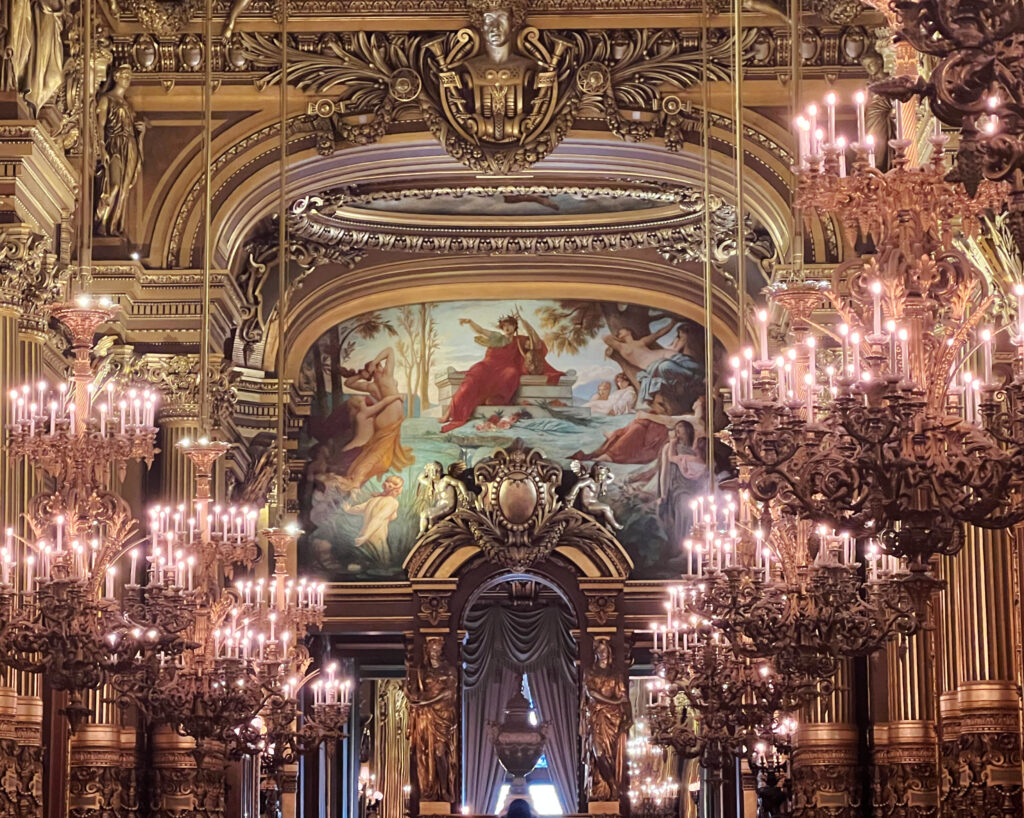
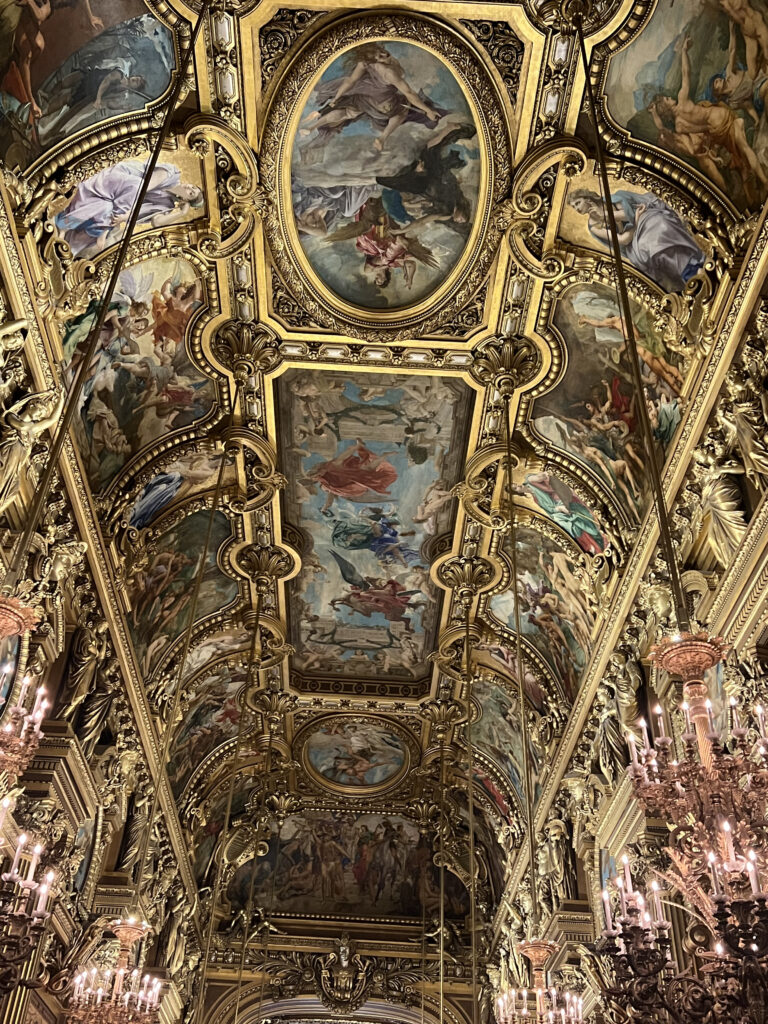
These are pictures of the Palais Garnier’s Grand Foyer. It was designed to rival the Hall of Mirrors at Versailles. The Grand Foyer is decorated with gold leaf, frescoes on the ceiling, and large mirrors (mirrors were extremely expensive at the time). It was the main gathering spot for people “wanting to be seen” during intermissions.
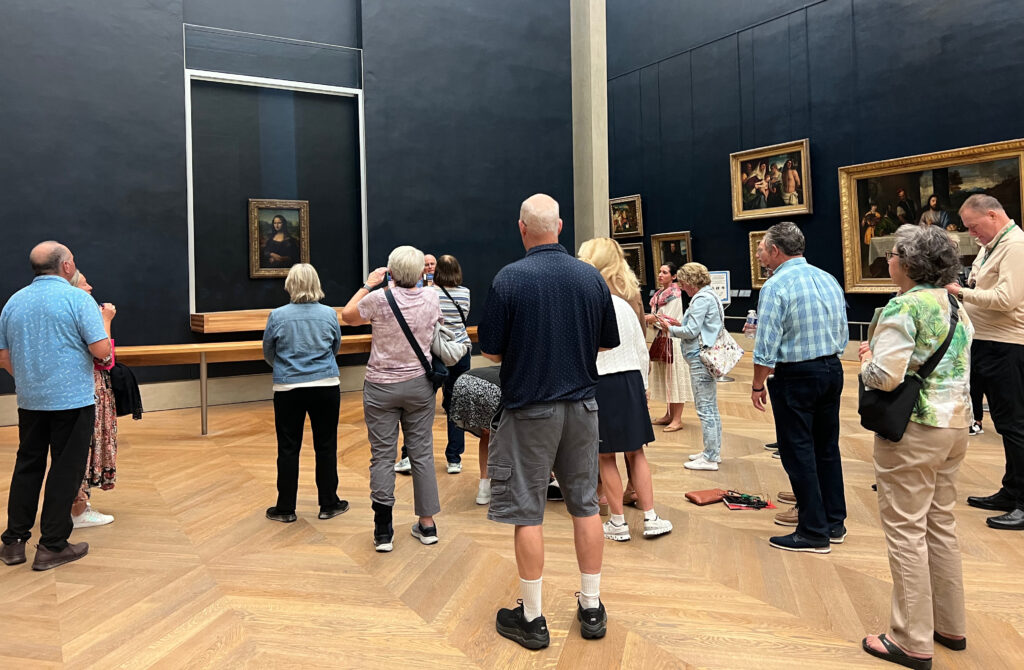
Tauck guests received a surprise from our tour directors – an after-hours visit to the Louvre. We had initially thought a visit to the Louvre would be crazy with the massive crowds, but our after-hours visit ended up to be a highlight of our trip to France. The picture above this post’s title was taken inside of the Louvre, looking at another wing of the museum.
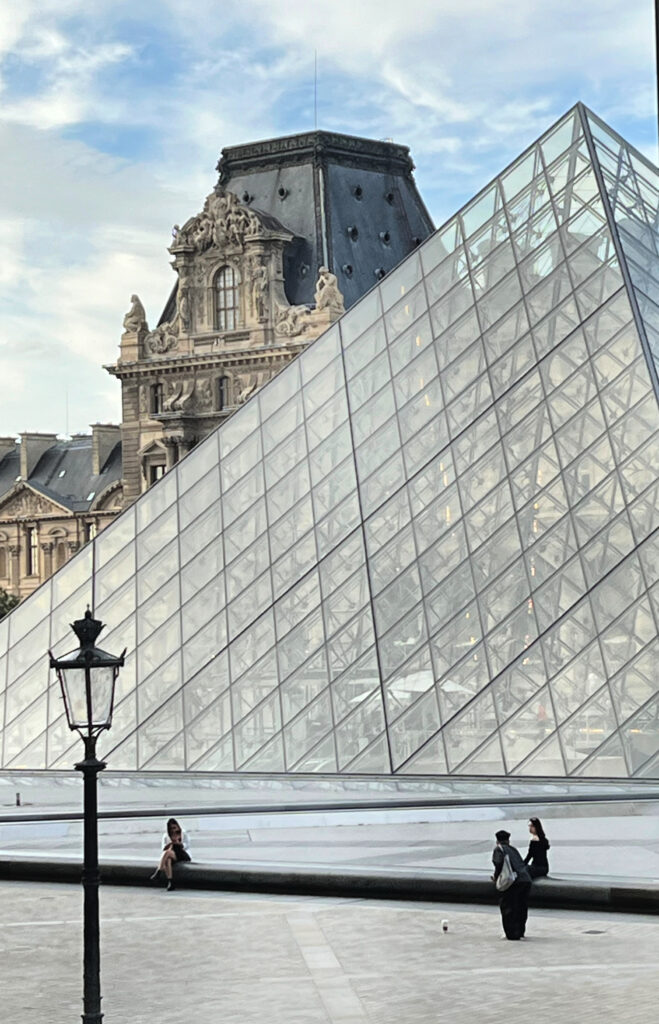
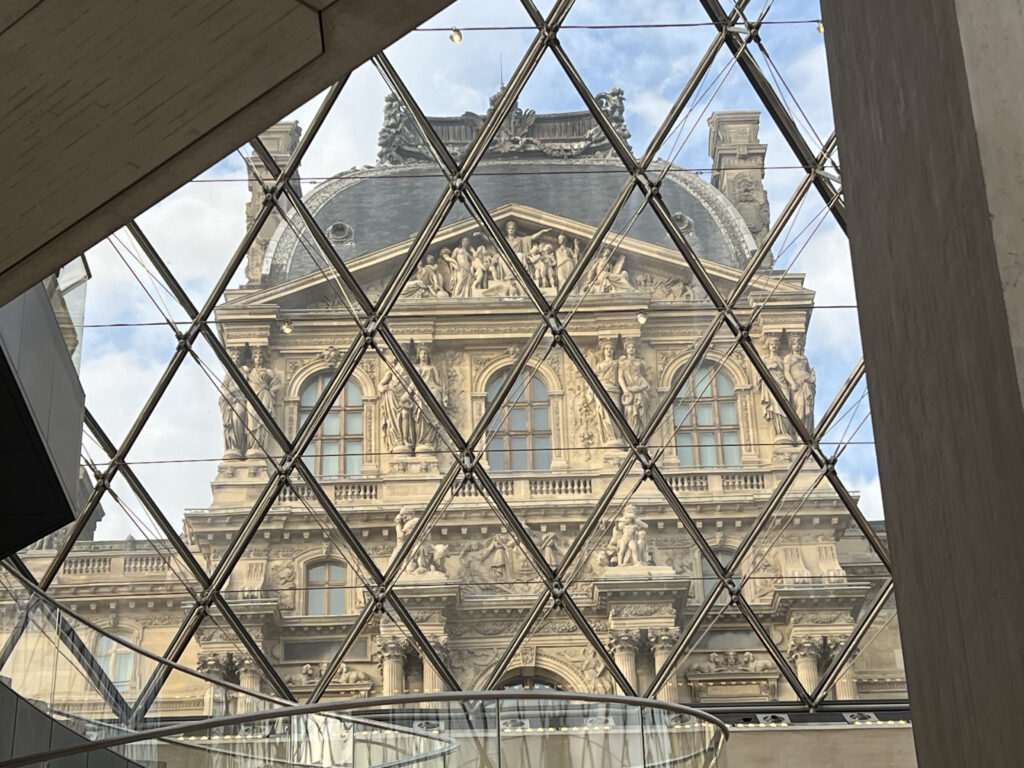
Below are pictures of the Louvre Pyramid. I took the first picture from a window inside the Louvre. The other picture was taken on the lower level looking out at another building. The Louvre Pyramid was built as a modern entrance to the museum, designed by Chinese architect I.M. Pei. It provides a central, light-filled lobby and visitor access to the underground levels, modernizing the aging palace without detracting from its historic facades.
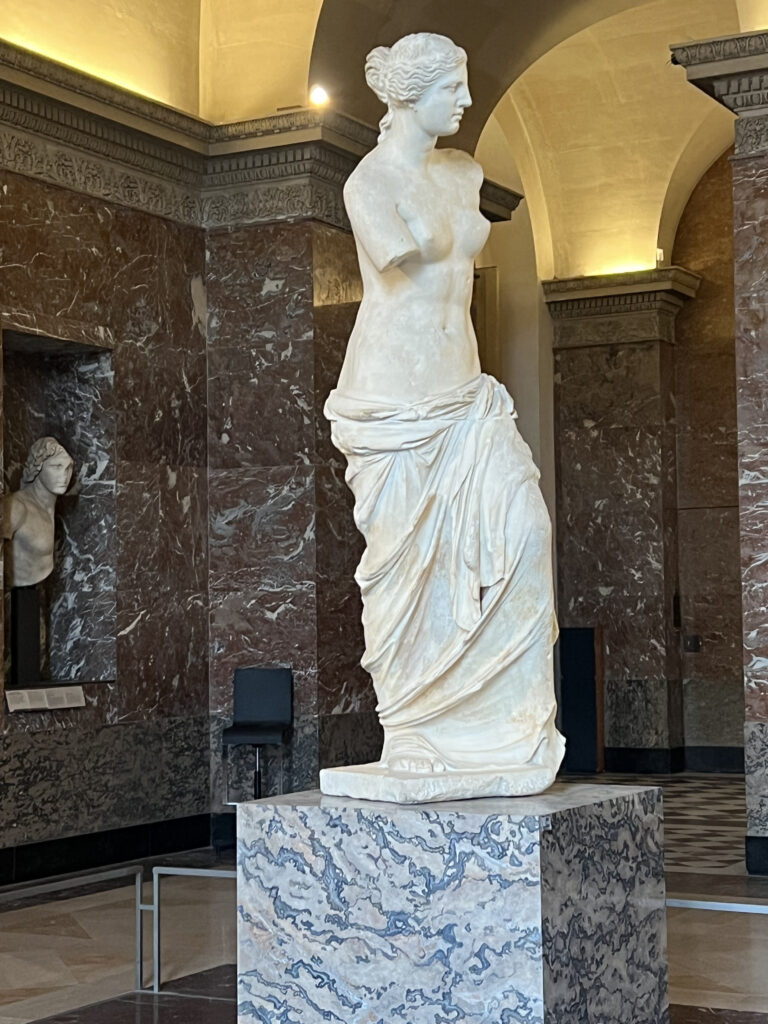
One of the sculptures we saw at the Louvre was the Venus de Milo. It is an ancient marble sculpture created by Alexandros of Antioch around 100 B.C. and is thought to represent the Greek goddess of love, Aphrodite. At over six feet tall, the statue is “larger than life.” It was discovered by a farmer on the island of Melos in 1820. Its missing arms and the object she once held are subject to debate, though some evidence suggests she may have been holding an apple. Contrary to the usual practice at the time, the statue was not significantly restored but exhibited in the state in which she was discovered. Today the Venus de Milo is perhaps the most famous ancient Greek statue in the world, seen by more than seven million visitors every year. It became a key part of the Louvre’s antiquities collection soon after its discovery.
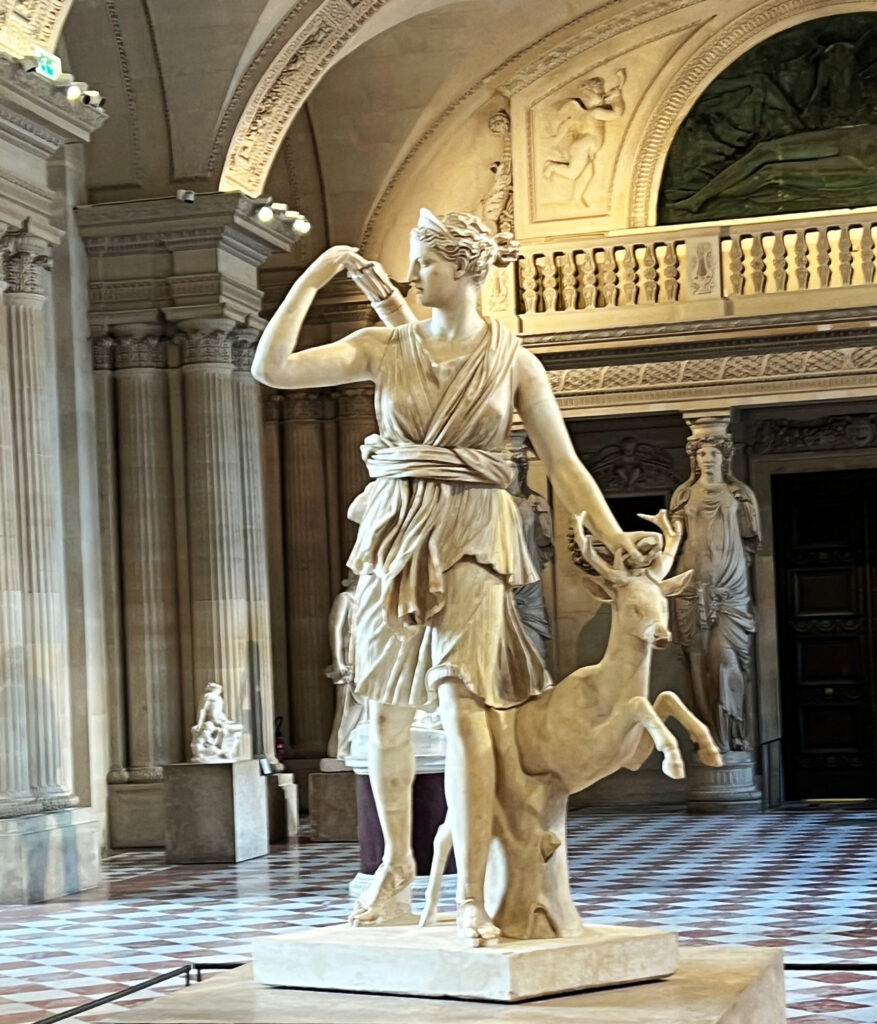
We also saw the statue, “Diana of Versailles,” depicting Artemis, the Greek goddess of the hunt. She was known as Diana in Roman mythology. The statue is a Roman marble copy from the 1st or 2nd Century AD, thought to be based on a lost Greek bronze statue by the 4th-century BC sculptor Leochares. The statue shows Artemis with a deer, reaching for arrows from her quiver. Likely discovered in Italy, Pope Paul IV gifted it to French King Henry II in the 16th Century.
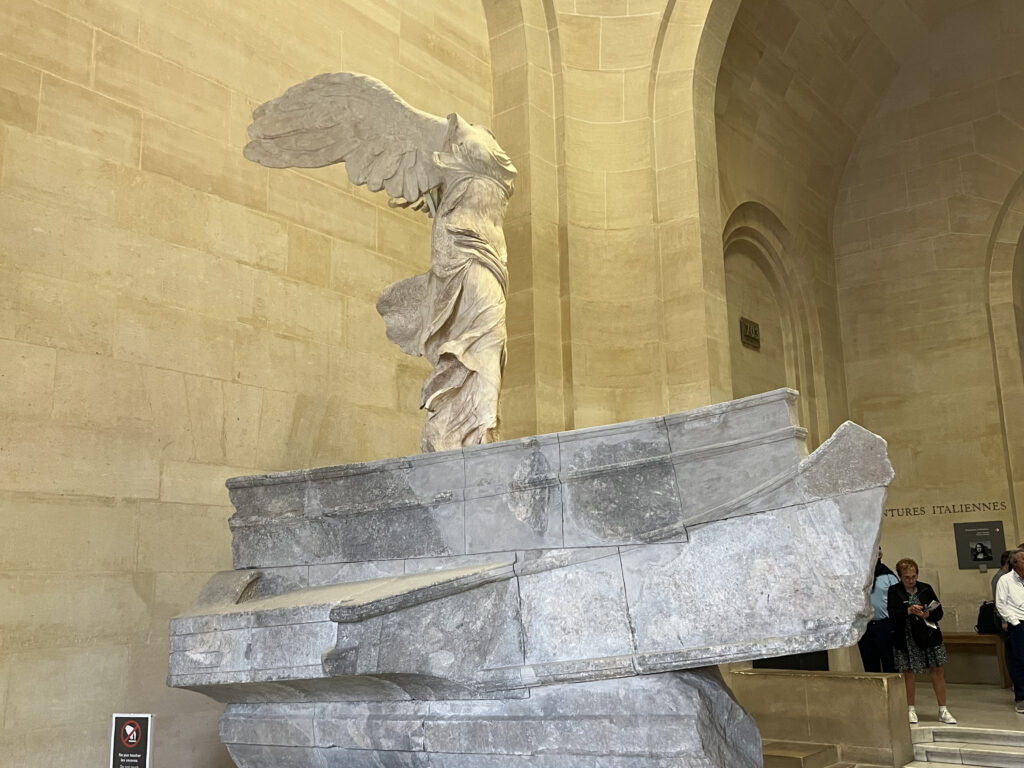
Next pictured is the “Winged Victory of Samothrace.” It is one of the highlights of the Louvre’s collections. It was found on the island of Samothrace, in the sanctuary of the gods to whom people prayed for protection from the dangers of the sea. It has been in the Louvre’s collection since 1883.
A little more about how it grew in popularity… In the 19th Century, a French diplomat found fragments of a statue. He identified them as part of “Winged Victory” and had them shipped to the Louvre. The monument was painstakingly pieced together, but without its wings. It was put on display, but the public showed little interest in the exhibit. Ten years later, archaeologists realized that the pieces of grey marble found near the statue had originally formed a ship. So the statue underwent a second restoration, adding the ship and wings. After that, “Winged Victory” became one of the Louvre’s most popular exhibits.
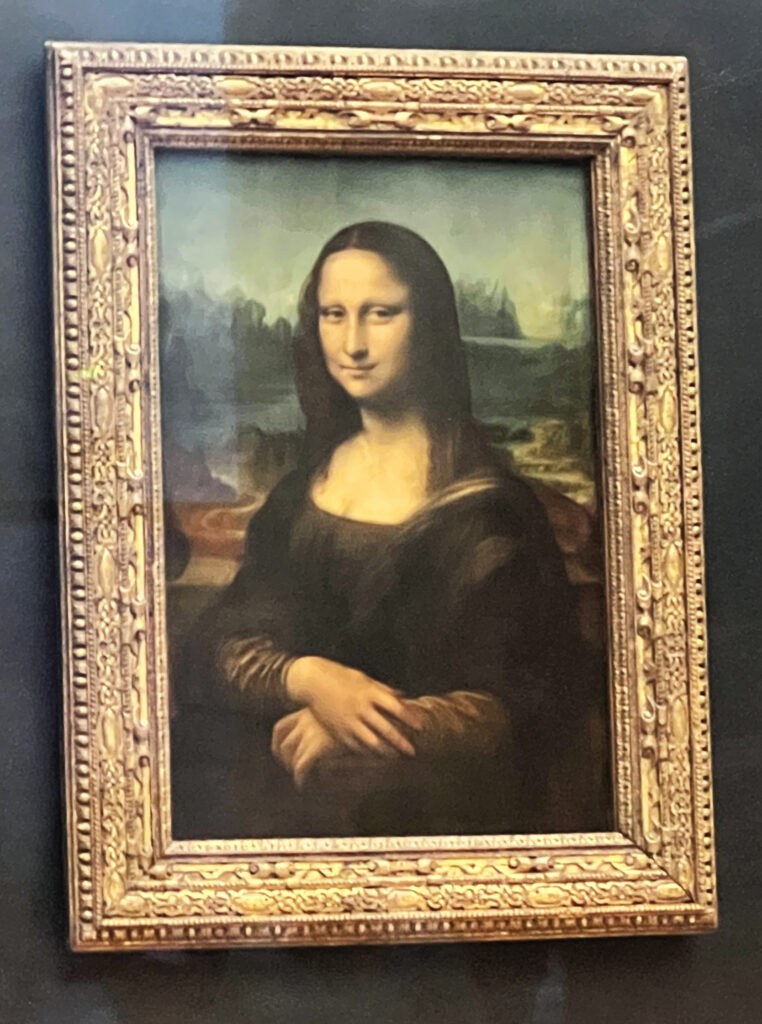
Another highlight of our visit to the Louvre was the Mona Lisa, a portrait painting by the Italian artist Leonardo da Vinci. The painting was thought to depict the Italian noblewoman Lisa del Giocondo. It is believed to have been painted between 1503 and 1506. King Francis I of France acquired the Mona Lisa after Leonardo’s death in 1519, and it is now the property of the French Republic. Because the Mona Lisa was painted on a wood panel, it is susceptible to environmental damage. Consequently it is displayed in a climate-controlled, glass case which provides the painting with needed protection.
The painting’s popularity partly stems from its 1911 theft by Vincenzo Peruggia, who believed the painting should belong to Italy. The theft and subsequent recovery in 1914 generated unprecedented publicity. The Mona Lisa is one of the most valuable paintings in the world. It holds the Guinness World Record for the highest known painting insurance valuation in history at $100 million in 1962, equivalent to more than $1 billion when adjusted for inflation in 2025.
Our after-hours visit to the Louvre allowed us to see the Mona Lisa up close and without pressing crowds. An incredible experience!