Matsue Castle
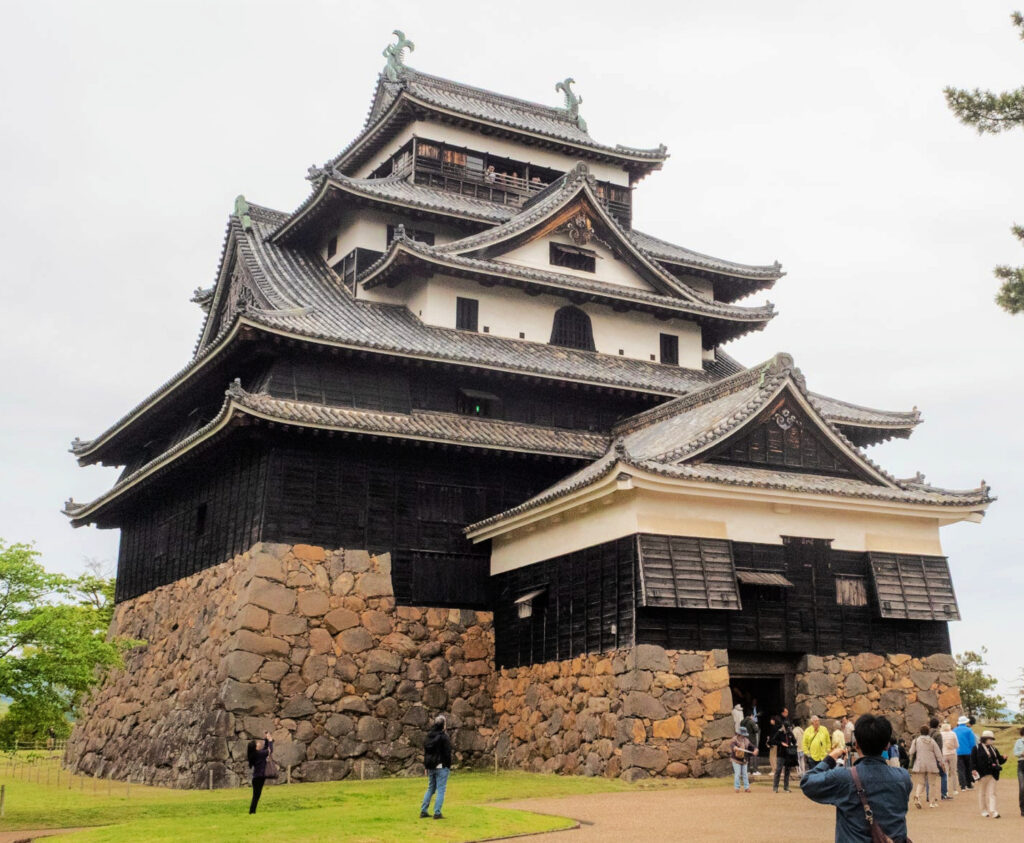
While I was at the Adachi Museum, Mike’s excursion took him to the town of Matsue where he toured the Matsue Castle, also called the Black Castle because of its dark-colored exterior.
There were many castles during feudal times with “tens of thousands” throughout Japan. But most of these were destroyed as a result of natural disasters and an official order for their dismantlement during the Meiji era (1868-1912). Prominent Matsue citizens stepped forward urging the Matsue Castle be protected and their efforts were successful. Many of the castles that remain have been reconstructed or are replicas of ones destroyed or beyond repair. Only twelve castles remain as they once were. Matsue Castle is one of the twelve. What is even more unusual is that the time of construction – before 1611 – can be established via talismans that date back to January, 1611 and were found on the Castle grounds. This remarkable story appears at Matsue Castle and is reproduced below.
“These two protective talismans were originally discovered by Doctor Hisashi Kido in 1937, but their whereabouts had since been lost. They were rediscovered at Matsue Shrine, located within the grounds of Matsue Castle, in 2012. These talismans indicate the possibility that prayers were carried out by two Buddhist sects (Tendai and Shingon) when the construction of the castle was completed. A later investigation confirmed that the holes in the talismans matched nail holes left in pillars in the basement (of the castle), showing that they originally hung there. The writitng on the talismans reads “Keicho 16” (meaning the 16th year of the Keicho era) and “Happy New Year’s Day,” confirming that the castle tower was completed before the New Year of 1611. Knowing the date of the castle’s completion became an important factor in its designation as a national treasure…”
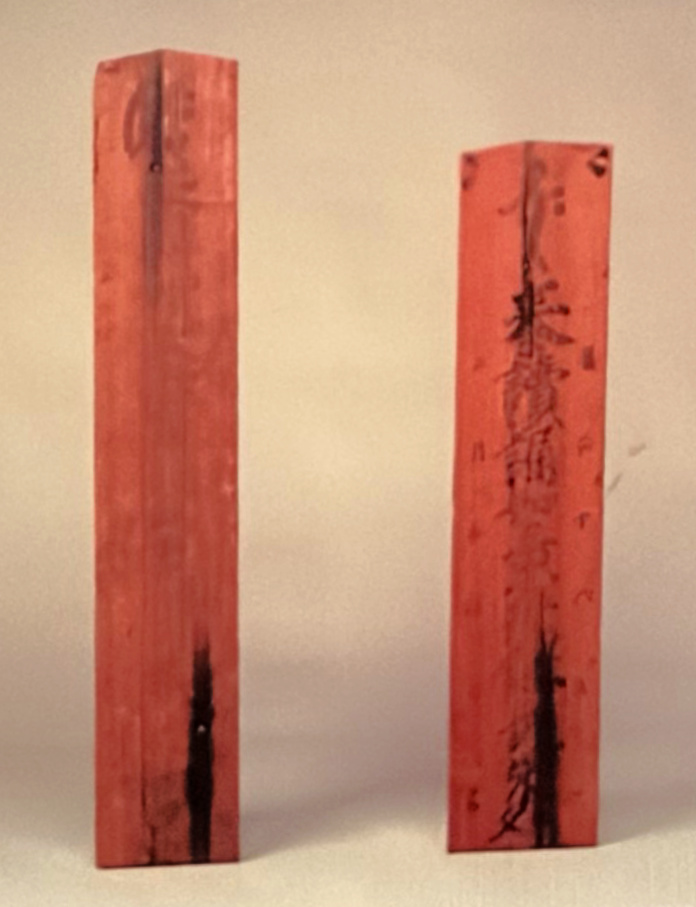
Talismans
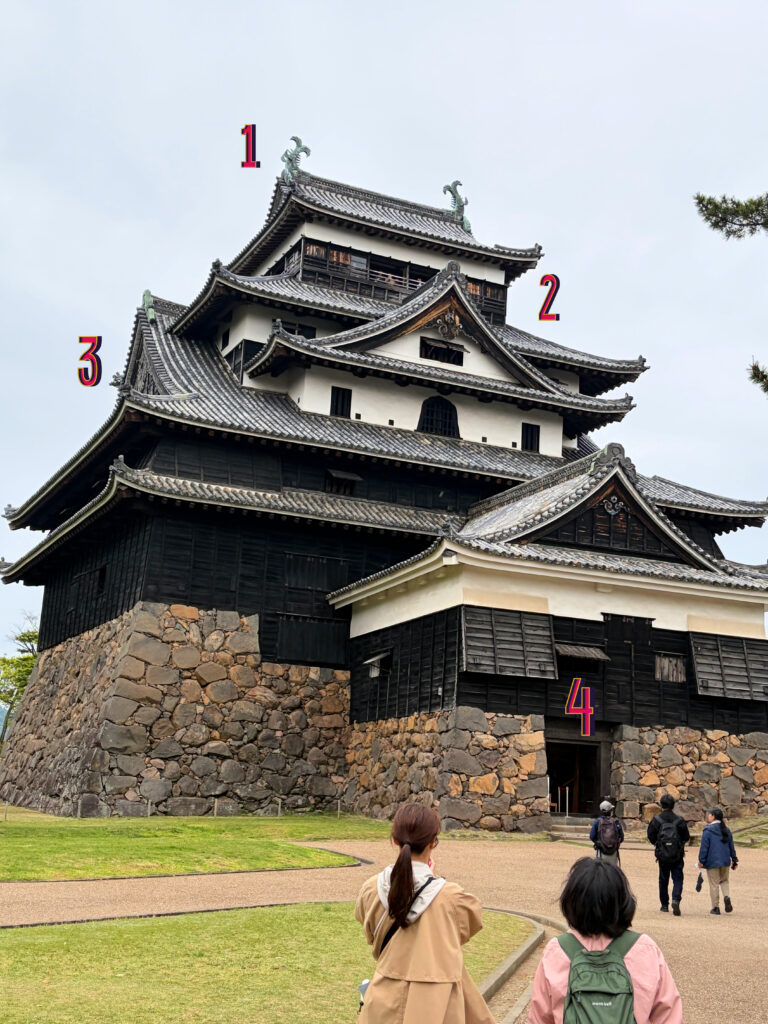
In this next section, I will share some features of Matsue Castle. They are keyed to the picture of the Castle below.
1 – Shachihoko Ornaments: Shachihoko were believed to be sea monsters that could swallow massive amounts of water and summon rain clouds. They acted as protective charms should the building be threatened by fire.
2 – Watchtower: The watchtower on the 5th floor of the castle provided unobstructive views of the surrounding area, serving a defensive purpose.
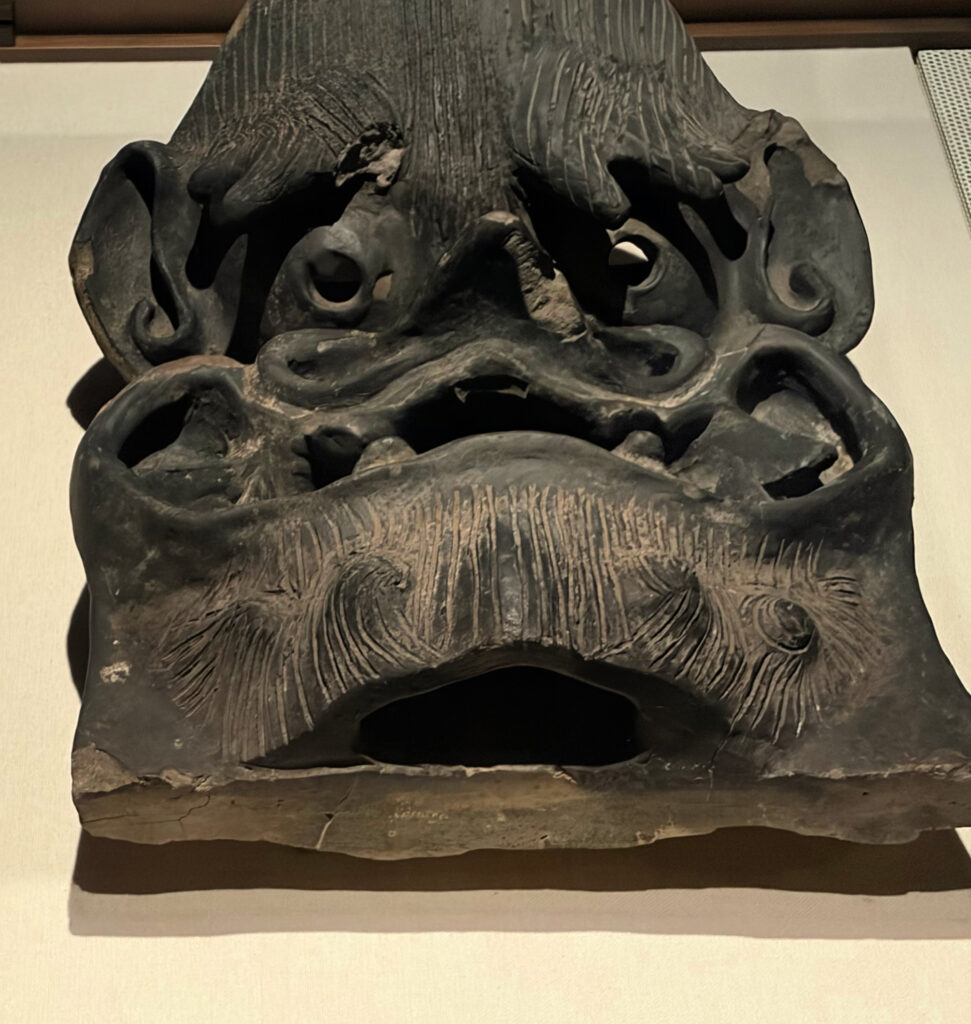
3 – Onigawara: These sit on the corners of the roof and are demon-faced tiles (see close-up picture below the castle). They are rare because most castles would have had a clan crest here.
4 – Forebuilding: This added building was to strengthen the defense at the entrance to the castle. The door is iron-plated. Behind it, the space divides into two floors, intending to slow any potential invaders.
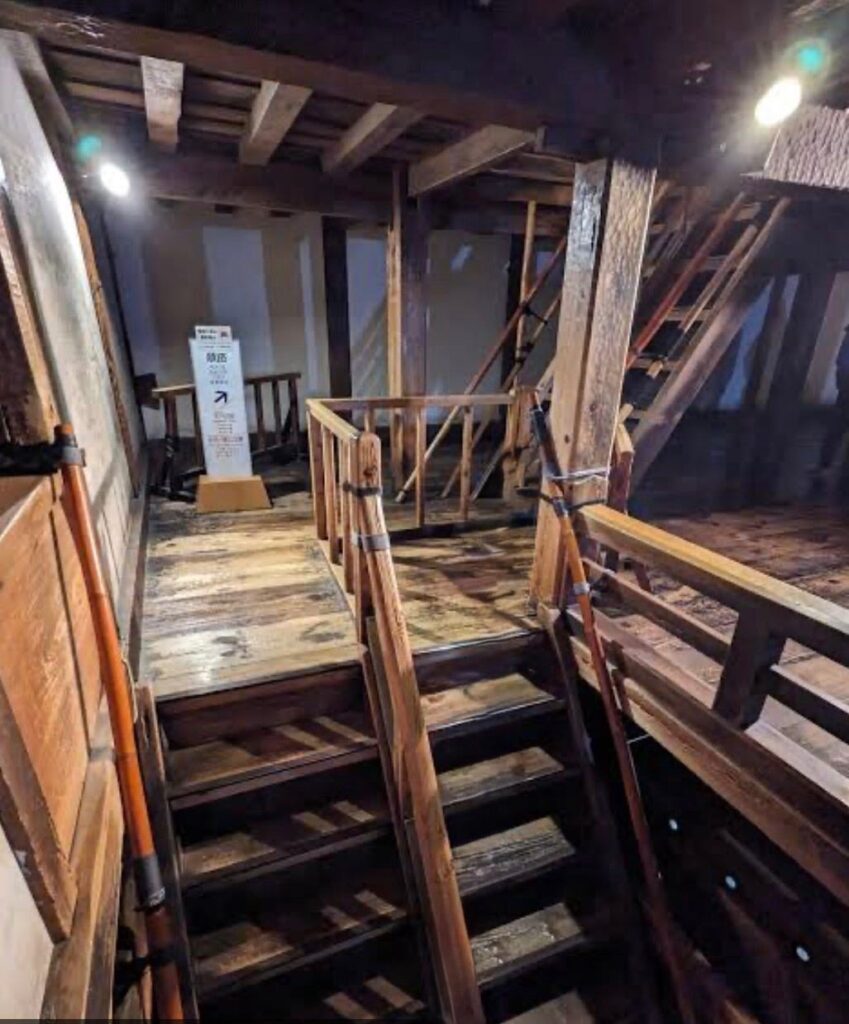
Besides the Watchtower and Forebuilding, Matsue Castle had other defensive protections. The castle has a basement and five floors. All of the stairs are steep, designed to be a deterrent if an aggressor tried to move from one floor to another (first picture below).
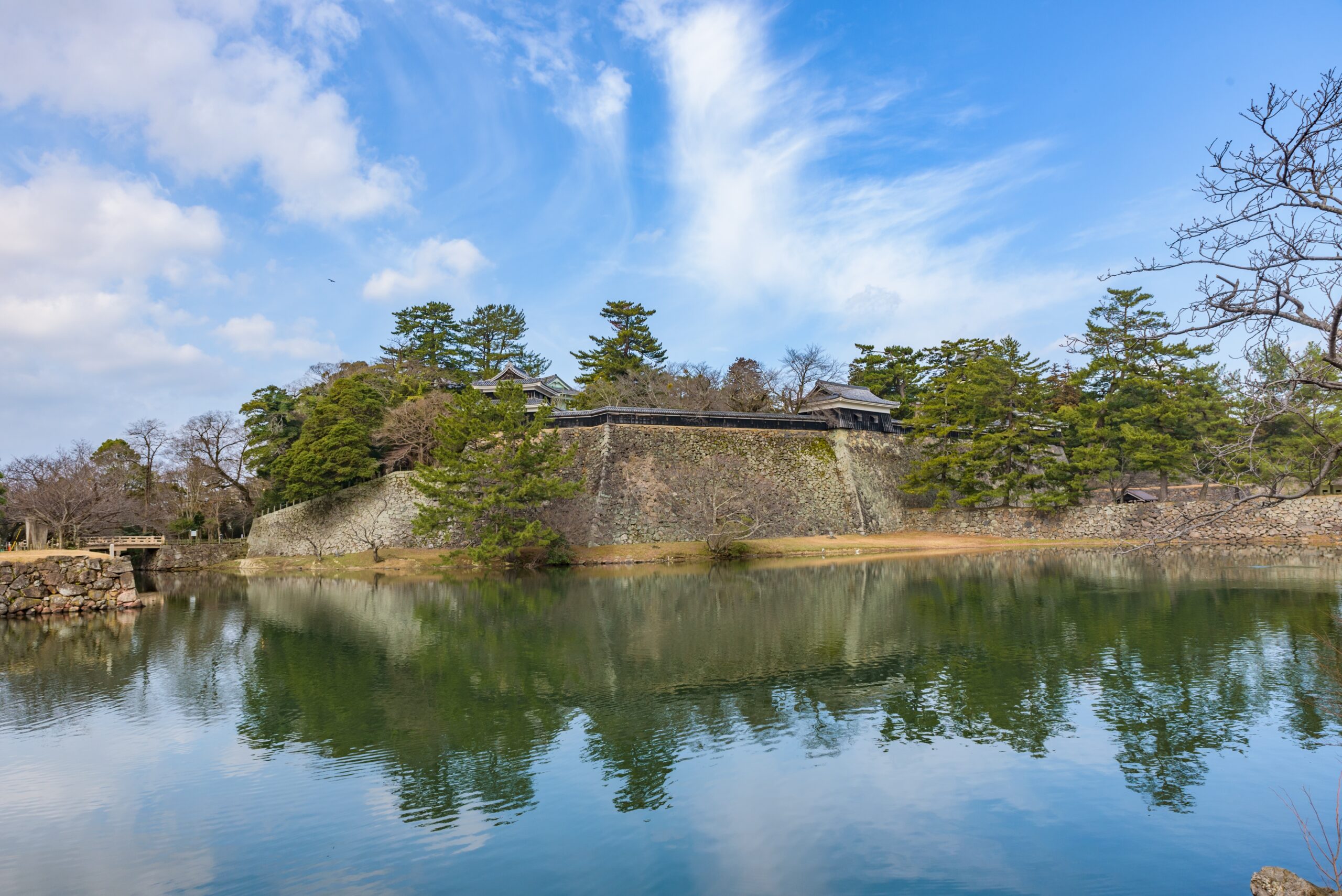
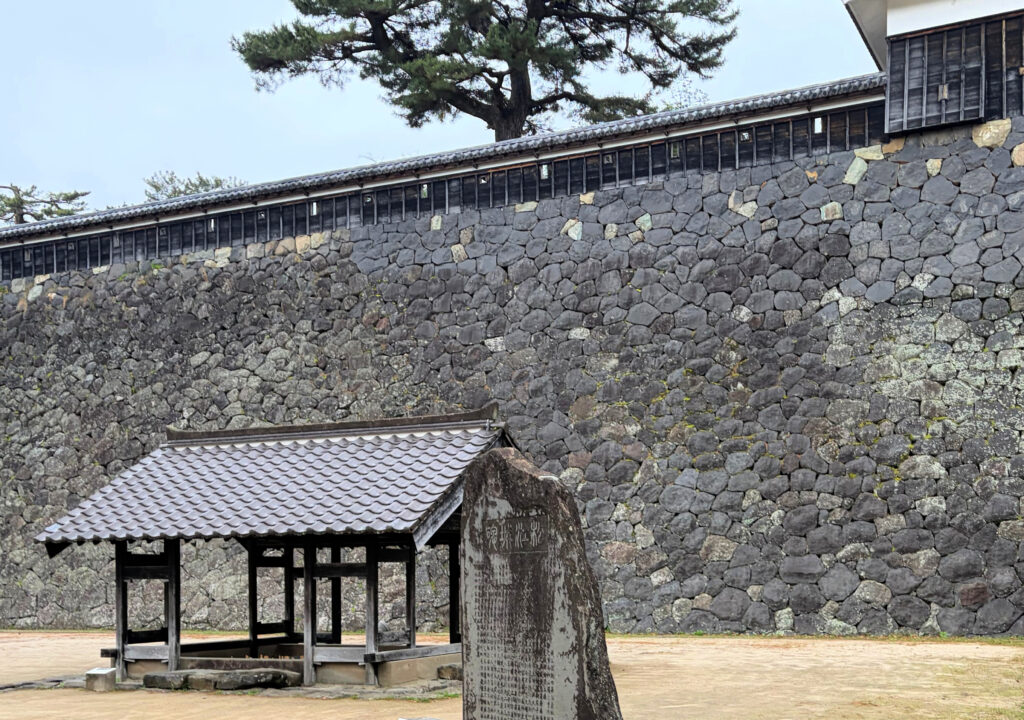
The Castle sits on a high, fortified wall and is surrounded by a moat which still exists (see picture above the title of this post; Credit: Shutterstock / Takashi Images). It is a complicated moat system, including moats, canals and rivers. The moats lead into each other like a maze. The moat system is just over two miles in length. Part of the castle wall is depicted in the second picture below. The small building was once a well.
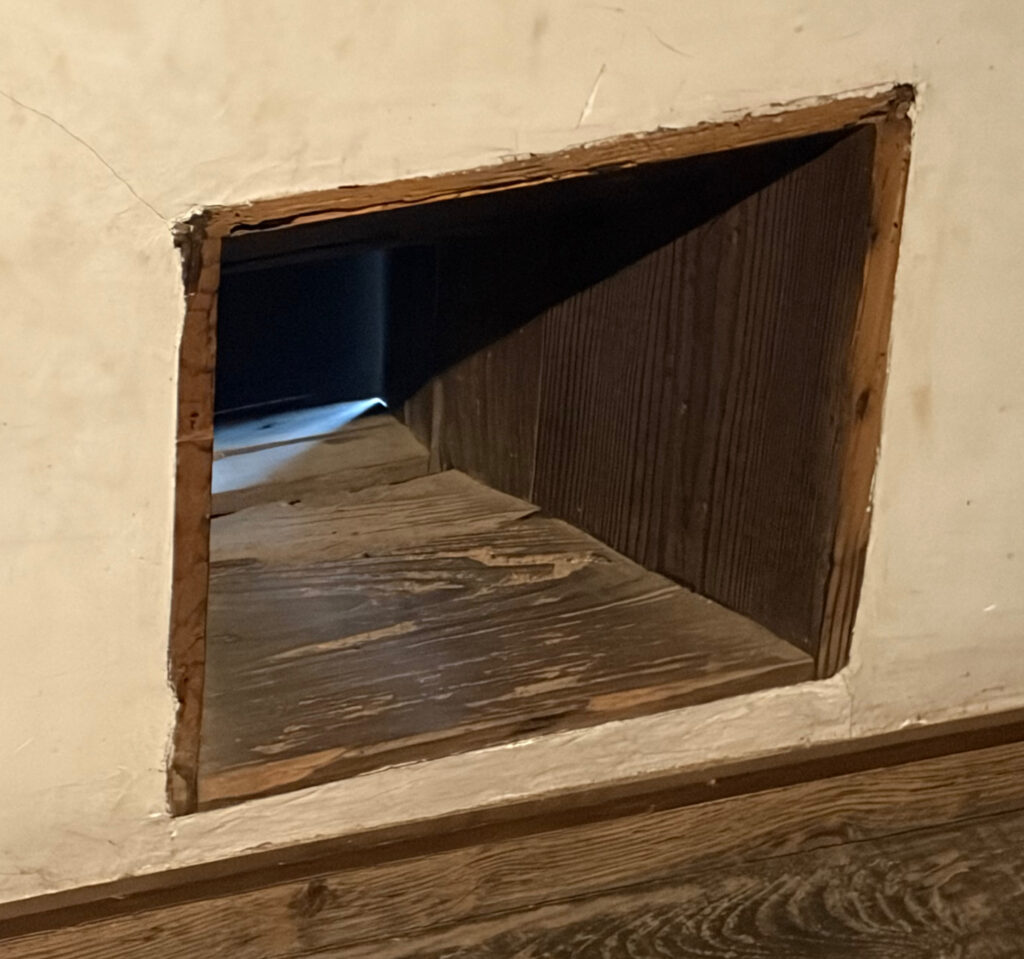
There are also arrow slits for archers, gun ports (third picture below), stone dropping openings and shooting platforms throughout the castle. Matsue Castle was never in a war which likely contributed to it surviving in its near original condition.
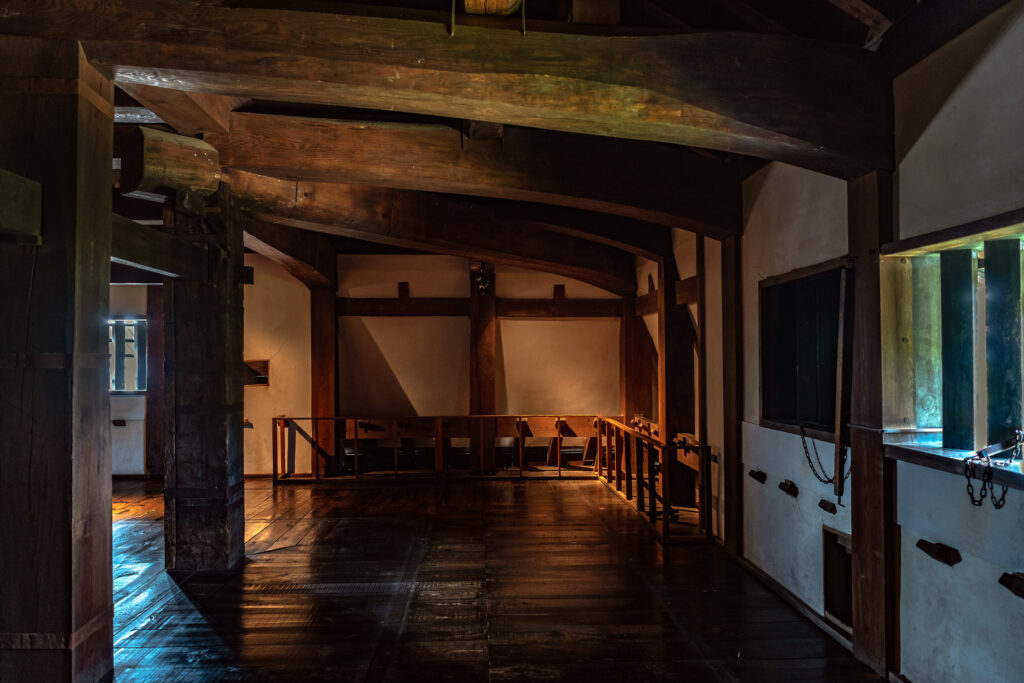
Pictured below is one of the interior rooms of the Castle Tower (Credit: Shutterstock / Taira). Two construction methods were used when building Matsue Castle. Due to timber shortages, the castle does not have a massive core pillar. Instead, through-pillars spanning two floors provide structural support. The second method uses other beams that transfer the weight from upper floors horizontally instead of directly to the pillars on the lower floors. This structural design is another reason for Matsue Castle’s designation as a National Treasure.
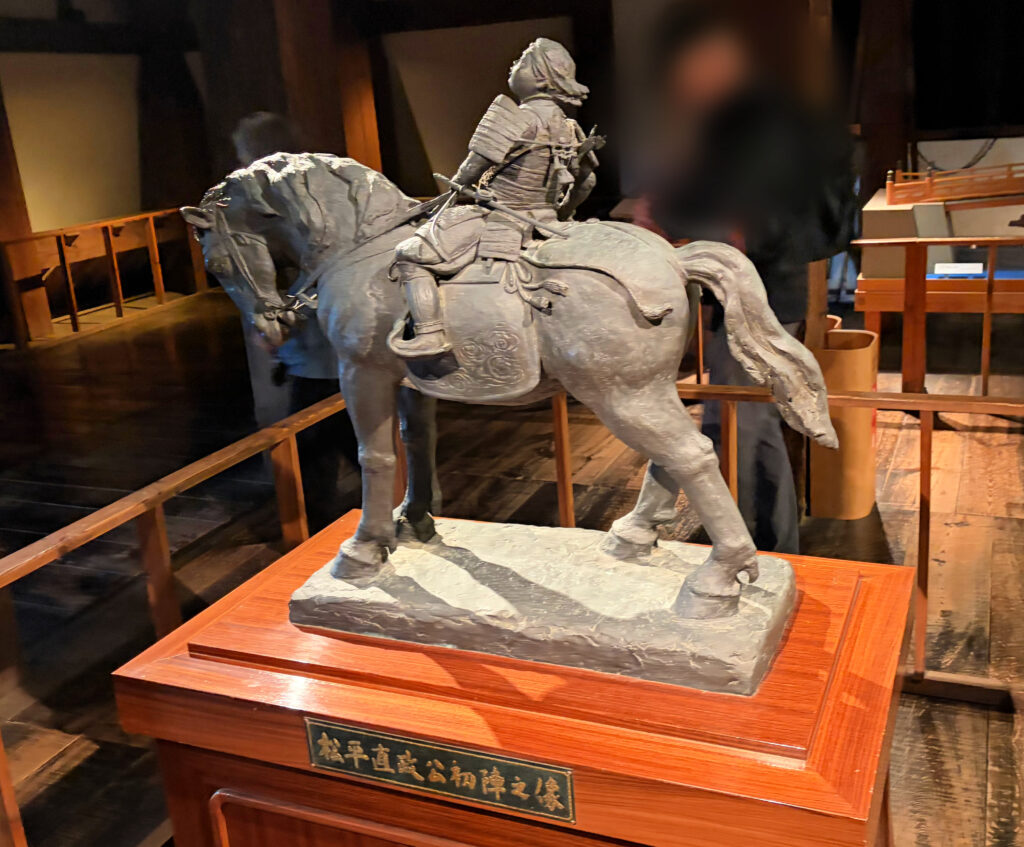
Artifacts were also displayed in the Castle. The picture below is a statue of Matsudaira Naomasa. He fought in the Siege of Osaka (1615) at the age of fourteen with such bravery that the opposing commander threw him his military war fan to honor him. Wikipedia describes a military war fan as a weapon and signaling device designed to look like a handheld fan. Naomasa’s war fan is a national treasure and displayed at Matsue Castle.
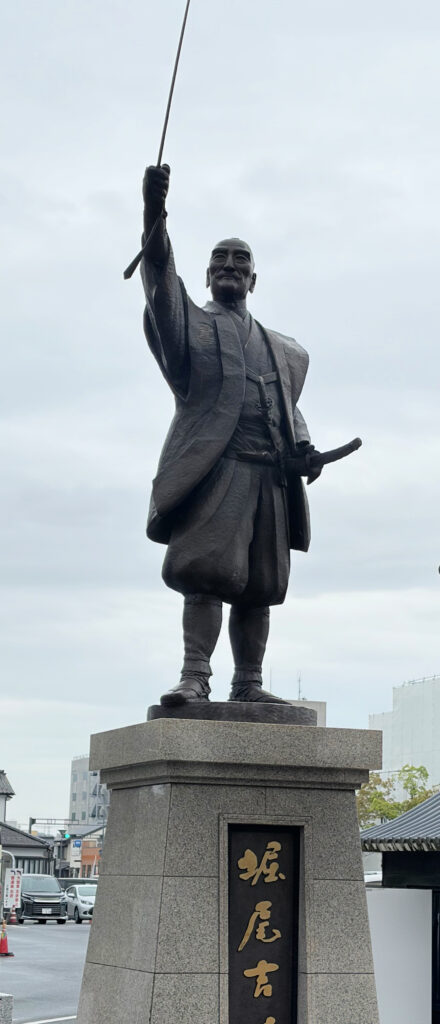
Horio Tadaharu (1542-1611), his statue pictured below, was a Japanese leader known as a daimyo. A daimyo was the most powerful class of samurai warlords. Tadaharu was the third leader of the Matsue clan and ordered the building of the Matsue Castle.
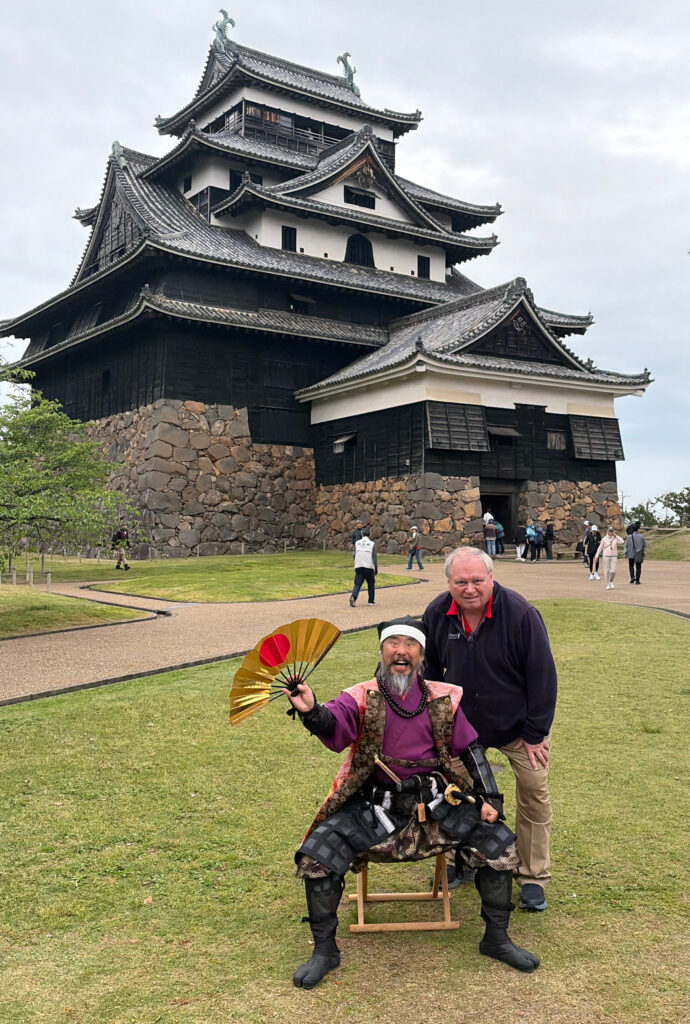
In next picture, Mike is posing with a man dressed as a samurai. Samurai were elite military nobility and officers serving powerful feudal lords (daimyo). They shaped Japanese history for centuries.
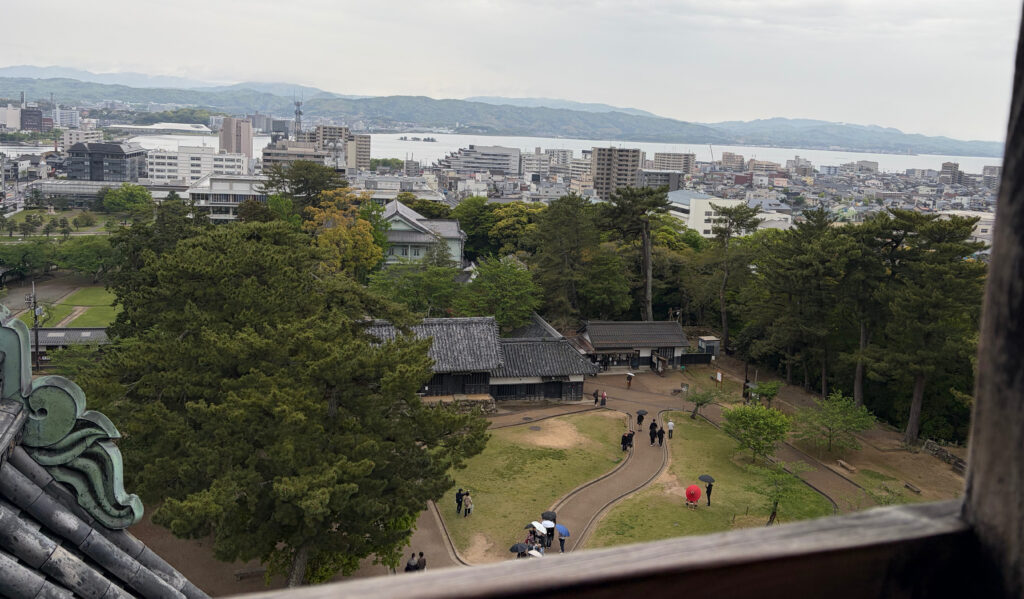
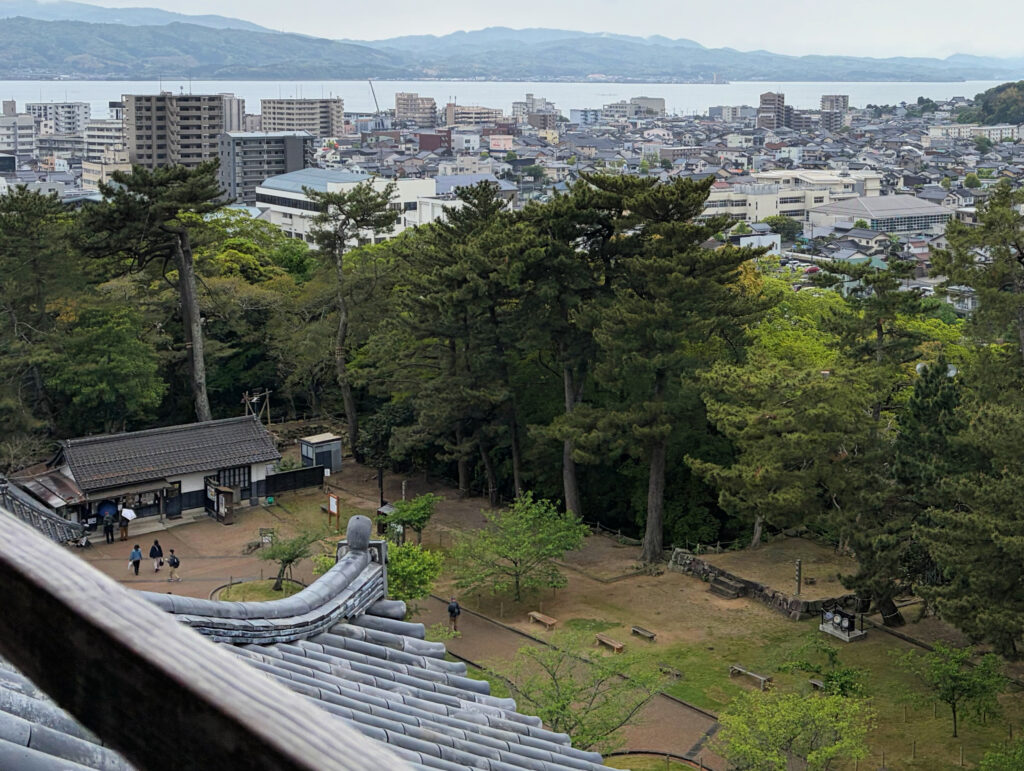
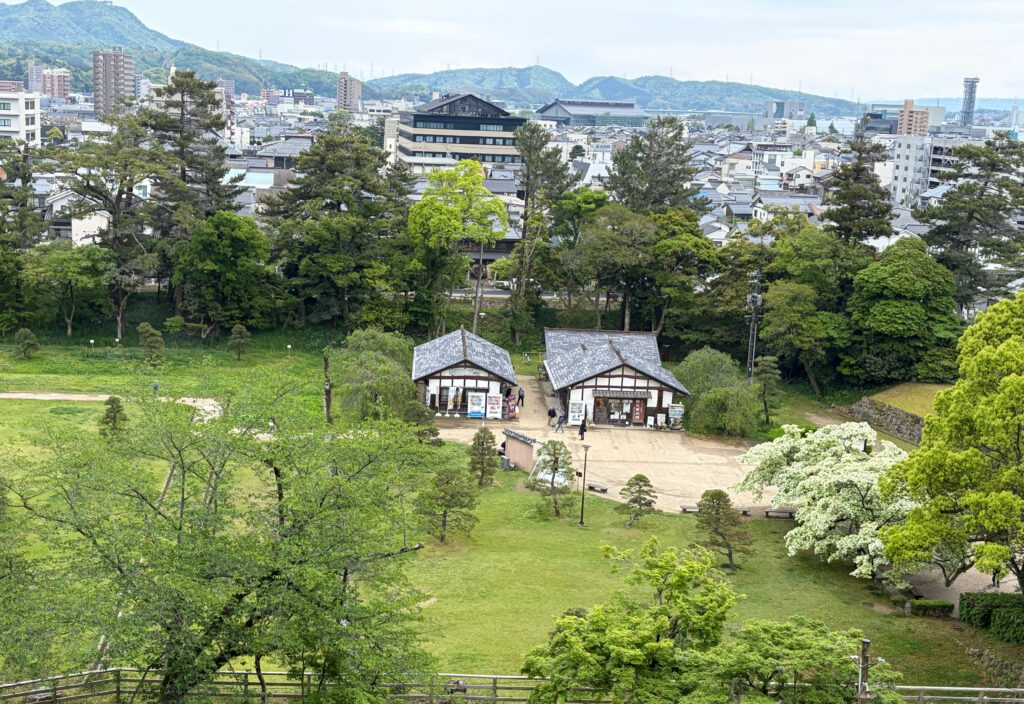
These are pictures of the Matsue Castle grounds and the city of Matsue. They were taken from the top floors of the Castle.