Adachi Museum of Art
Tauck’s Sakura Seas tour continued as we boarded the Le Soleal and we set sail for Japan. The first town we would visit was Sakaiminato, located on Japan’s main island of Honshu. Sakaiminato is a key port on the Sea of Japan coastline, connecting Japan with Korea, China, and Russia. The port supports fishing, cargo shipping, cruise ships and international trade. And of course it’s a great place to get fresh seafood!
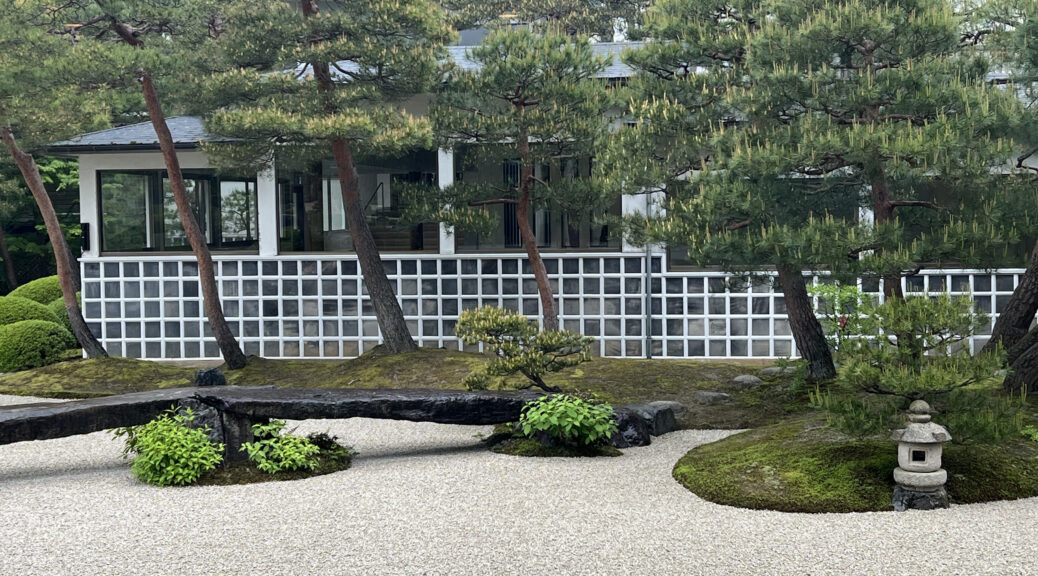
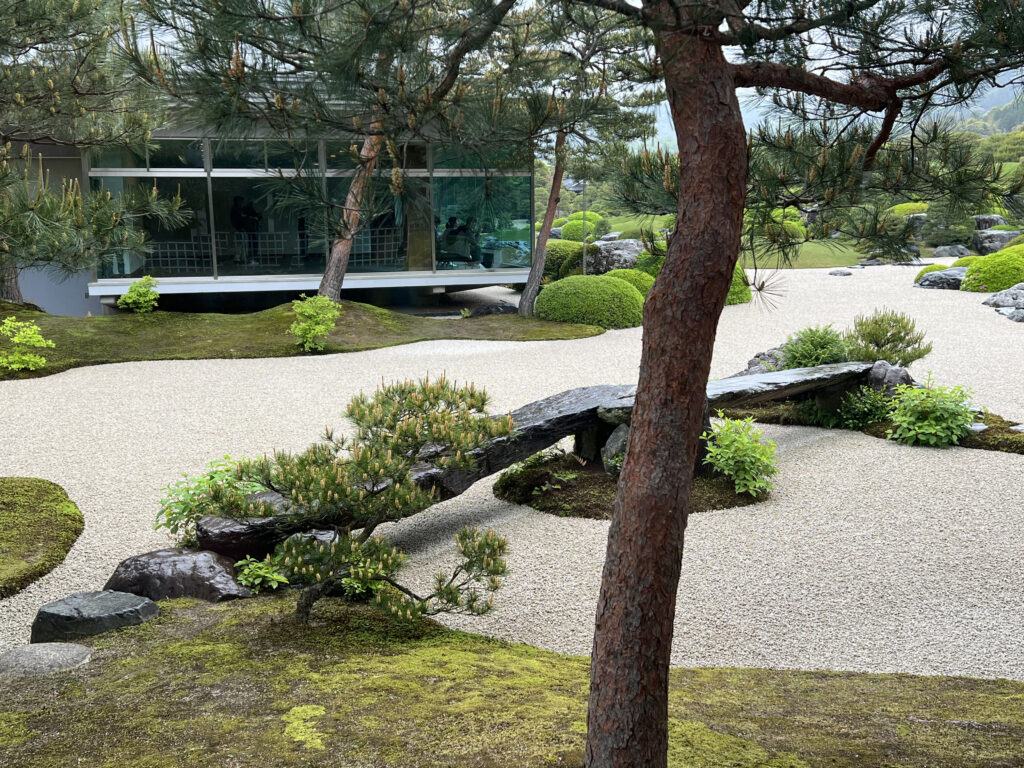
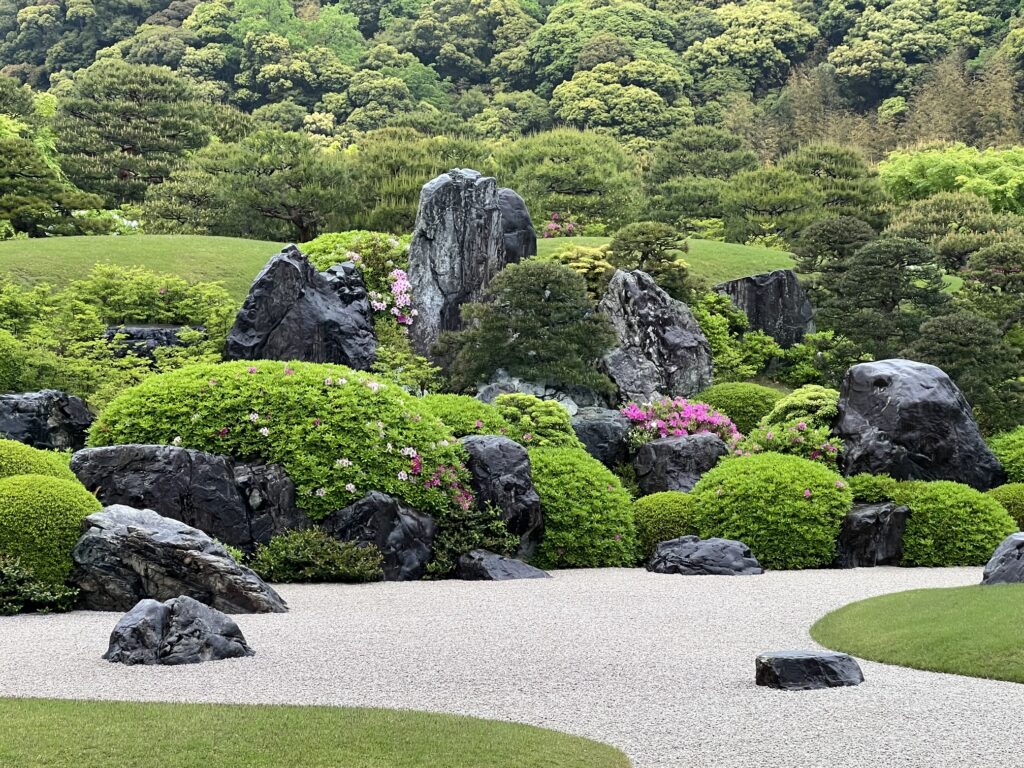
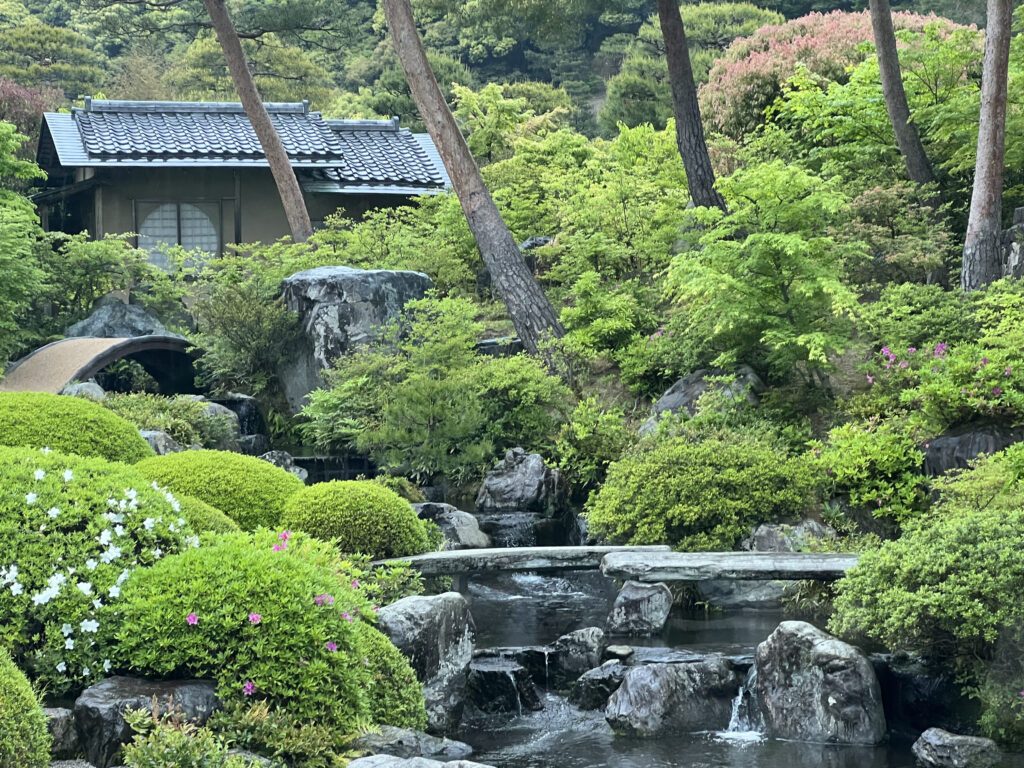
In Sakaiminato, we had our choice of excursions. I chose to go to the Adachi Museum of Art, better known for its beautiful gardens than for its collectiion of contemporary art. The Museum’s founder, Adachi Zenko, stated, “A Japanese garden is thought of as a living canvas.” A traditional Japanese garden is referred to as a “dry landscape” consisting mostly of rocks and sand. They are commonly known as Zen gardens. The gardens at Adachi are also made up of white gravel, pine trees, bushes, moss, grasses, water and tea gardens. The Museum’s windows frame the different gardens beautifully.
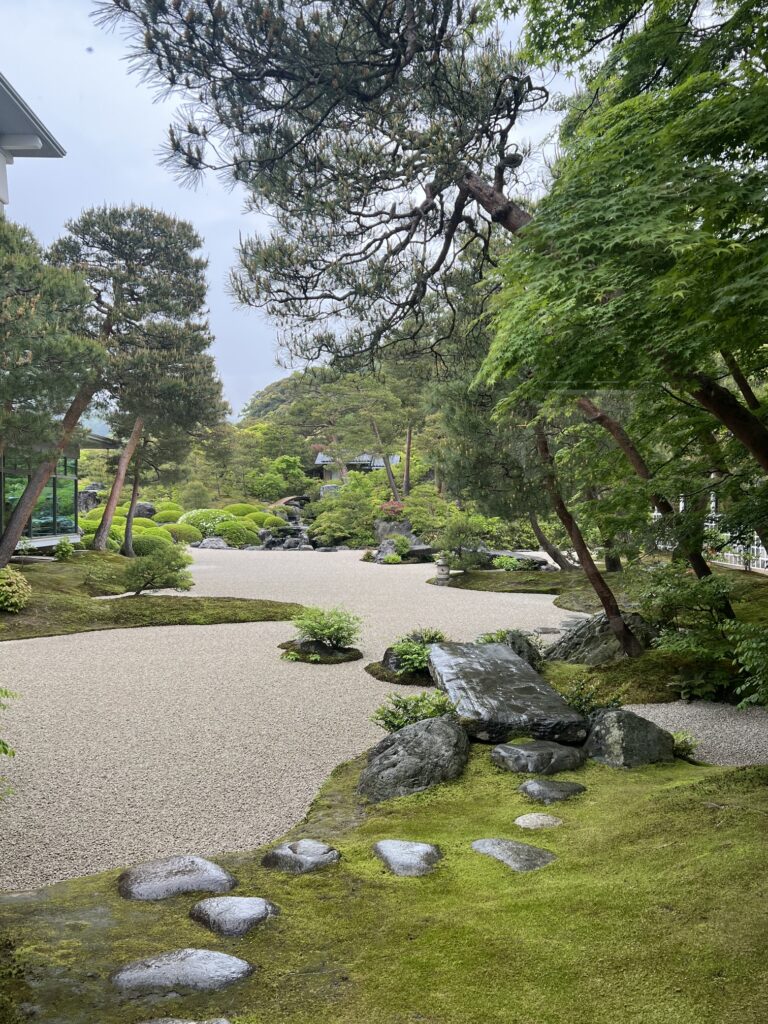
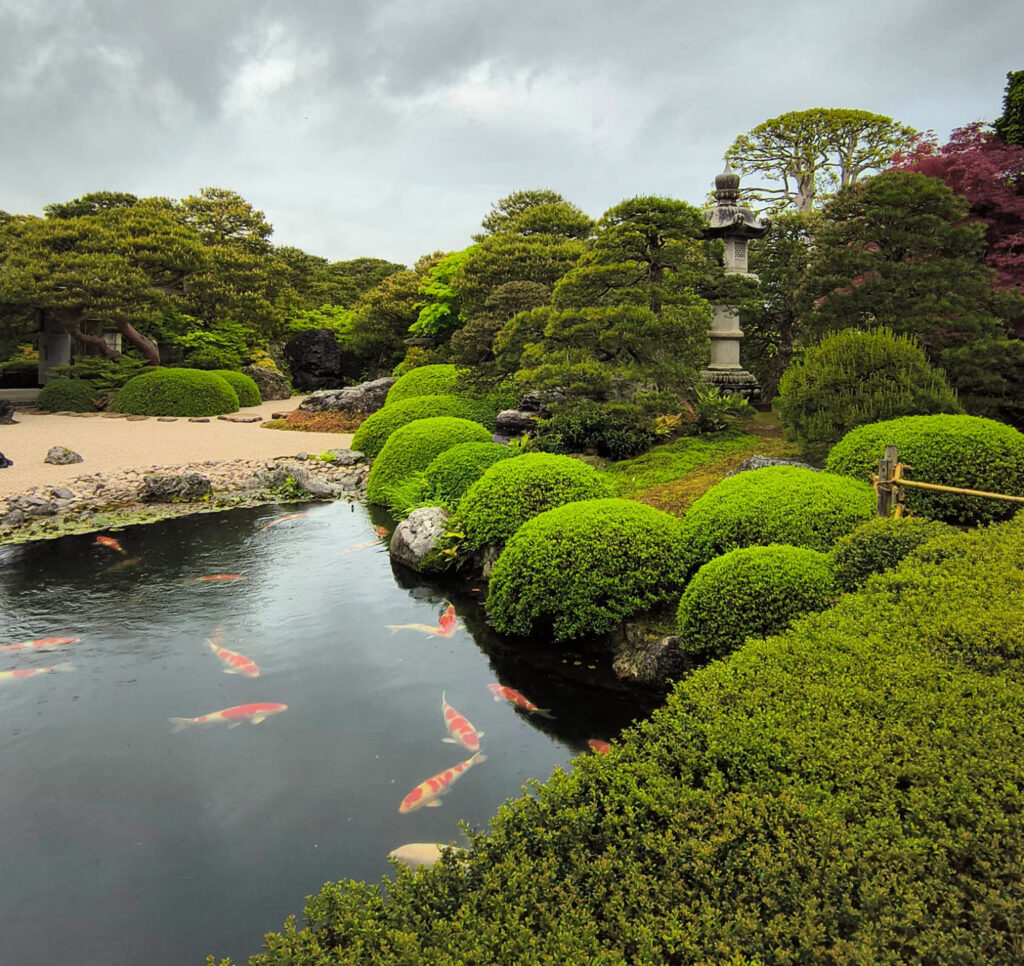
Pictured both above the title for this post and the first picture below is the Garden of Rosanjin Hall which includes several kinds of trees including red pines and Japanese maples. The next picture is the Moss Garden with the moss contrasting with the white gravel. The last picture in this section is the Pond Garden. Seven full-time gardeners maintain the grounds.
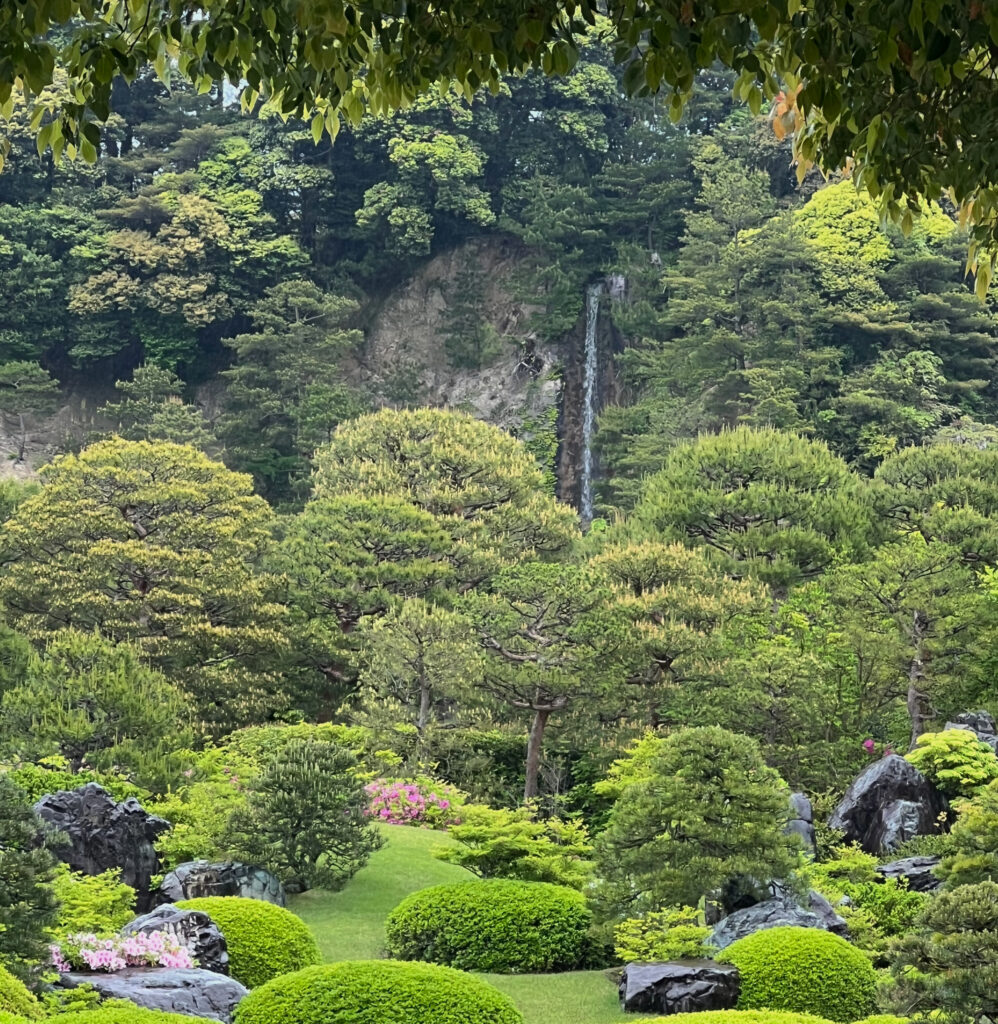
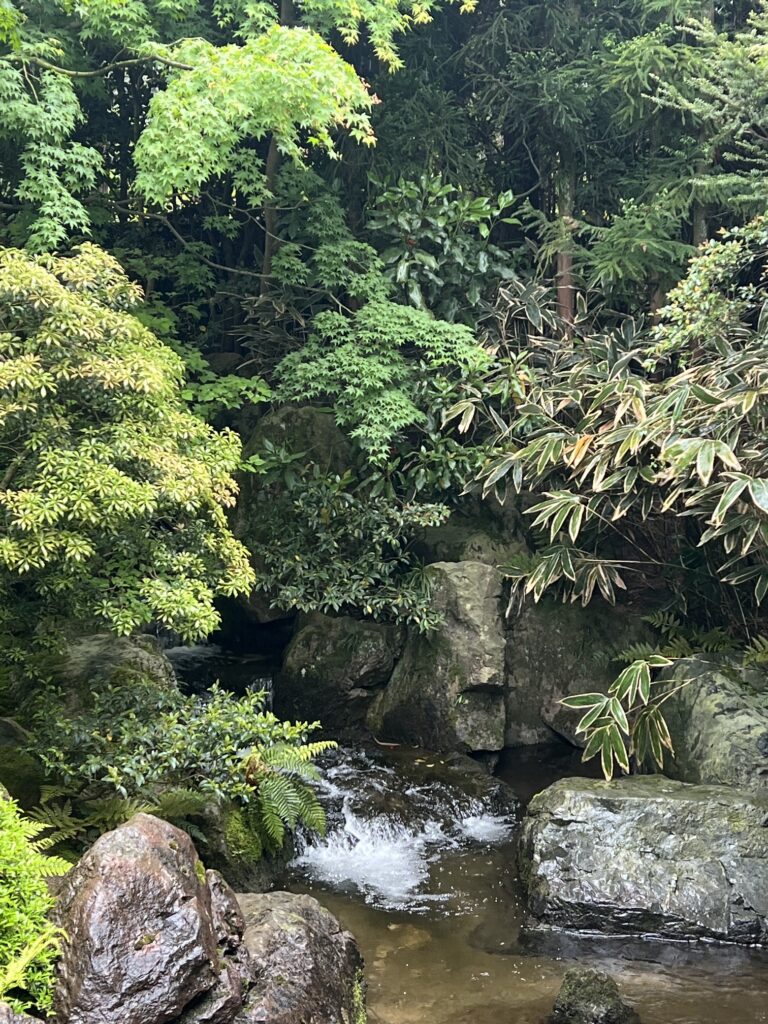
As we walked through the Museum, every turn revealed another opportunity to see the gardens from a different vantage point. The pictures below include the Kikaku Waterfall. The Waterfall actually lies outside the Museum grounds – in fact there is a road between the gardens and the waterfall. A view of the waterfall was artfully incorporated into the gardens.
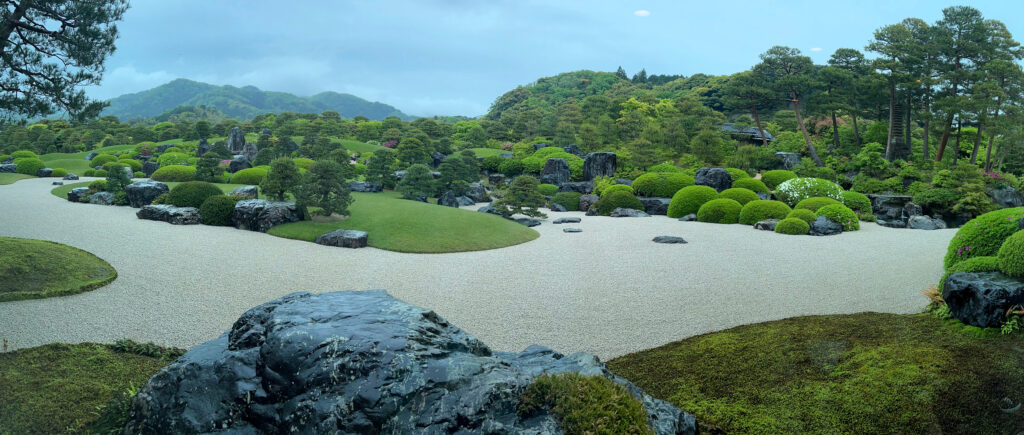
The panorama picture below is known as the Living Framed Picture. One of the Museum’s large windows serves as the “frame” for the garden.
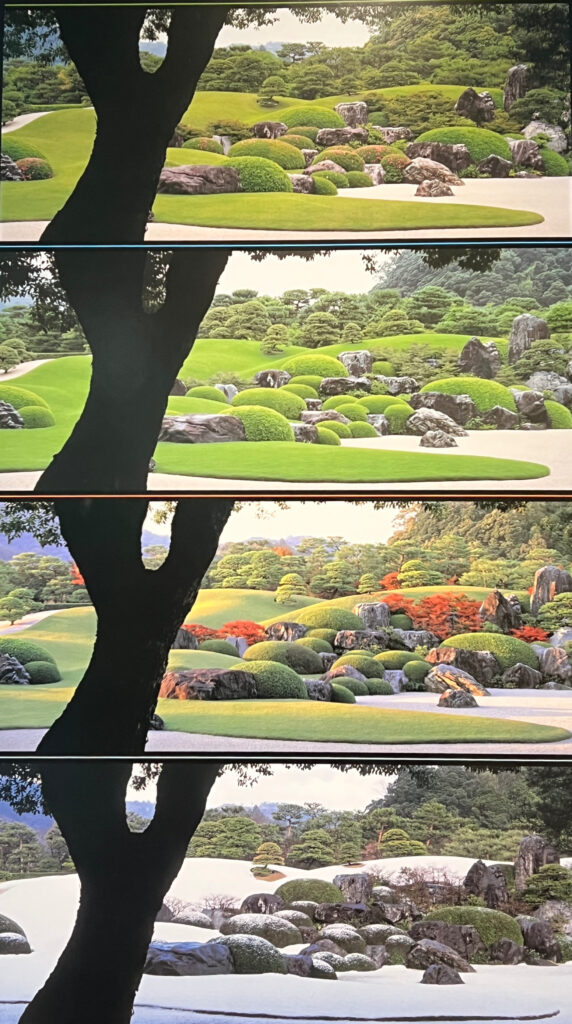
The second picture is actually a picture hanging in the Museum. It depicts the same garden view but taken in the different seasons. As this photograph shows, there is beauty throughout the year.
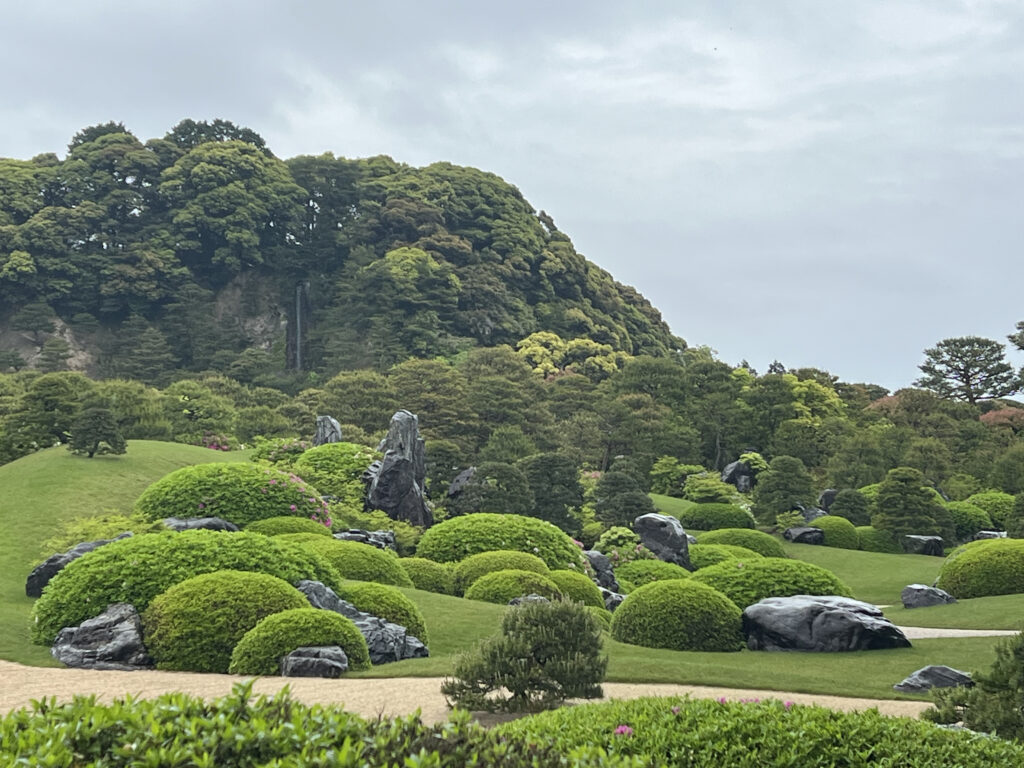
The Adachi Museum was one of my favorite excursions on this tour. Kinsaku Nakane designed the 12 acres of inter-connected gardens in 1970. It is considered a modern masterpiece. The Adachi Museum gardens have been ranked #1 among Japan’s 1,000 gardens by Sukiya Living Magazine: The Journal of Japanese Gardening. These are a few more of the beautiful views of the gardens we enjoyed.
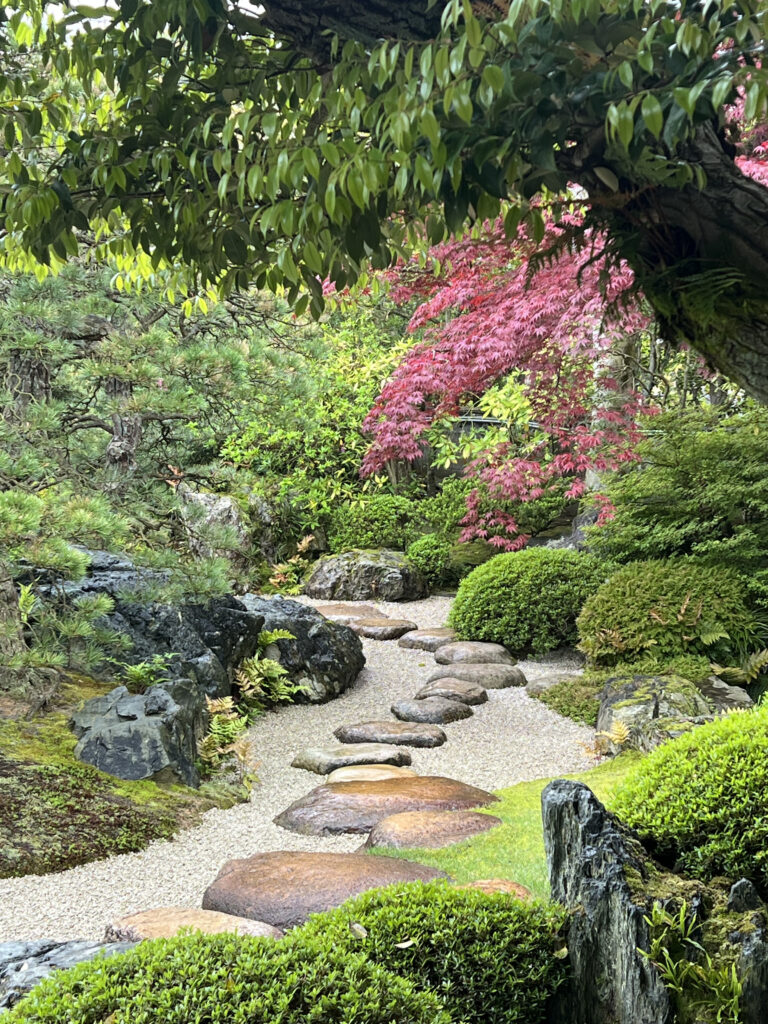
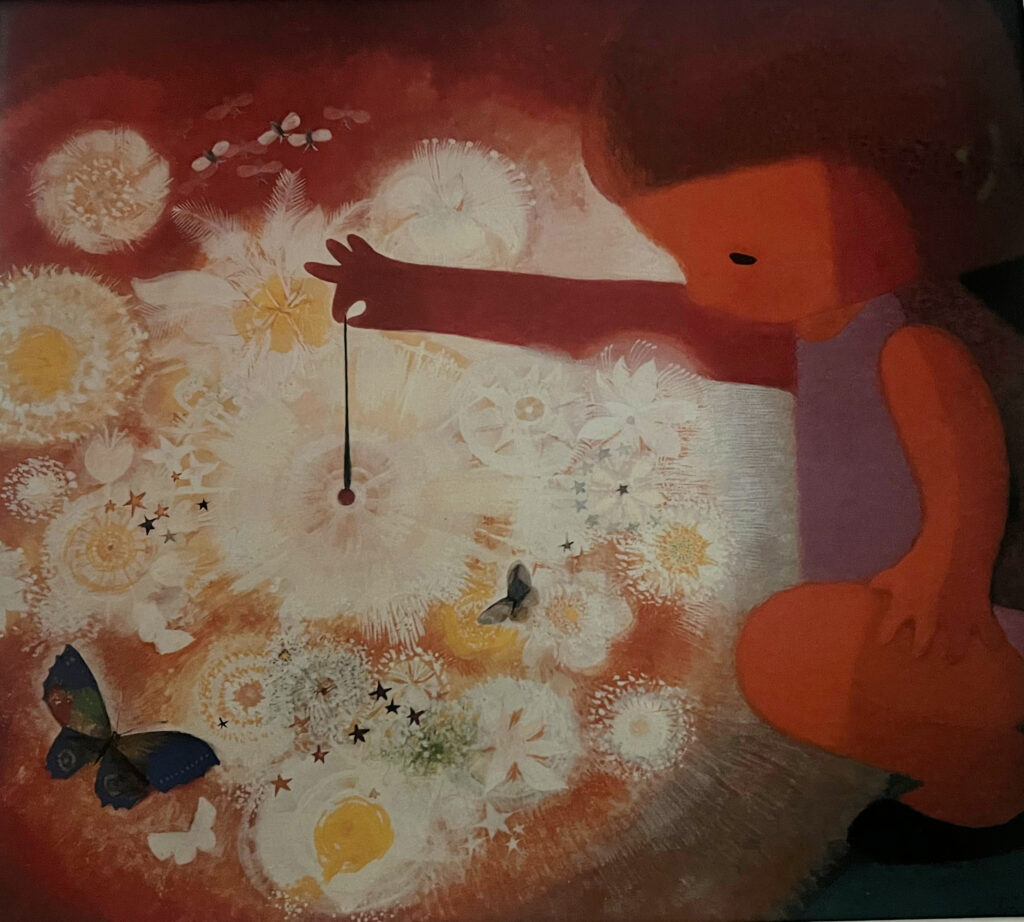
Although the gardens were my focus, the Museum is also home to 2,000 works of art, including paintings, ceramics, wood carvings, and paintings for children. The Museum includes a room where children can try their hand at painting, encouraging their creativity. The picture below, “Sparkler,” is a copy of the original painting created by Hayashi Yoshio (1905-2010). His paintings often feature children playing together and “smiling” animals. We purchased a copy of “Sparkler” for our granddaughter.