War Memorial of Korea
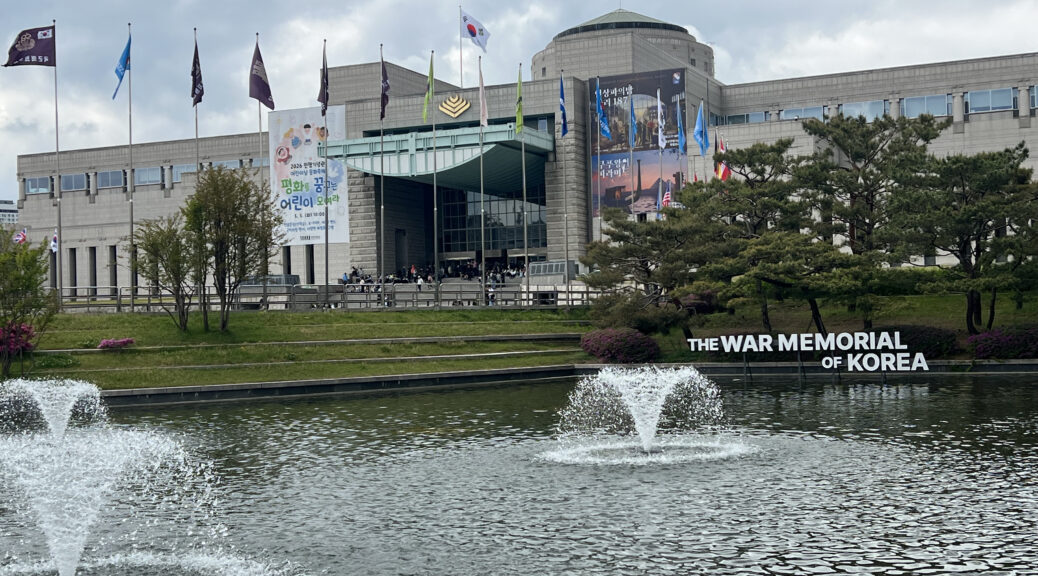
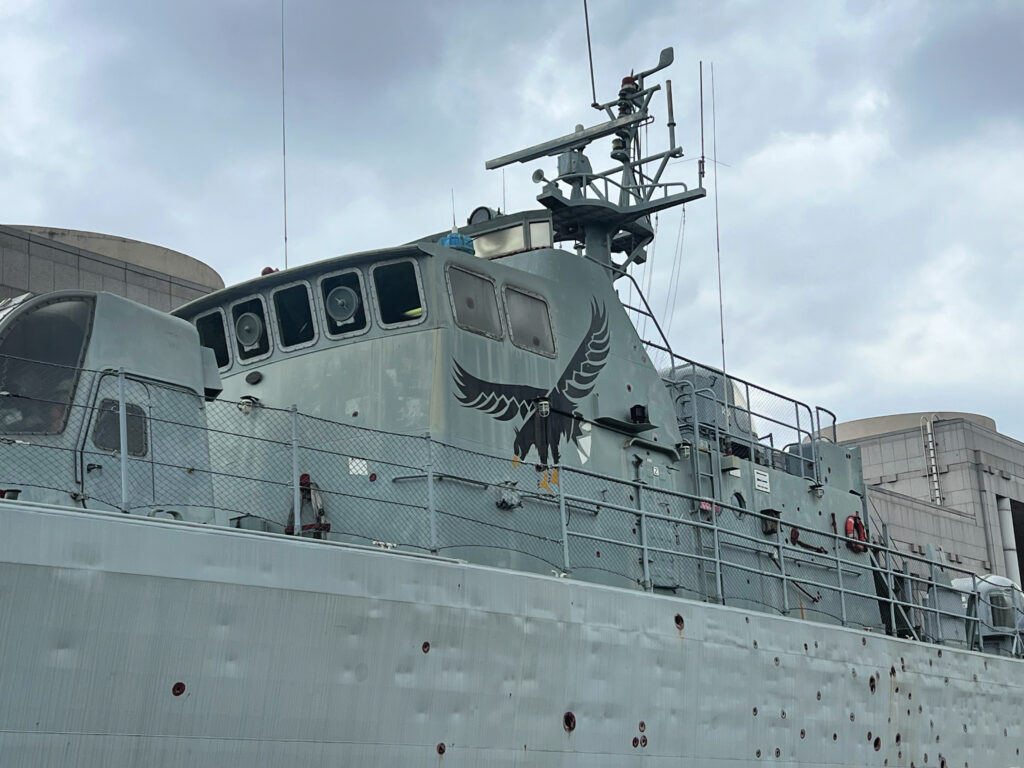
Our tour also took us to the War Memorial of Korea. It was an exceptional museum with lots of information about the Korean War which is where our group spent most of our time. But first I want to share a little about two other exhibits. The first is a South Korean patrol boat that became famous during the Second Battle of Yeonpyeong (2002). Two North Korean patrol boats crossed the Northern Limit Line (NLL), the disputed maritime border in the Yellow Sea. A battle ensued. The South Korean Navy heavily damaged the North Korean boats, and the South Korean ship sank as it was being towed to shore. A replica of the ship, complete with bullet holes, is on display at the War Memorial.
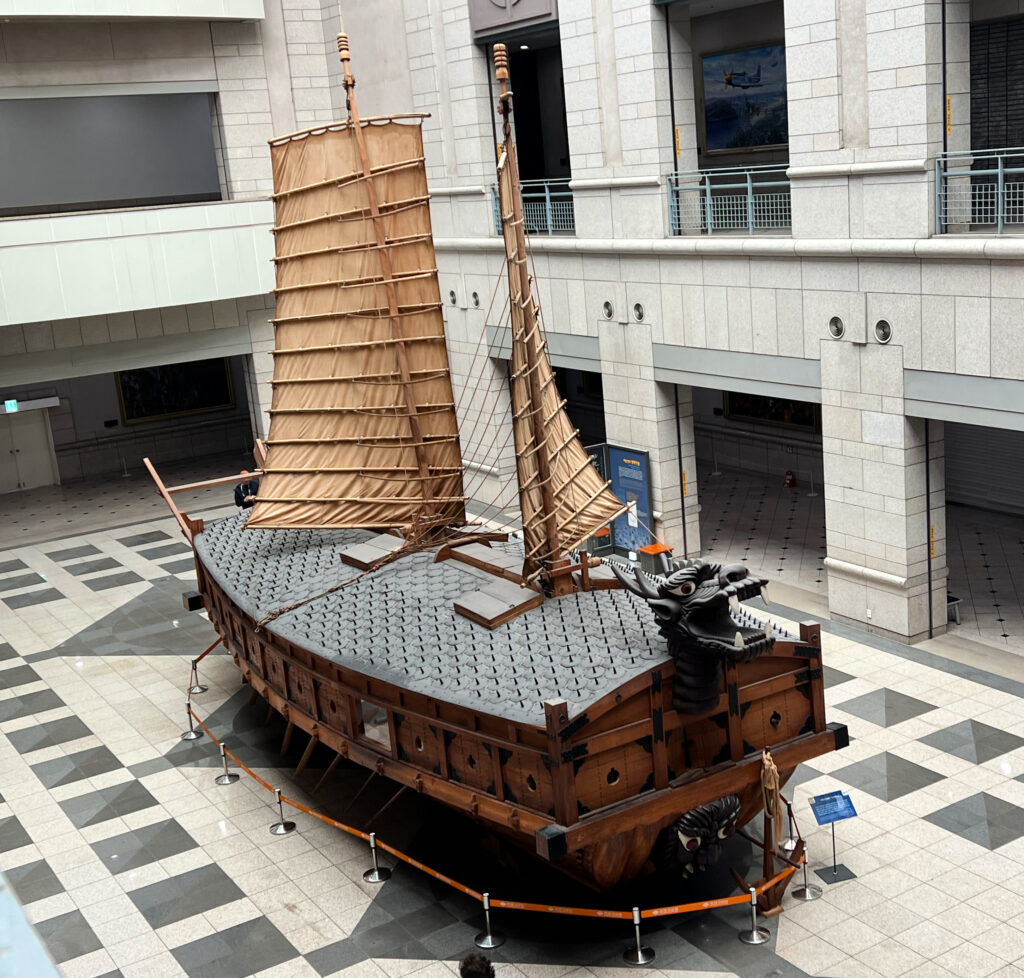
The second exhibit goes much further back in time. It is the geobukseon, known in the west as a “turtle ship.” It was used to defend Korea from invasion by foreign countries during the Joseon period. Korean Admiral Yi Sun-shin designed the ship in 1591. The ship had sharp iron spikes on hexagonal plates that covered the top of the ship giving it the “turtle” name. The plates and spikes prevented enemies from boarding the ship. The turtle ship was also famous for its dragon head mounted on the bow of the ship. A cannon fit inside the dragon’s head. The dragon’s head could also emit sulfur smoke which helped to camouflage the ship’s movement when battling at close distances.
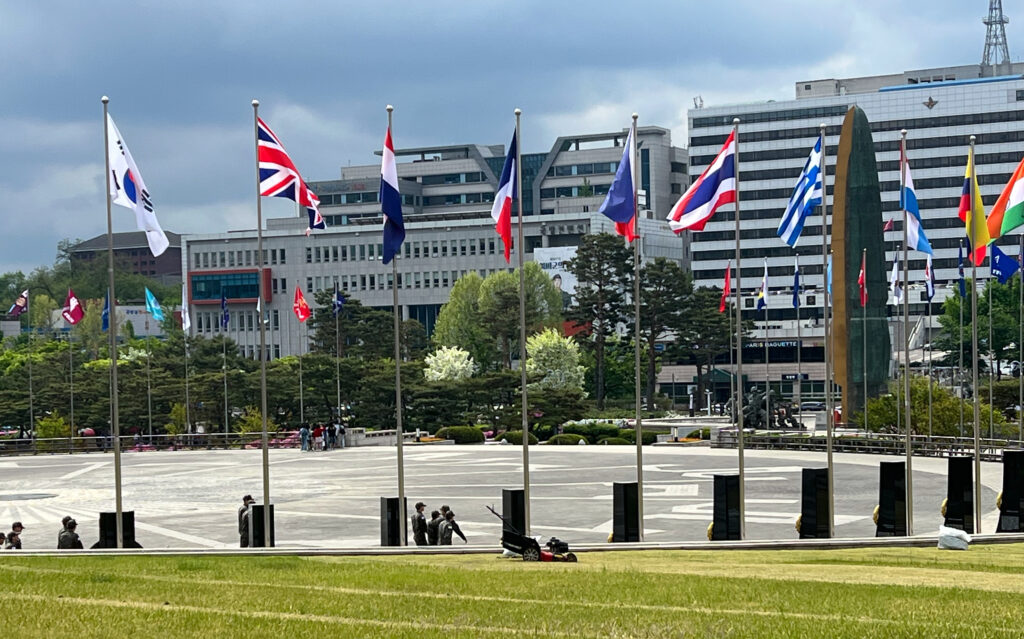
As we first entered the War Memorial, it was immediately apparent the tremendous gratitude South Korea has for the United Nations and the countries that came to their support during the Korean War. The Peace Plaza displays the South Korean flag, the United Nations flag, and the flags of the 22 countries that supported South Korea arranged chronologically by the date they joined the allied war effort.
At the end of World War II, the Soviet Union and the United States divided the Korean Peninsula along the 38th parallel, setting up a communist government in the north and an anti-communist government in the south. This meant the United States avoided a direct war with China but what had been one country was now two and the governments were very much opposed to each other.
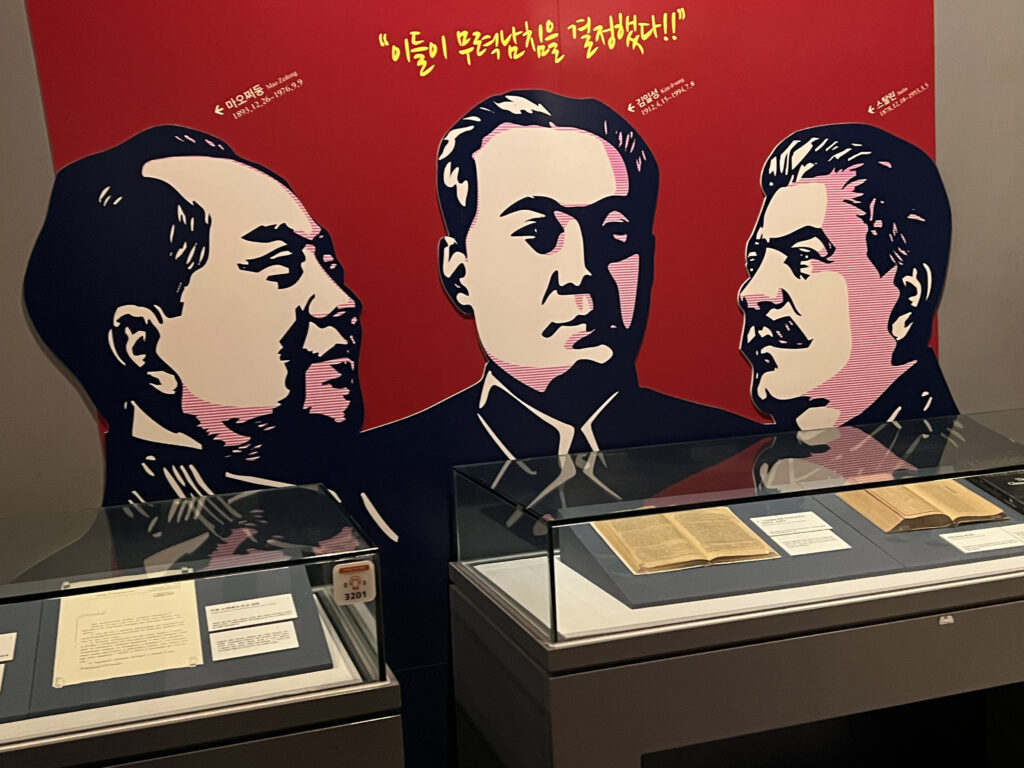
North Korean leader Kim Il Sung visited Stalin in March 1949 and again in March 1950; he wanted to invade the south, and although Stalin was initially reluctant to provide support, he eventually agreed. Kim II Sung also secured the promise of support from China’s Mao Zedong should the US enter the war. These three leaders are pictured below.
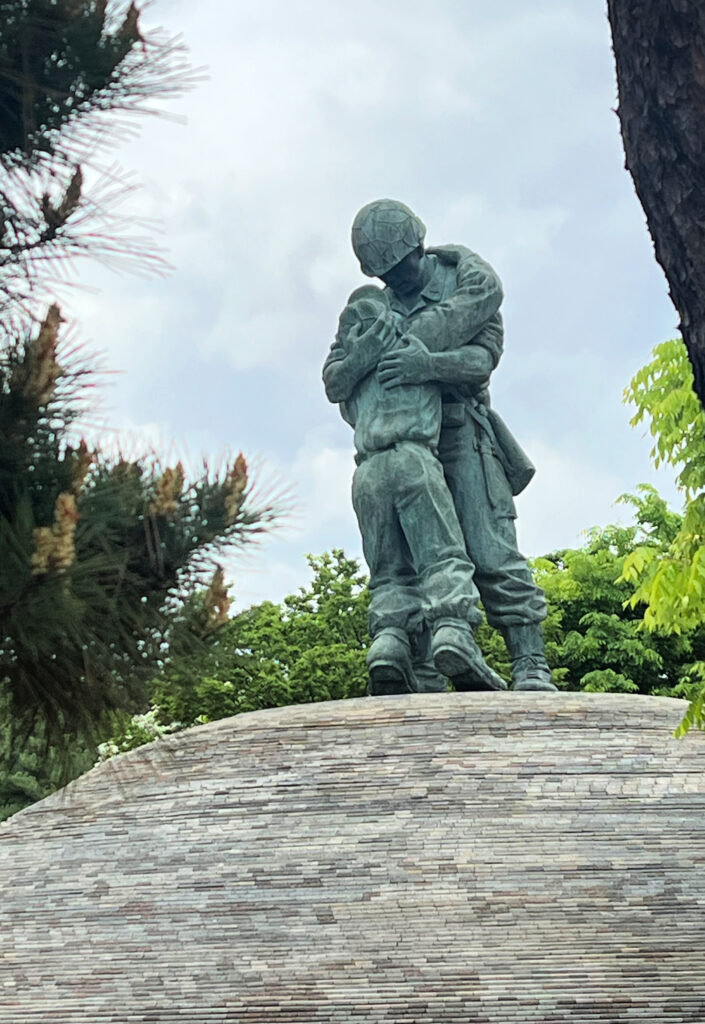
After Kim Il Sung met with Stalin, the two countries signed an agreement that would support North Korea’s war efforts. Russia loaned North Korea $40 million, provided them with modern weapons, provided military training, and worked with North Korea on the invasion plans. The Korean War officially began on June 25, 1950 when North Korean soldiers crossed the 38th parallel, invading South Korea. In addition to two countries at war, family members might also be fighting on opposing sides dependent on if they lived north or south of the 38th parallel. The second picture below depicts this heartbreaking situation. It is the “Statue of Brothers” monument and it is described as follows:
It depicts a real-life encounter from the Korean War: an older brother, an officer in the South Korean Army, unexpectedly reuniting with his younger brother, a North Korean soldier. The two brothers dropped their weapons and embraced in a display of love and sorrow. The statue represents the tragedy of the war, illustrating how the conflict pitted families and countrymen against one another.
After hearing of the invasion, President Harry Truman asked that the UN Security Council be convened. The Council met (Russia boycotted the meeting thus losing their veto power) demanding North Korean forces immediately stop their hostile actions and retreat to the 38th parallel. But North Korea did not retreat, so another resolution was adopted on June 28th labeling North Korea as an invader and urging UN member nations to help South Korea. Twenty-two countries supported South Korea during the War.
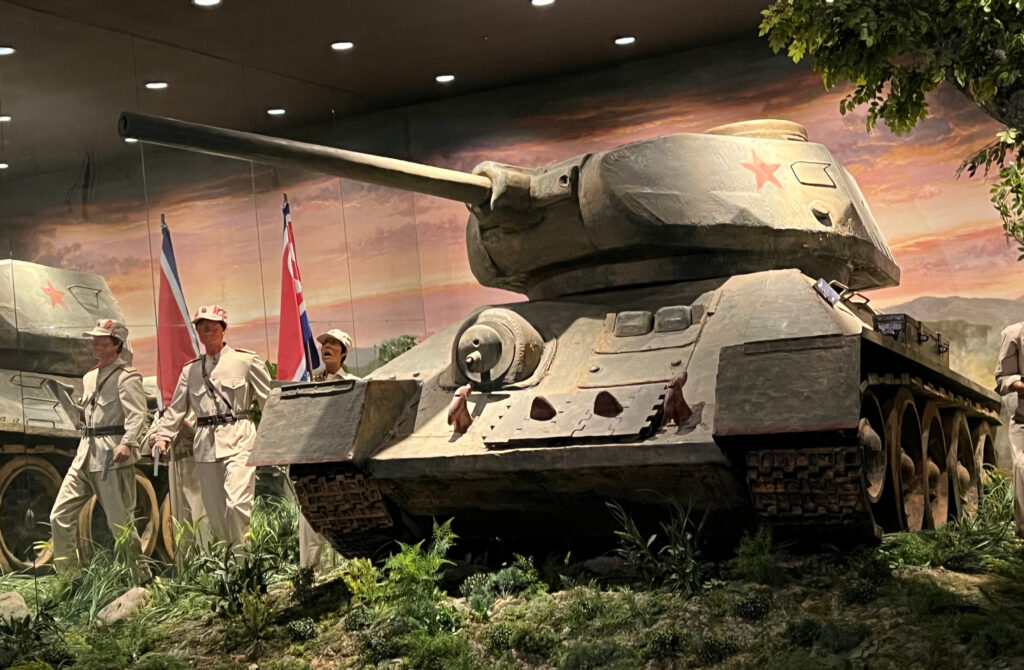
That same day, North Korean tanks entered Seoul. The South Korean Army blew up the Han River Bridge in an effort to stop the North Korean forces (depicted in the first picture below). The United States assisted, but the defense line collapsed and Seoul was occupied by North Korea.
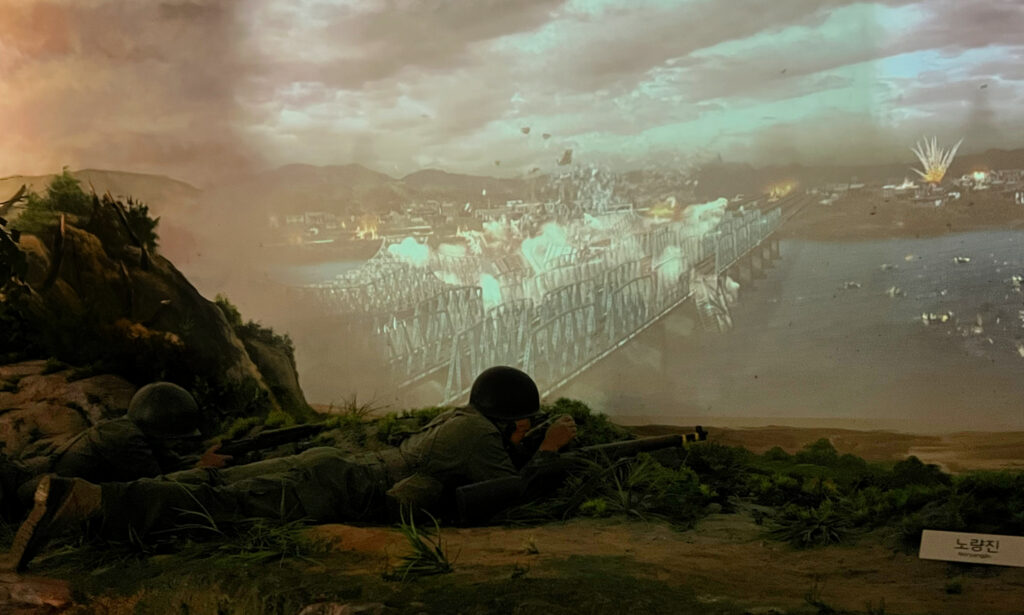
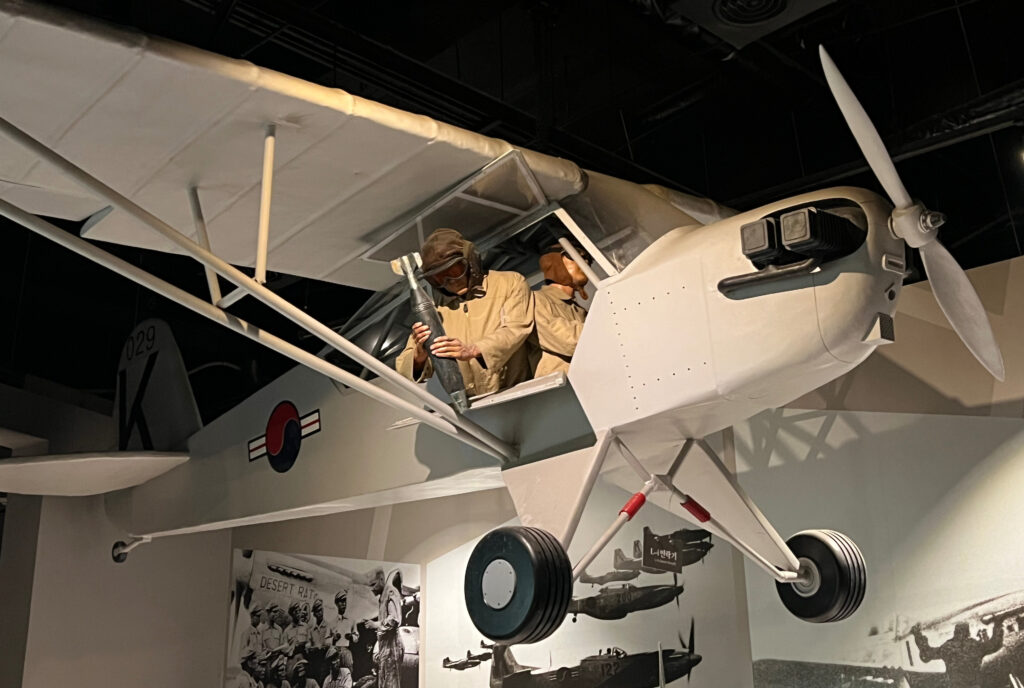
The picture below shows an airplane displayed inside the War Memorial. Notice the soldier leaning out of the plane and dropping a bomb over his target by hand. At the beginning of the Korean War, there were only 57 pilots in the South Korean Air Force. Since the planes were not armed, an observer at the back had to drop a bomb directly through the window while the pilot was flying at low altitude.
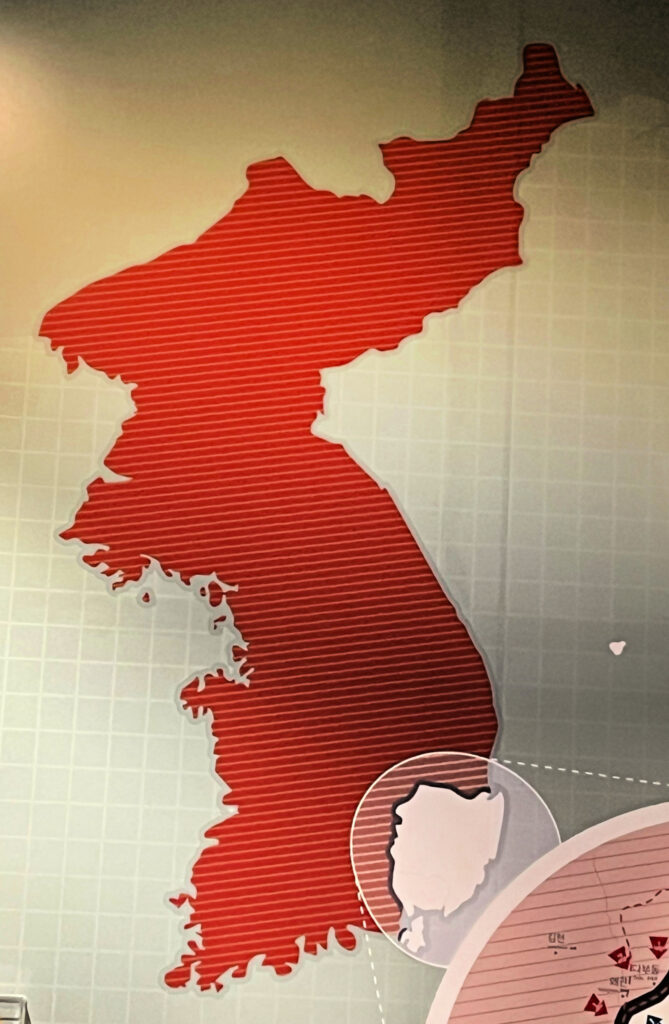
For a time, the situation looked dire for South Korea. Following the initial invasion on June 25, 1950, North Korea’s army pushed rapidly down the peninsula. By August, they controlled about 90% of South Korea, forcing the remaining South Korean and UN forces into a small area around Busan (white area on the map in the second picture). This became known as the Pusan Perimeter.
In mid-September, the UN force launched a successful amphibious counterattack at Inchon forcing North Korea to retreat. Many children between the ages of 14 and 17 were drafted into the South Korean Army while many others volunteered. With little to no formal training, they were sent to the front lines, risking their lives in defense of their country.
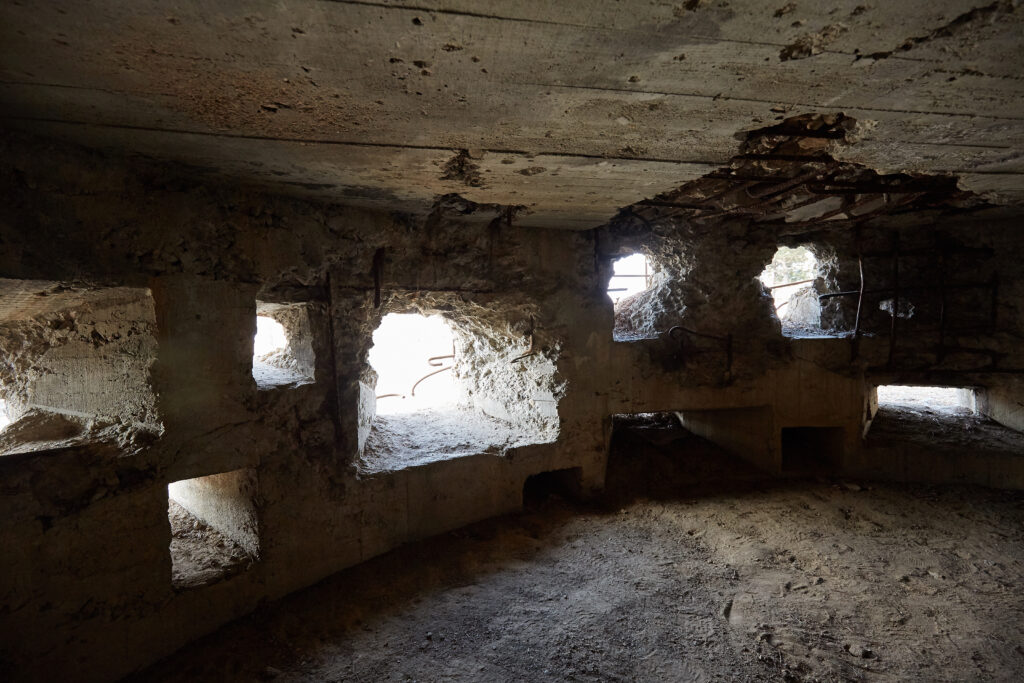
These are actual pictures related to the Korean War that I purchased from Shutterstock. The first picture depicts the remains of the Pocheon Bunker. It was a defensive military structure with an outside concrete wall about 35 inches thick. The openings were wider inside and narrower outside, giving an offensive advantage while protecting the soldiers inside the bunker. The bunker is one of many built by South Korean forces around 1948 when tensions were growing between the North and South. It was used in battles during the Korean War.
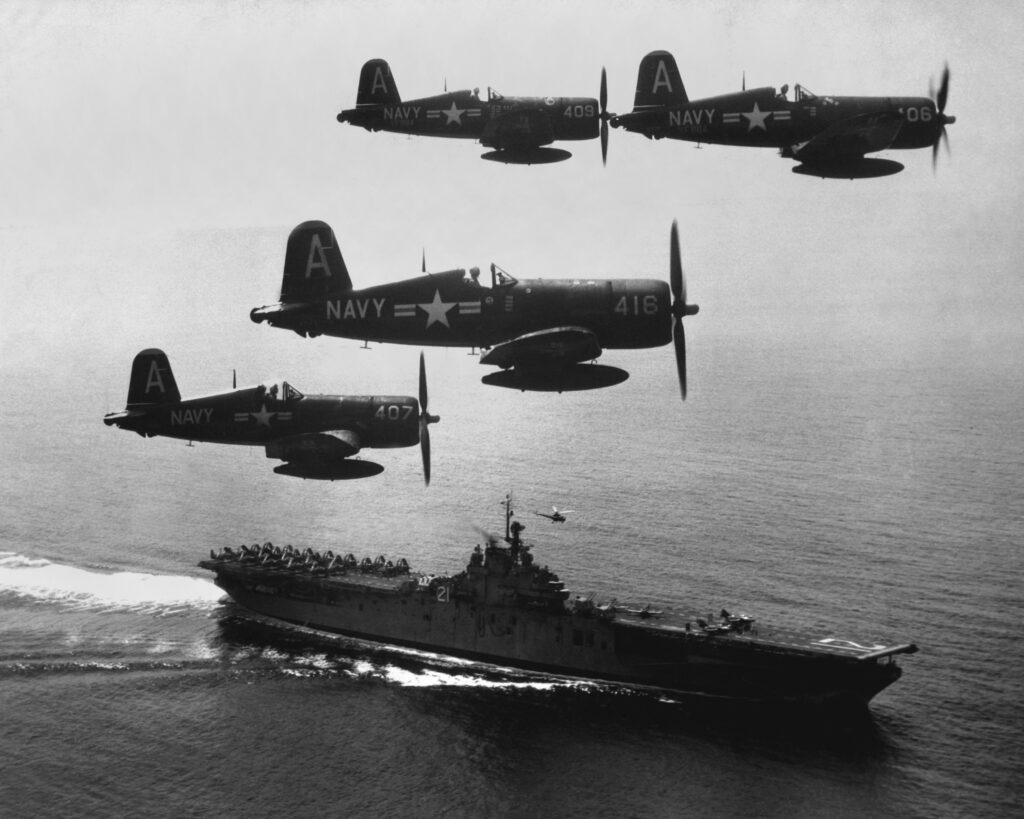
The second picture shows Corsair aircraft returning to the USS Boxer from a combat mission over North Korea (09/04/1951). The aircraft were American fighters that saw action primarily in World War II and the Korean War. They were carrier-based aircraft and were considered one of the most capable carrier-based fighter-bombers for their time.
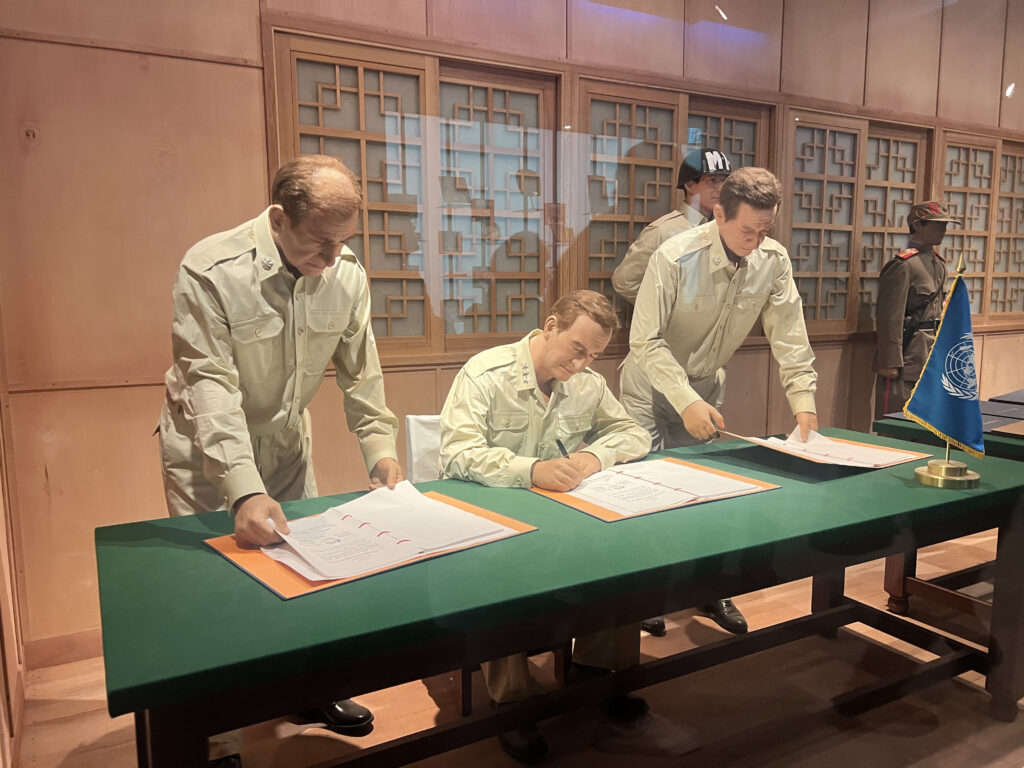
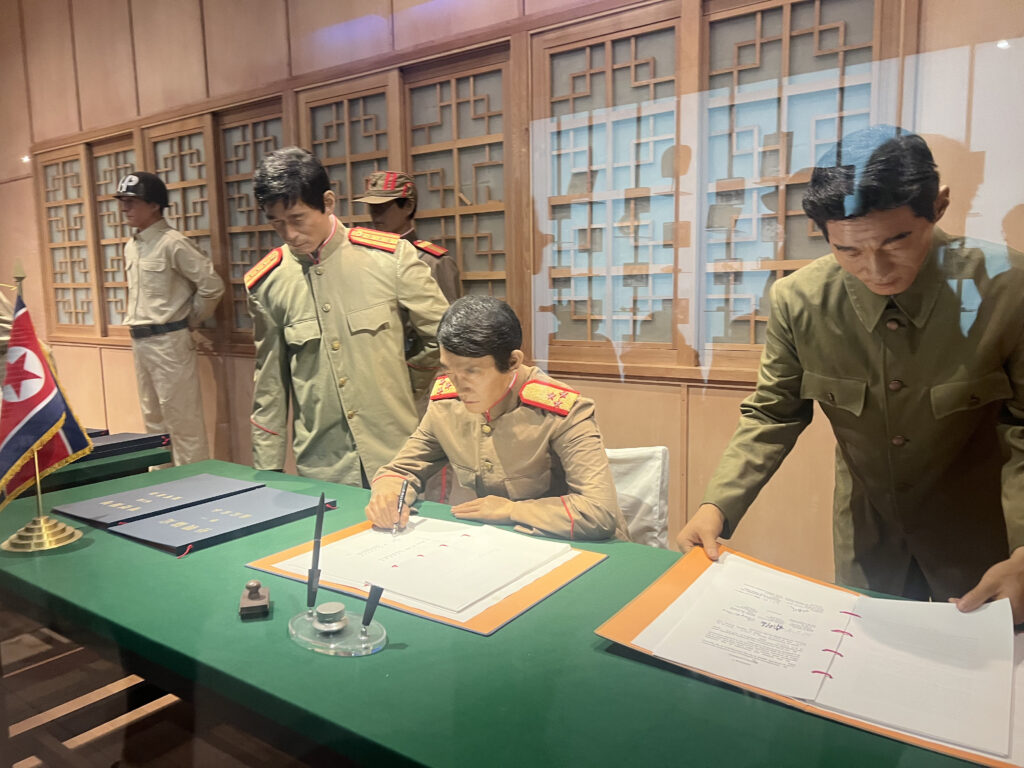
The Korean War never officially ended; rather, active hostilities ceased on July 27, 1953, when military commanders from the United States (representing the United Nations Command), North Korea, and China signed the Korean Armistice Agreement. Because no permanent peace treaty was ever signed, the Korean Peninsula remains technically at war. The Armistice also created the Demilitarized Zone (DMZ), a buffer zone between the two countries.
When we were in Korea in 2009, we visited Imjingak Park located near the DMZ. We debated doing an independent tour of the DMZ before this Tauck tour began, but ultimately decided we didn’t want to go in the tunnel which is part of most tours. A few other guests did do a DMZ tour and shared their pictures. I am including some of those pictures and their stories here.
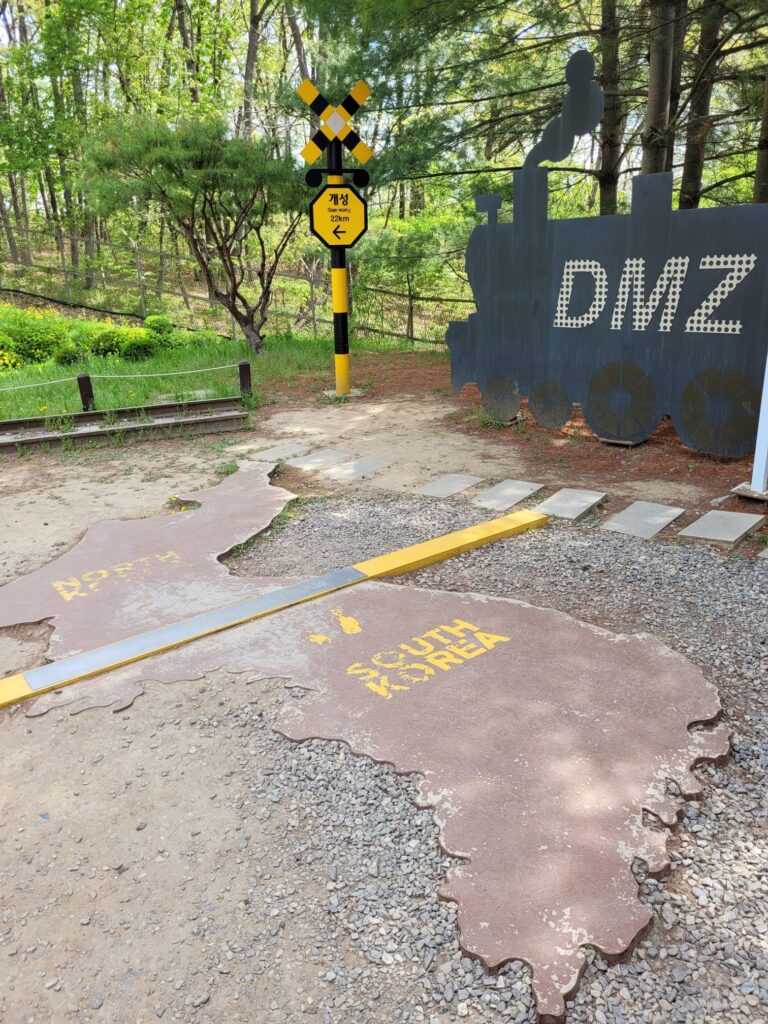
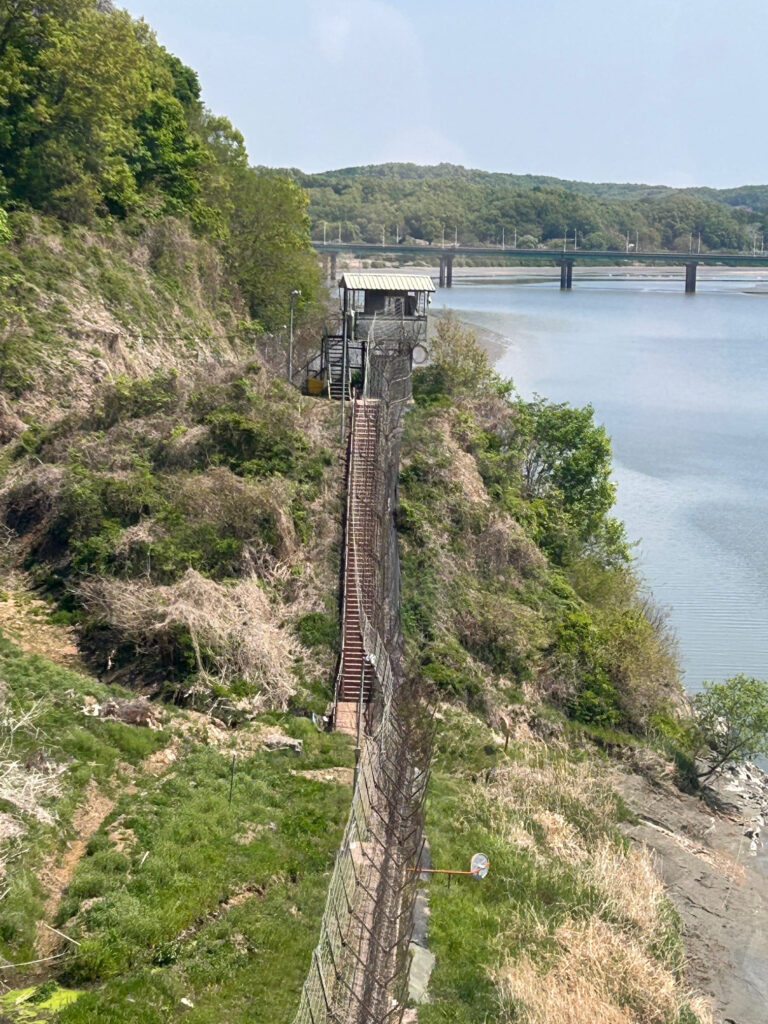
The picture below makes it look like crossing the border into North Korea is as simple as a step. Obviously it is much more consequential. The next picture is very similar to what we saw near Imjingak Park – lots of fencing, barbed wire and guard houses.
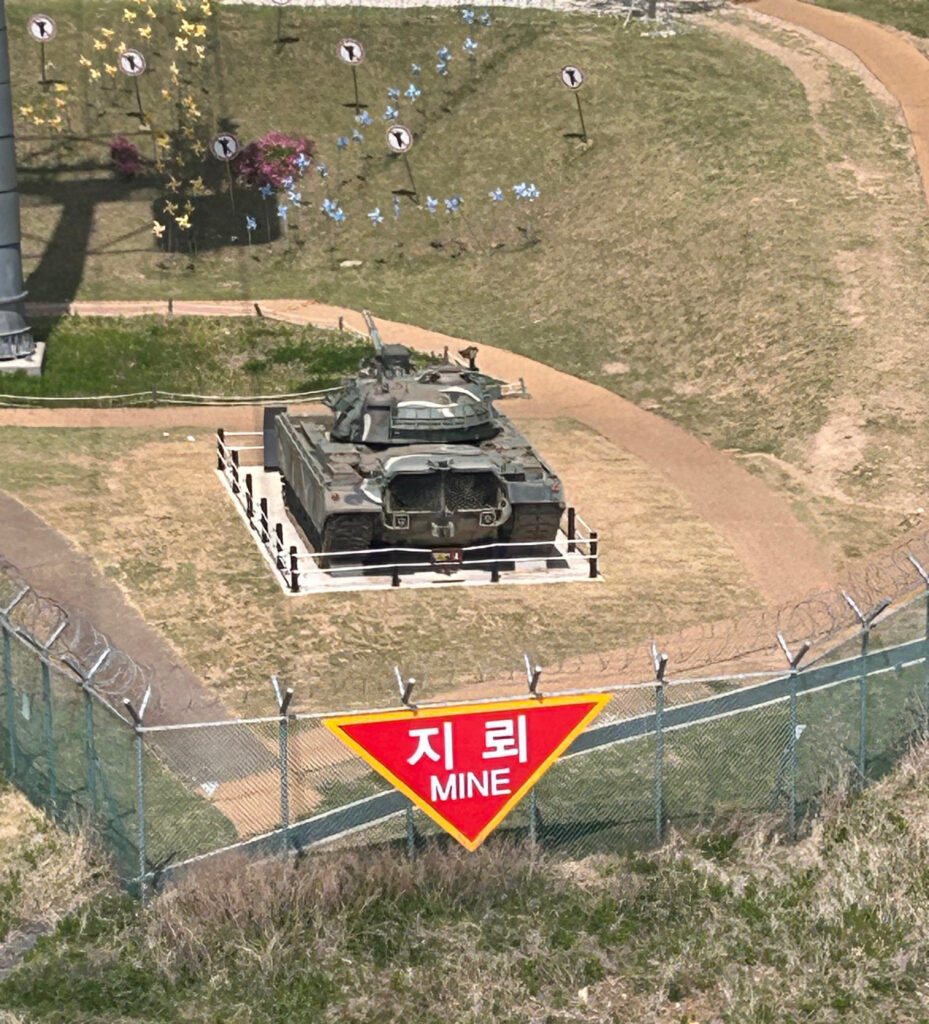
We did not see any land mines but they really do exist. The DMZ is one of the most heavily mined areas in the world. The presence of so many buried landmines is an issue in itself, but the bigger issue is the fact that no one knows which mines are buried where or how many. During the Korean War, the armed forces of South Korea, the United States, North Korea, and China all placed mines throughout the front lines. This did not change when the war was over; during the Cold War in the 1960s more mines were buried.
Based on the combined estimates of the South Korean government and experts, around 1 to 1.3 million mines could remain buried on the South Korean side of the peninsula, including those placed by the US military. Since the 1990s, the South Korean military has spent around $350,000 per year clearing mines from the DMZ and surrounding area. Around 500 are removed each year. When I think of the Korean War, I think of the assistance the US provided but our country also contributed to some of the difficult issues Korea faces today.
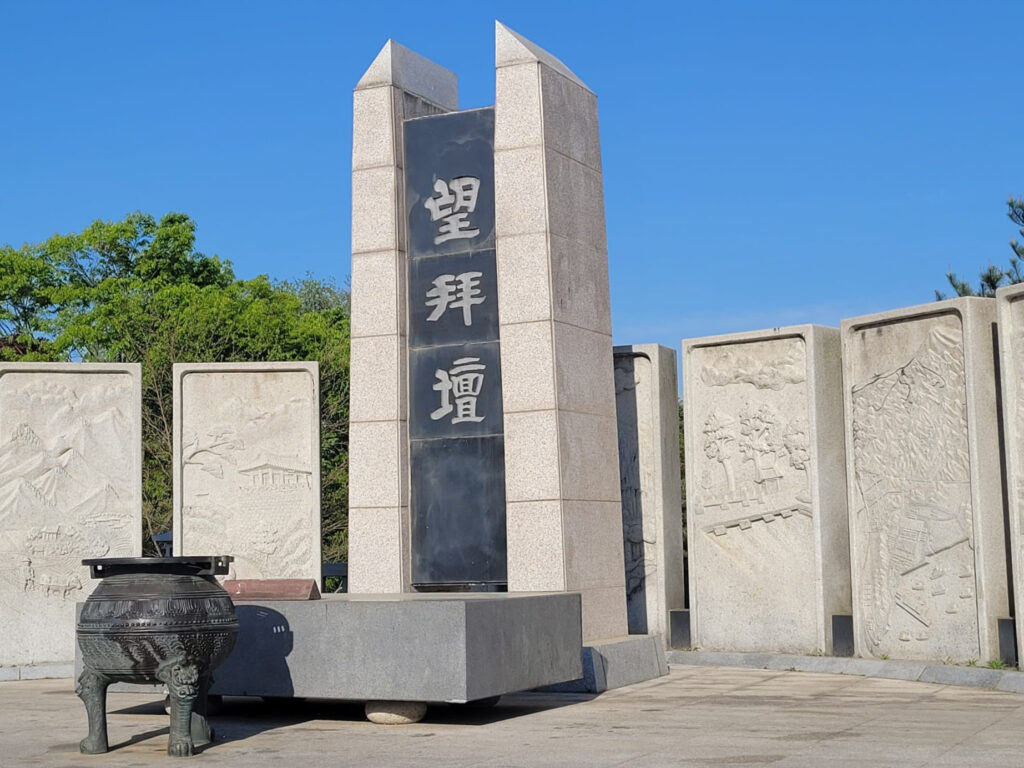
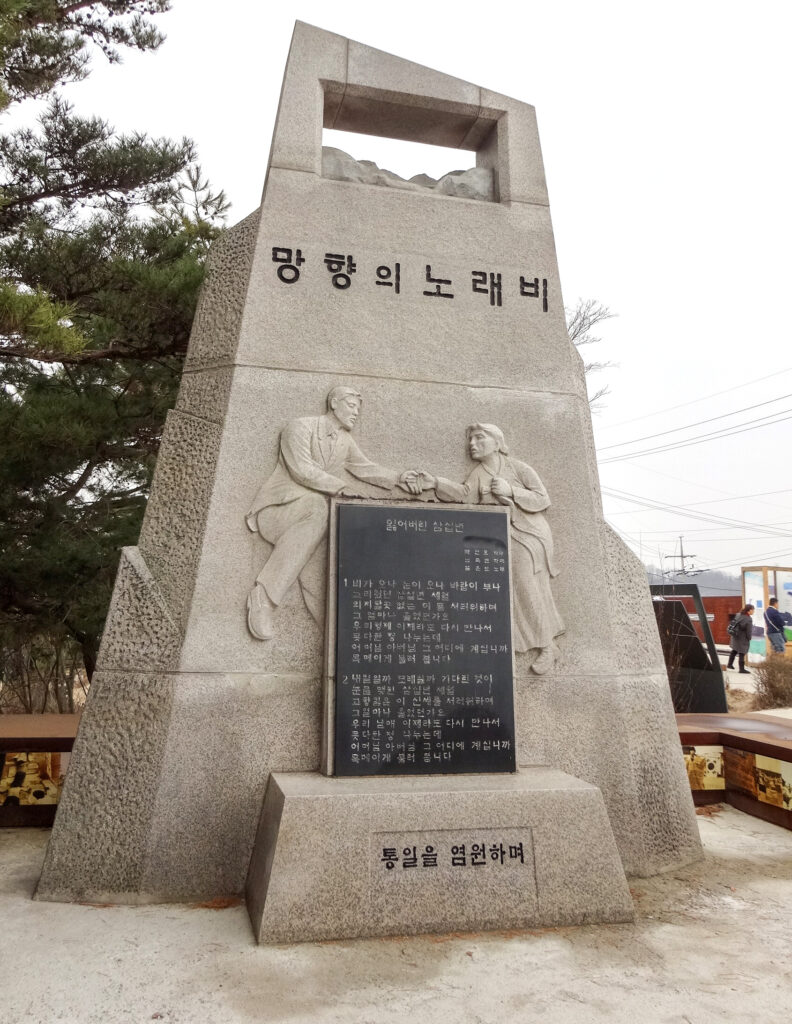
Although Korea had been a unified country for hundreds of years, after World War II, the country was split and families were separated. Families and friends would pray for their ancestors and those they left behind at the Mangbaedan Altar in Imjingak Park, one of the areas closest to the DMZ civilians are allowed to go. It is the first picture below. There is a another monument at the Park near the Altar which is the second picture. It is dedicated to the song “30 Years Lost” which was used as the theme song for the show “Finding Dispersed Families.” The program went on the air in 1983, around the 33rd anniversary of the outbreak of the Korean War and the 30th anniversary of the ceasefire that ended the fighting.
When the Korean Broadcasting System (KBS) announced the show, it was planned as a 95-minute special. But the network was inundated with requests for help to re-connect individuals with their lost family members. Ultimately, 53,000 people were featured on air, reuniting 10,000 families. What was supposed to be a 95-minute special aired live for a total of 453 hours and 45 minutes.
The first government-sanctioned South-North family reunions took place in September, 1985 when 50 displaced family members from each side crossed the border to visit relatives in Seoul and Pyongyang. For most of these family members, this was the first time they had seen or heard from their loved ones in over 35 years.
In addition to changing the lives of 10,000 families, the program also had global significance, documenting the consequences of war on civilians and the impact of national division. The U.N Secretary-General Javier Perez de Cuellar met with the Korean Ambassador to the United Nations, Kim Kyoung-won, to express his sympathy over the fall-out of the Korean War. The program was also broadcasted by 25 other countries and covered in international newspapers including the New York Times. The decision to divide Korea into the North and South saved the United States from a war with China, but it forever changed thousands of families – and the impact of that decision is still felt to this day.