Palace and Gardens of Versailles
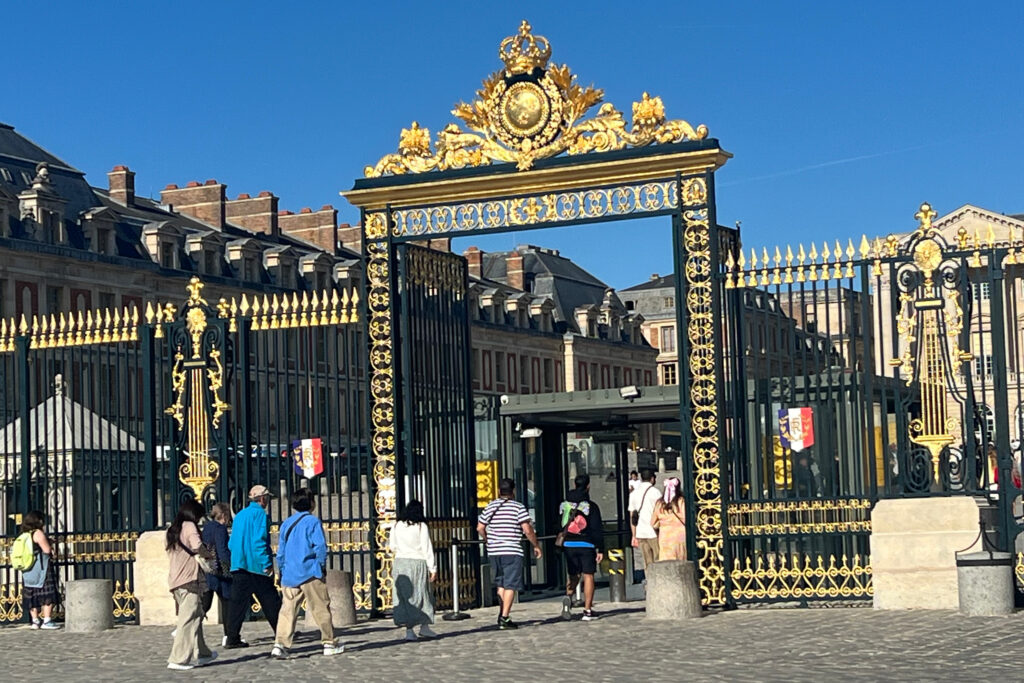
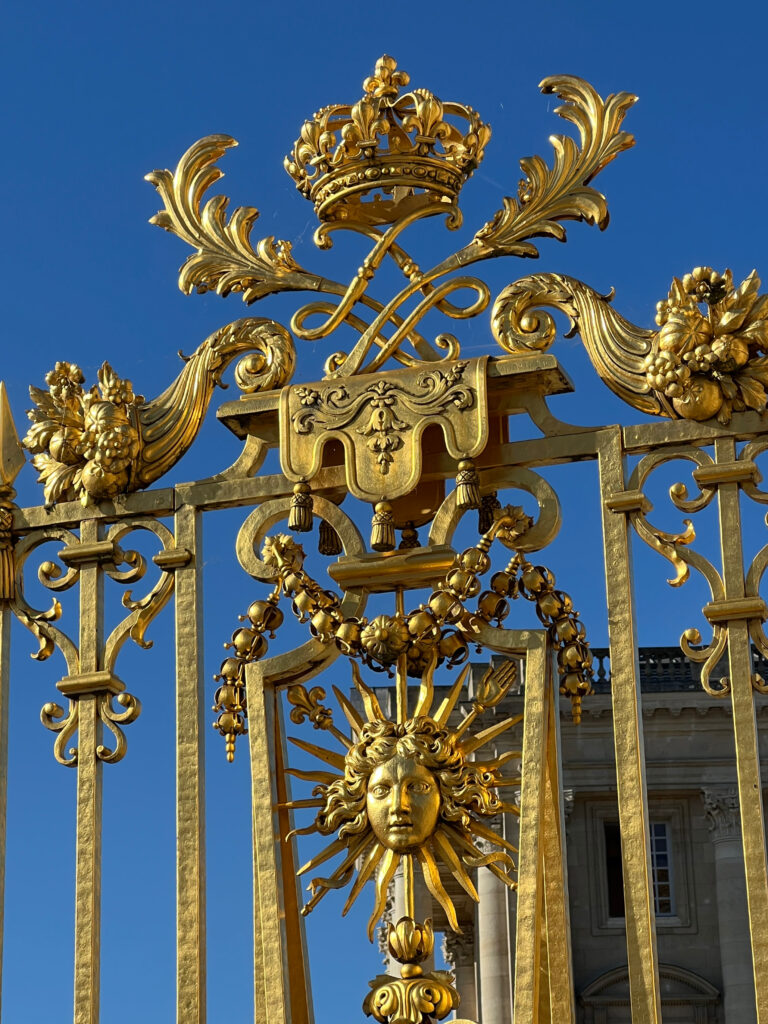
After our time in Paris, our riverboat set sail for our first port of call, Poissy. From there we took a bus to the Palace of Versailles. Both the Palace and the Gardens are a UNESCO World Heritage Site. Walking to the Palace entrance, we were struck by the beauty of the gates and fencing surrounding the Palace. The gilded gates were originally built to impress guests and emphasize the grandeur of the monarchy. The gold leaf was a sign of wealth, and although the original was replaced with a modern imitation, the gates are still impressive.
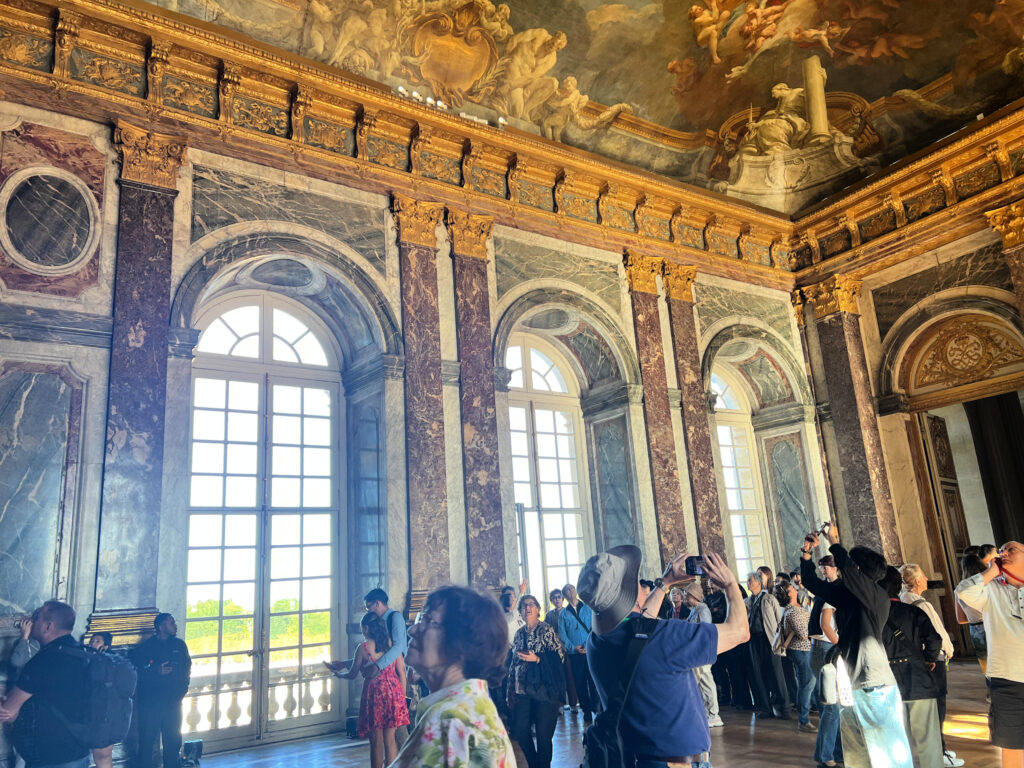
The pictures below are of the Hercules Salon in the Palace of Versailles. Work on the room began in 1712 and was completed in 1736. It is considered one of the most beautiful rooms in the Palace. The painting on the ceiling, one of the largest in the world, is entitled “The Apotheosis of Hercules.” The painting illustrates Hercules being welcomed into the realm of the gods as a reward for his divine deeds. The theme was likely intended to suggest the great accomplishments of the French King as well.

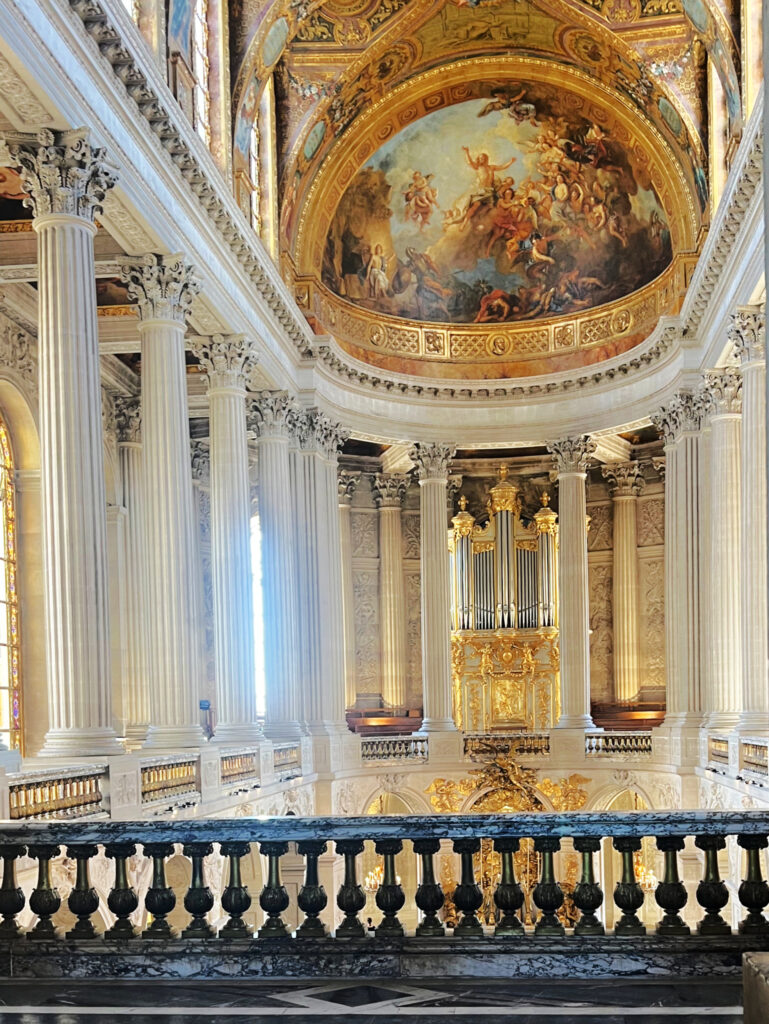
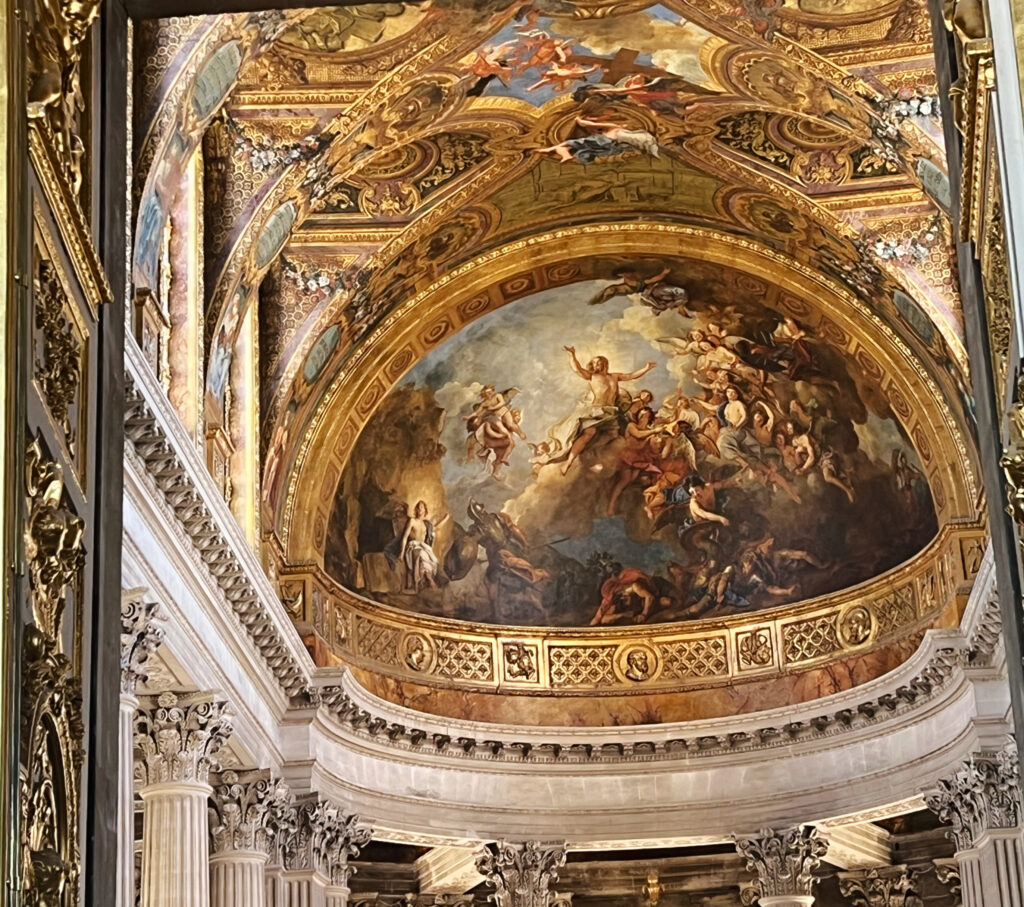
Next are pictures of the Royal Chapel at Versailles. While we could not actually enter the Chapel, we could view it from open doors at the back. The Chapel hosted the King’s daily mass and was the setting for grand ceremonies like weddings. The Chapel features a two-story interior. The upper level has a royal tribune (pew) for the king and his family, while other members of the court sit at the ground level. The elevated position of the royal tribune symbolizes the monarch’s special relationship with God, suggesting his earthly power is divinely sanctioned.
The dome over the high altar in the Royal Chapel features a painting of the Resurrection of Christ by Charles de La Fosse. This work was commissioned in 1707 and is located in the half-dome. The organ dates back to 1710 and was placed above the altar in view of the royal family. It was reconstructed in 1994 to its original 1710 condition.
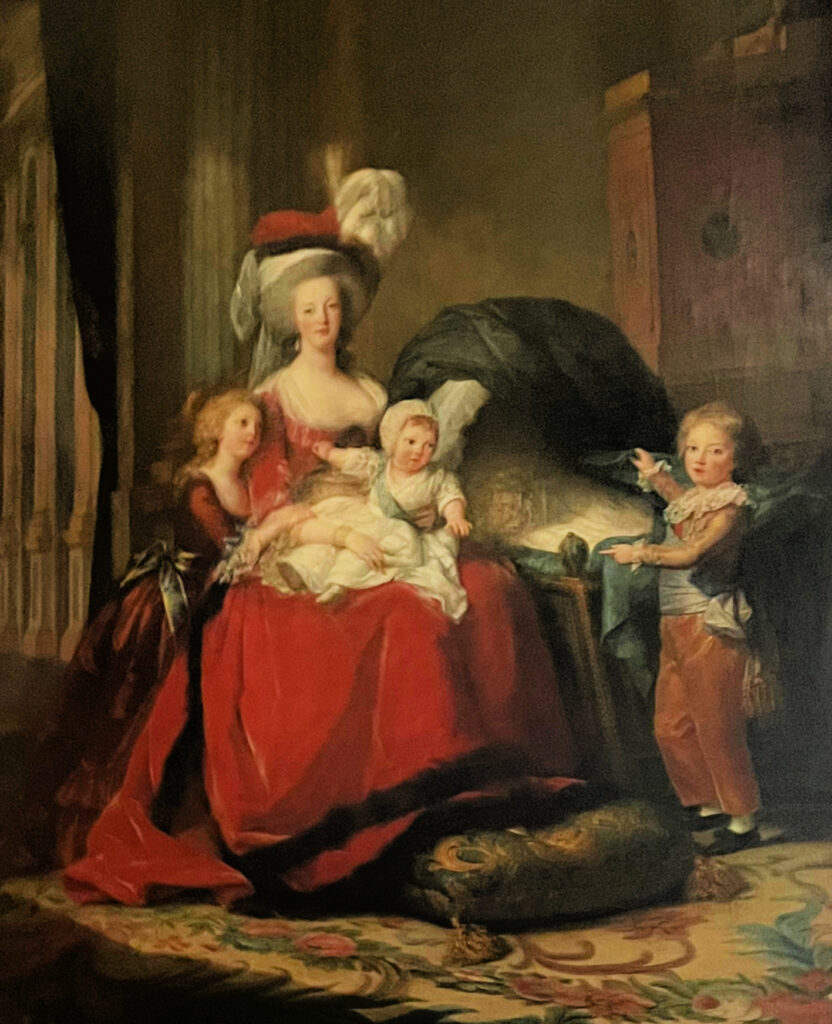
This painting, “Marie Antoinette and her Children,” was painted in 1787 by Élisabeth Louise Vigée Le Brun. Marie Antoinette’s popularity with the French people was declining and the painting was designed to restore Marie Antoinette’s image as a loving mother. Today the painting is considered one of France’s most important national treasures. It shows the Queen seated with her youngest son on her knee. Her daughter is on the left, and her eldest son, the prince, stands on the right. An empty bassinet symbolizes the baby girl who died while the painting was in progress.
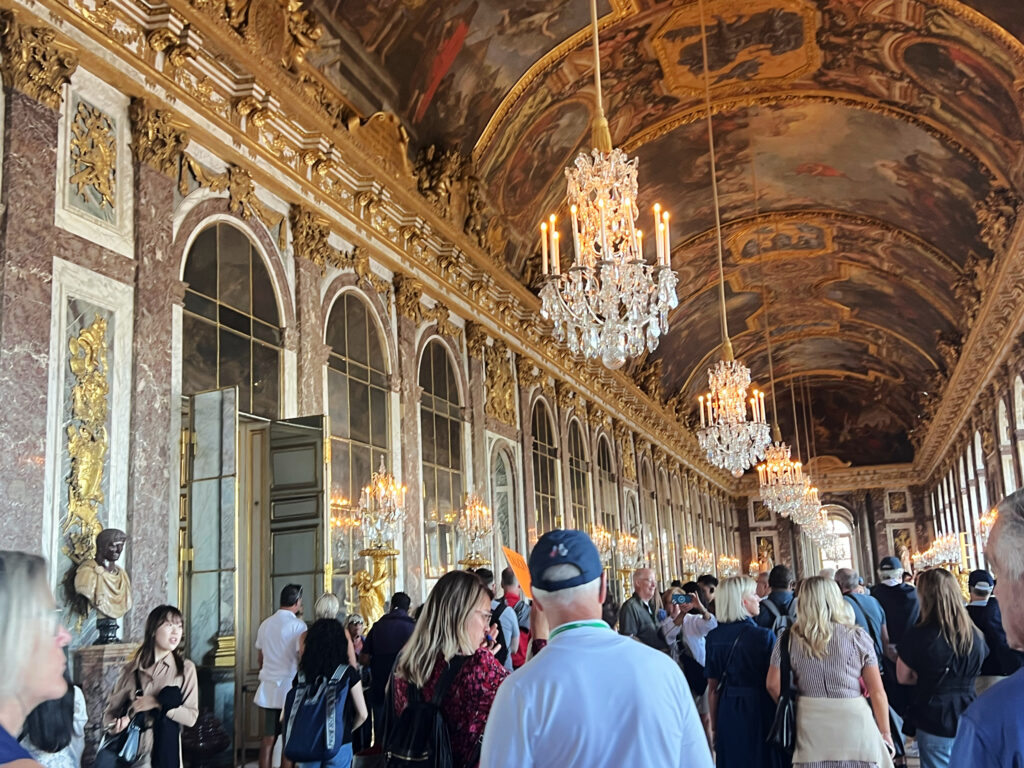
The following pictures were taken in the Hall of Mirrors. This room was symbolic of Louis XIV’s power, wealth, and authority. The hall’s 357 mirrors were an extravagant luxury in the 17th Century, designed to showcase France’s strong economic position and the King’s personal wealth. The ceiling paintings portray the King’s military victories, reinforcing his “right to rule.”
The Treaty of Versailles was signed in this very room on June 28, 1919, ending World War I. The treaty was signed by the Allied powers and Germany with Woodrow Wilson representing the United States. Since then, French presidents have continued to receive official guests here and still do to this day.
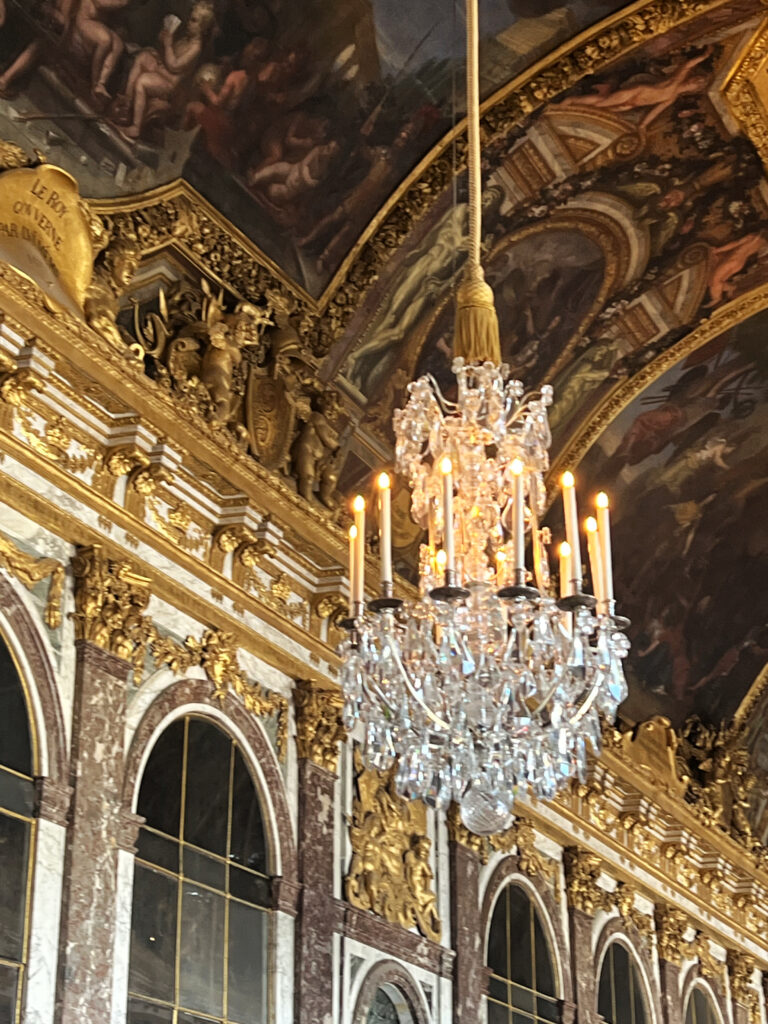
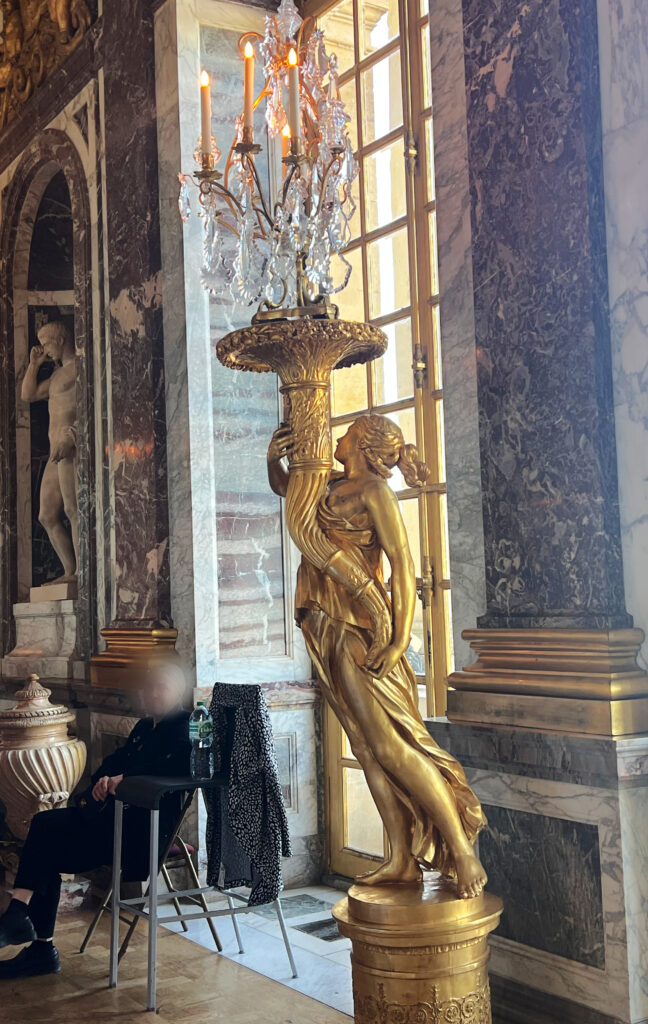
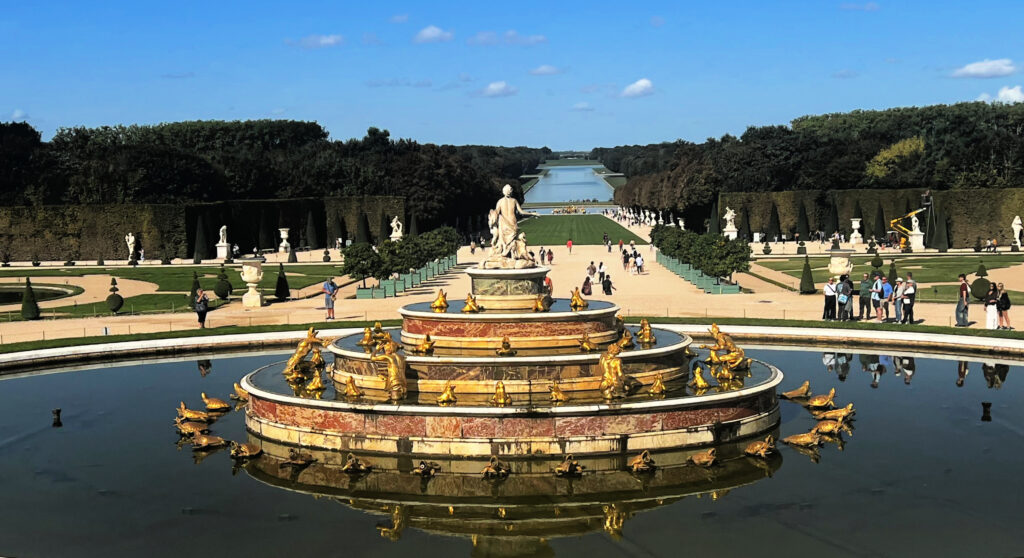
These are pictures of the Gardens of Versailles which lie just outside the Palace. They date back to the time of Louis XIV, who served as the King of France from 1643 until his death in 1715. The Gardens are vast, covering 2,000 acres of land. They are a classic French formal garden which means they have a landscape style based on symmetry and the principle of imposing order on nature. In addition to the manicured lawns, parterres (or paths), sculptures and fountains are located throughout the Gardens.
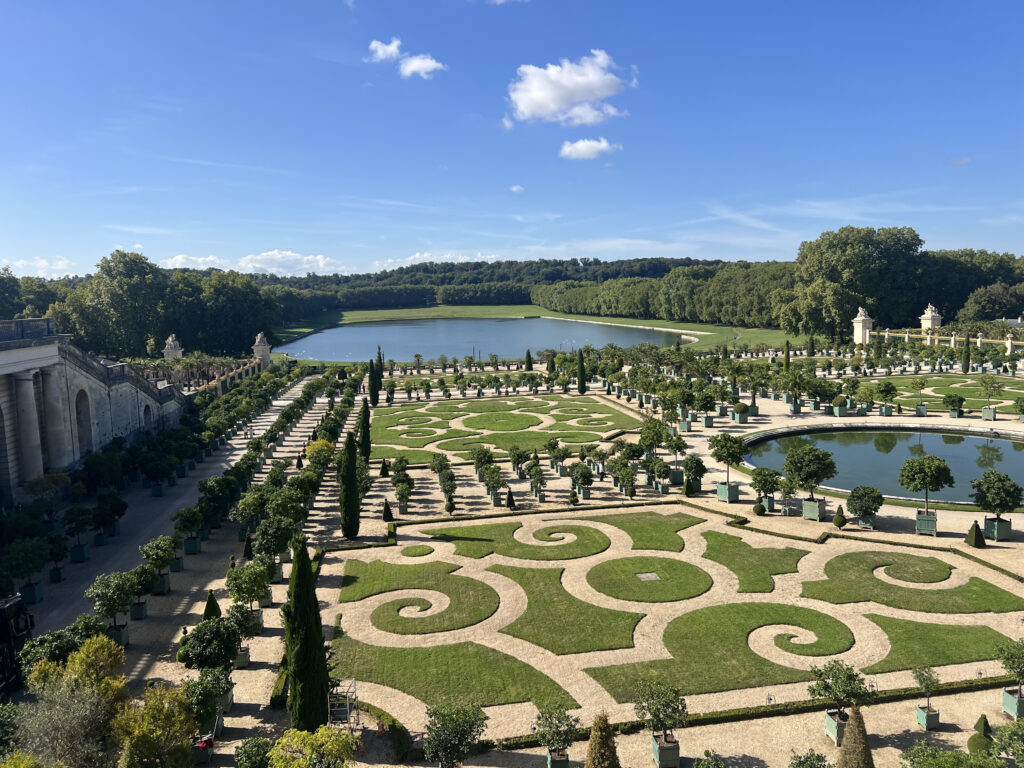
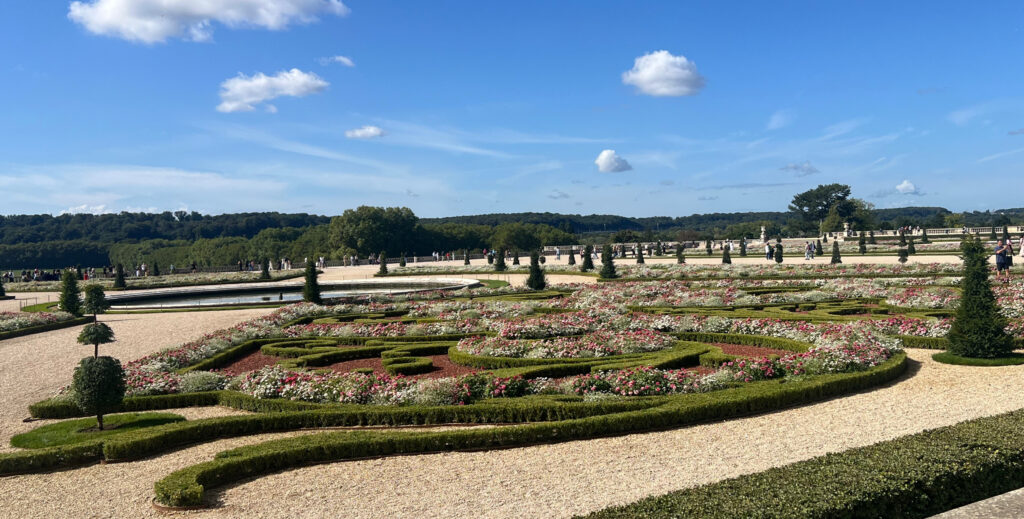
This last picture was also taken in the Gardens. The picture depicts the Latona Fountain, which dates back to the 1600s. The fountain has four tiers topped by statues representing the goddess Latona and her two children, Apollo and Diana. On the three other tiers are statues of men, women, frogs, lizards and turtles. According to Roman mythology, the goddess Latona fell in love with Jupiter. Juno, Jupiter’s wife, learned Latona was pregnant and chased her from heaven. On earth, the goddess gave birth to her twins, but when she went to the fountain in Lycia, the people refused to let her approach the water. Latona cried out to Jupiter, who punished the people by turning them into frogs, lizards and turtles.