Itsukushima Shrine
From Uwajima, we next sailed to Miyajima, an island in Hiroshima Bay. We anchored off the island and took a tender to Miyajima.


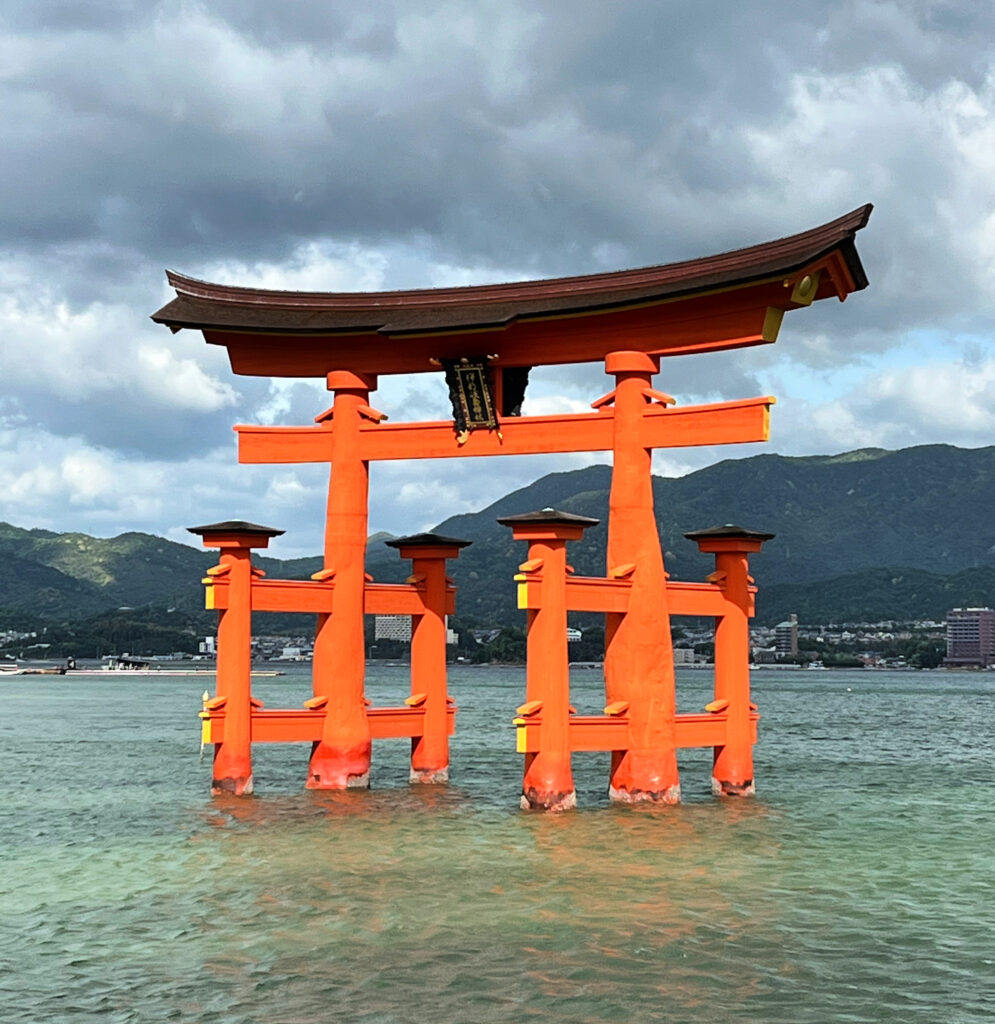
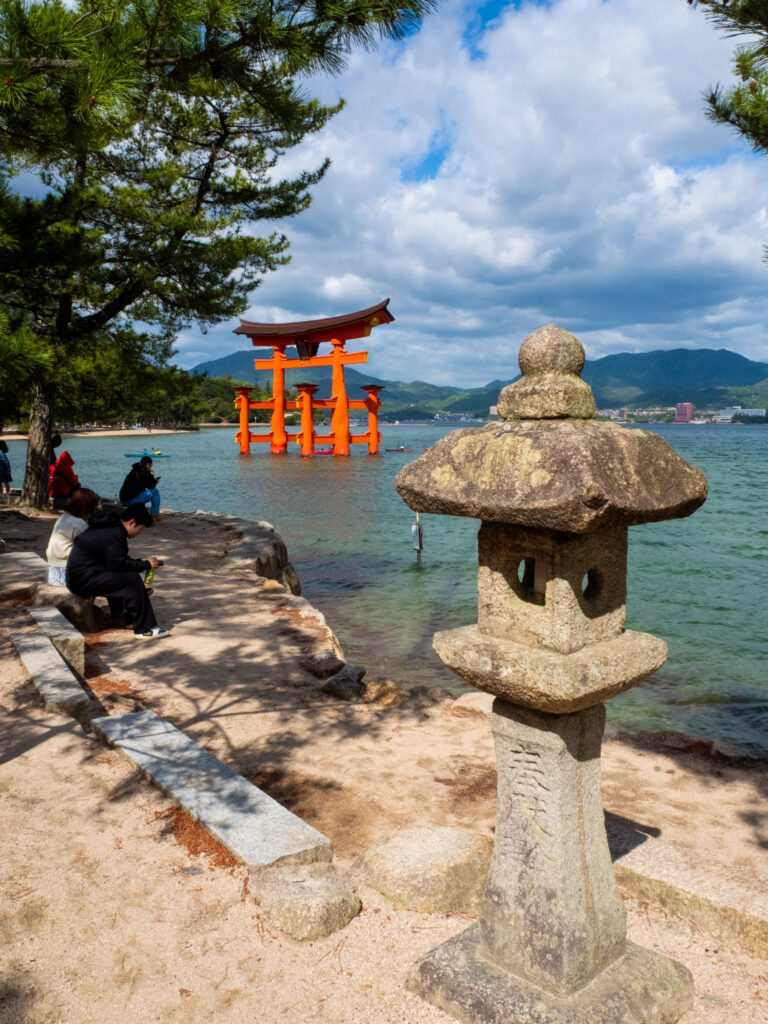
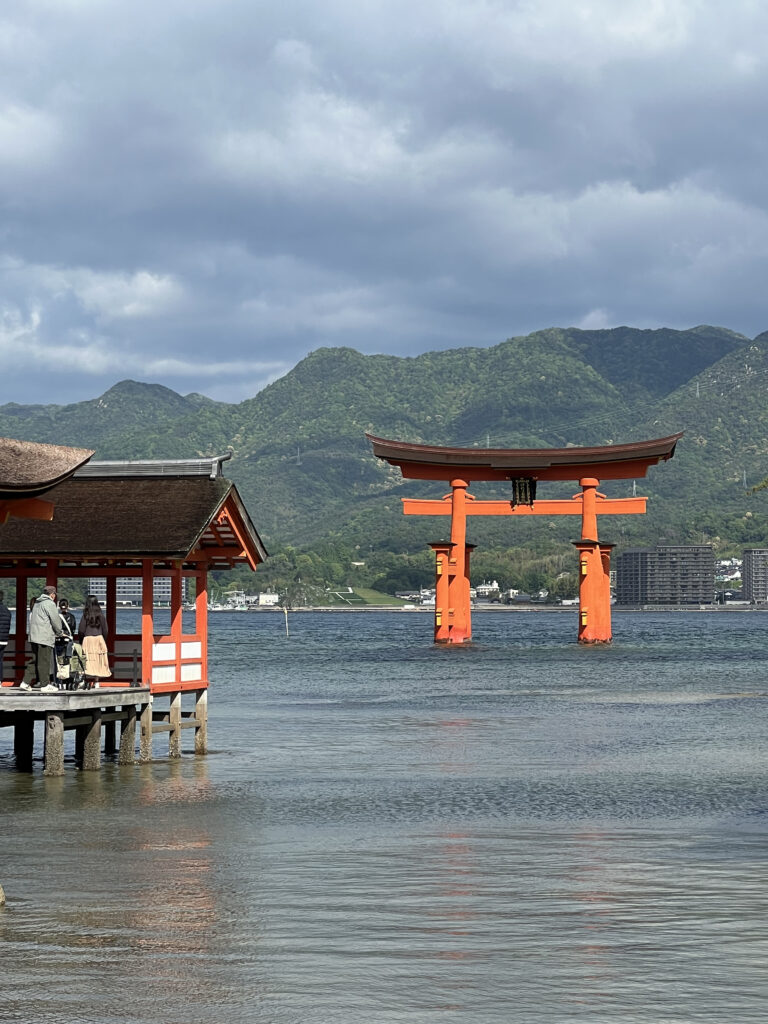
Miyajima is well known for its “floating torii,” a popular tourist attraction. At high tide it appears to be floating, but at low tide visitors can walk on the sea floor right up to the torii.
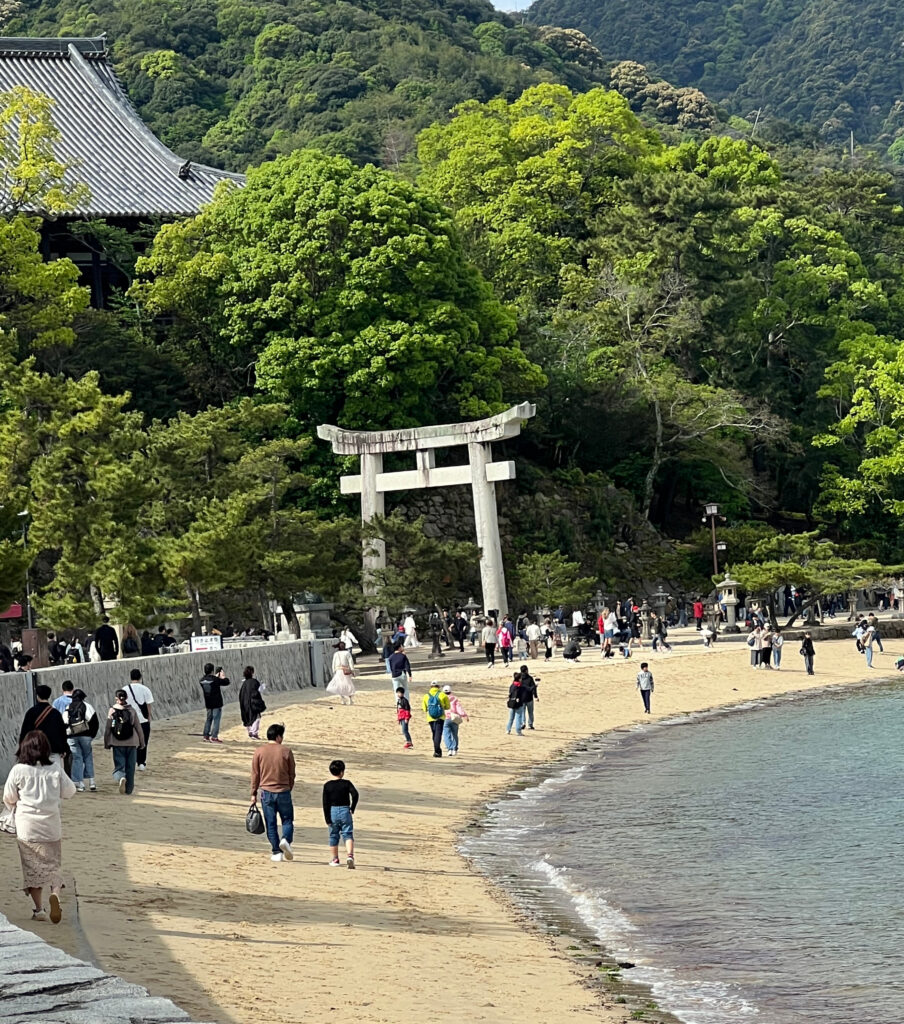
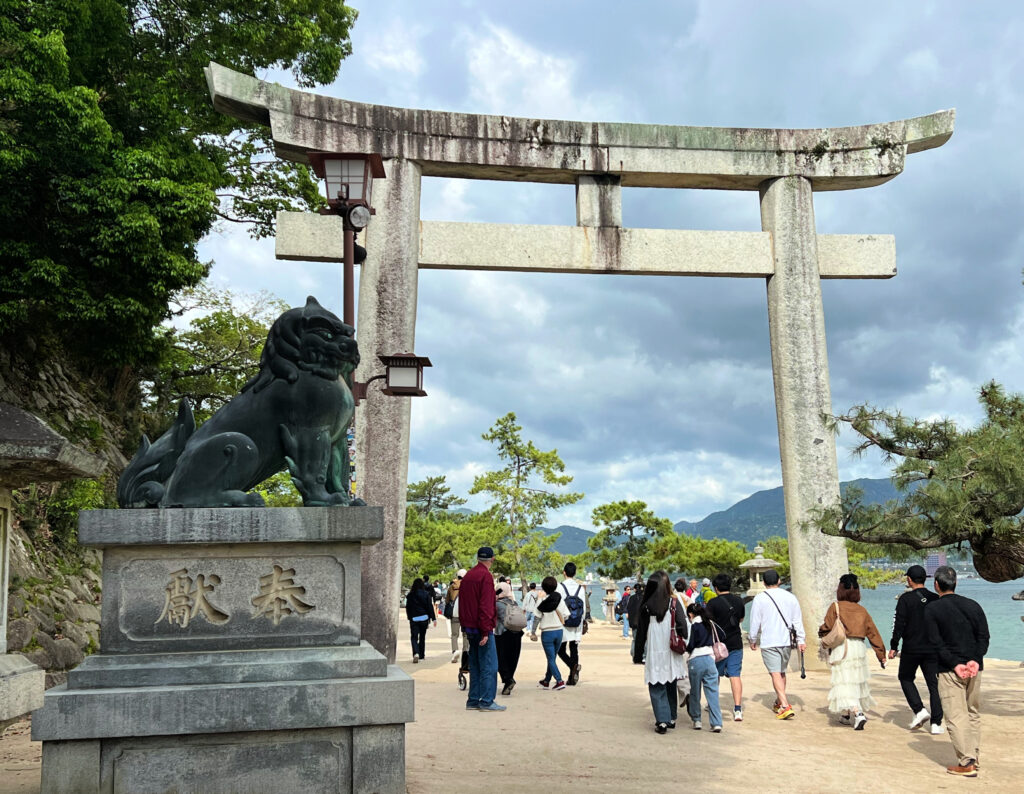
In addition to seeing the floating torii, we also visited the Itsukushima Shinto Shrine. We walked on this path which led us to the Shrine. The gate marks the boundary between the human world and the sacred one. Before passing through the gate, one bows once and then walks through the gate, avoiding walking down the center of the path as it is considered the pathway for the gods.
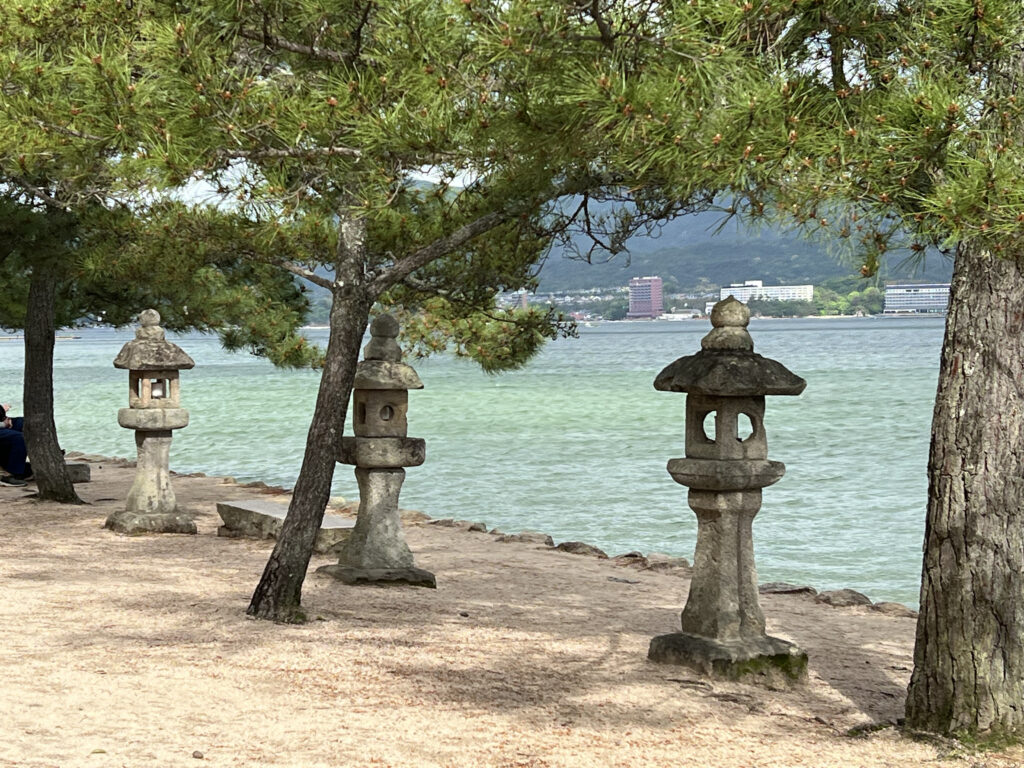
These are stone lanterns that line the path to the Itsukushima Shinto Shrine. Today lanterns like these can also be found in Japanese gardens.
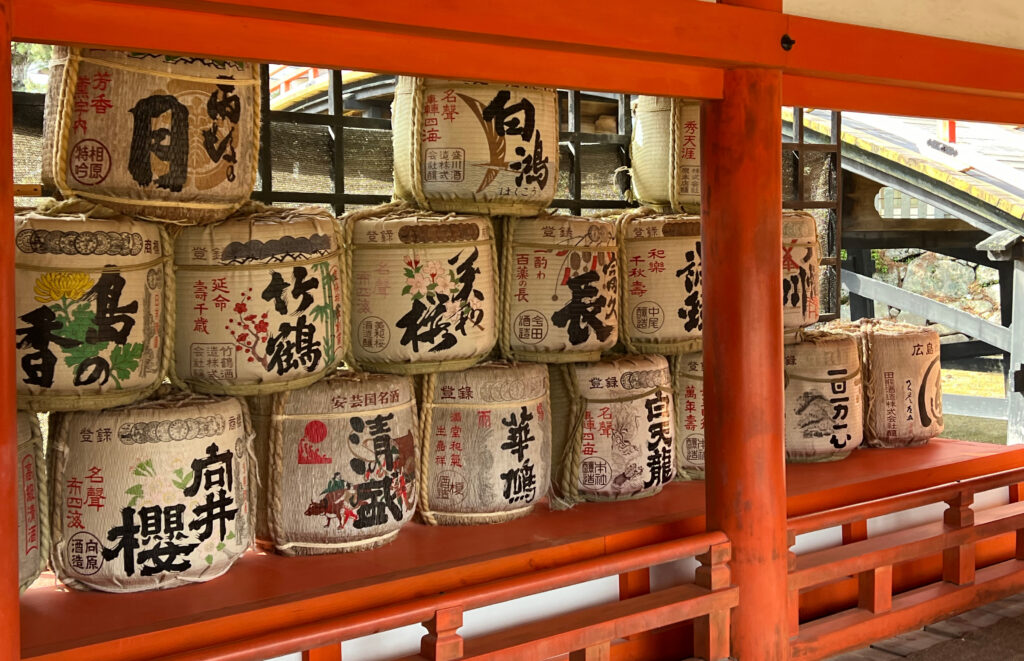
We saw these sake barrels near the Itsukushima Shrine. Sake, the traditional Japanese rice wine, is associated with rituals, celebrations, and religious ceremonies. In Japanese shrines, sake barrels play a prominent role, serving as symbolic offerings to deities and representing the connection between the spiritual and human worlds.
Sake barrels, known as “kazaridaru” in Japanese, are crafted with intricate decorations and calligraphy. The barrels are typically made of Japanese cedar wood and bound with metal hoops, showcasing the craftsmanship and traditional techniques passed down through generations. Each shrine has its distinct style of decoration, reflecting regional customs and beliefs.
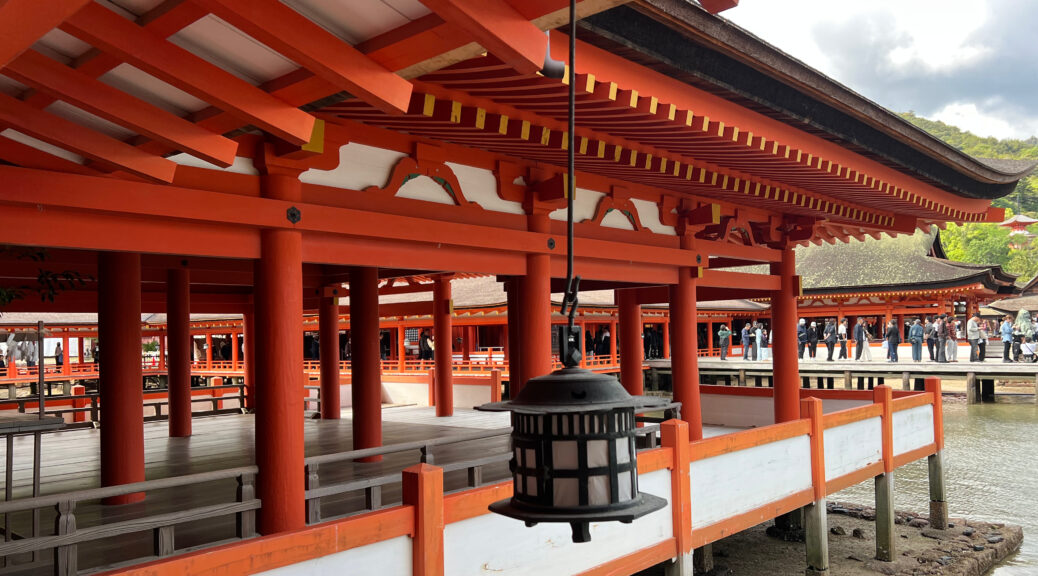
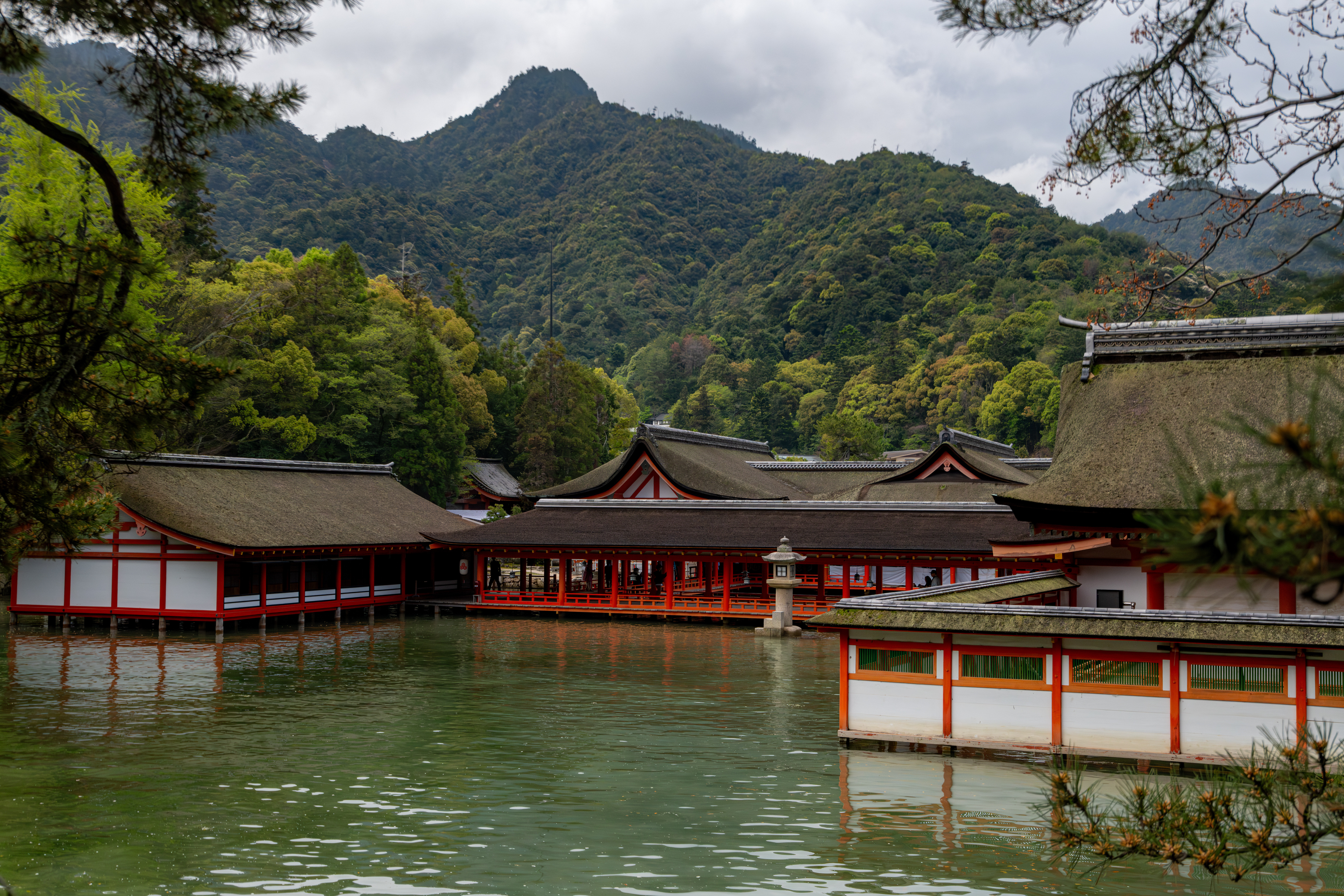
This is the Itsukushima Shinto Shrine. We learned that there is a reason the Shrine and torii were built over water. Because the entire island of Miyajima was historically considered sacred, commoners were forbidden to set foot on it. The Shrine and torii gate were built over the water so pilgrims could pass beneath the gate by boat, bridging the gap between the earthly and the spiritual world. Even today, births and deaths are not allowed on the island.
The Itsukushima Shinto Shrine is a UNESCO World Heritage Site. The following description of the Shrine is from the UNESCO site:
The island of Itsukushima, in the Seto inland sea, has been a holy place of Shintoism since the earliest times. The first shrine buildings here were probably erected in the 6th century. The present shrine dates from the 12th century and the harmoniously arranged buildings reveal great artistic and technical skill. The shrine plays on the contrasts in colour and form between mountains and sea and illustrates the Japanese concept of scenic beauty, which combines nature and human creativity.
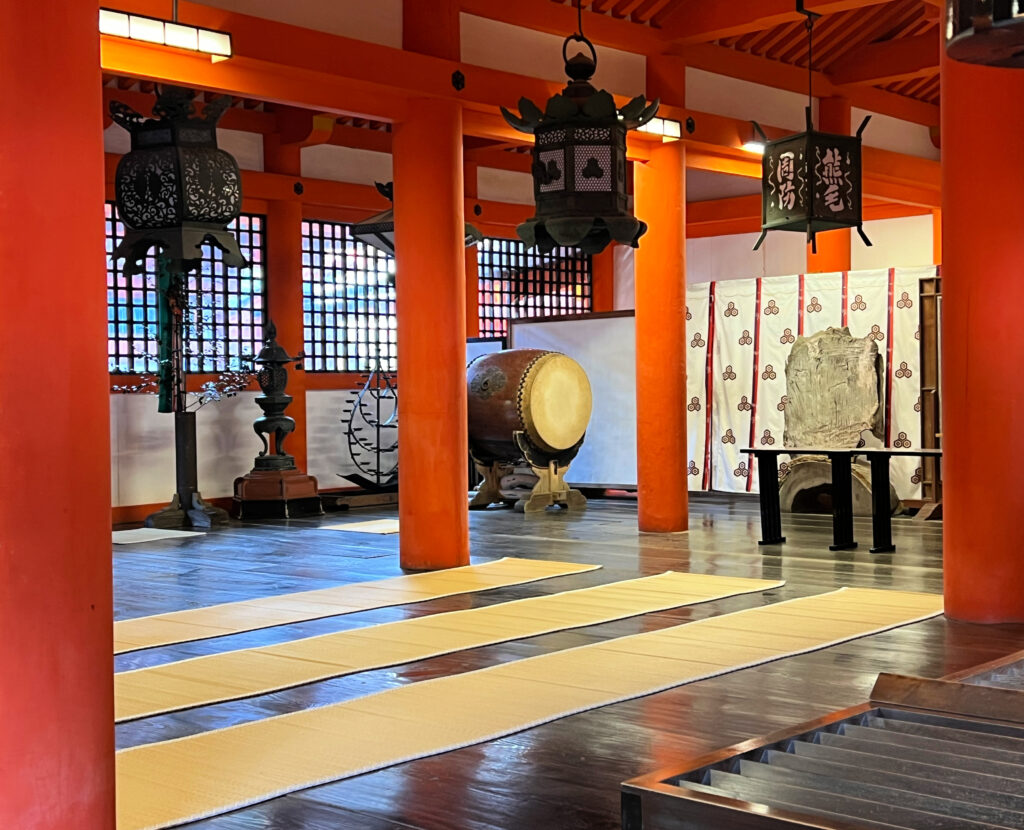
There were several buildings and rooms in the Shrine we visited. The room below with the drum is the “haiden” or hall of worship. The large taiko drum is played by priests to announce daily rituals, accompany sacred music, and help purify the space.
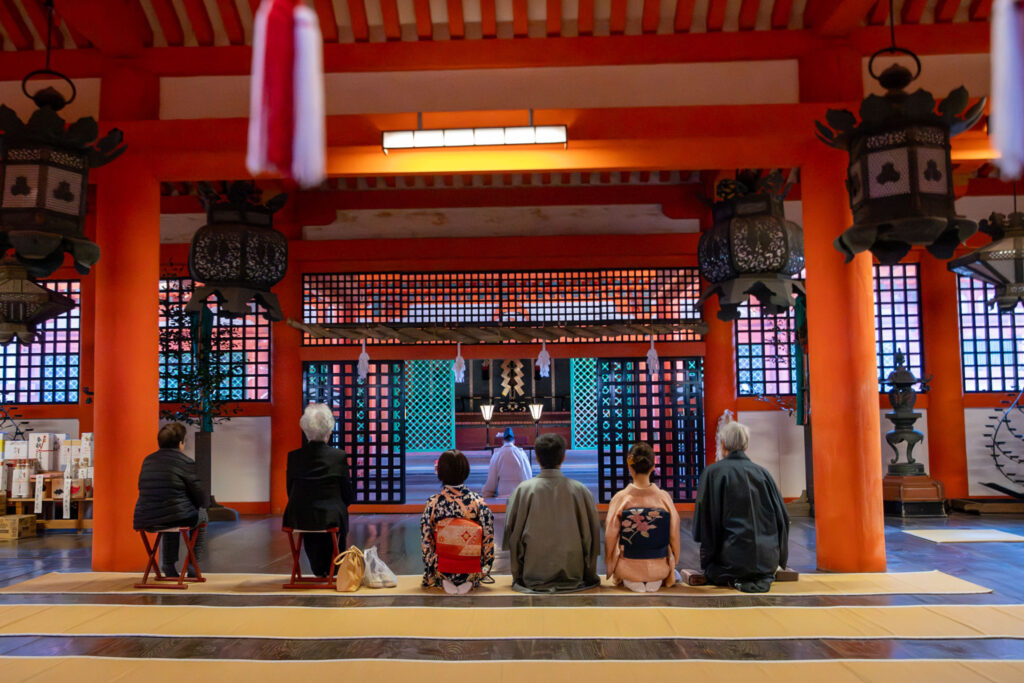
The next picture shows people worshipping. Before entering the Shrine, they would have passed a purification pavillion where they washed their hands and also an offering hall where they would place a coin in an offering box. After this, they would worship. The “Core of Shinto Worship” involves bowing twice, clapping twice, and then keeping the hands in a praying position as the person silently identifies him/herself to the gods and gives gratitude or makes a wish. The person then bows deeply and bows again when returning through the torii gate. The website, world history.org, describes the Shinto religion:
Shinto means ‘way of the gods’ and it is the oldest religion in Japan. Shinto’s key concepts include purity, harmony, family respect, and subordination of the individual before the group…Shinto has become so interwoven with Japanese culture in general that it is almost inseparable as an independent body of thinking. Consequently, Shinto has become part of the Japanese character whether the individual claims a religious affiliation or not.
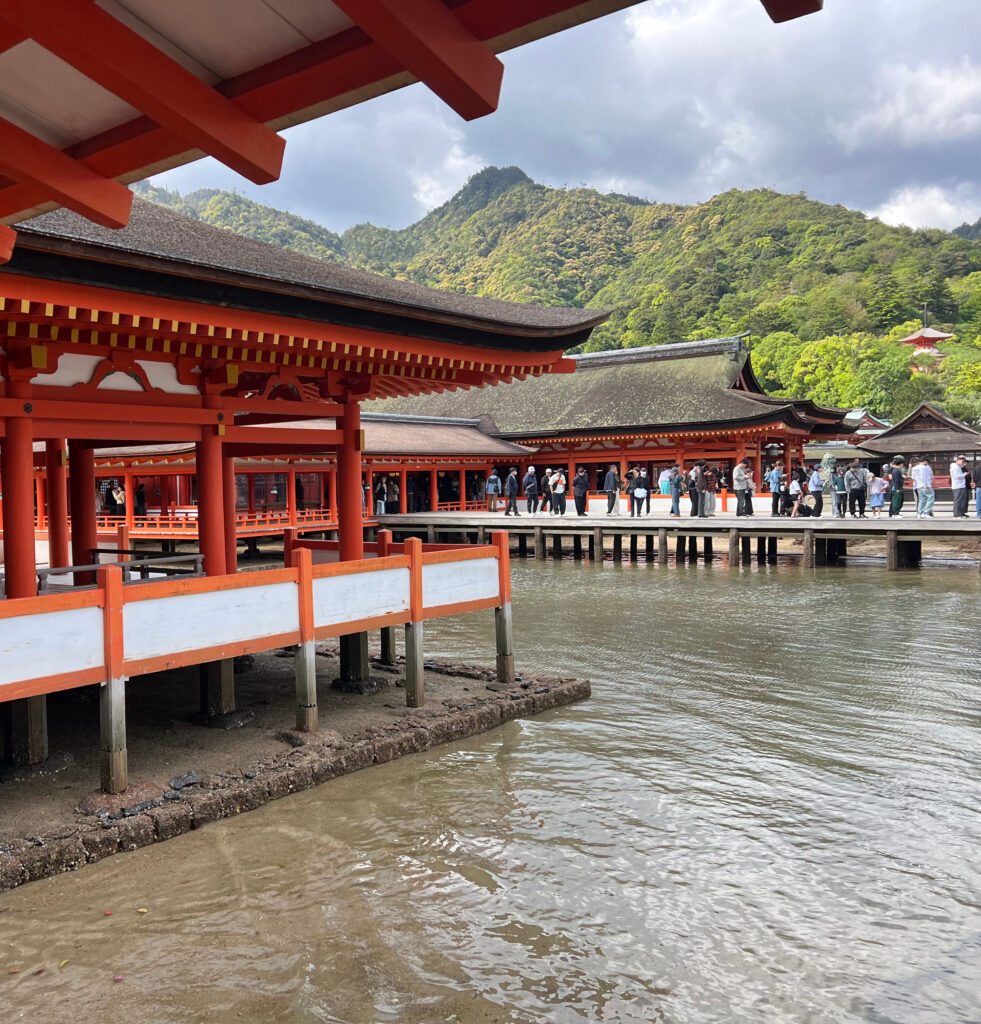
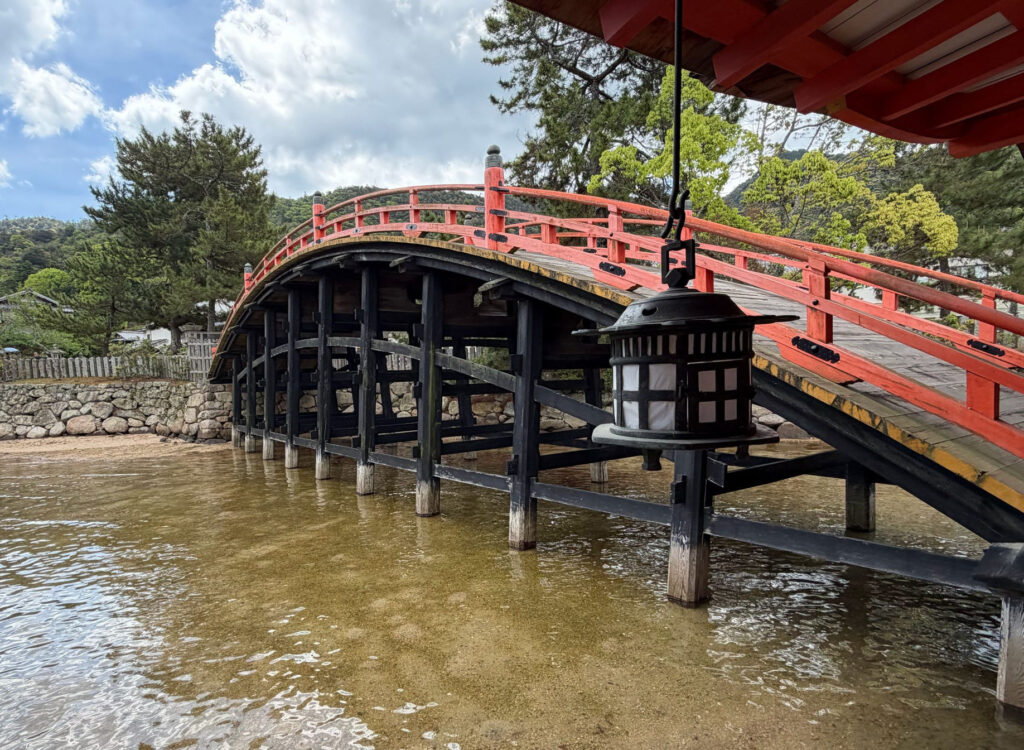
These are a few more pictures and were taken from one of the buildings in the Shrine.
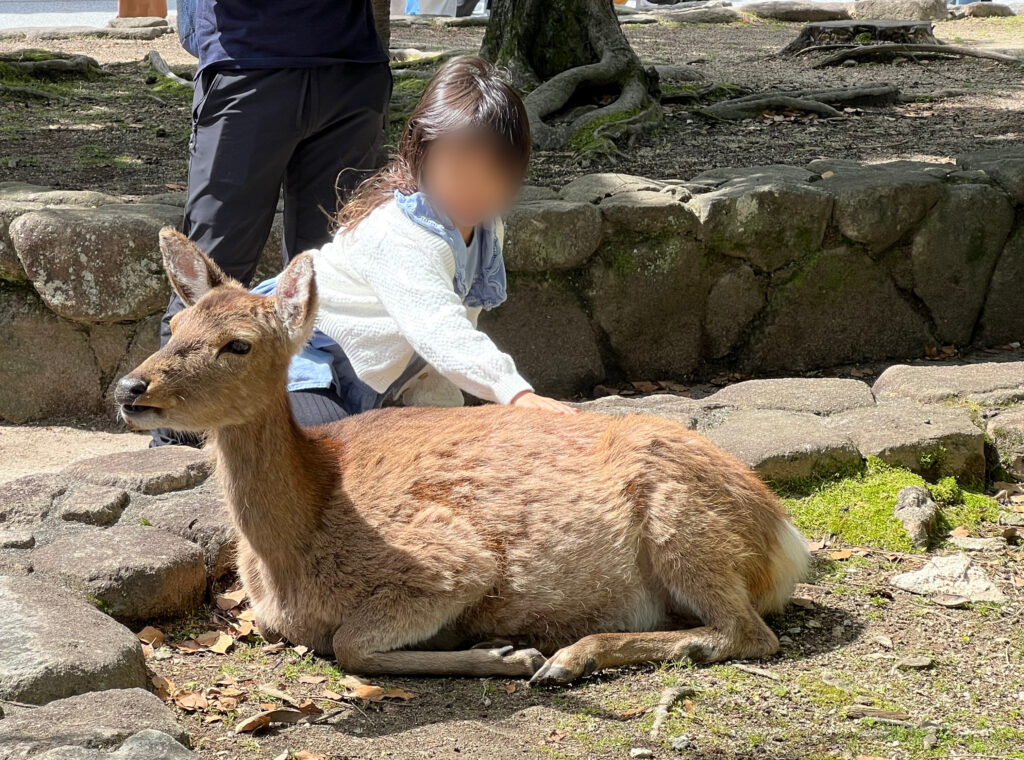
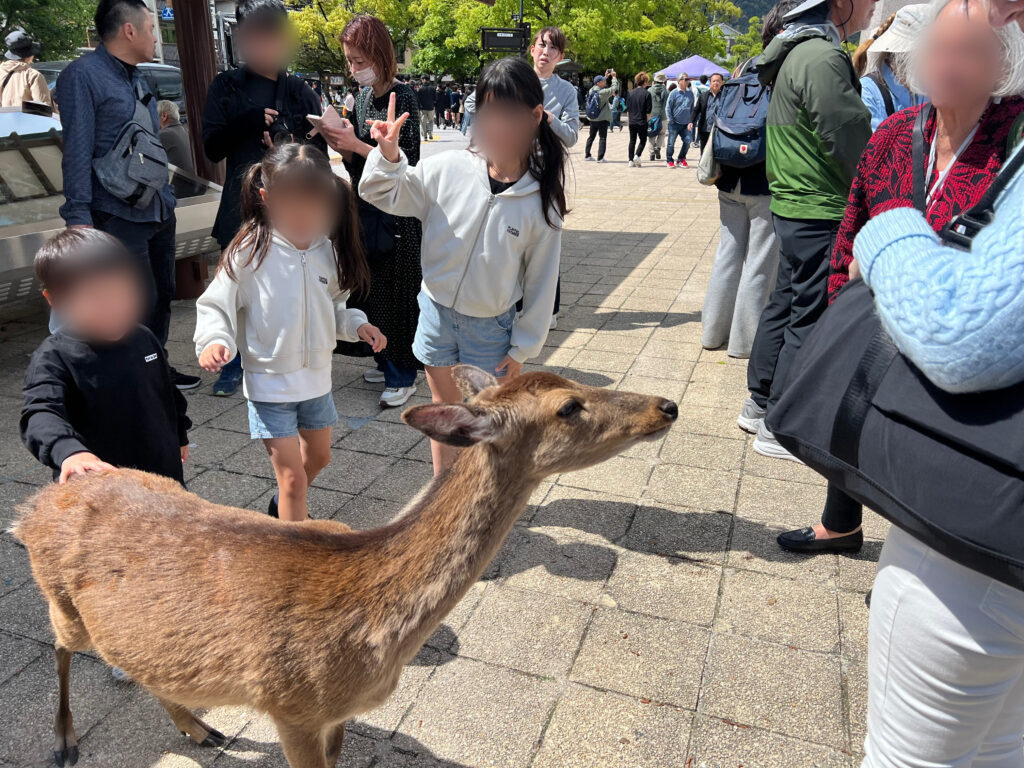
Finally…the island of Miyajima is home to many deer. They were use to people so were completely unafraid and patient with children and photographers. And they weren’t shy about checking pockets and purses for food!