Altarpieces at the Unterlinden Museum
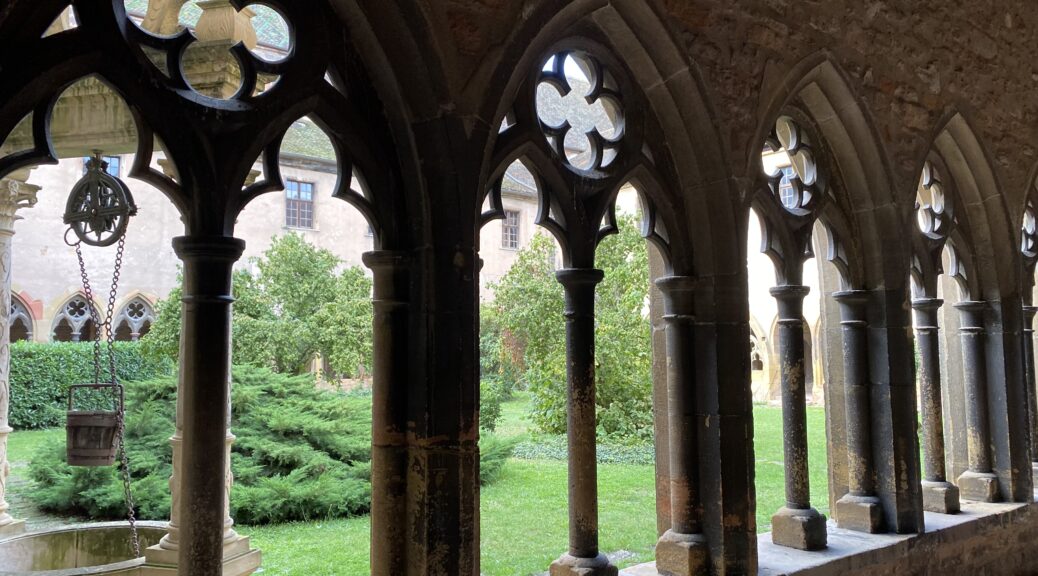
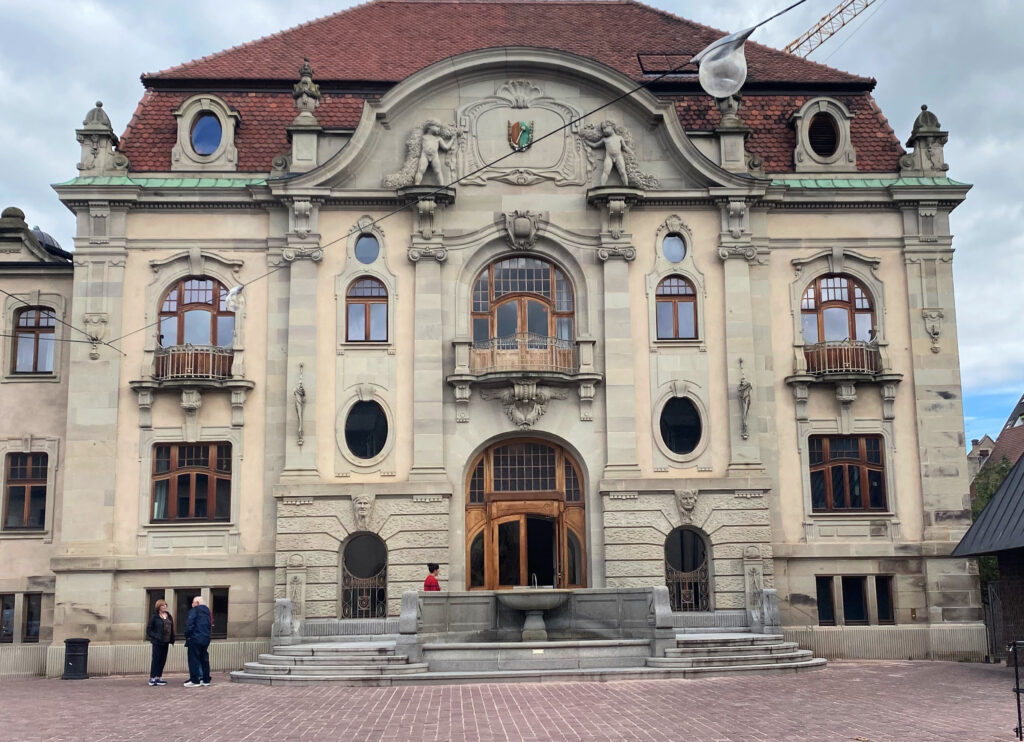
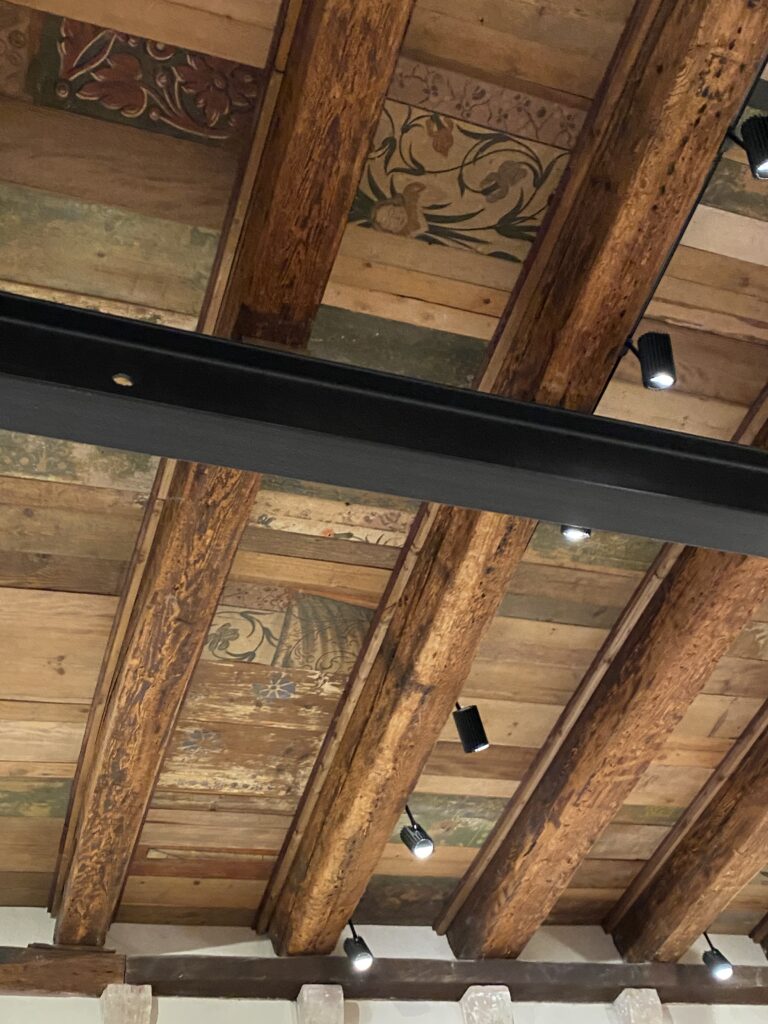
The building pictured below is the Unterlinden Museum, located in Colmar, France. The Museum is housed in a 13th-century Dominican religious sisters’ convent and a 1906 former public baths building. The second picture is one I took of the ceiling. It dates back to the 16th century. Pictured above the blog title is the cloister.
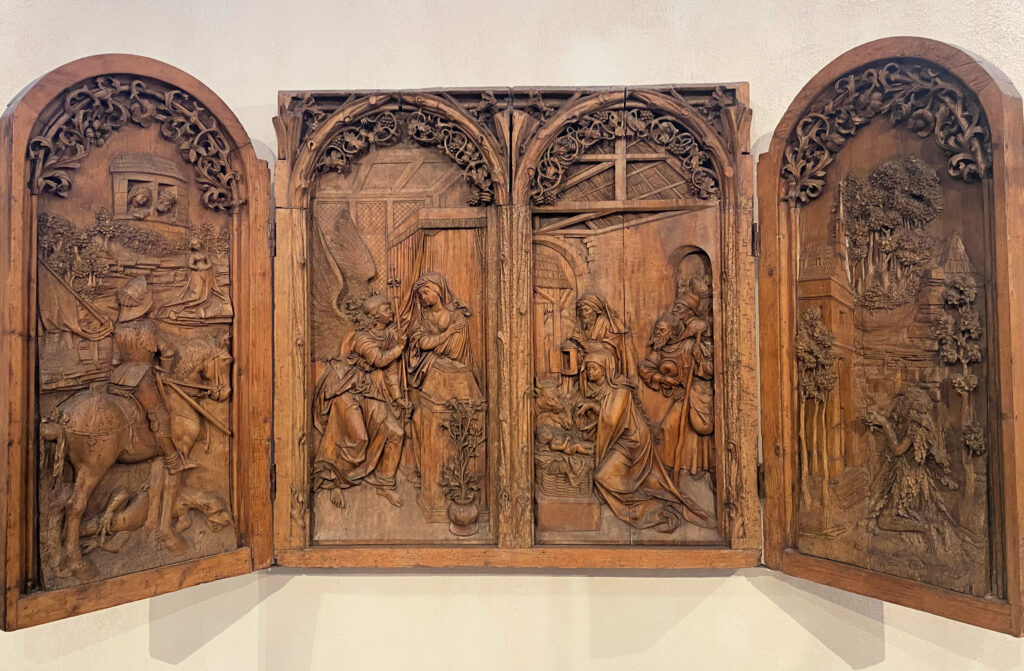
One of the altarpieces we saw at the Unterlinden Museum was the Bergheim Altarpiece. It was created between 1515 and 1517 for a chapel in Bergheim which is near Colmar. The Altarpiece consists of relief carvings on four panels. The sculptor, Veit Wagner, varied the depth of the carvings giving them a three-dimensional perspective. When fully open, the Altarpiece is about 4 1/2 feet high and 9 feet long.
The first three panels depict Saint George Slaying the Dragon, the Annunciation and the Adoration of the Shepherds. These were inspired by engravings created earlier by Albrecht Dürer. There is a fourth panel of a hermit, thought to be Saint Onuphrius, who is praying.
The Museum is best known as home to the Isenheim Altarpiece by the German Renaissance painter Matthias Grünewald and sculptor Nikilsud Hagenauer. The Isenheim Altarpiece has multiple hinged wings. The panels are arranged allowing for three different views: (1) The Closed View commonly portrayed on weekdays; (2) The First Opening which was used on Sundays and feast days; and (3) The Second Opening which was used on the celebration of the Feast of St. Anthony. The Altarpiece opens somewhat like layers – as the center panels of one layer are moved, a new center layer is revealed. The Museum has separated these panels so visitors can view them all. The picture below, a screenshot from a video by Smart History, shows the many panels making up the Isenheim Altarpiece.
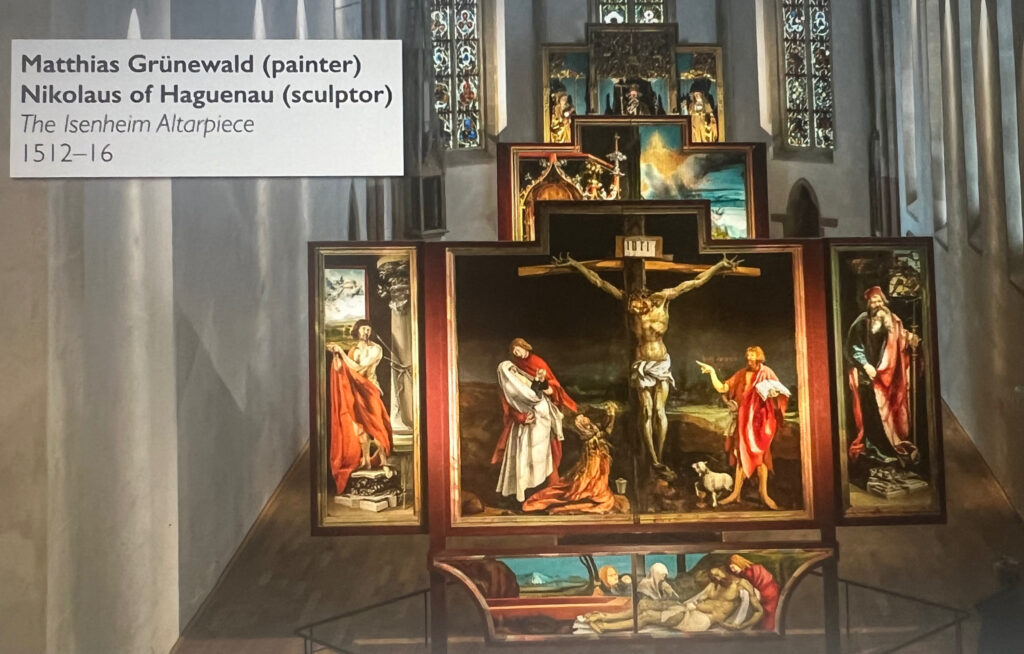
As way of background, altarpieces were a way the church could share the story of Christianity with their congregants, even if they could not read. They were usually placed on or behind the church altar. Altarpieces were constructed in individual panels so they could be transported from the place they were created to the church that had them commissioned. The panels could be changed depending on the liturgical season. They could be open or closed allowing for the different views described above. Looking back in history, the individual panels also allowed the Altarpiece to be safely hidden during The Thirty Years War and the French Revolution.
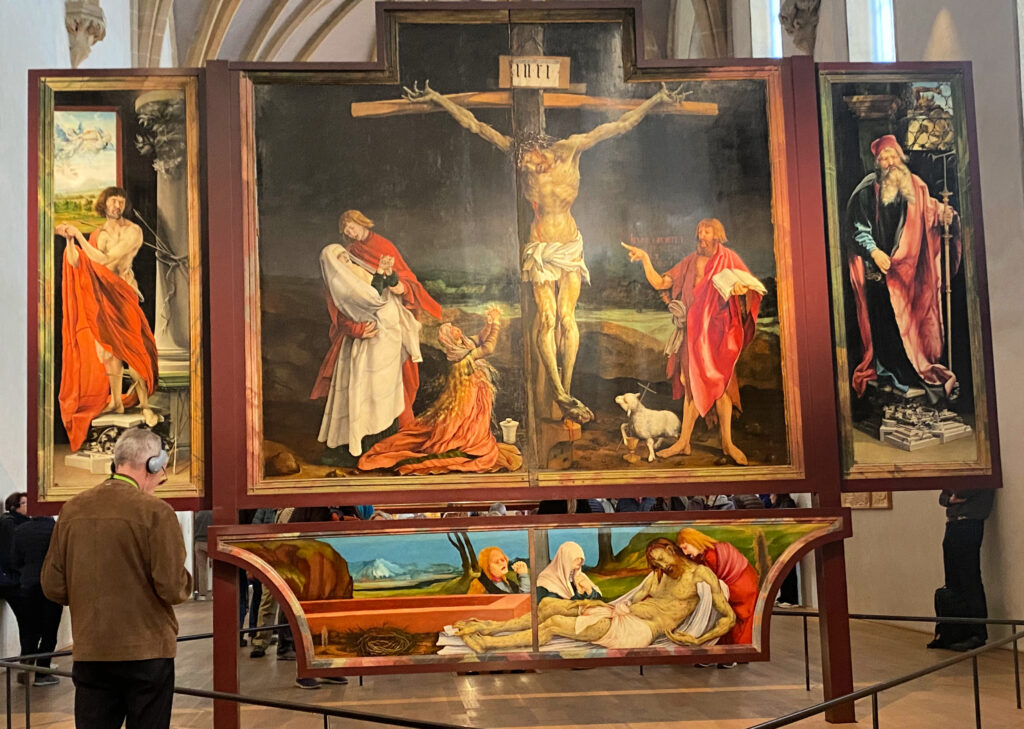
The Isenheim Altarpiece was painted by Matthias Grünewald (1470-1528). It was his largest and most famous work. The section pictured below is “The Closed View.” The center panel is titled “The Crucifixion.” In describing the painting, the author of The Isenheim Altarpiece wrote:
“Grünewald did not content himself with showing worshippers the tragic moment of Christ’s death on the cross, he insisted on expressing the suffering (of Christ).”
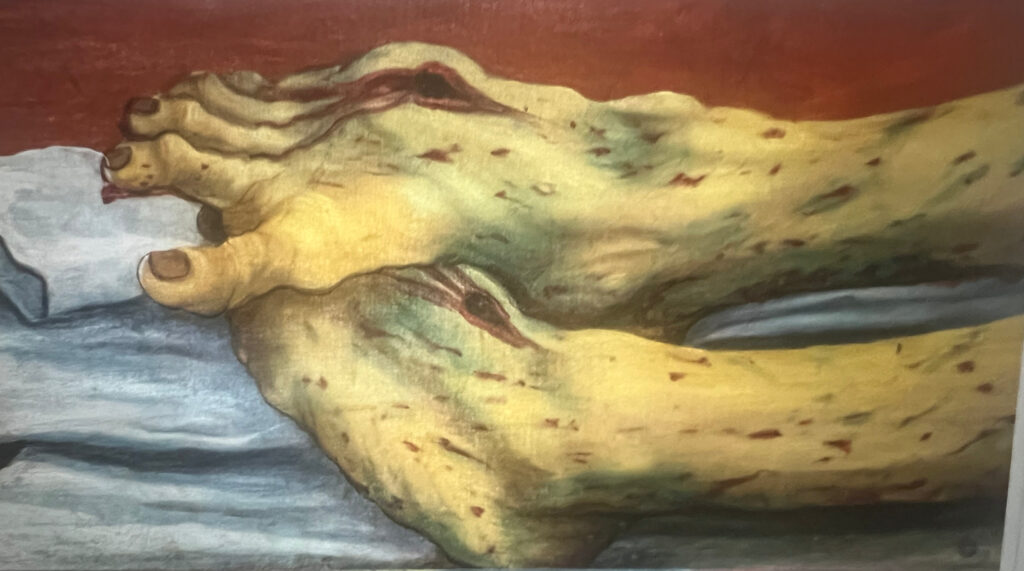
The intent was to show congregants the price of salvation. The second picture is a detail of Jesus’ feet showing some of the suffering He endured.
Pictured to the left of Jesus is Mary, Jesus’ mother, being held by St. John. Mary Magdalene is at His feet and John the Baptist is to His right. But John the Baptist would have already been beheaded at the time of Christ’s crucifixion. The author says he has a look of wisdom and points to Christ as “the new law.” The bottom panel (under The Crucifixion) is titled “The Lamentation of Christ.” It shows Christ having been removed from the cross but not yet taken to the tomb.
The two side panels picture Saint Sebastian (to the left) and Saint Anthony (to the right). St. Sebastian is the patron saint of plague victims and Saint Anthony is the patron saint of the sick. The Altarpiece was originally created for the Monastery of St. Anthony Hospital Chapel. These saints would be comforting to the patients treated at the Hospital.
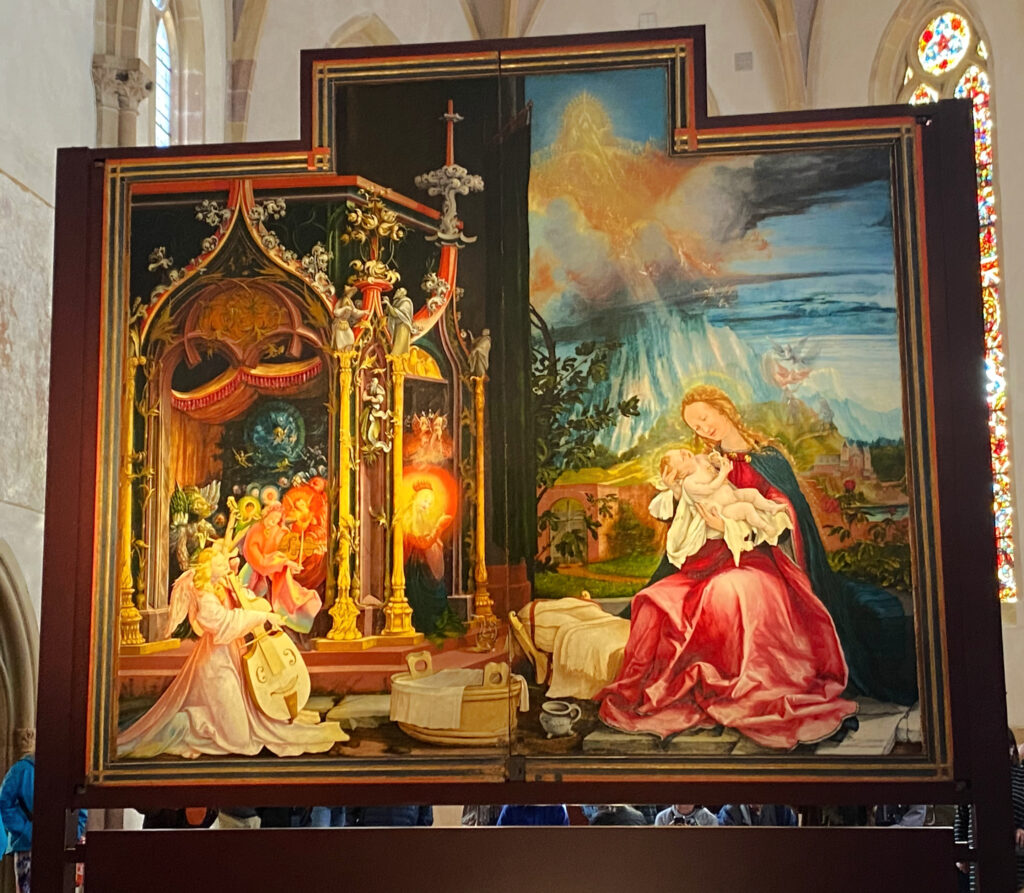
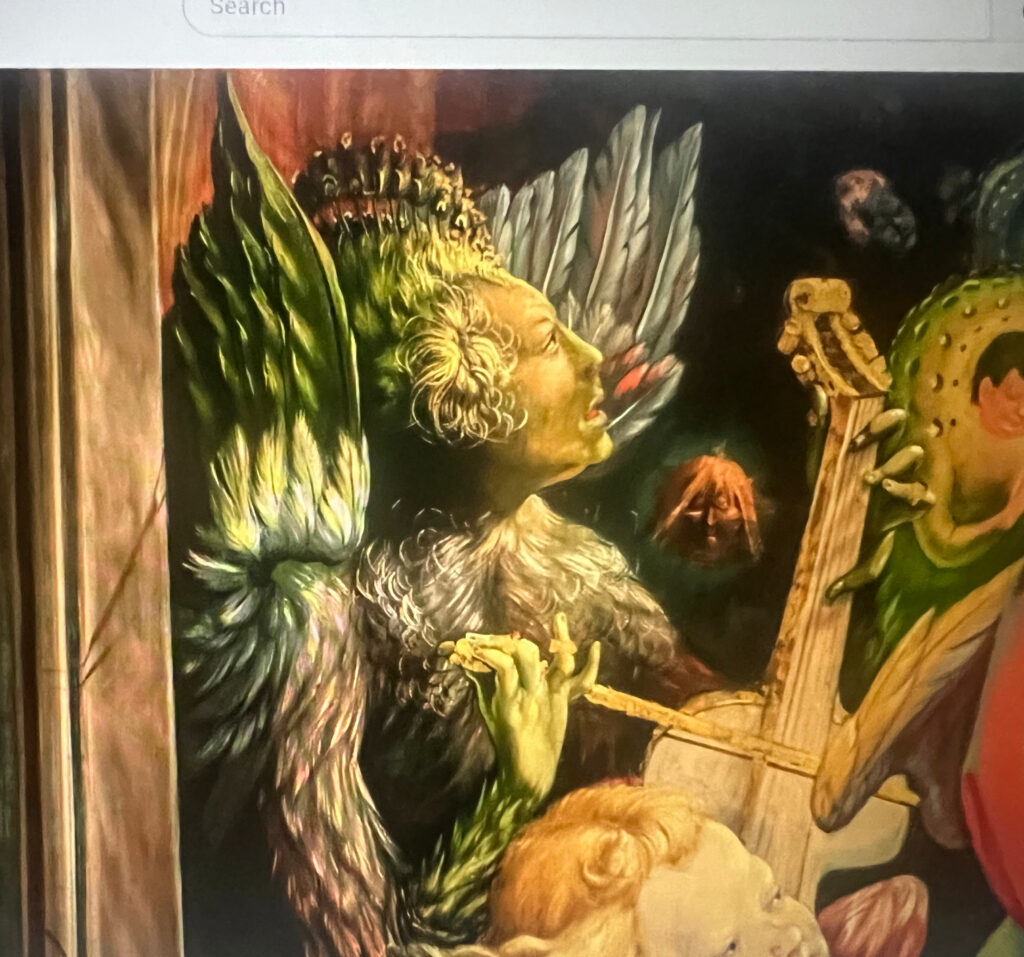
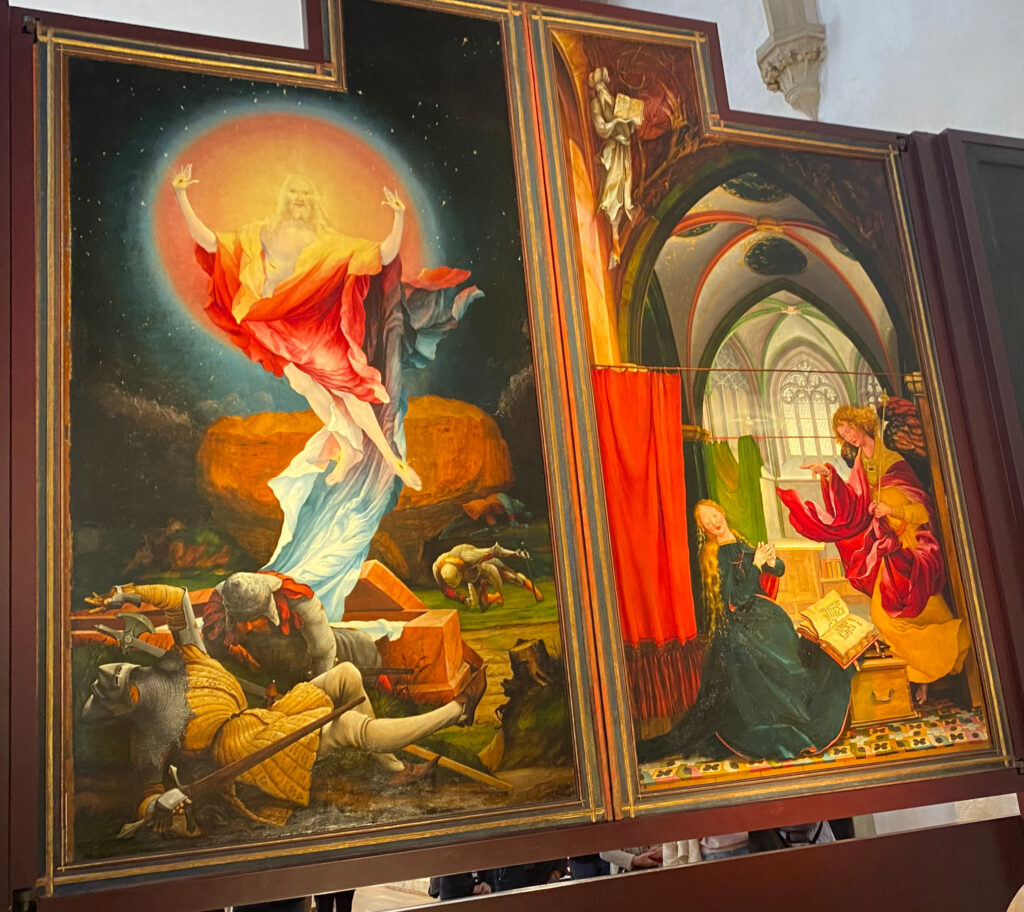
The next pictures show the “First Opening” of the Isenheim Altarpiece. The center panel is actually two panels made to look like one. On the left is “The Concert of the Angels” and on the right is “The Virgin and Child.” Encyclopedia Brittanica describes “The Concert of Angels” like this:
The Concert of Angels… depicts an exotic angel choir housed within an elaborate baldachin. At one opening of the baldachin a small, glowing female form, the eternal and immaculate Virgin, kneels in adoration of her own earthly manifestation at the right. And at the far left of the same scene under the baldachin, a feathered creature, probably the evil archangel Lucifer, adds his demonic notes to the serenade.
The second picture shows a close-up of the devil.
The Virgin and Child, the panel on the right, shows that Jesus has been born. The only figures are Mary and Jesus. Joseph and the animals were not painted into the panel. The bed and chamber pot emphasize the human nature of the birth.
The third picture shows the side panels of “The First Opening.” The one on the left is titled “The Resurrection.” Grünewald depicts Jesus as omnipotent rather than as a man who could be mistaken for the gardener. Jesus’ hands are raised so his wounds are visible. The soldiers that had been guarding the tomb are lying on the ground and look weak/defeated.
The side panel on the right is titled “The Annunciation.” The Archangel Gabriel tells Mary that she has been chosen by God to be the mother of Jesus. A picture of Isaiah is at the top left of the panel. He is witnessing the angel’s announcement.
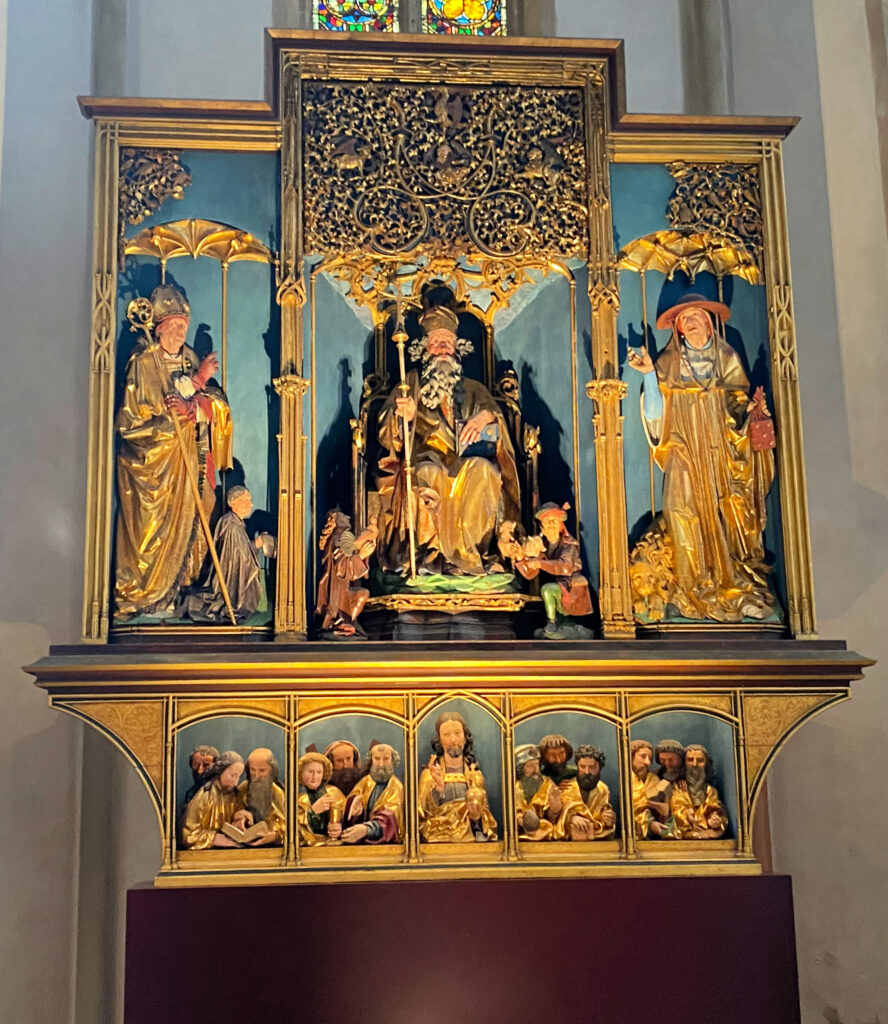
The next pictures show the “Second Opening” of the Isenheim Altarpiece. This is the final center panel and was sculpted by Nikolaus Hagenauer. The center figure is Saint Anthony who was a Christian monk from Egypt. St. Anthony was also the patron saint of the St. Anthony Hospital Chapel. Those afflicted with skin diseases often prayed to St. Anthony, asking him to intercede with God on their behalf. As noted earlier, the Altarpiece was originally created for the Monastery of St. Anthony Hospital Chapel. Most of the Hospital’s patients had skin diseases so St. Anthony might offer them comfort and be someone to whom they would pray. At St. Anthony’s feet are smaller figures giving him offerings.
Saint Augustine and Saint Jerome are to his left and right, respectively. They were recognized as great theologians of the early church. The sculpture at the foot of St. Augustine is Guy Guers. He was the donor that made the Isenheim Altarpiece possible. Beneath the central sculptures are depictions of Christ and the twelve apostles.
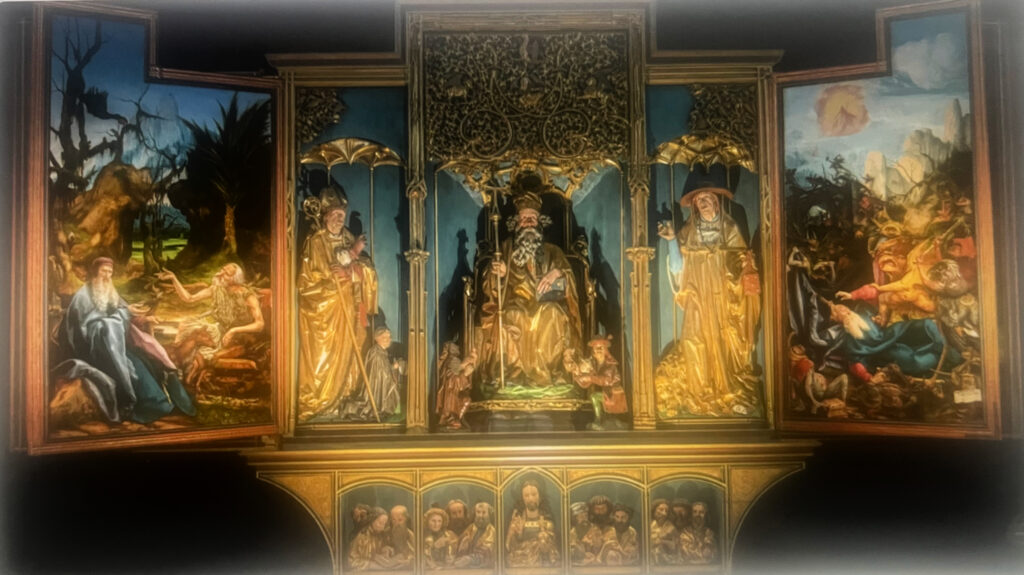
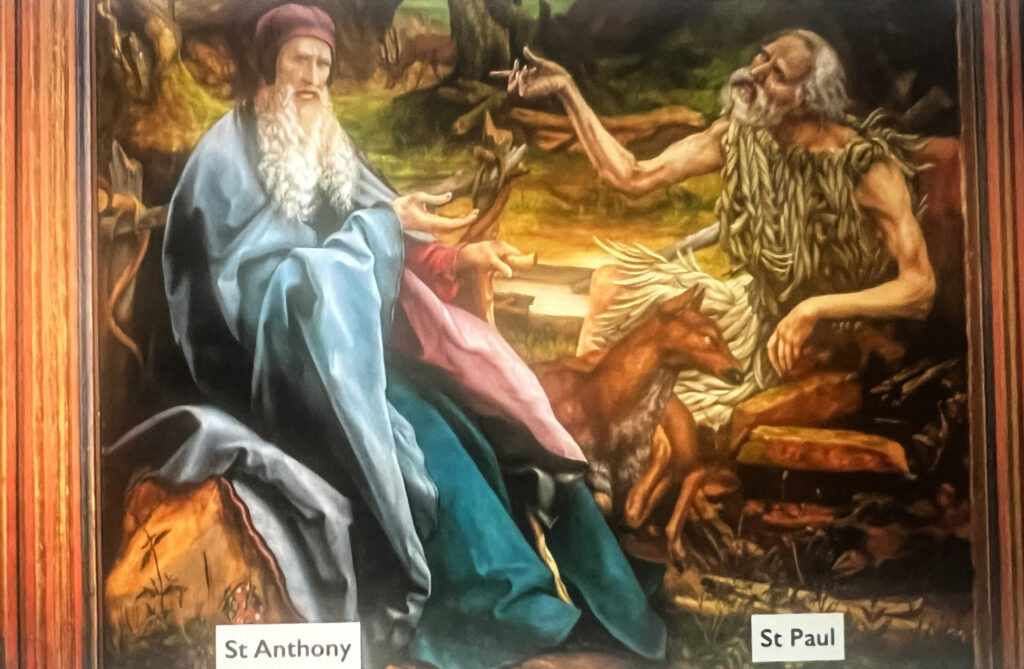
There are also two side panels that were part of the “Second Opening.” While we did not see them, I learned about them in my research. They were both painted by Matthias Grünewald and are depicted in the second picture below (this picture and the two close-ups that follow are screenshots from a video by Smart History). The panel on the left shows St. Anthony visiting St. Paul, the Hermit. He went to visit him a second time, but found that St. Paul had died. They both lived in the desert as hermits for many years. There they lived simply and meditated on spiritual matters.
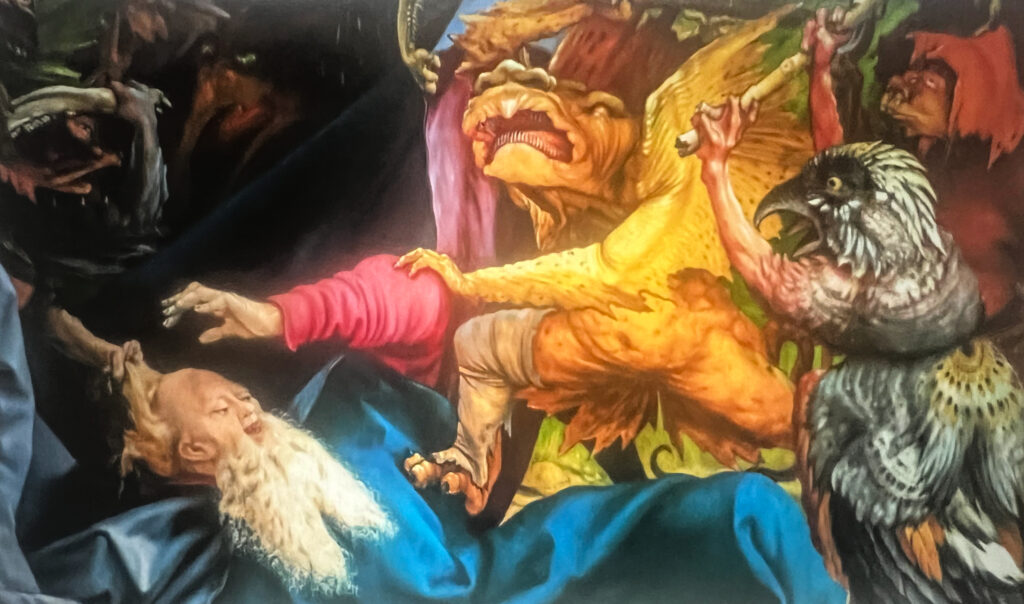
The panel on the right depicts St. Anthony being tempted and tormented by demons. He is lying in pain when a sudden light appeared, driving the demons away. St. Anthony recognized the light as Jesus.
The Isenheim Altarpiece is an incredibly complicated work of art. Matthias Grünewald and Nikolaus Hagenauer not only created this magnificent work but also made it inspirational for the patients at the hospital, giving them comfort and hope.