Lucerne, Switzerland
While on Tauck’ Rhine, Alps and Amsterdam tour, we first explored Bern and then headed to Jungfraujoch in the Alps. Next we visited Lucerne which is the focus of this post. A highlight would be seeing the Chapel Bridge (Kapellbrücke in German) pictured below.
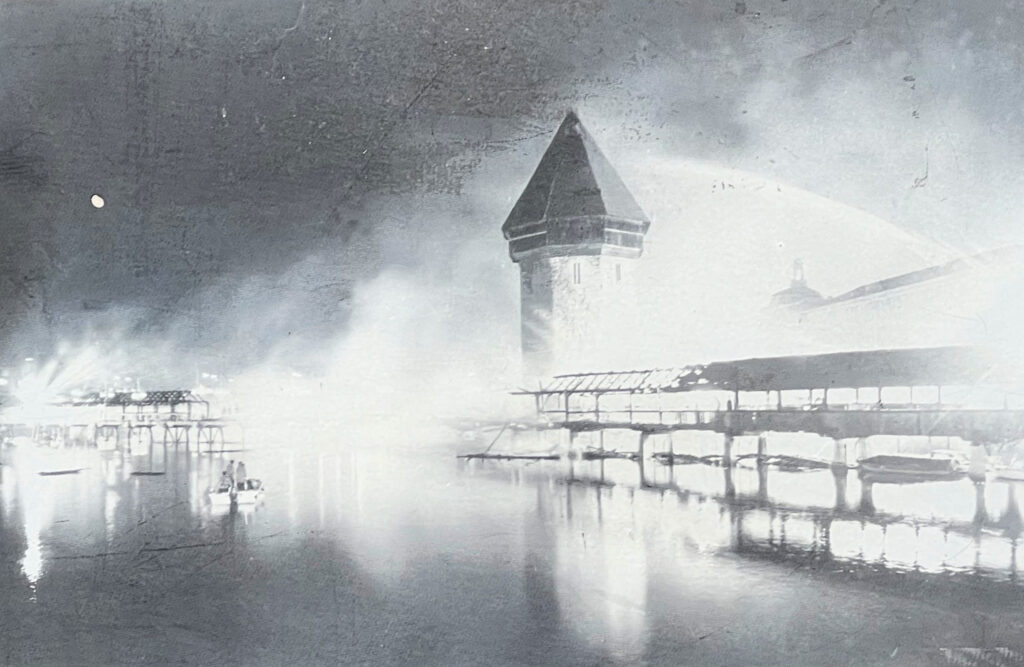
The Chapel Bridge is a covered wooden footbridge over the Reuss River. It was named after St. Peter’s Chapel, a nearby Catholic Church. The bridge contains a number of interior paintings dating back to the 17th century. Although parts of the bridge and many of the paintings were destroyed in a 1993 fire, they have been restored. I have included a picture of a picture that was on display near the Chapel Bridge in Lucerne. It shows the Bridge on fire in 1993.
The Chapel Bridge is the oldest wooden covered bridge in Europe. It serves as the city’s symbol and as one of Switzerland’s most popular tourist attractions.
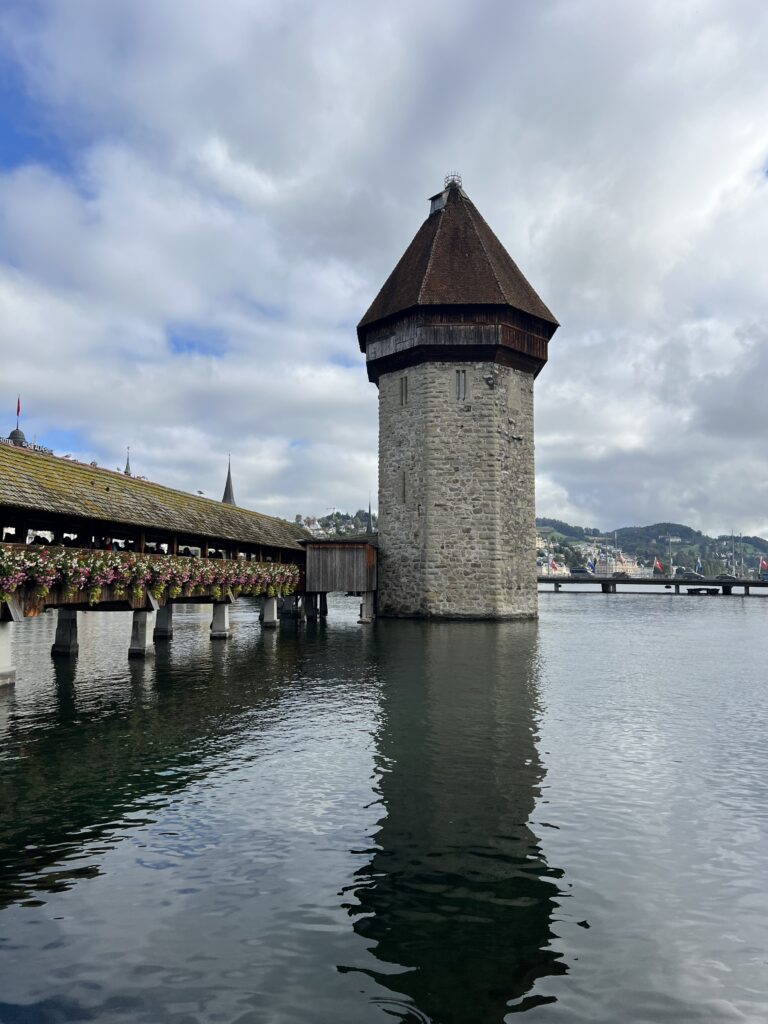
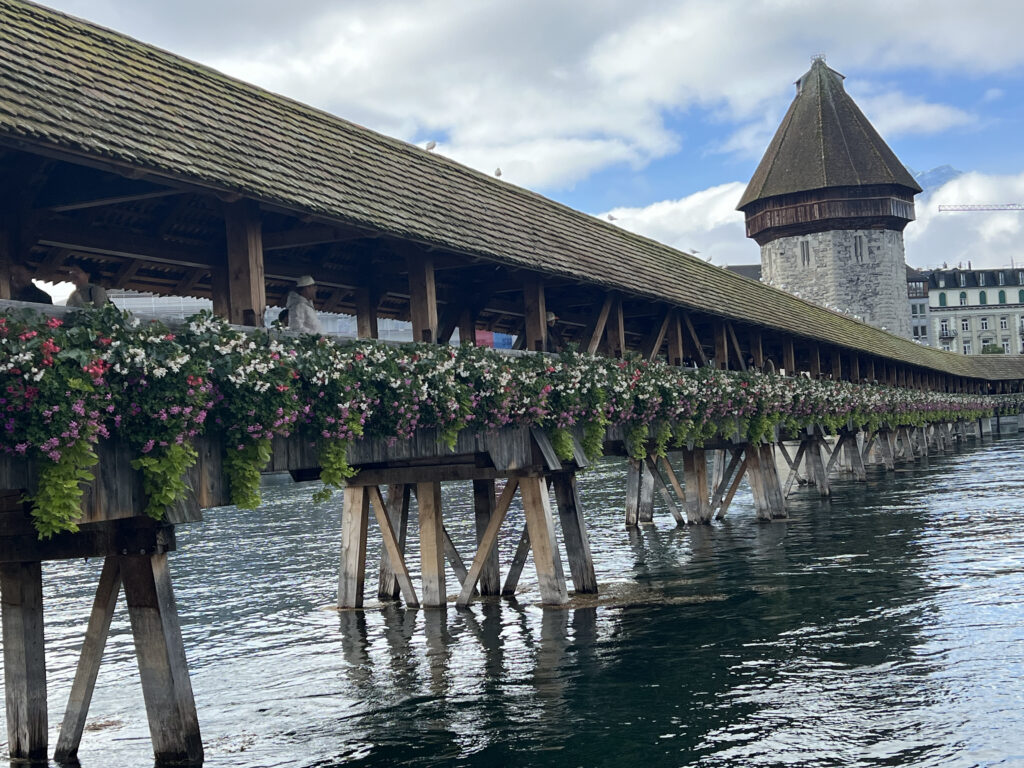
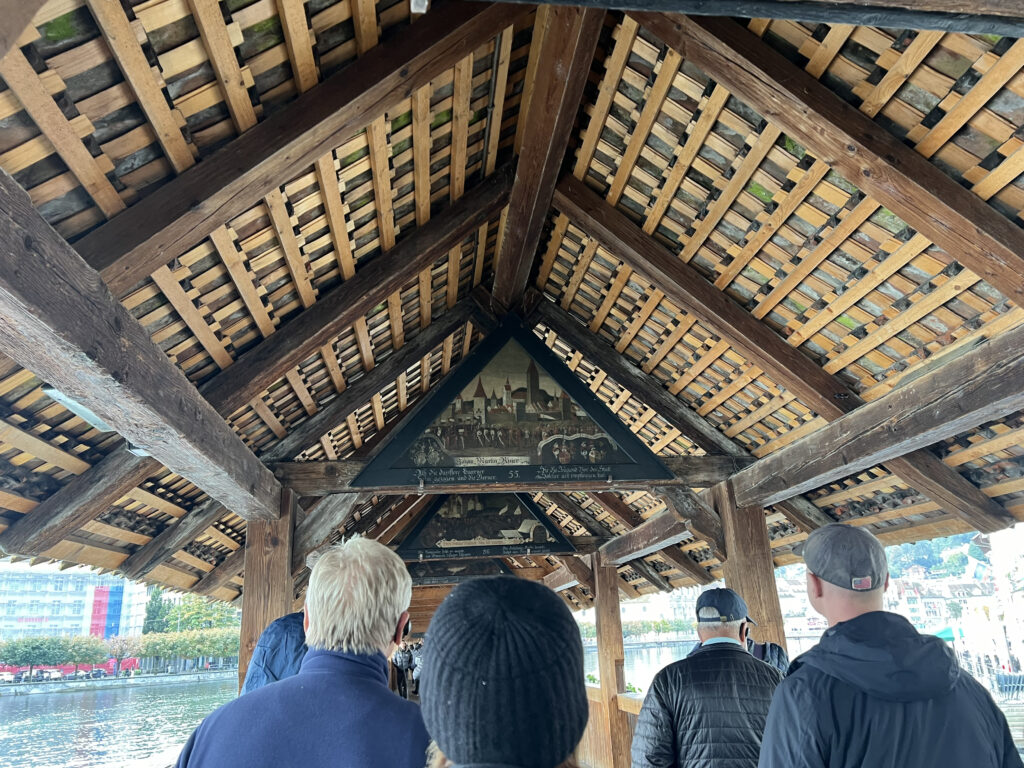
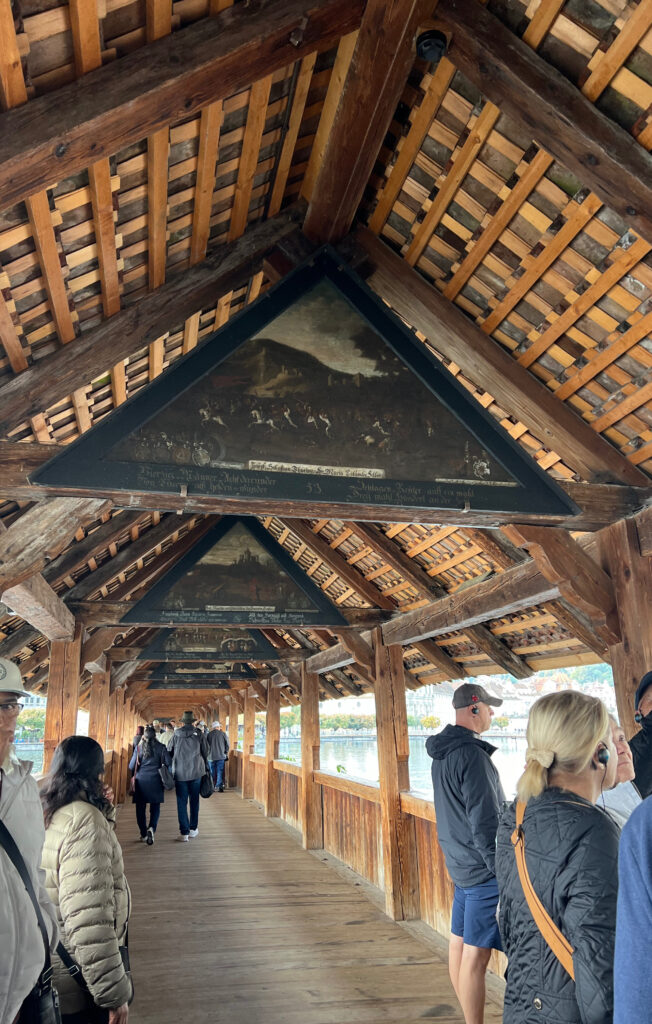
The Chapel Bridge paintings tell the story of the history of the Swiss Confederation and its neighboring countries. The paintings on the Chapel Bridge are important from an art history perspective and are among Lucerne’s key landmarks. The bridge fire in 1993 destroyed around two thirds of the paintings. Fortunately, professional photographs had been taken of the paintings two years before which greatly assisted in the restoration of the paintings.
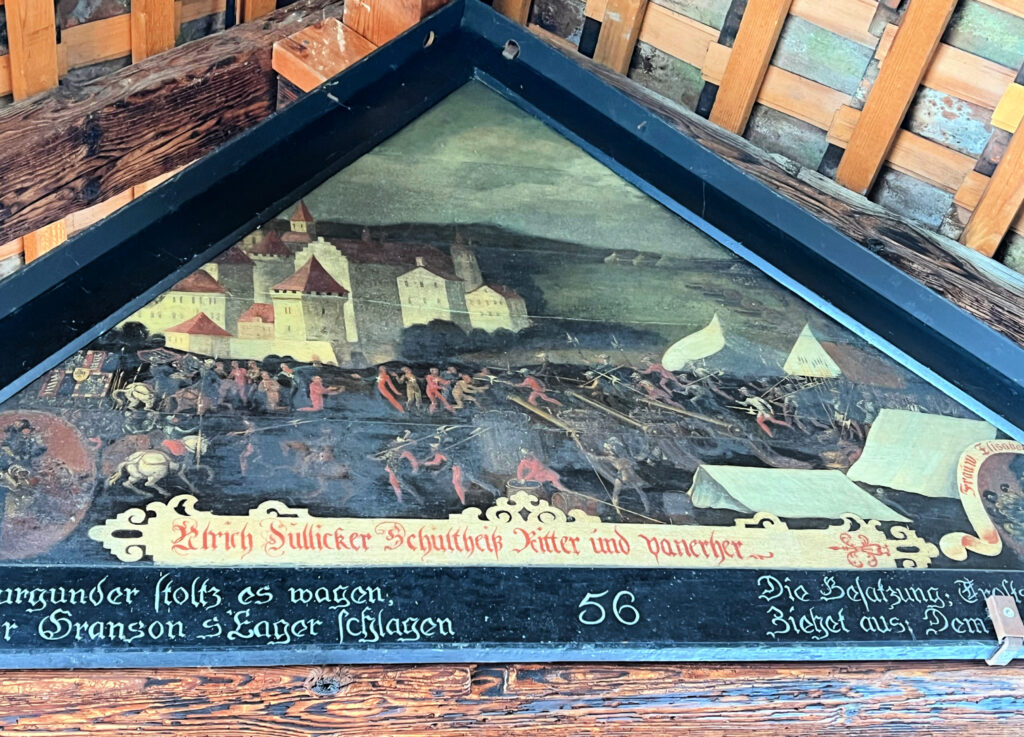
The pictures below are two we saw while walking across the bridge. The top picture is titled “Charles the Bold Lays Siege to Grandson.” The Battle of Grandson was fought in 1476, during the Burgundian Wars. Charles the Bold, Duke of Burgundy, was defeated in the battle by the Old Swiss Confederacy.
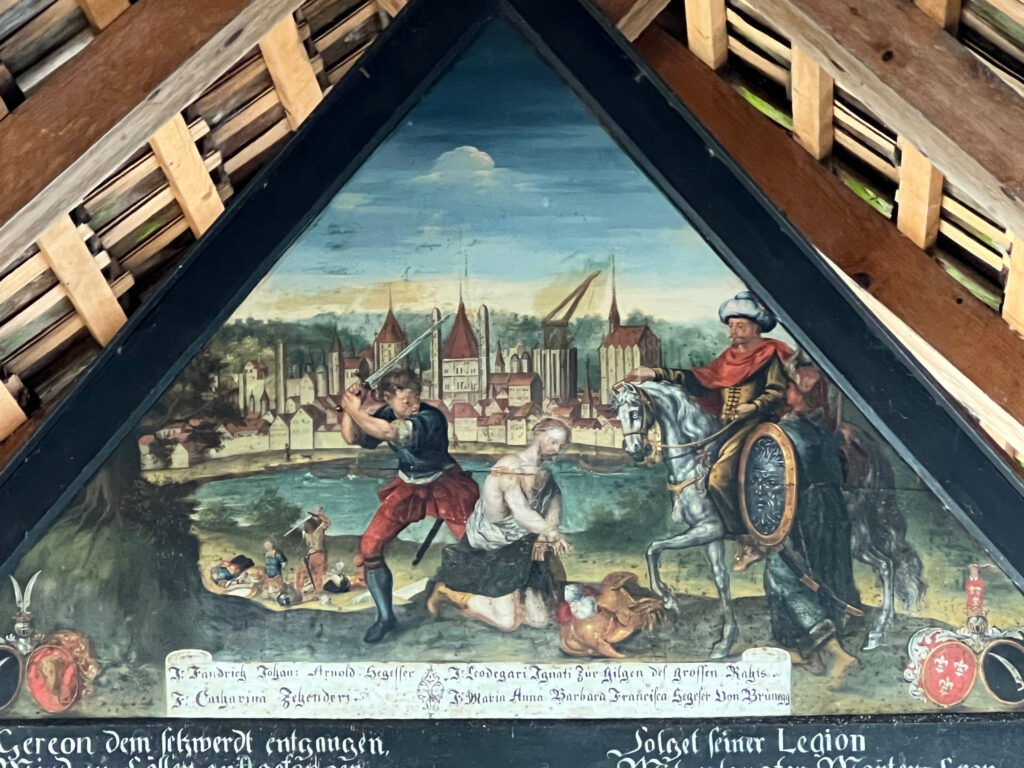
The bottom picture is titled “Gereon is Beheaded in Cologne.” According to legend, Gereon, a Roman officer, and his followers defied an imperial order to persecute Christians. Consequently, he was beheaded in about 304 AD.
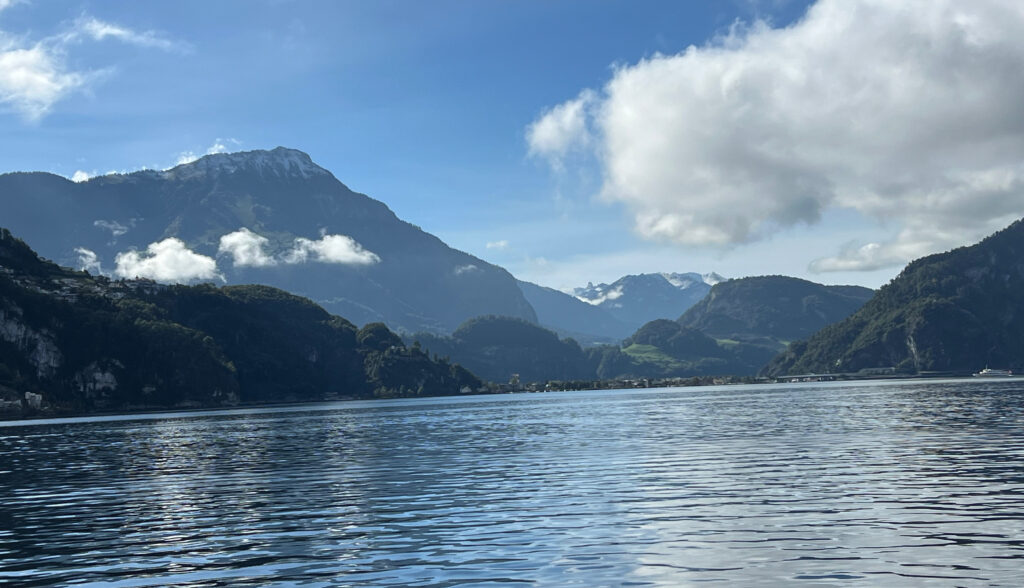
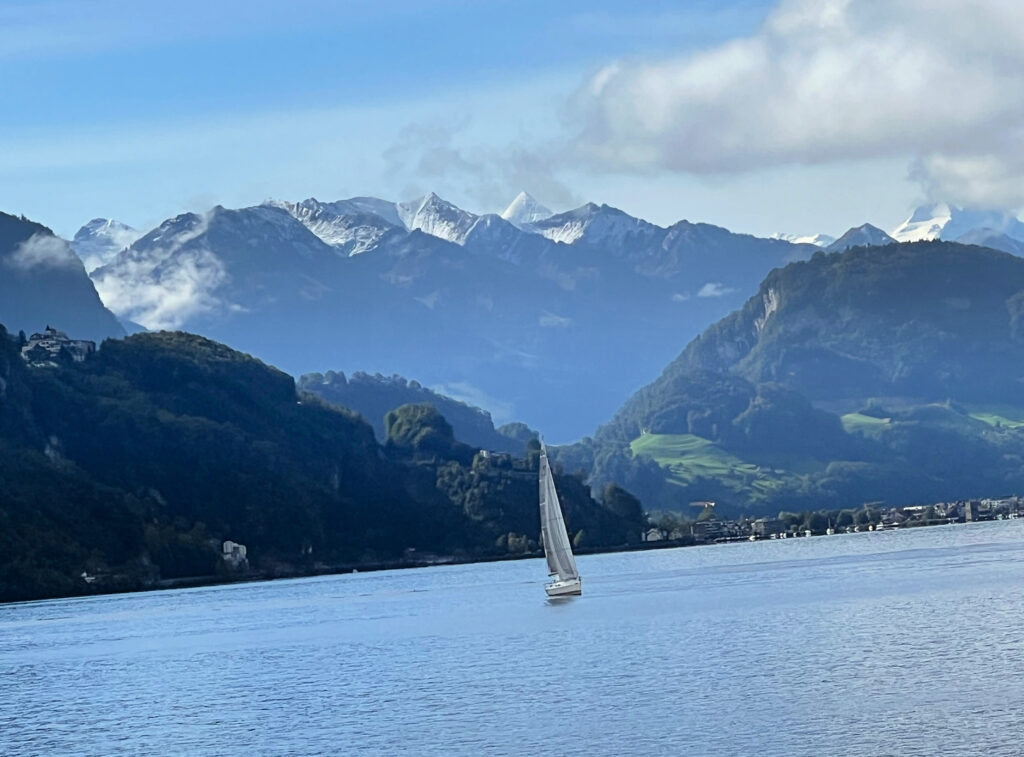
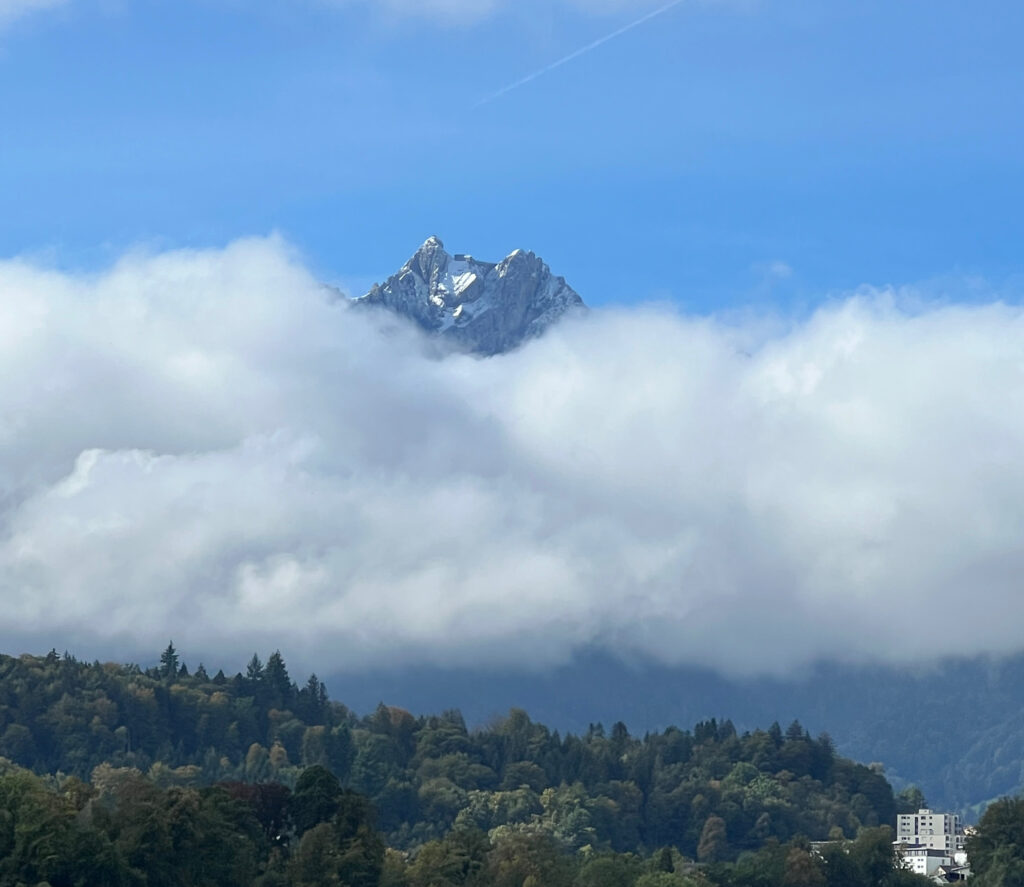
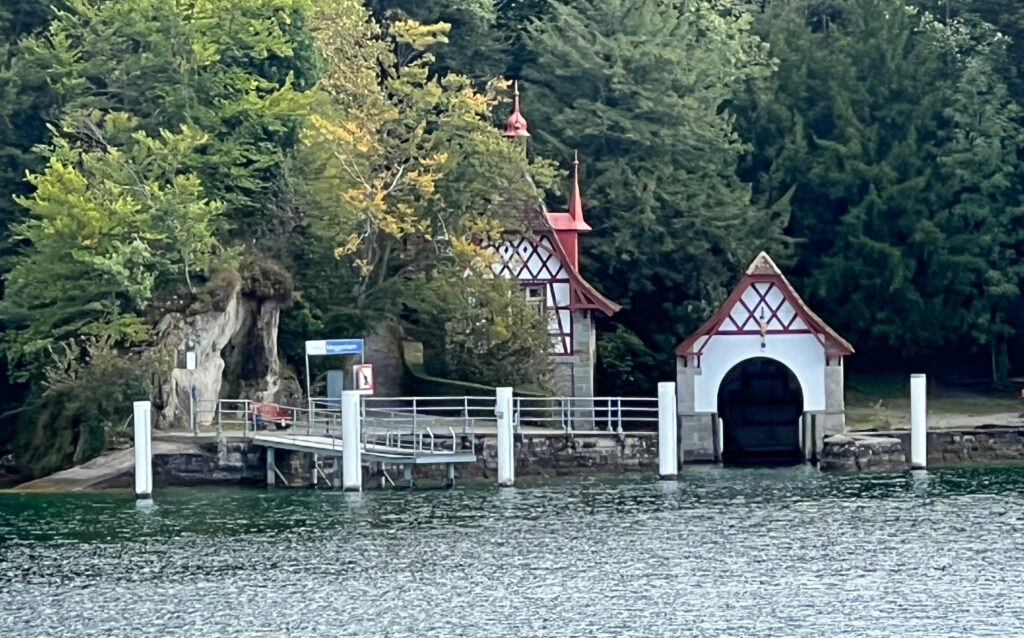
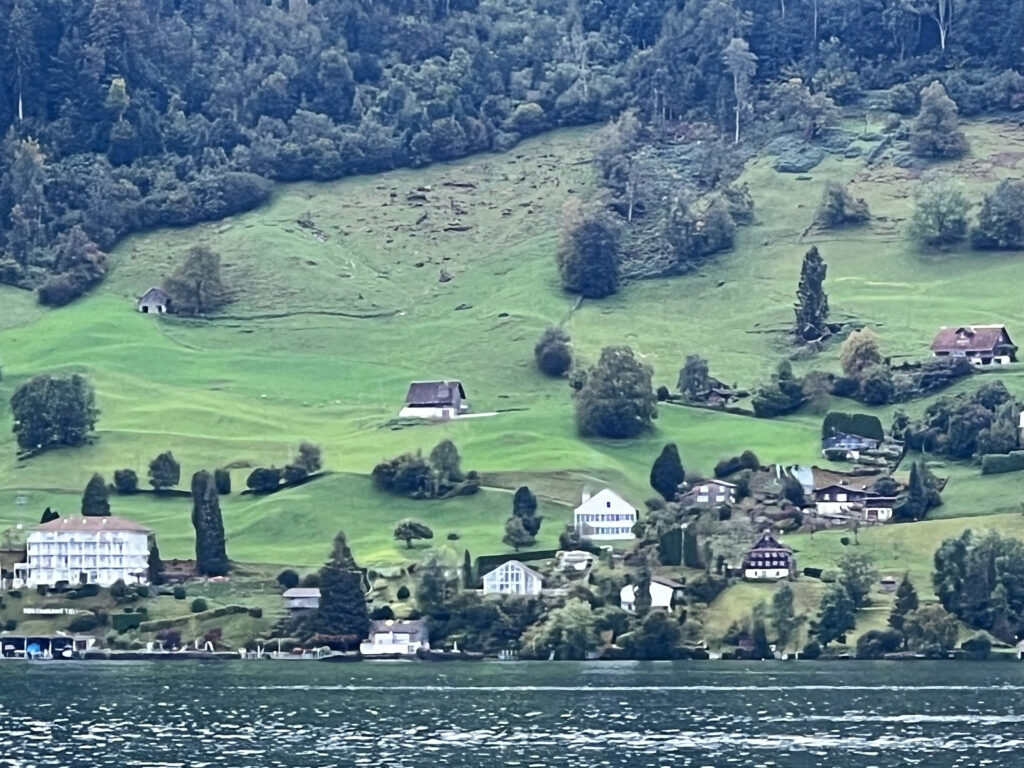
We also took a boat ride on Lake Lucerne which has picturesque villages along its shore. The mountains that surround it include Pilatus. The third picture shows the peak of Pilatus.
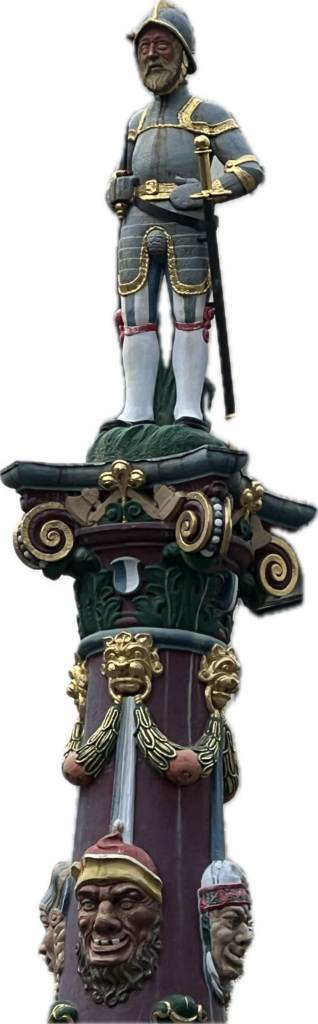
As we walked around Lucerne, we saw many beautiful sites. One was the Fritschi Fountain which was built in 1918. The figure on top of the Fritschi Fountain is a “standard bearer” for Fritschi. The four masks on the column represent Fritschi, his wife, a nursemaid and a servant. There are also four fools pouring water from goat horns near the base. Fritschi is a legendary carnival figure and is supposedly buried beneath the fountain.
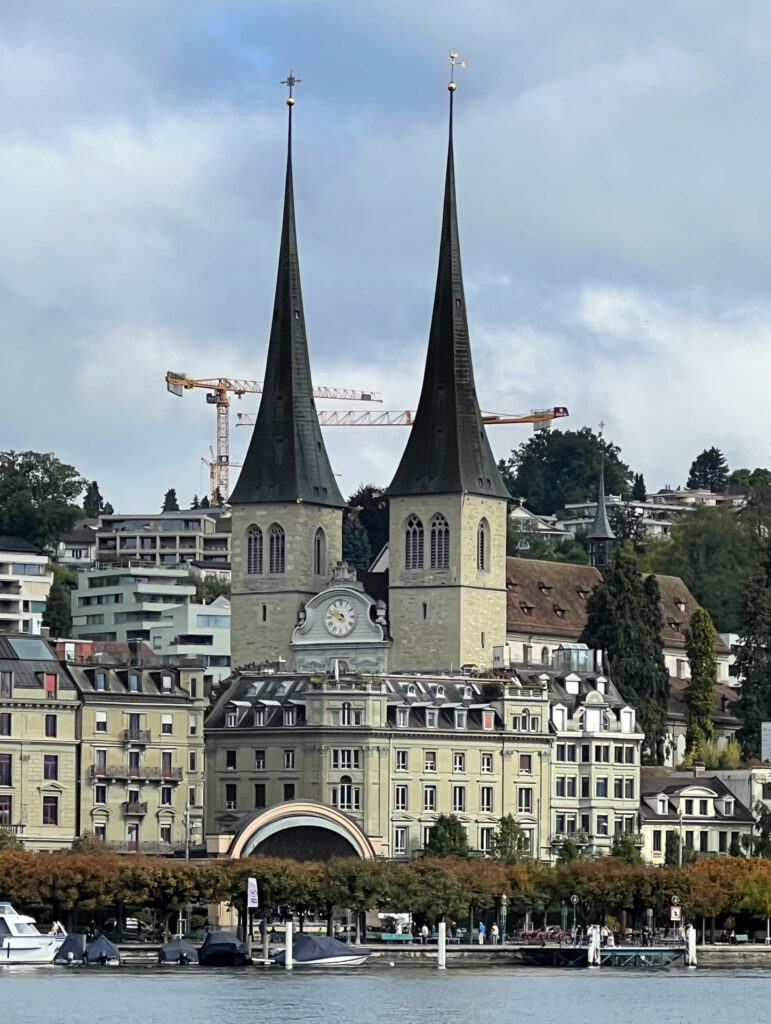
Pictured next is the Church of St. Leodegar, a Roman Catholic Church. It was built from 1633 to 1639 on the foundation of the Roman Basilica, which dated back to 735. A rooster sits atop the right spire. It reminds us of God’s grace to sinners. It is an image of Peter’s failure (denying Christ three times before the rooster crows) and Jesus’ triumph over sin and death.
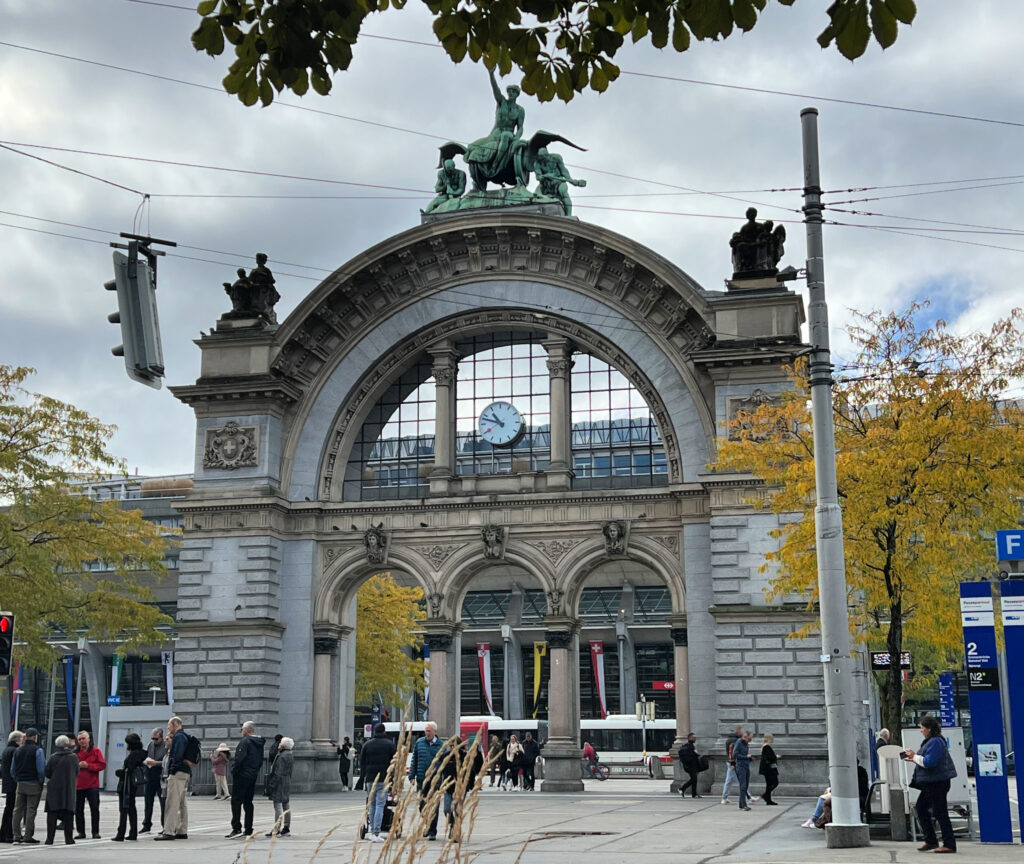
The next picture is Lucerne’s train station. This building replaced one that was largely destroyed by fire in 1971. Temporary buildings kept the train station operating. A competition was held to select a design for a permanent train station. It ultimately opened in 1991. It is a multi-story building with shopping on the lower level. The old entrance to the train station survived the fire and now stands in front of the new one.
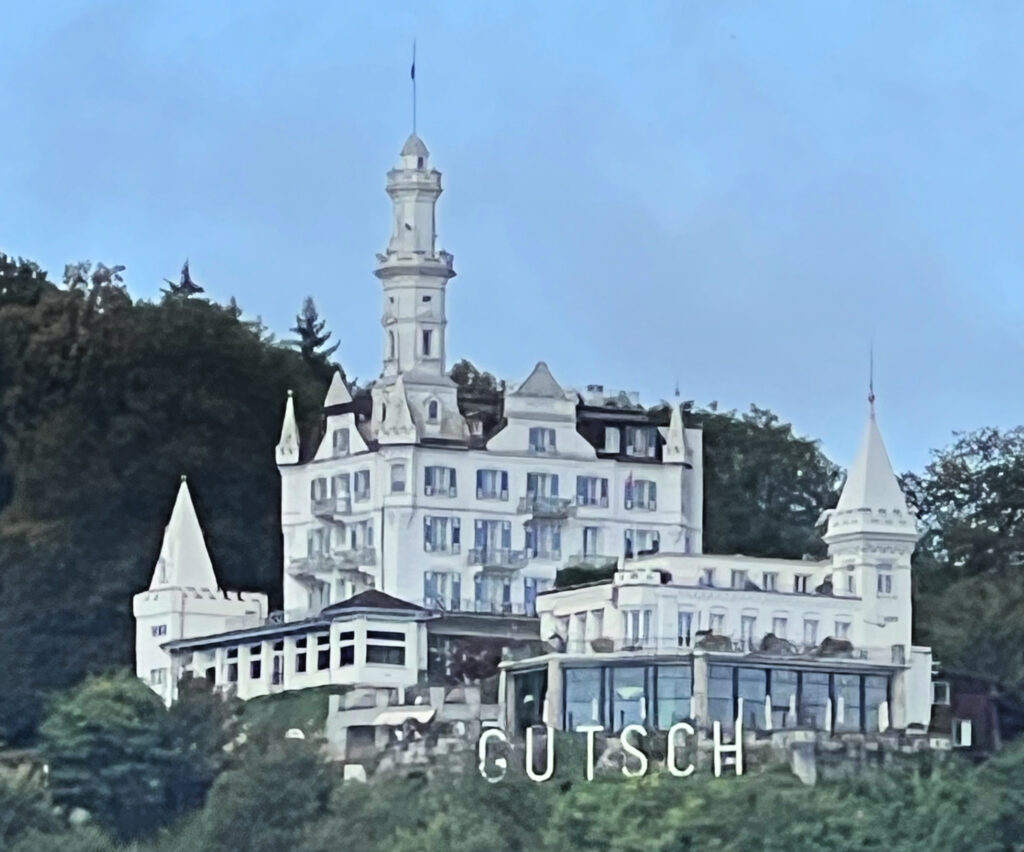
The next picture is the Chateau Gutsch, a hotel and restaurant complex. It was built in 1888 and was designed to look like a fairy-tale castle. It was built on Gutsch Hill and overlooks the the city of Lucerne and the Reuss River.
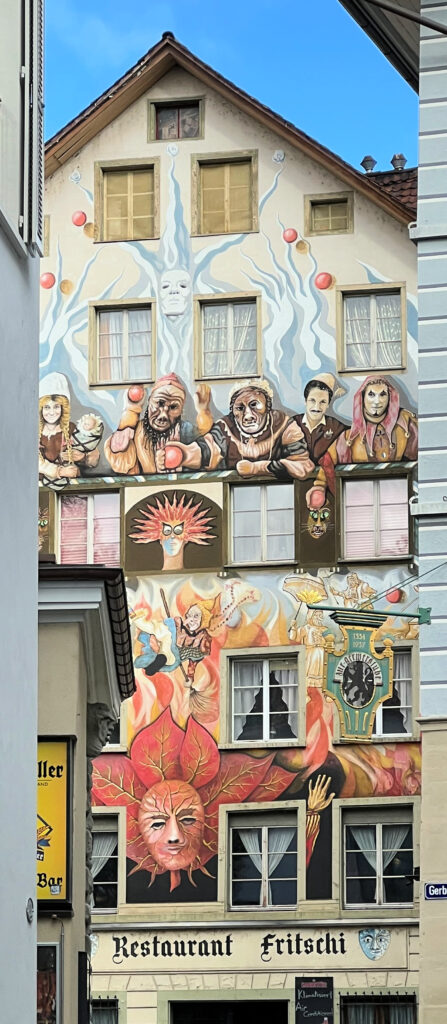
Some of the buildings in Lucerne are decorated with paintings and murals. The next picture is a mural on the Restaurant Fritschi. It is called “Carnival Mural” and was designed by a local artist, Robert Ottiger, in 1985. The mural features many characters and masked bands (called Guggemuusige) that parade through the streets during the Lucerne Carnival the week before Ash Wednesday.
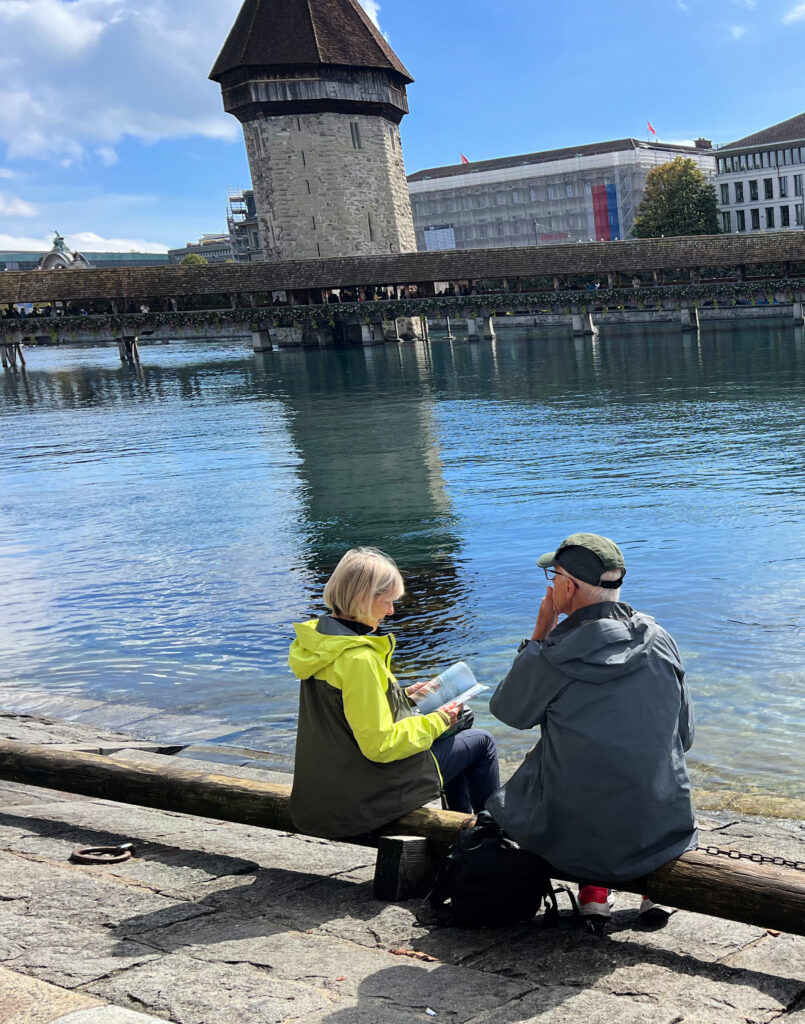
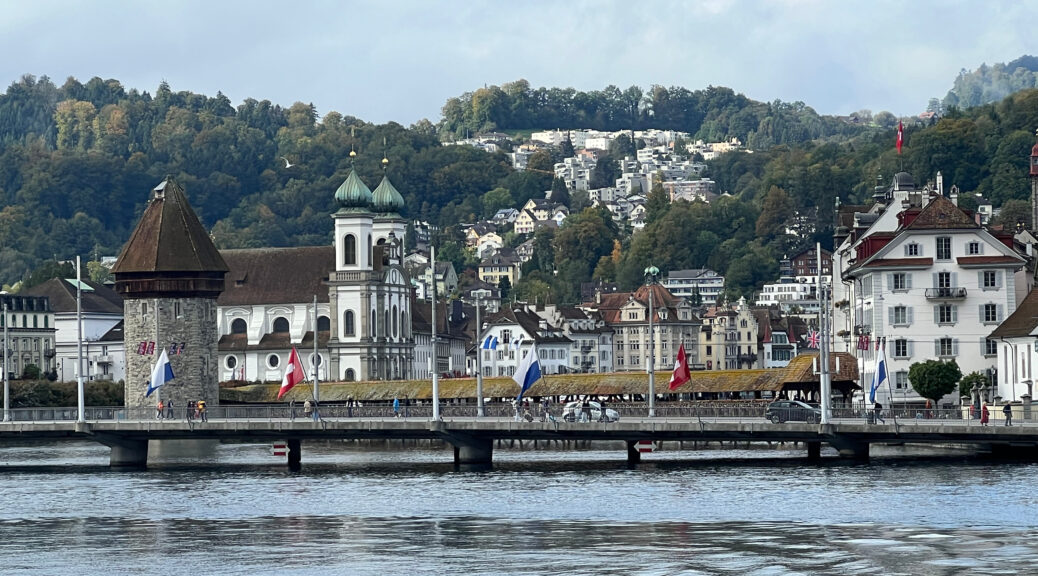
Lucerne is a beautiful city and the Chapel Bridge is really special. These final pictures for this post were taken by the Reuss River.