Visiting Uwajima
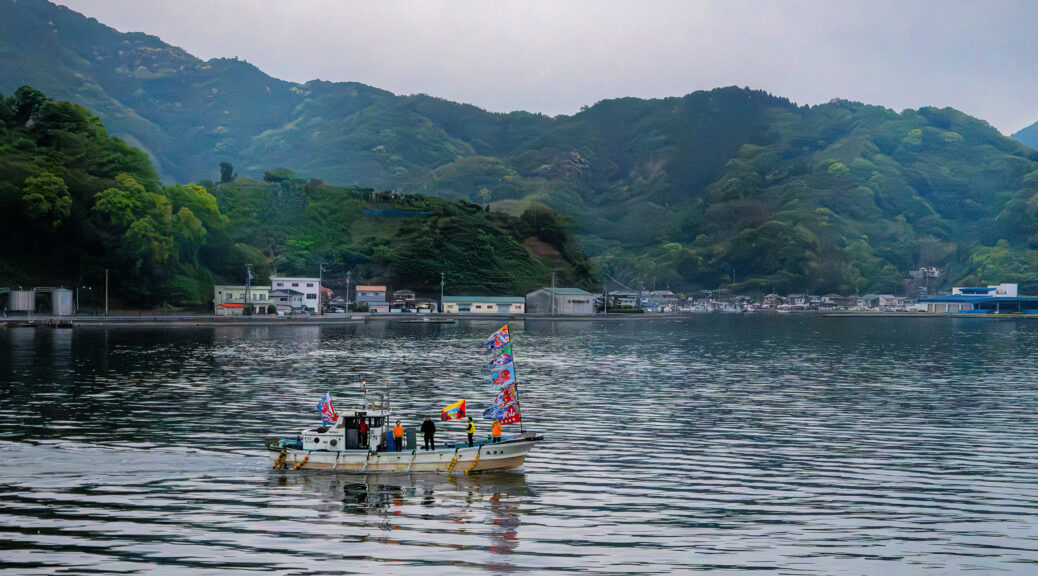
We left Beppu and sailed overnight to Uwajima on the island of Shikoku, one of the four main islands of Japan. Uwajima is known as one of the three best areas in Japan for pearl cultivation. We chose an excursion to the Doi Pearl Farm where three generations work together to grow, harvest and sell Akoya pearls.
Pearl cultivation is a complex endeavor. There are oysters of different ages to care for, nucleation and post-nucleation management, oyster cleaning, and pearl harvests. On their website, the family acknowledges that their pearls are “crafted by time, the sea, and generations of skill.”
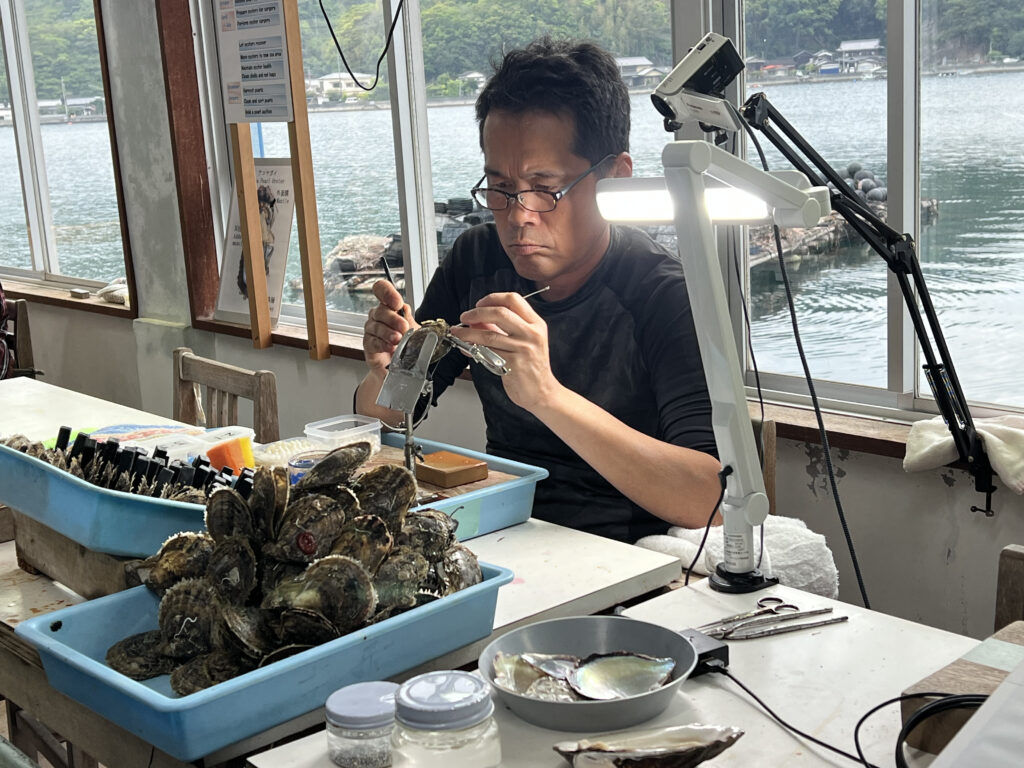
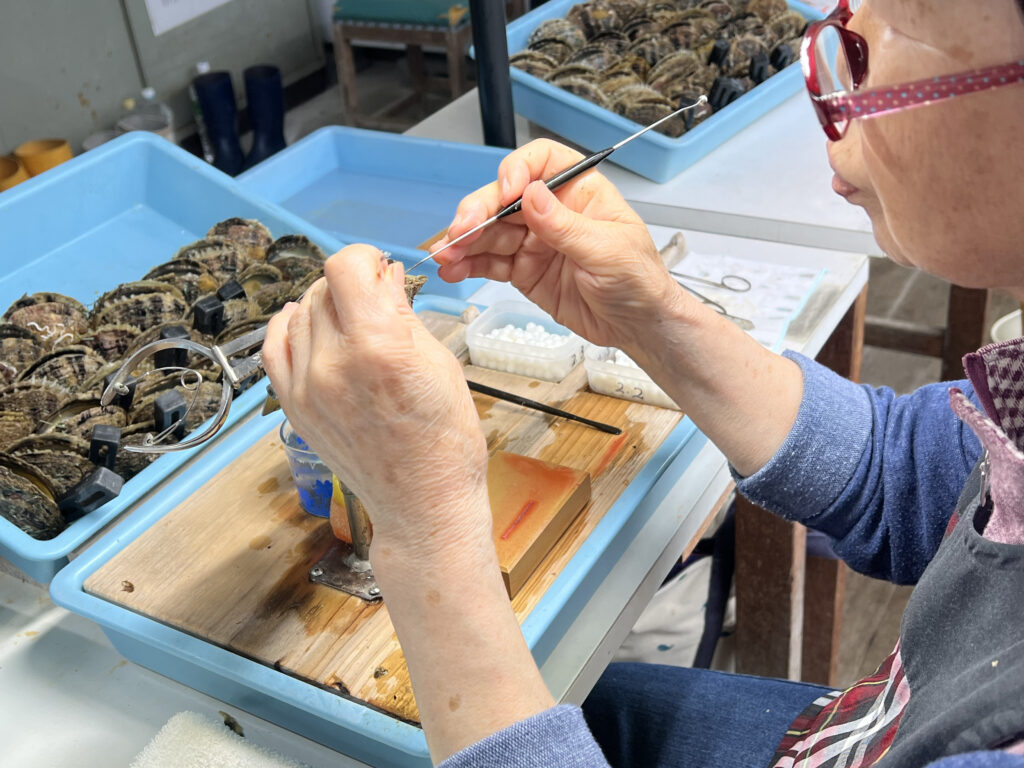
The Doi Pearl Farm purchases Akoya oysters that have been growing for about two years. Then their work begins. A nucleus is inserted into the oyster. A round-shaped piece from a shell is used as the nucleus. Mantle from a donor oyster is inserted with the nucleus. The mantel will secrete layers of nacre which will surround the nucleus, eventually creating the pearl.
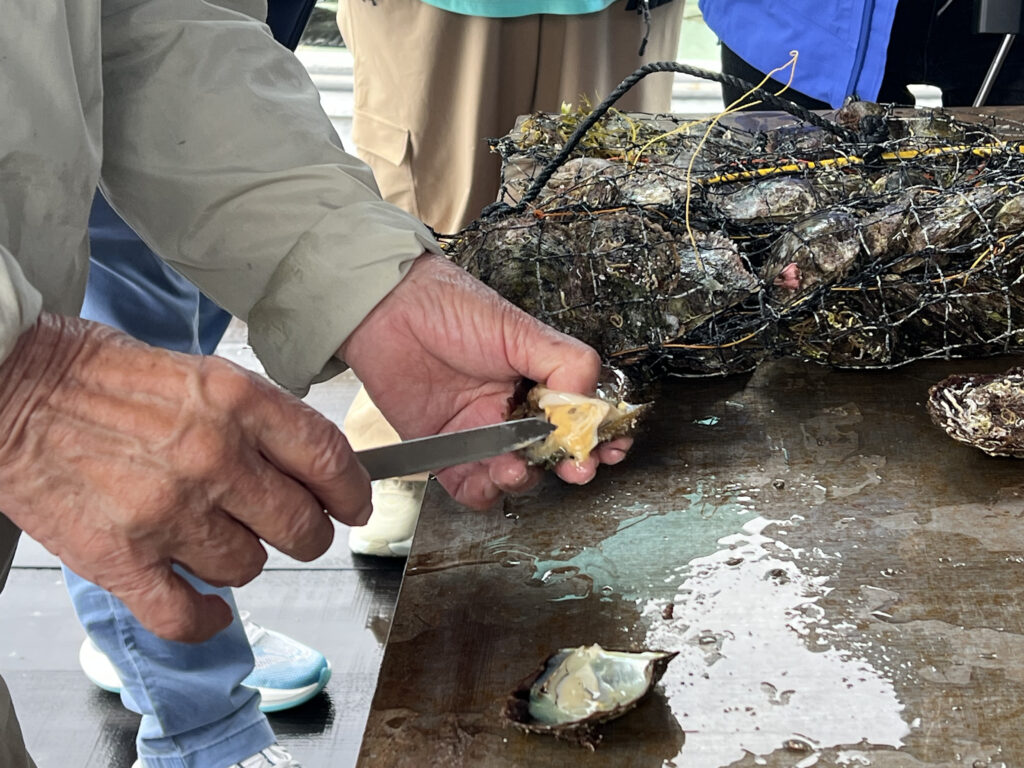
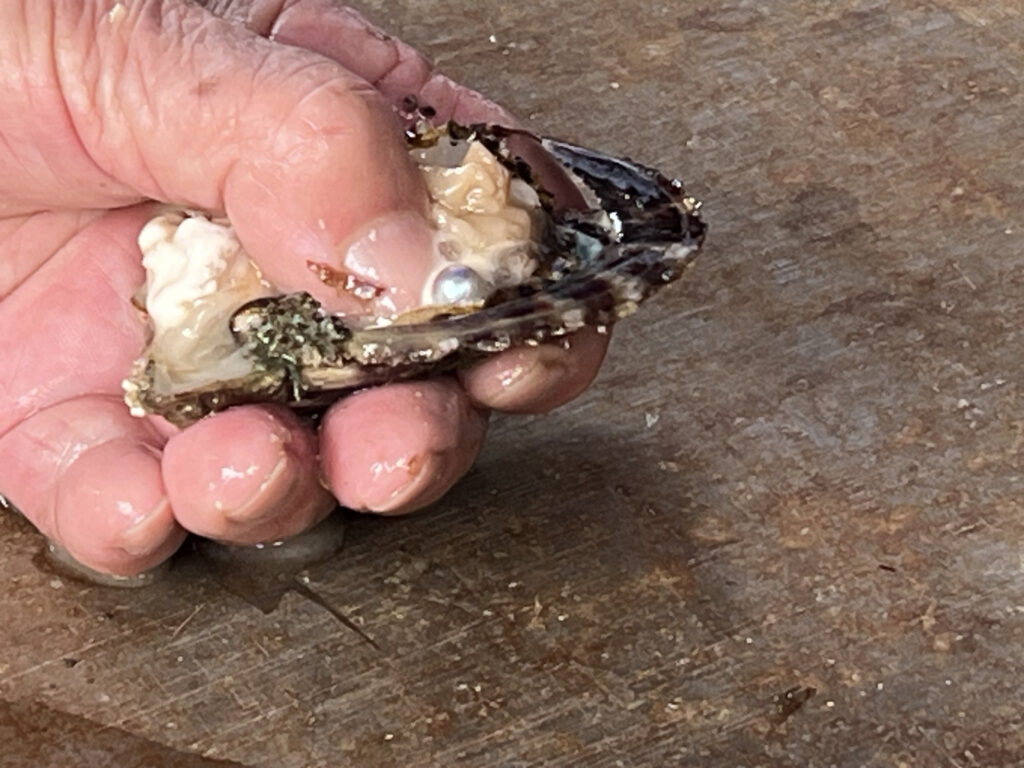
Inserting a nucleus requires a high degree of skill and can take several years before the individual is proficient. The next pictures show a nucleus being inserted into the oyster.
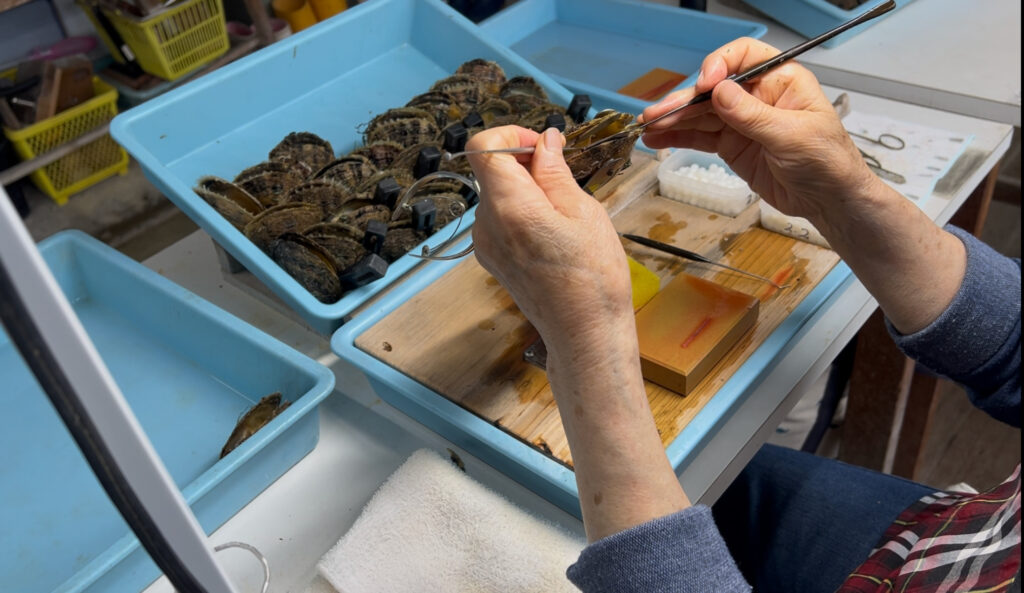
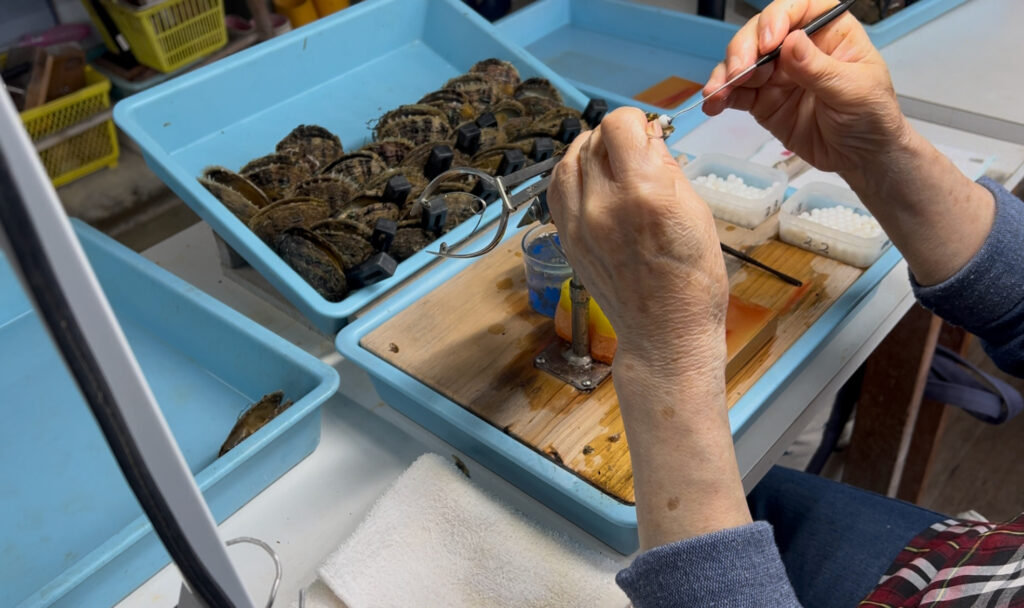
After the implantation, Akoya oysters go into a post-surgery recovery period. They are put in baskets and placed under rafts. They spend about a month in the calm bay until their wounds are healed.
They are then placed in a net and moved outside the bay where there are abundant nutrients. All oysters are periodically cleaned to remove barnacles and other parasites which not only compete with the oysters for nutrients, but can also adversely affect their health. Cleaning will occur every 10 to 14 days until the pearls are ready for harvest.
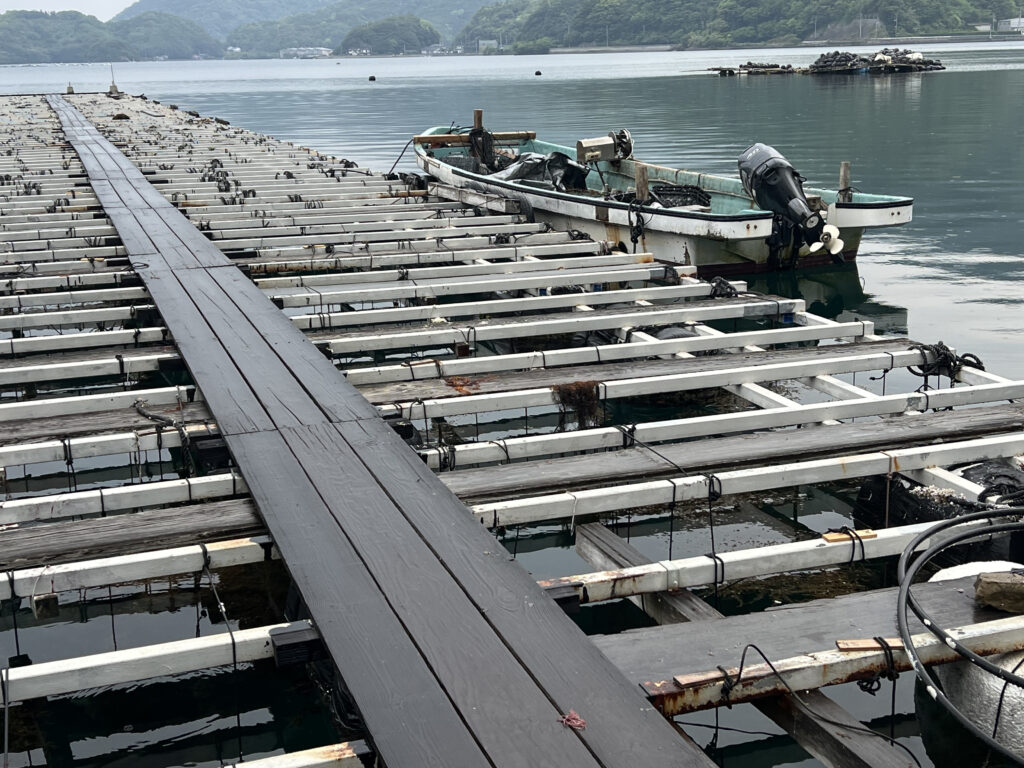
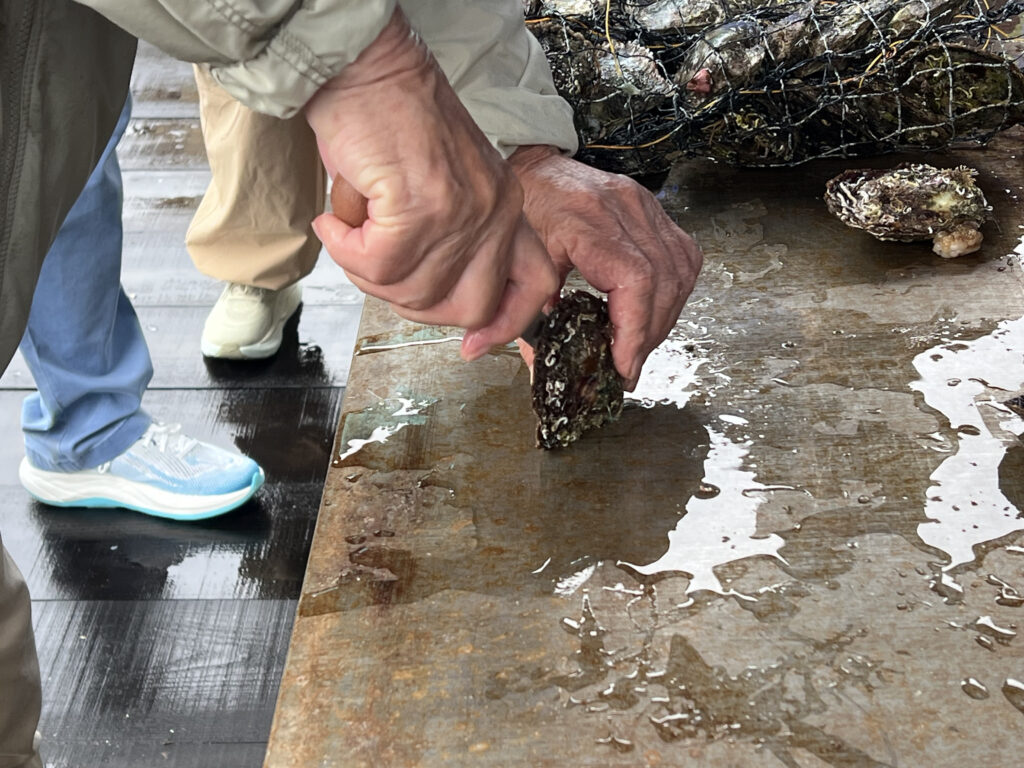
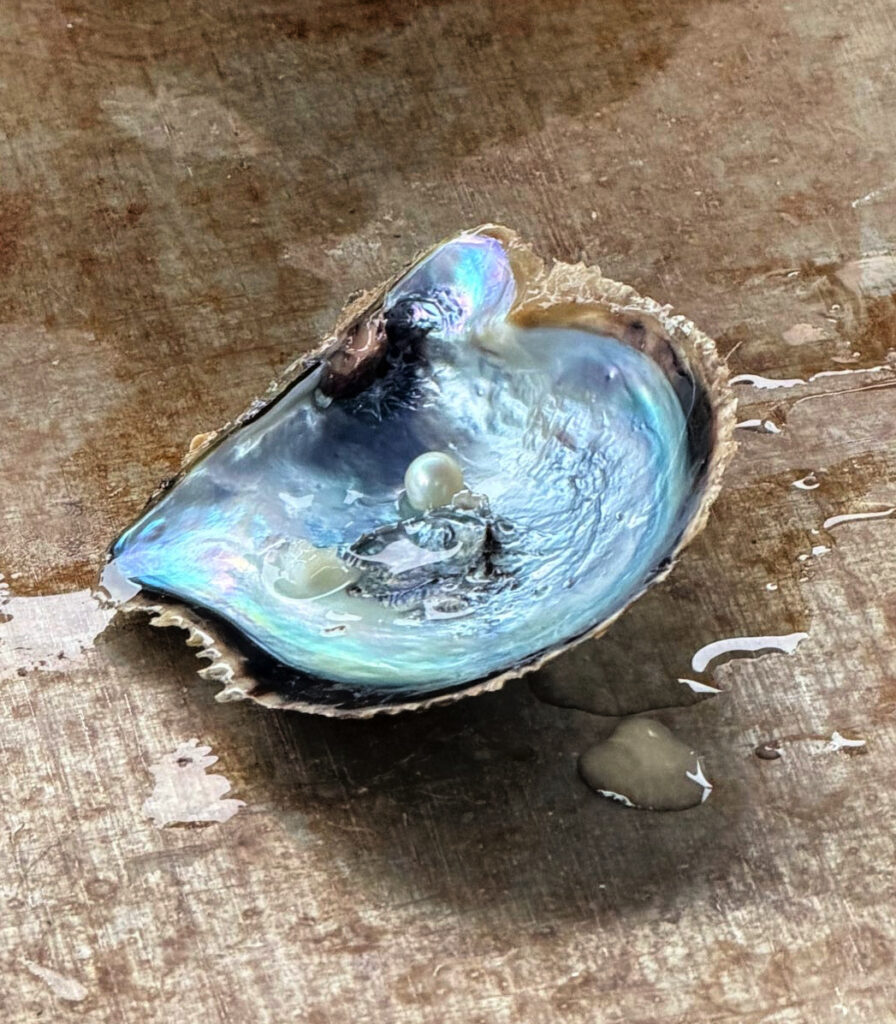
After one to two years, the Akoya oysters are pulled up from the ocean and pearls are taken out of the shell. The harvest is carried out during the winter when the water temperature is low. The nacre gets firm when water is cold, and that creates a strong luster. Ultimately the pearls will be made into beautiful jewelry and sold.
After visiting the pearl farm, we went to Kuniyasuno Sato, an open air museum recreating an Edo-period town. There were several demonstrations that gave insight into traditional Japanese culture and practices. Some were led by students practicing their English.
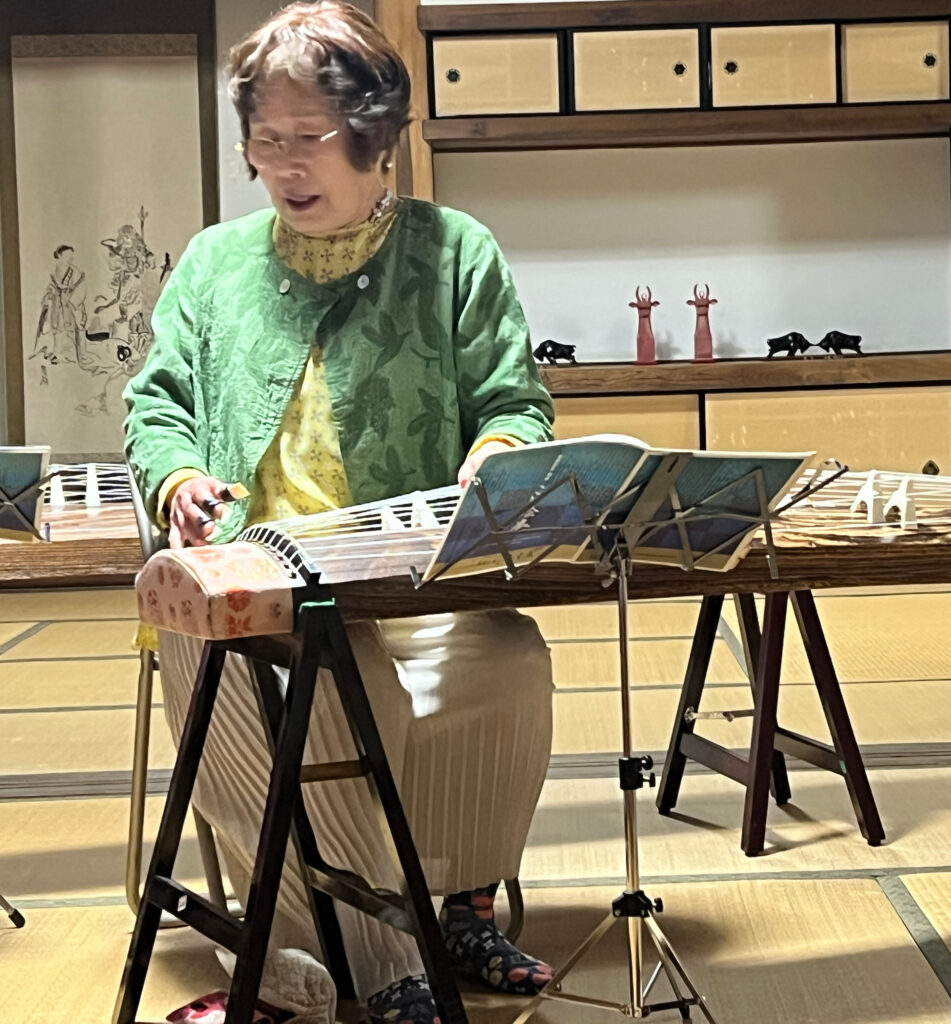
Pictured below is a woman playing a koto, a musical instrument with 13 strings, a young girl making origami cranes, and a man dressed as a samurai. There were also calligraphy, wood block printing and archery demonstrations.
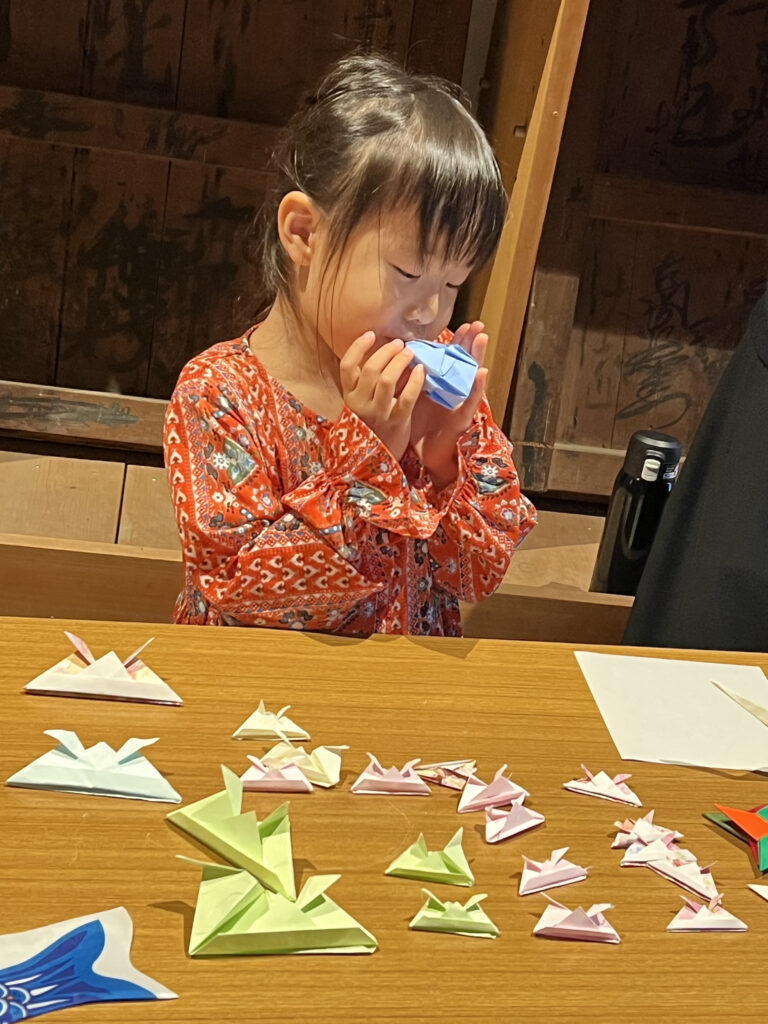
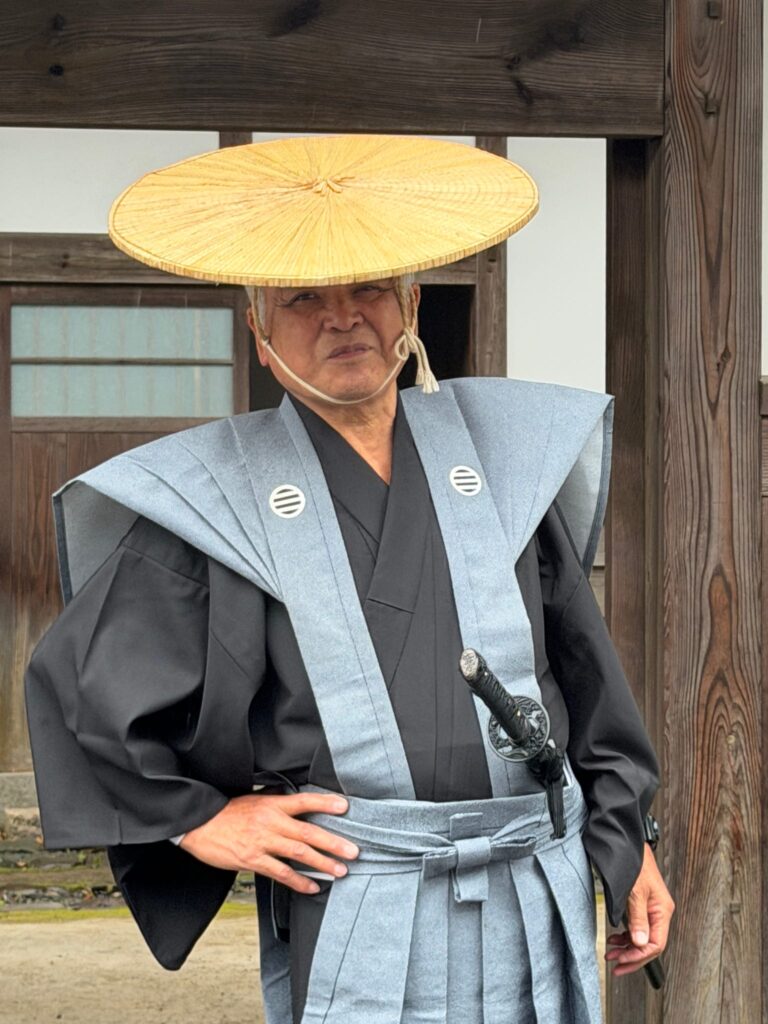
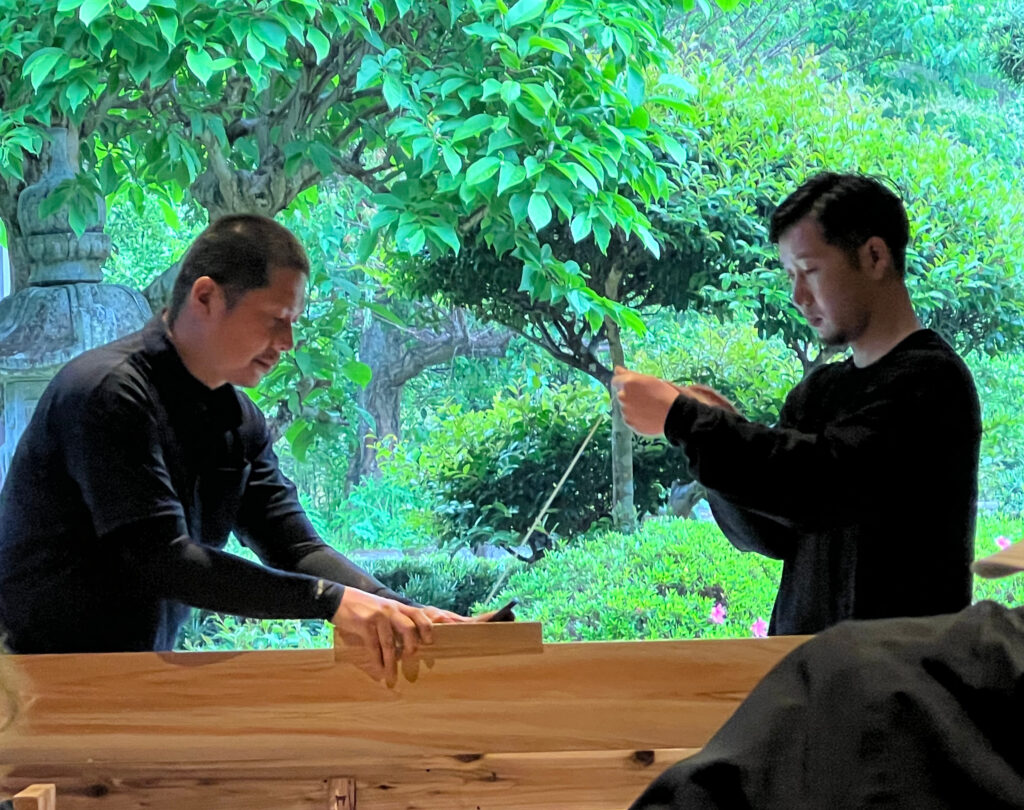
We also saw carpenters demonstrate how they plane wood. The technique they use has been passed down through many generations. In the picture below, one man is planing the wood, while the other holds up the very thin strip of wood as it is cut by the plane.
When the work space is well set up and the plane is sharpened by an expert, the plane glides through the wood with little resistance and leaves a surface finish “second to none.” The Japanese carpenter does not plane at a bench but on a beam. The beam slopes slightly downward so gravity helps with the planing process.
We purchased cutting boards for our children. They were made from Japanese cypress and each planed by hand. They were so smooth they felt like glass.