Gyeongbokgung Palace
Our Sakura Seas South Korea and Japan Tour officially started and first took us to the Gyeongbokgung Palace located in Seoul. When I researched the Palace, I learned it was the site of significant Korean achievements, followed by the Japanese’s government systematic destruction of the Palace during its occupation of Korea, and finally Korea restoring the Palace to its original glory.
Gyeongbokgung Palace was built in 1395 and served as the royal residence and government center for the Joseon Dynasty. Because the Joseon era lasted over 500 years, the Palace was the site of significant Korean achievements. One of these was the “birth” of the Korean language. King Sejong the Great oversaw the invention of Hangul in the 15th century. Hangul was the Korean alphabet and replaced the use of Chinese characters. Hangul is still important in Korea’s national identity.
During the Japanese colonial period (1910–1945), government authorities destroyed or damaged over 90% of the palace’s buildings. The Japanese General Government Building was built directly in front of the Korean throne hall as a way for Japan to further assert its dominance over Korea.
For many decades, the Japanese Government Building was a reminder of this dark period in Korea’s history. In 1995, the 50th anniversary of Korea’s liberation from Japan, the building was demolished and a massive project to reconstruct the Gyeongbokgung Palace was undertaken. I found this statement regarding the rebuilding of the Palace and feel it summarizes this triumphant moment in the history of Gyeongbokgung Palace well:
The ongoing restoration is a literal manifestation of the country reclaiming its history. Rebuilding Gyeongbokgung is not merely an architectural endeavor to boost tourism; it is a declaration of national survival. By reconstructing the exact structures that an occupying force tried to erase, South Korea reinforces the narrative that its cultural and political lineage remains unbroken.
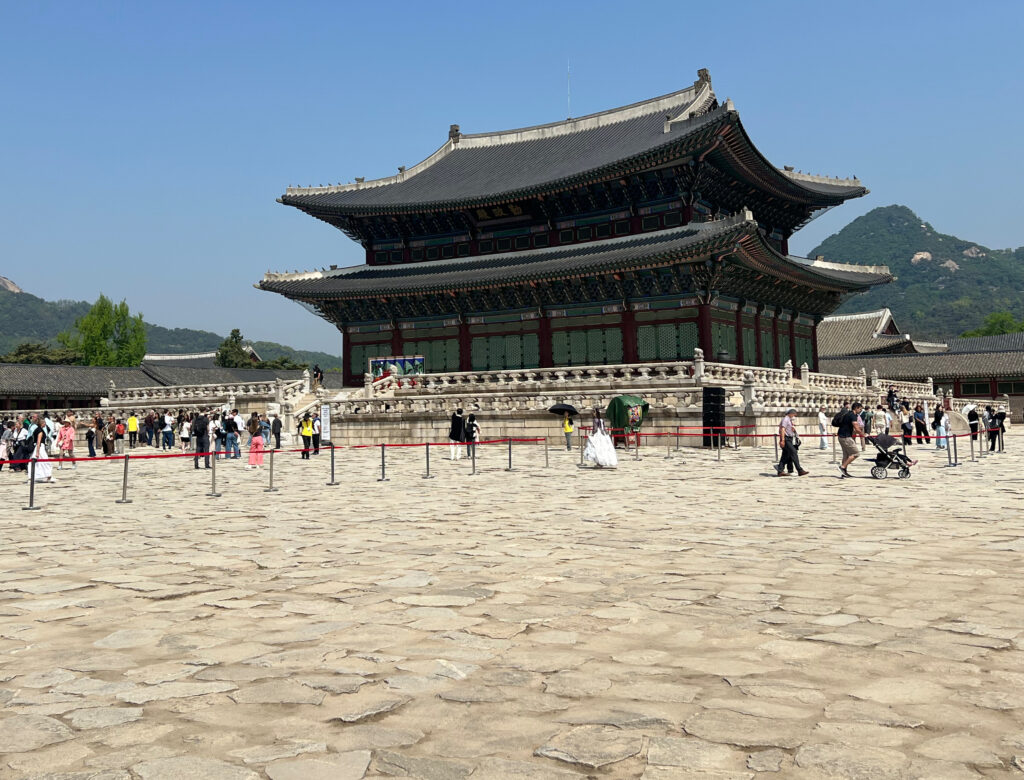
Geunjeongjeon Hall, or the Throne Hall, is pictured below. It is the most significant building in the Gyeongbokgung Palace. Kings conducted state affairs, held official functions, issued edicts and received foreign envoys here. High ranking officials, including military officers, assembled in this courtyard to pay their highest respect to their kings. It was in front of this building that Japan built the Japanese Government Building which was demolished 50 years later and the Palace restored.
Pictured below is Gwanghwamun Gate, the main gate into Gyeongbokgung Palace. Gwanghwamun Gate consists of three arched gates; the center gate was used by the king, while the other two were used by the crown prince and royal officials. Unlike other palaces’ main gates, Gwanghwamun Gate has a double-roofed pavilion over a high stone foundation which is the way the gates of fortresses were built. The Gate was damaged during wars, but has been restored to its original form.
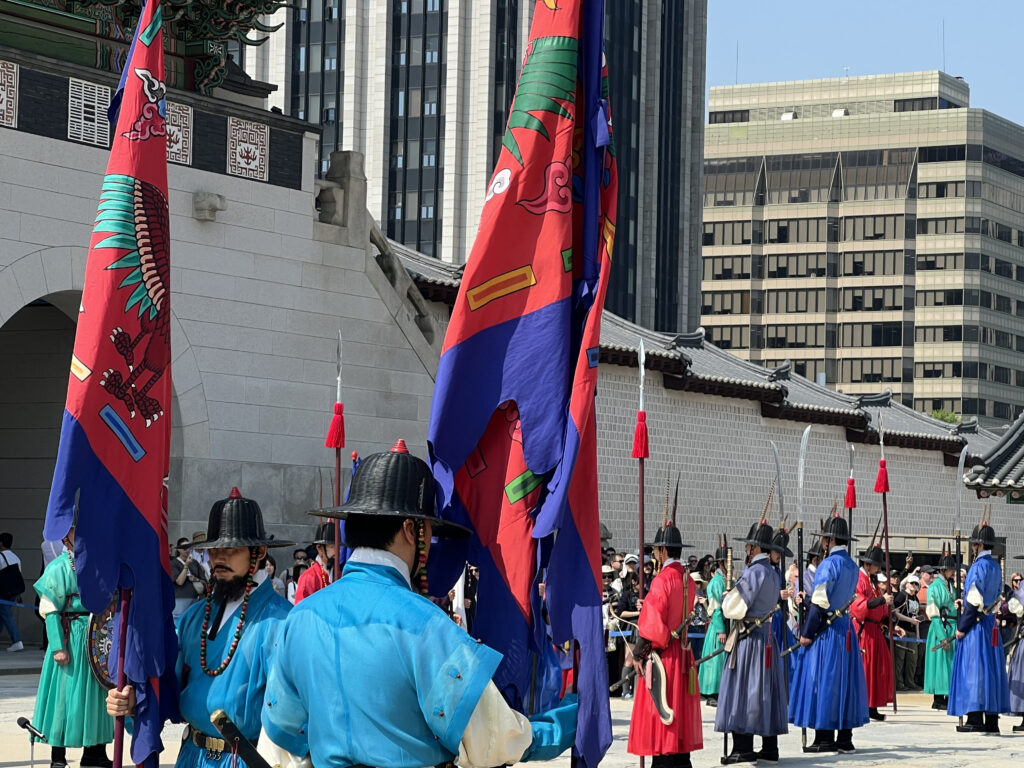
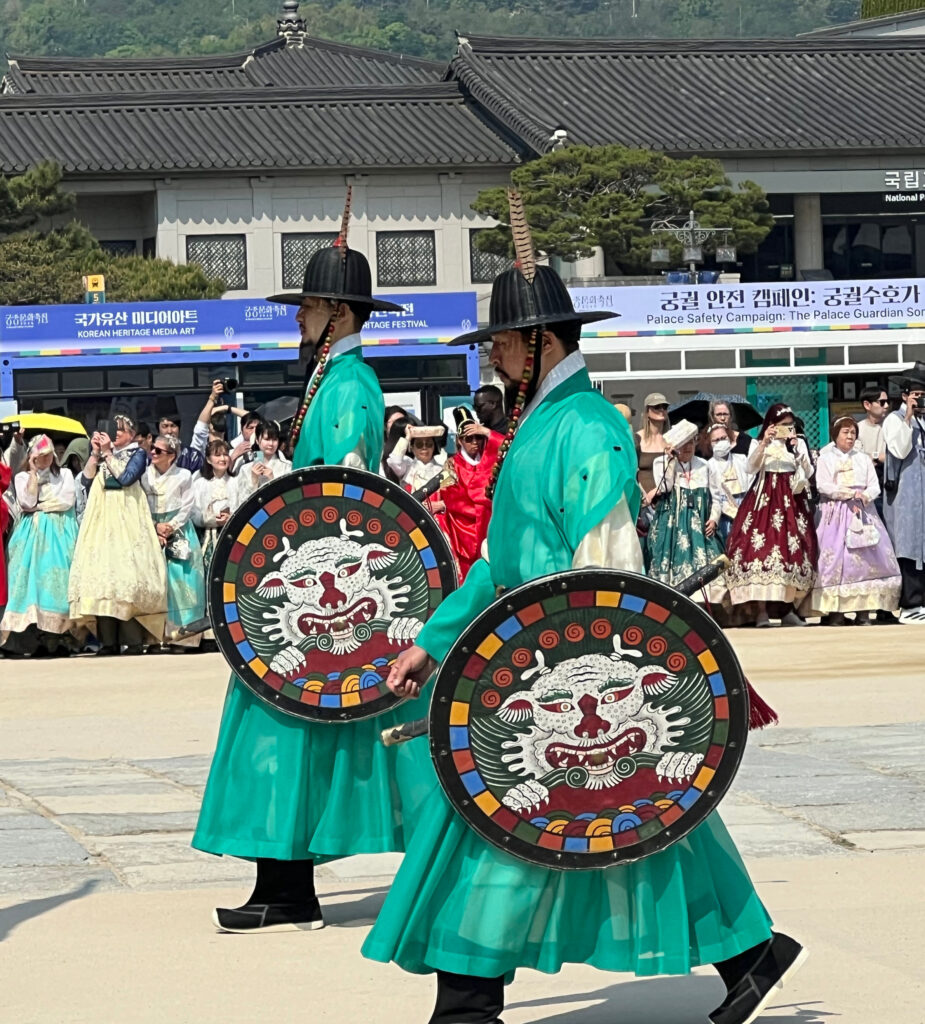
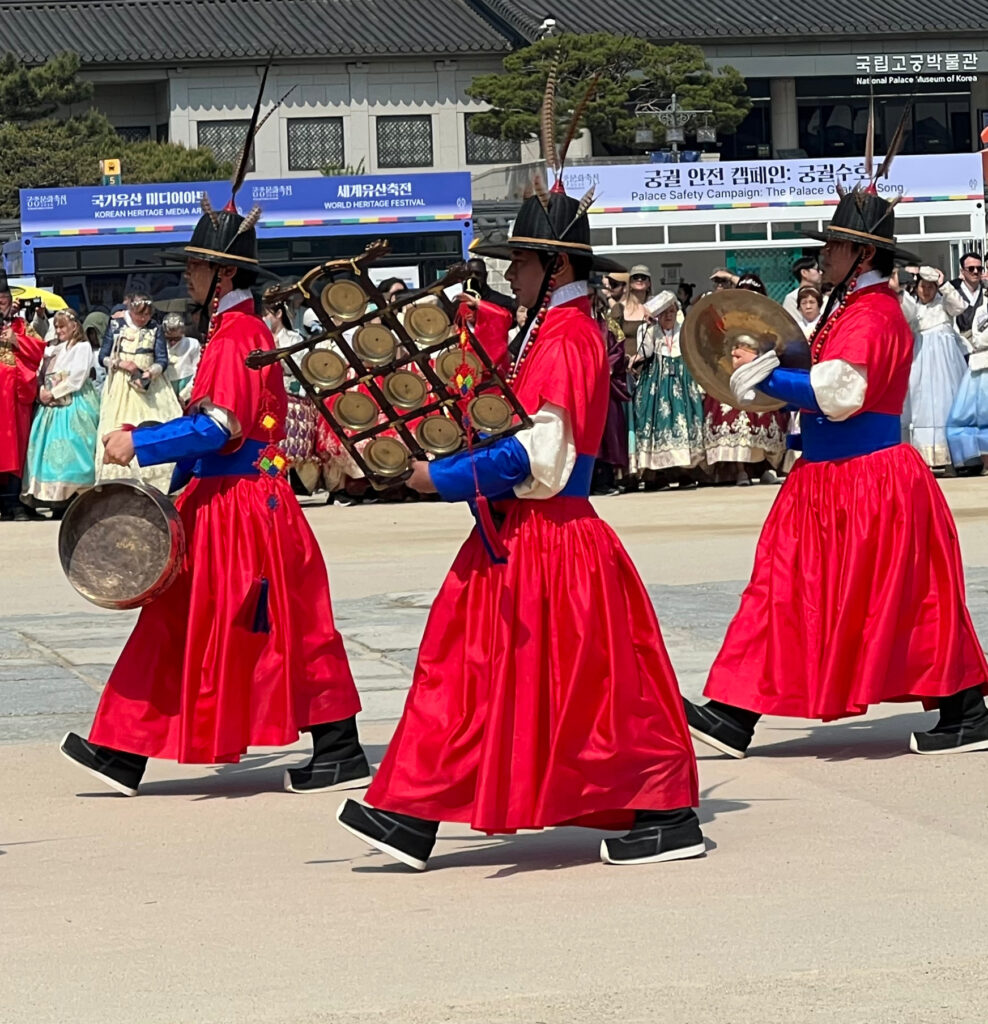
The Changing of the Guard Ceremony at Gyeongbokgung Palace is pictured next. It takes place in the courtyard in front of the Gwanghwamun Gate. The ceremony features guards dressed in traditional Joseon-era uniforms. The ceremony begins with the guards marching to traditional Korean musical instruments. The guards then perform the symbolic changing of the keys and the handing over of the guard post from one shift to another.
The ceremonial drums at South Korea’s royal palaces are played to signal the distinct phases of the Royal Guard Changing Ceremony. The first drumbeat signals the relieving guard unit to mobilize and march toward the palace gate. At the second drumbeat, the guards meet outside the gate to identify each other, exchange passwords, and salute. When the third drumbeat sounds, the on-duty guards take their positions while the relieved guard unit formally departs.
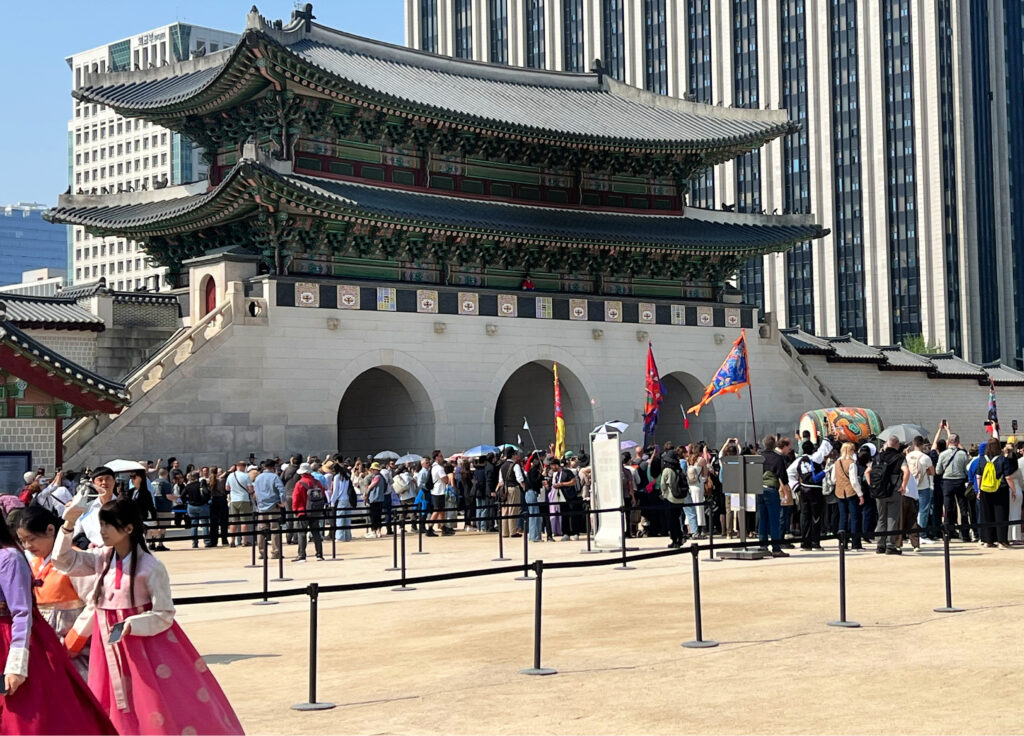
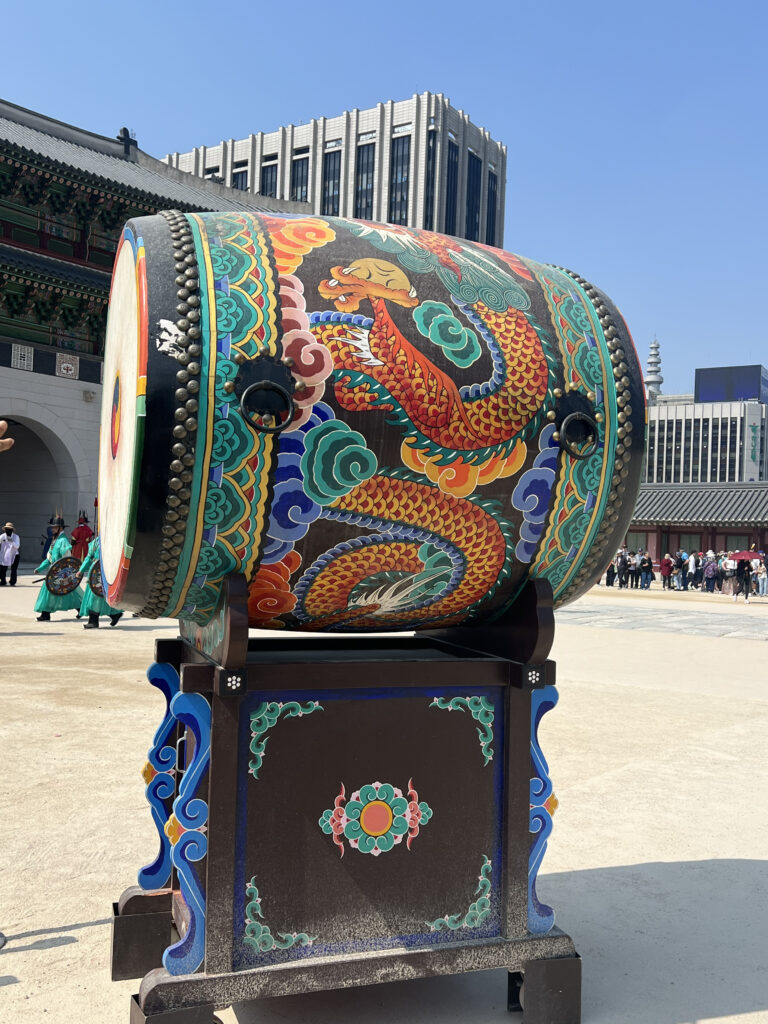
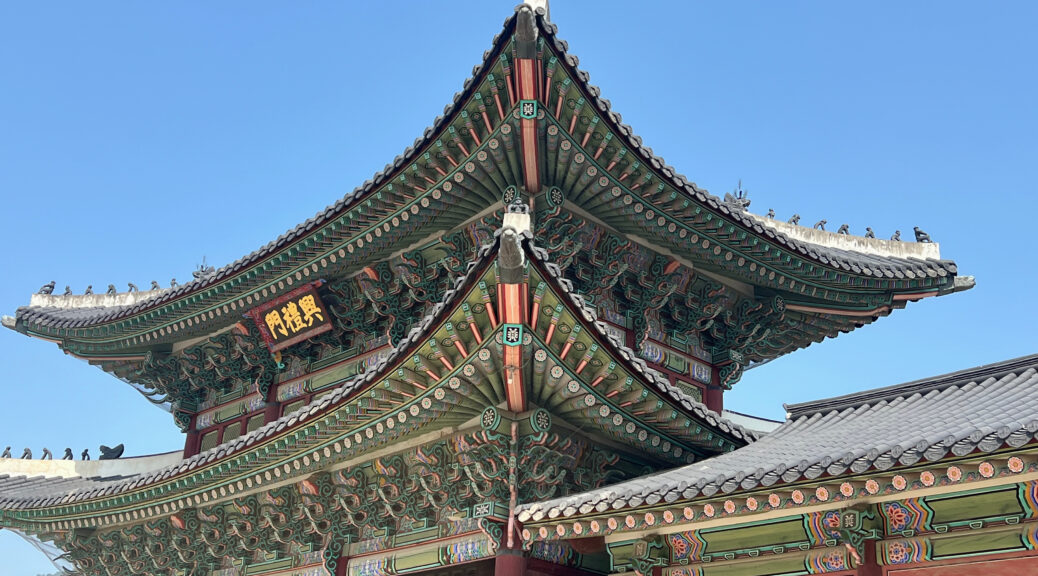
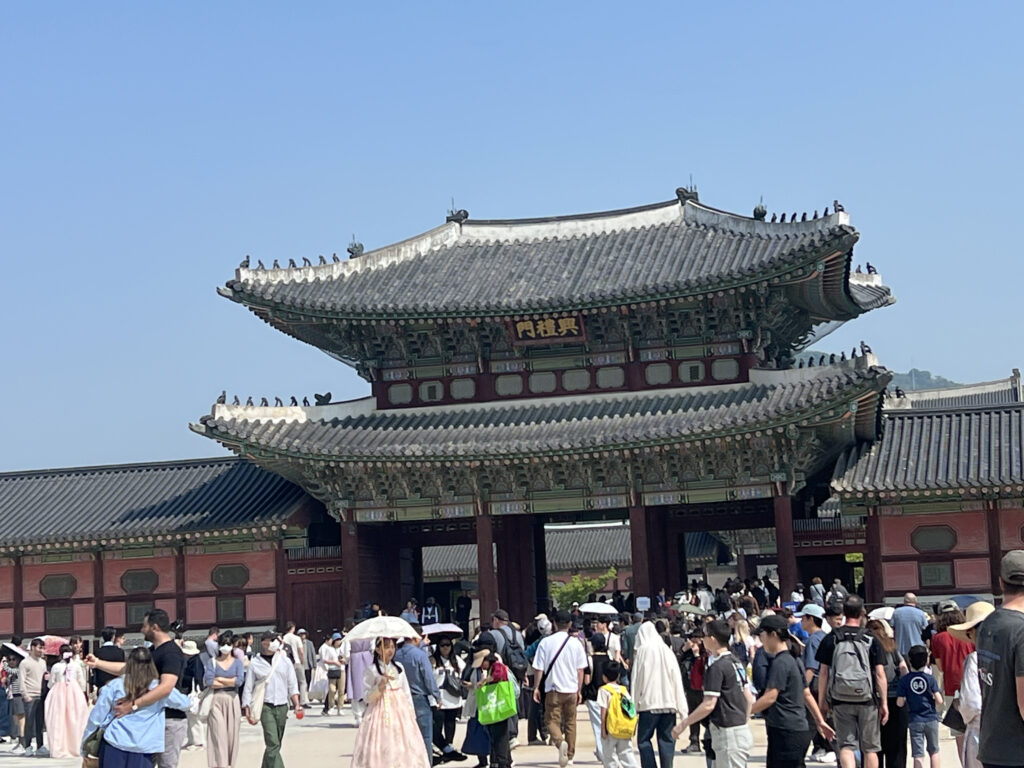
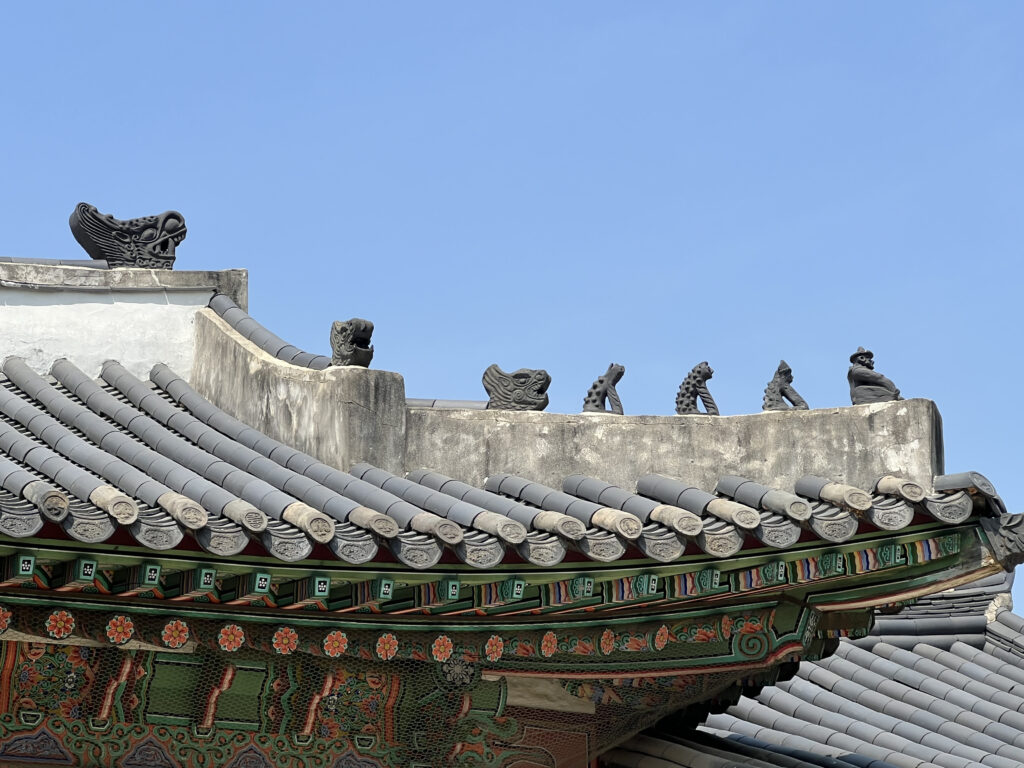
This is the Heungnyemun Gate. It was destroyed by the Japanese in 1914 and the General Government Building was built in its place. After that building was demolished, Heungnyemun was reconstructed between 1997 and 2001. Along many of the rooftops, including this one, are animal and human figures placed there to protect the palace from evil spirits.
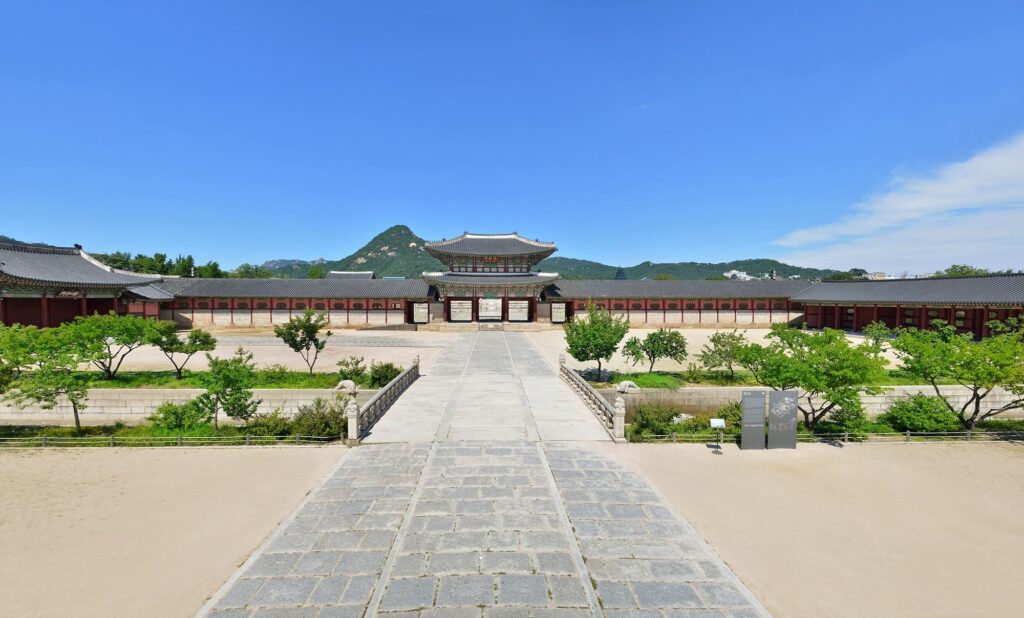
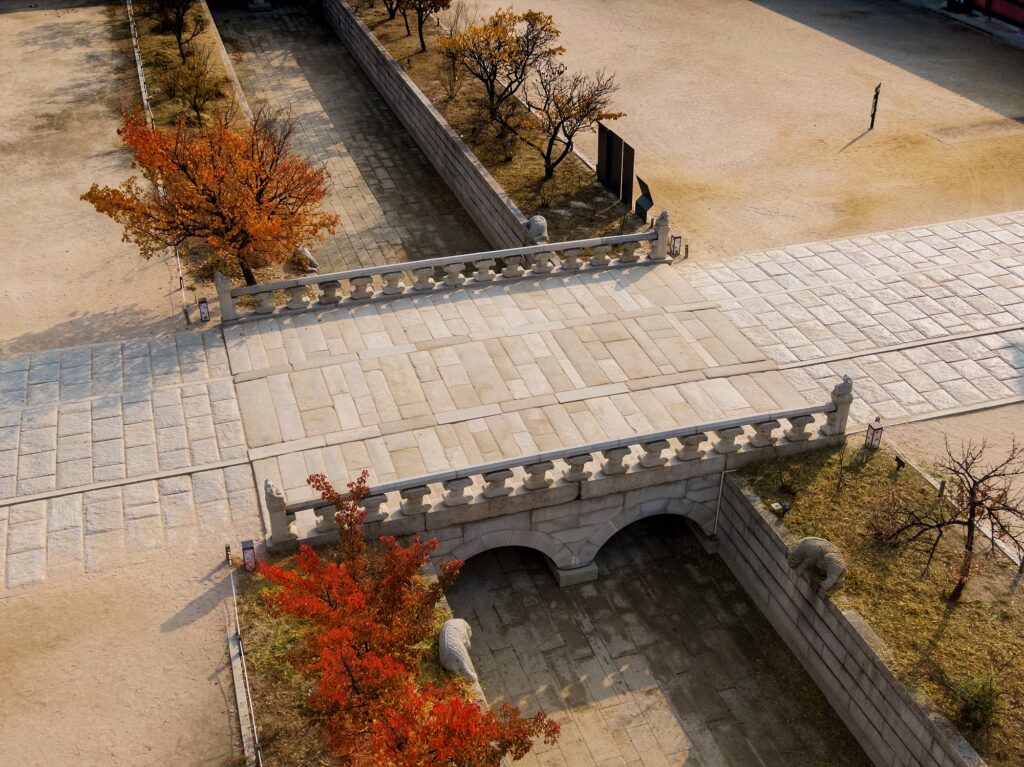
The Geumcheon Stream flows in the courtyard in front of the gate. The bridge over the stream was named “Yeongjegyo.” It survived the Japanese Invasions in the late 16th century without severe damage and was repaired in 1867 when Gyeongbokgung Palace was rebuilt. The Yeongjegyo Bridge was destroyed during the Japanese colonial era but was restored in 2001.
The first picture is one I took of the Heungnyemun Gate. The second picture is a close-up of the roof with the figures intended to provide protection from evil spirits. The third picture shows the Gate, courtyard, and the bridge over the stream. The fourth pictures depicts the bridge and stream. Both the third and fourth pictures are from the website, Royal Palaces and Tombs Center; the website address is listed as the “credit.”
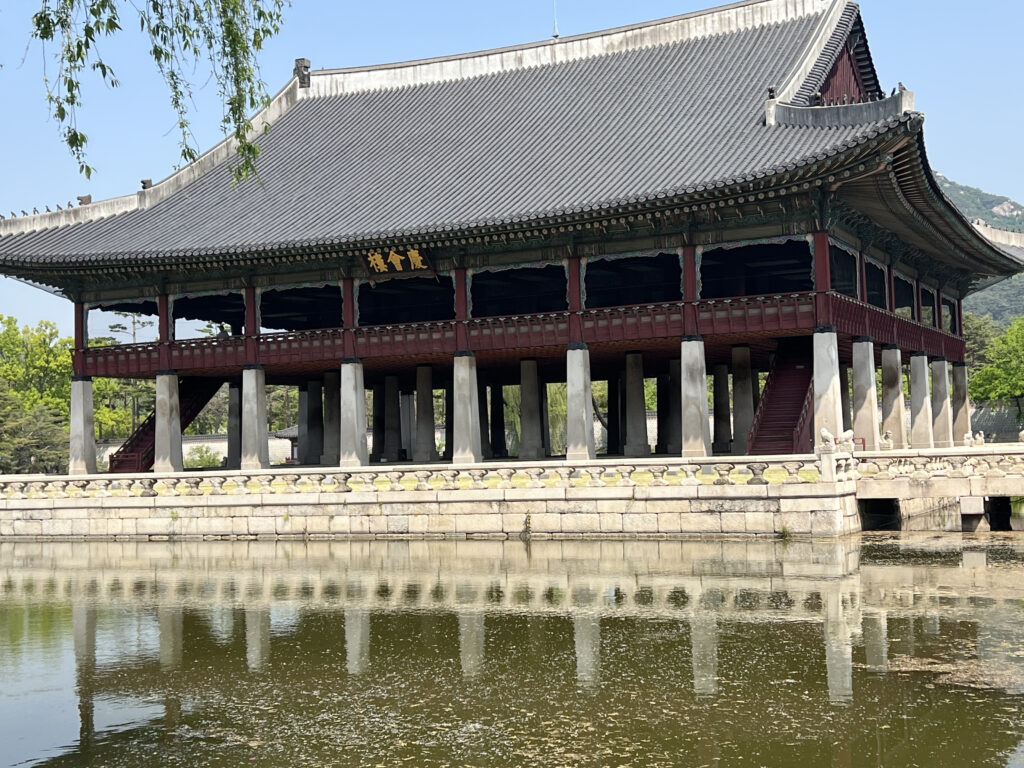
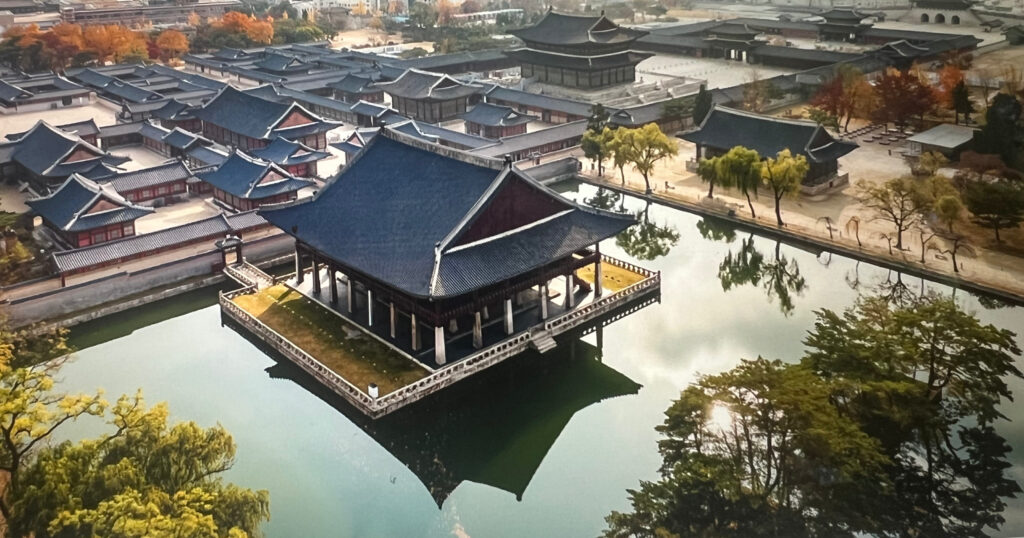
King Taejo, founder of the Joseon Kingdom and builder of Gyeongbokgung Palace, had the pavilion pictured below built; he named it Gyeonghoeru, or Pavilion of Joyous Meeting. Large banquets were held here. The King and his guests could also enjoy boat riding on the pond. The pavilion was burned down by the Japanese in 1592 but rebuilt in 1867. The pavilion’s first floor consists of 48 stone columns but no walls. The second floor of the Gyeonghoeru Pavilion shows off views of the Palace and Inwangsan Mountain, making it an ideal place for the king to hold banquets for foreign envoys. The second picture depicts the Gyeonghoeru Pavilion from an aerial perspective. It is from the website, Royal Palaces and Tombs Center; the website address is listed as the “credit.”
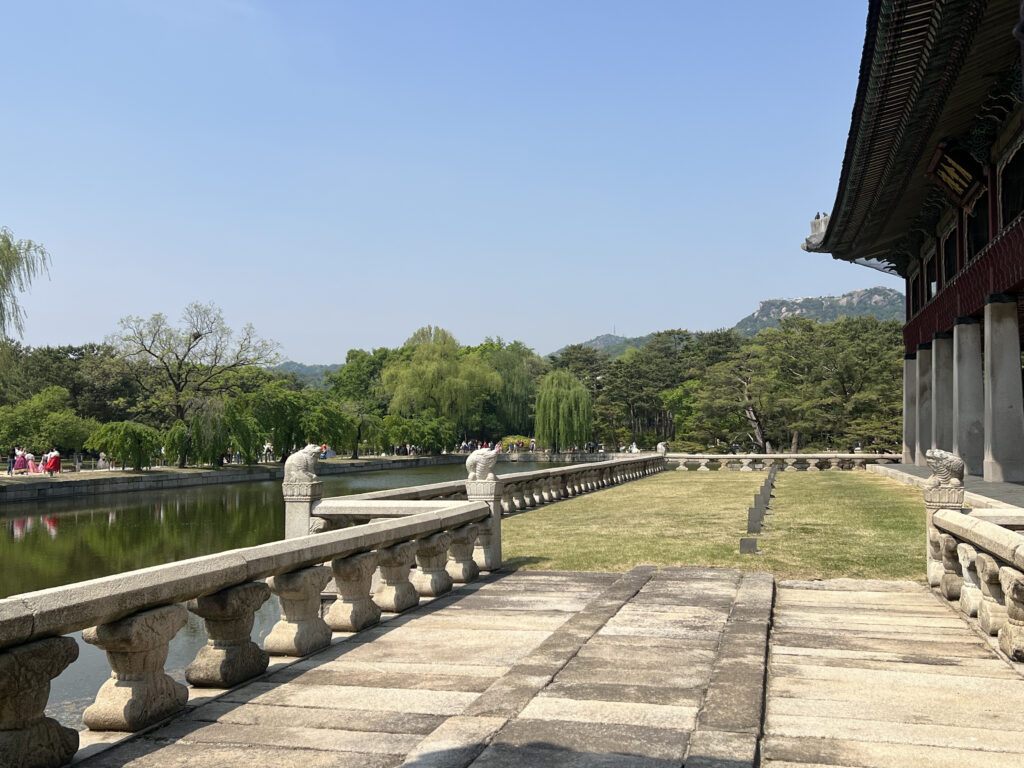
It was once believed that there was an animal called a Bulgasari which could engulf fire. A statue of a Bulgasari was erected on the stone railings to defend the Gyeonghoeru Pavilion from any approaching flames. Despite being a wooden structure, it was unharmed during the Korean War in spite of heavy artillery fire, perhaps due to the protection of the Bulgasari.
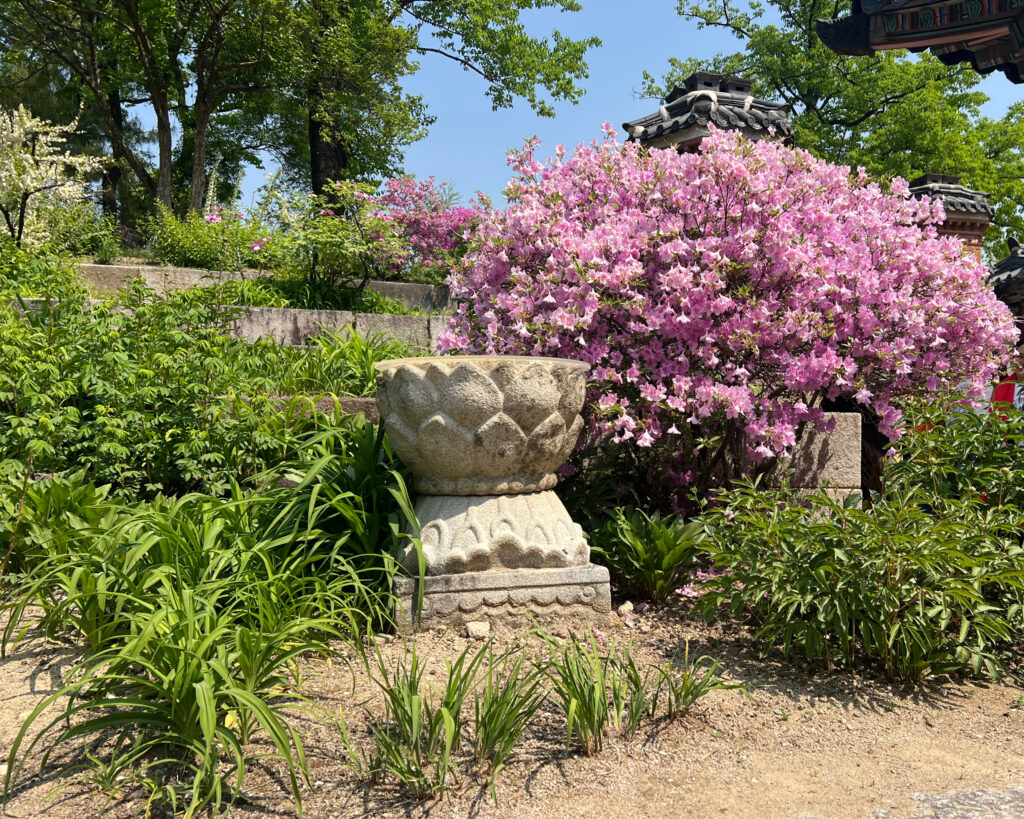
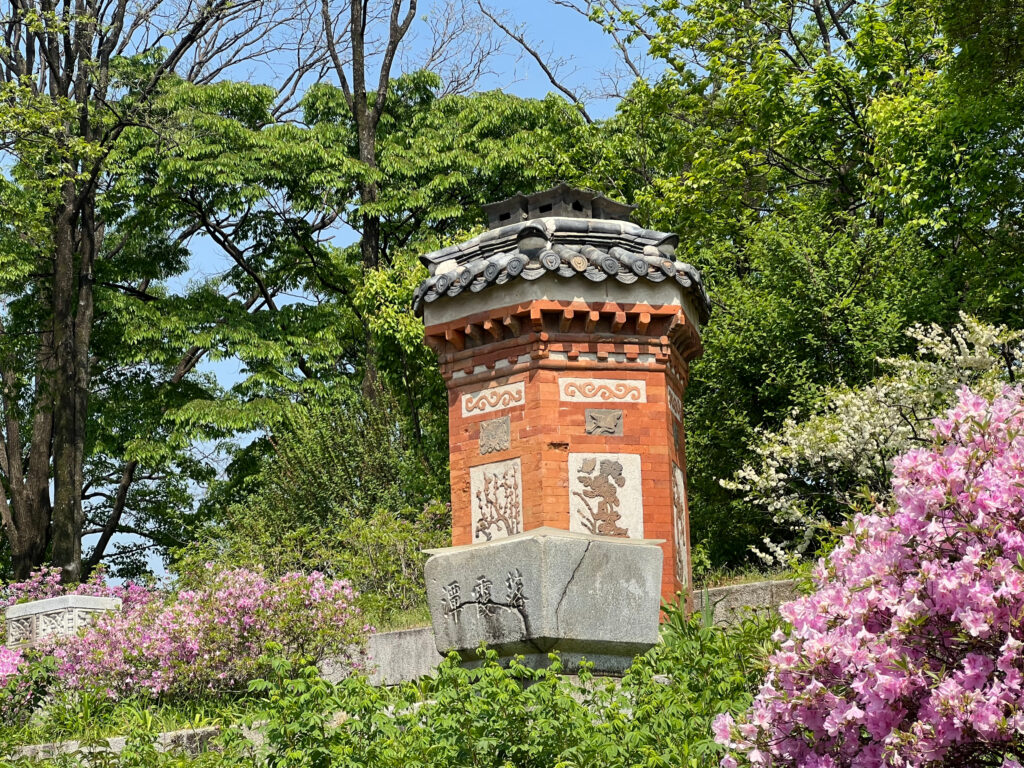
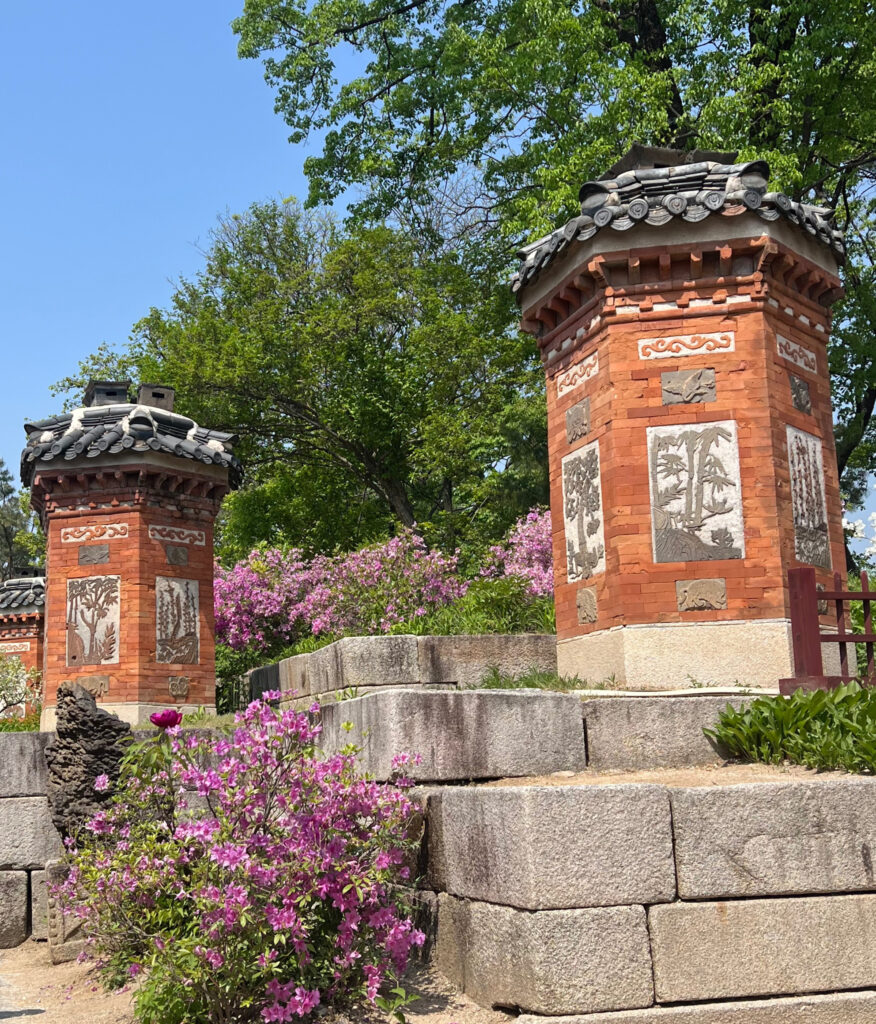
This is the Royal Garden, called the Amisan Garden at Gyeongbokgung Palace. It was built in 1869 behind the queen’s living quarters. It is a terraced garden and is famous for its ornate hexagon-shaped chimneys decorated with floral patterns. Ten Symbols of Longevity are engraved on the four hexagonal chimneys to ward off evil spirits and pray for longevity.
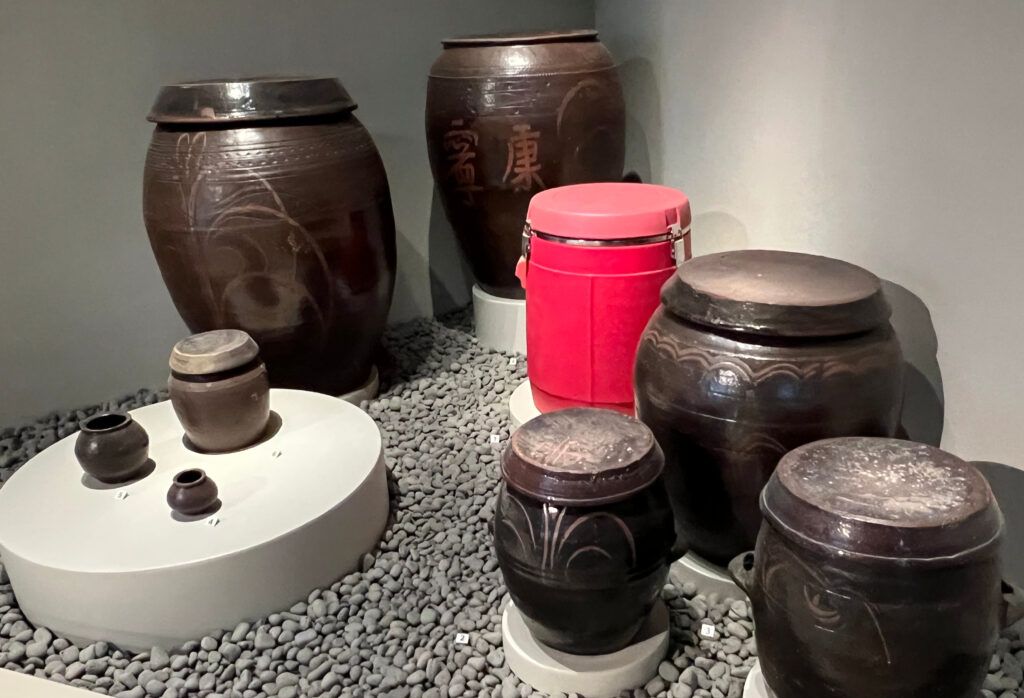
We also visited the National Folk Museum of Korea which was located on the Palace grounds. The National Folk Museum focuses on life in Korea and the Korean culture. The first picture below depicts onggi, or earthenware pots once used for fermenting kimchi and other sauces that flavored food. Today they have been replaced by stainless steel containers and kimchi refrigerators.
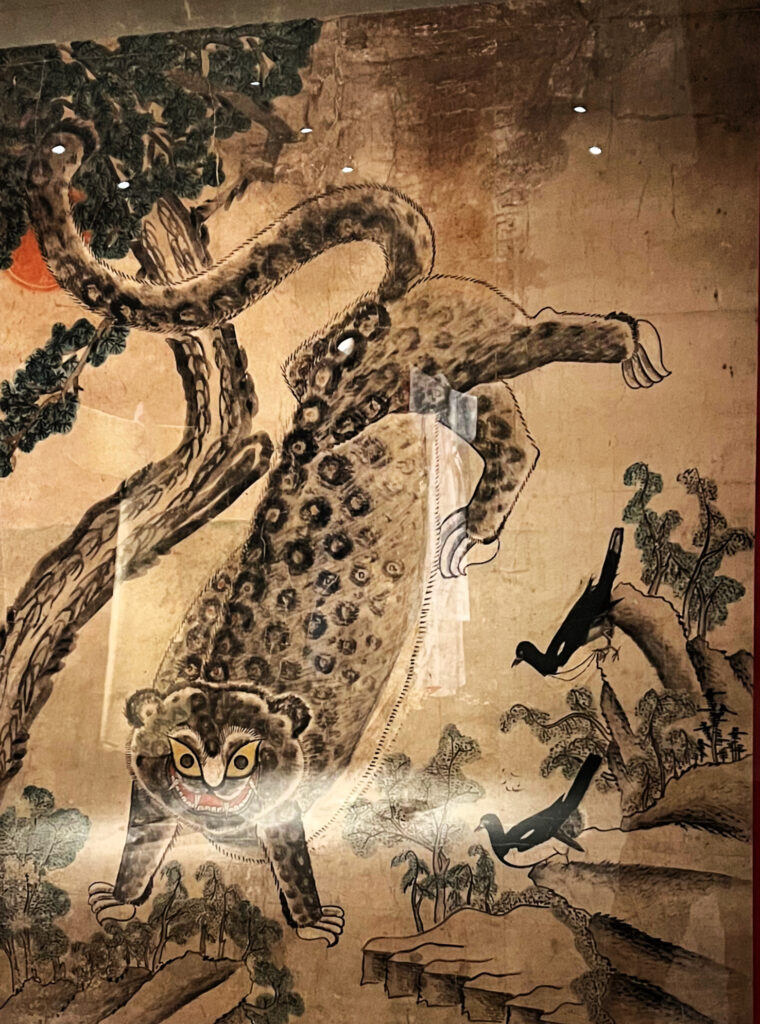
The second picture is a painting of a tiger and a magpie. The tiger was believed to have the power to ward off evil spirits and the magpie was a bird that brought good news. Pictured together, the tiger repels misfortune and the magpie brings about good events.
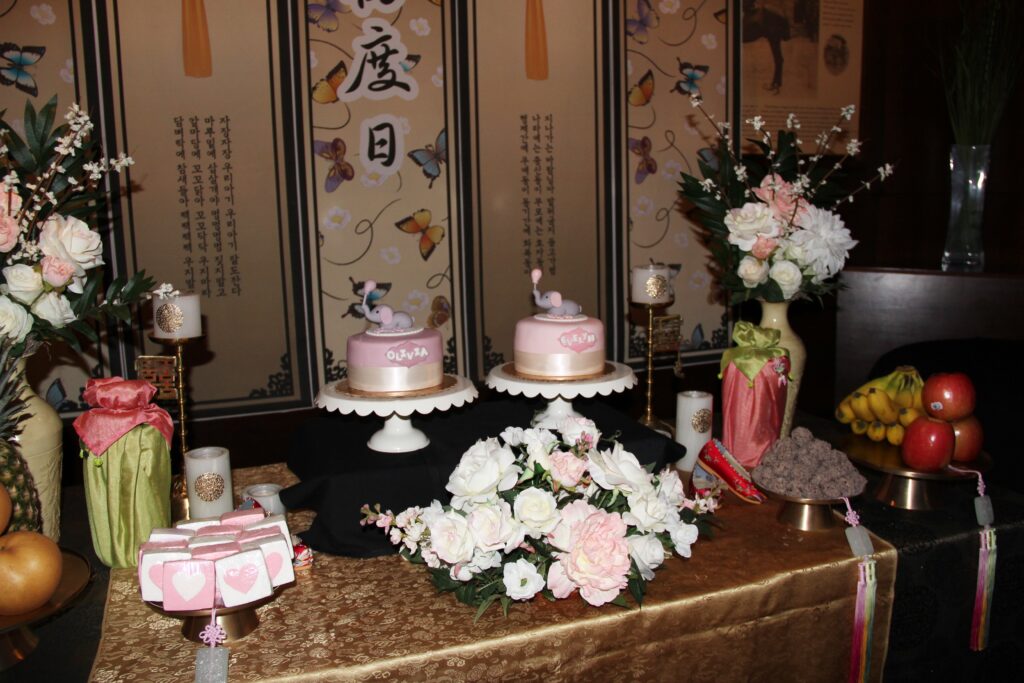
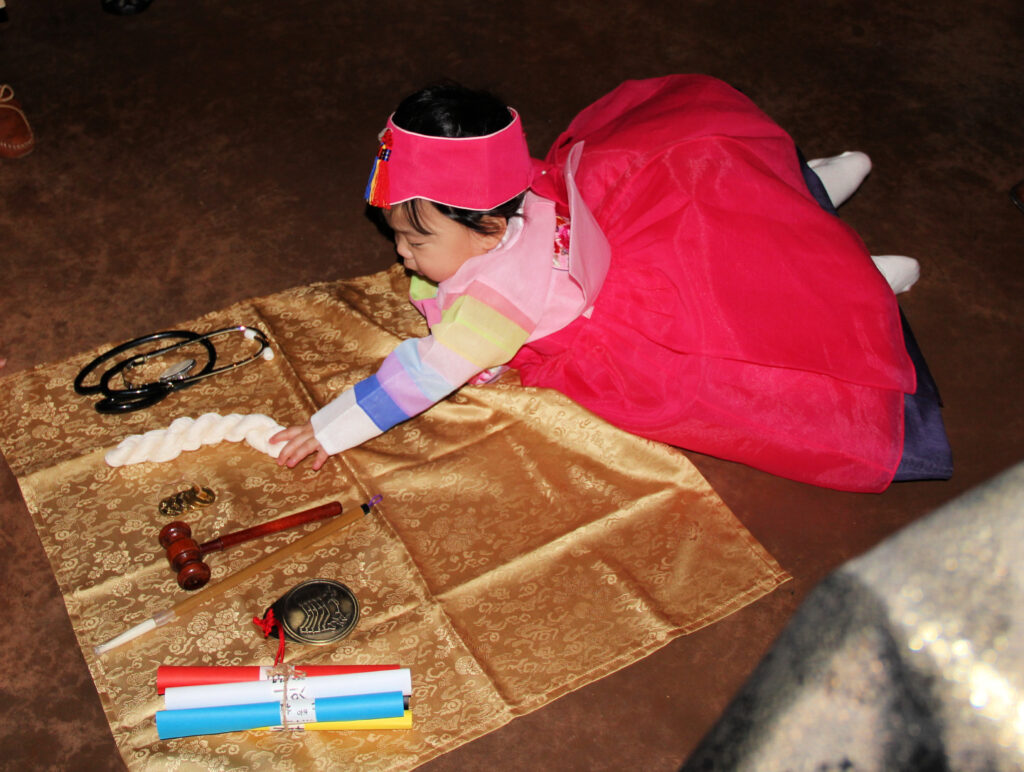
We also visited an exhibit called “Korean Life Passages.” The exhibit depicted passages as they would have been observed in the 1800s. The passage “birth” is traditionally celebrated on the child’s 100th-day and first birthday. These were important milestones because of high infant mortality. Even with all of the medical advancements, the 100-day celebration and first birthday are still important celebrations today. The child usually wears traditional clothes for their first birthday and chooses an object that symbolically suggests their future in a ceremony called the Toljabee. We actually know this first-hand as our granddaughters celebrated their first birthdays in the Korean tradition. Our granddaughters wore hanbuks and chose an item that “predicts” their future. The second and third pictures are from our granddaughters’ birthday celebration.
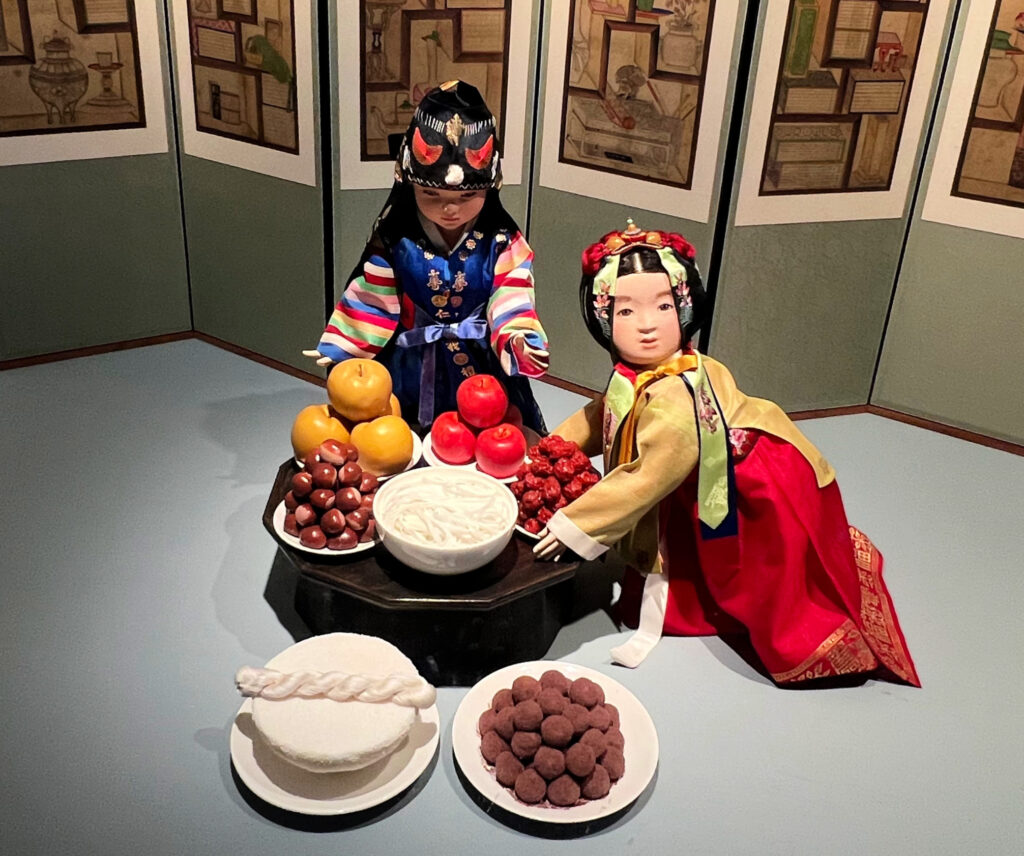
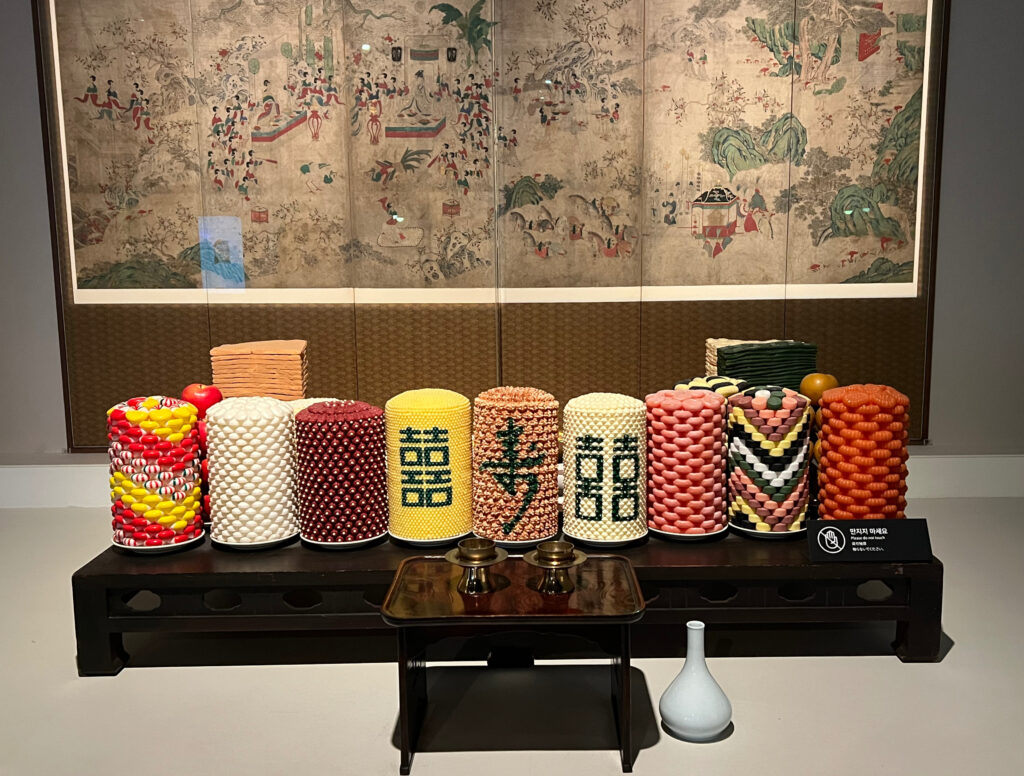
Another important life passage is “longevity.” Traditionally celebrated at age 60, reaching this milestone was considered a great blessing. The honoree sits at a low table with towering foods such as rice cakes, fruits, and dried dates. The honoree’s children, beginning with the eldest, bow deeply to the parents and offer them a cup of traditional wine to show respect and wish them longevity. Today, traditional banquets are often substituted with family dinners or special experiences such as presenting gifts, hiring photographers for professional portraits, or planning family vacations.
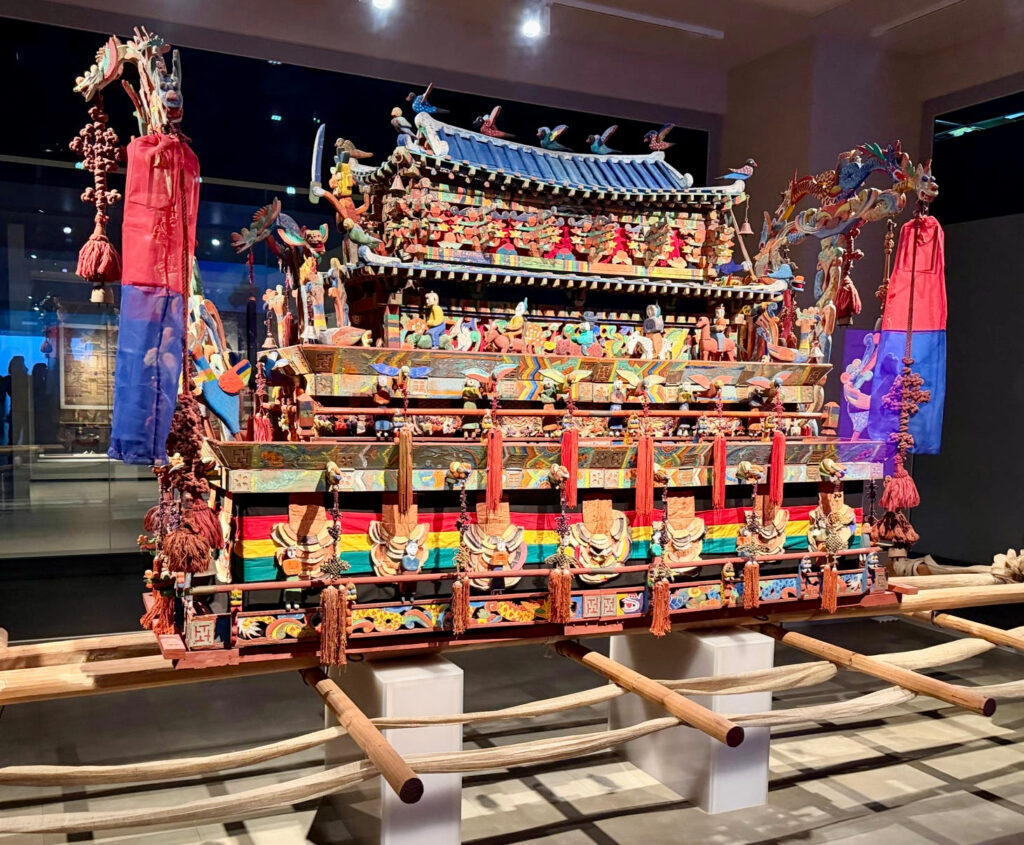
The funeral is another passage. In the 18th Century, the individual who passed away was placed in an extravagantly decorated bier, and was buried with burial objects for the afterlife. Today funeral rites have become much simpler and the person’s body could be buried or cremated. Honoring ancestors is still as important today as it was years ago.
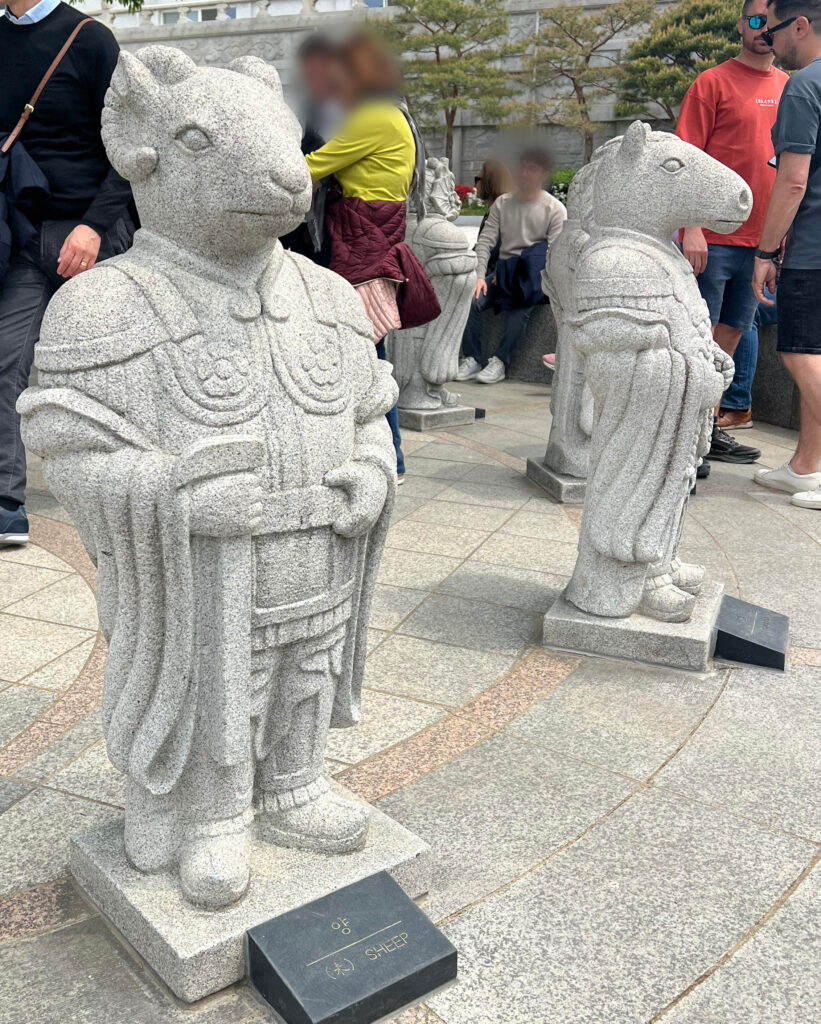
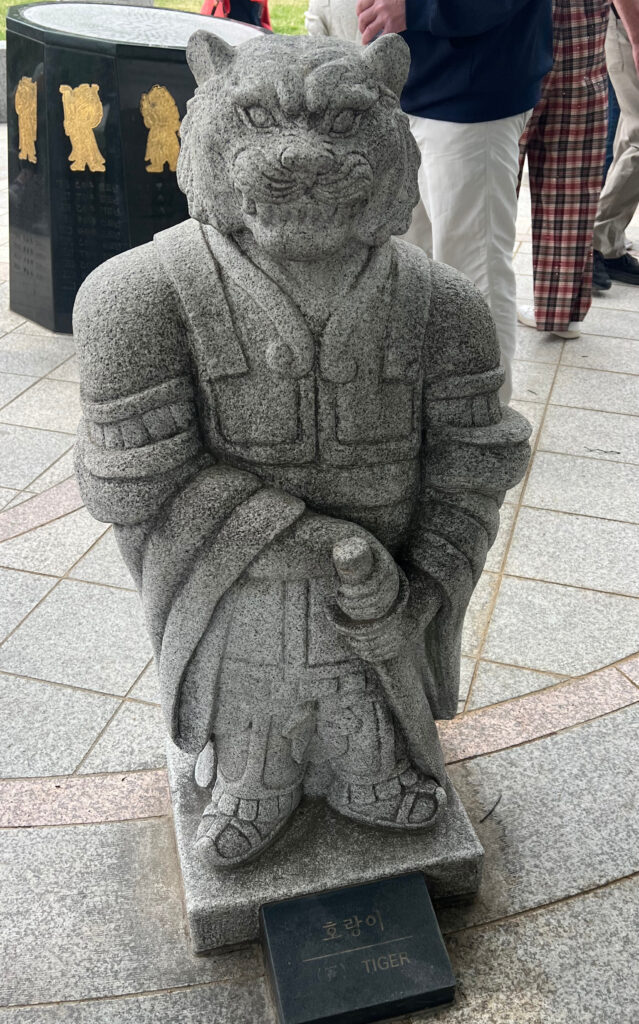
There is a display of the Korean zodiac animals outside the Folk Museum. Everyone has one of twelve animals “assigned” to them according to their birth year. Pictured are a sheep, horse and tiger. In addition, each is also paired with one of five elements: wood, fire, earth, metal, and water. These occur two years in a row (a yin and yang year). So each animal, element and yin/yang combination occurs once every 60 years. That is one of the reasons the 60th birthday is so important – the person has lived the complete zodiac cycle.